


 Anteprima in scala reale
 Condividi
 Condividi
 Dettagli
 Guida stampabile

 Scarica
 Articoli simili
 Radiografia
 Slideshow
 Statistiche
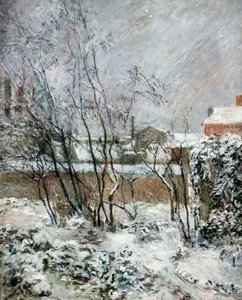
Balcone Inverno
 Olio su tela
- Opere da parete
- Impressionist Landscape
 1902
1902 76.0 x 76.0 cm
Dipinto impressionista di John Henry Twachtman "Balcone Inverno": Tranquillità invernale e luce delicata catturate con pennellate morbide. Scopri l'arte americana!
 Leggi tutto
John Henry Twachtman (1853-1902): pittore americano innovativo, maestro del tonalismo e dell'impressionismo. Scopri i suoi paesaggi suggestivi e la sua influenza sull'arte del XX secolo.
Giclée / Stampe d'arte
Stampa giclée o su tela di qualità museale, con produzione rapida e diverse opzioni di finitura. ( Ordina la riproduzione dipinta a mano Passa all'immagine digitale)




P118B €10

P118H €10

P118W €10

P438Z €10

P508JH €12

P508YH €12

P805H €10

P805Z €10

P919BZ €10

P919G €10

P919XJ €10

P959ZH €10

P968JZ €12

W106C €8

W218G €10

W218JH €8

W218Y €10

W307PJ €10

W316G €10

W316PJ €8

W316Y €10

W398PJ €8

W4111J €10

W500HY €15

W500JH €15

W692G €12

W849H €8

W940BG €15

W953PJ €8




Standard
personalizzato
CM
INCH
Scegli tra le nostre dimensioni predefinite, che rispettano le proporzioni originali dell'opera d'arte.
Loading sizes...

larghezza
altezza
Inserisci la larghezza e l'altezza desiderate, per adattarle alla tua cornice o alla tua parete. Una stampa può essere solo ritagliata, mai resa più grande dell'immagine originale; pertanto, un formato con una forma differente comporterà la perdita di una parte dell'opera. Ti invieremo un mockup digitale da approvare prima di procedere con la stampa. L'immagine mostrata in questa pagina non rappresenta il ritaglio reale — solo il mockup lo mostra.
Consegna in tutto il mondo () in 2 settimane invece delle normali 4/5 settimane. (22 Ottobre)

Spedizione espressa gratuita in tutto il mondo

Tela in lino di alta qualità

Assicurazione completa sulla spedizione

Garanzia di rimborso dei dazi doganali

Garanzia di perfetta fedeltà cromatica

Politica di reso entro 100 giorni (solo per difetti di fabbricazione)

Garanzia di rimborso al 100%

Sconto per acquisti multipli
 L'opzione vetro è disponibile solo per dimensioni inferiori a 110 cm

Balcone Inverno
Giclée / Stampe d'arte
Dimensioni della riproduzione
-


Prezzo totale
€ 60
Balcony in Winter – A Symphony of Light and Texture by John Henry Twachtman
The painting “Balcony in Winter” by John Henry Twachtman transcends mere representation; it’s an immersive experience into a moment frozen in time, capturing the quiet beauty of a winter landscape with remarkable precision. Executed in 1902 during his prolific period as a tonalist painter, this oil on canvas masterpiece resides within the Telfair Museum of Art collection and exemplifies Twachtman's dedication to portraying atmospheric conditions—specifically the diffused light characteristic of snowy days—with unparalleled subtlety. ### Composition and Style – Impressionistic Elegance Twachtman’s artistic vision centers around a simple yet profoundly effective composition: a balcony adorned with potted plants, framed against a backdrop of snow-covered trees. The artist skillfully employs soft pastel hues—primarily muted blues, greens, and whites—creating an atmosphere of serene tranquility. Delicate brushstrokes dominate the surface, conveying not just visual information but also a palpable sense of stillness and contemplation. Two prominent trees – one positioned on the left side of the balcony and another receding into the distance – contribute depth and perspective to the scene, guiding the viewer’s gaze across the canvas. ### Technique: Mastering Impressionistic Light The painting's brilliance lies in Twachtman’s masterful manipulation of light—a cornerstone of Impressionist technique. He meticulously observes how sunlight filters through the snow-laden branches, casting dappled shadows that dance across the balcony and illuminate the foliage with a luminous glow. This careful attention to detail isn’t merely decorative; it's integral to conveying the emotional essence of winter – a feeling of quiet solitude punctuated by fleeting moments of radiant beauty. The artist achieves this effect through layering thin glazes of paint, allowing light to penetrate through successive coats and creating an illusion of shimmering translucence. ### Historical Context: Embracing Tonalism’s Legacy Twachtman's work aligns perfectly with the broader movement of tonalism, which emerged in America during the late 1890s and early 1900s as a reaction against academic painting’s emphasis on idealized forms and dramatic contrasts. Unlike Impressionists who sought to capture immediate sensory impressions, tonalist painters prioritized conveying mood and atmosphere through subtle gradations of color—often monochrome—that evoke emotion rather than depicting precise visual reality. “Balcony in Winter” embodies this ethos, inviting viewers to contemplate the profound beauty found within seemingly unremarkable landscapes. ### Symbolism: Finding Resonance Beyond Appearance Beyond its technical prowess, "Balcony in Winter" carries symbolic weight. The potted plants represent resilience and vitality amidst adversity—a quiet assertion of life’s enduring presence even during periods of dormancy. Similarly, the snow-covered trees symbolize purity and contemplation, mirroring the stillness of the winter season itself. Taken together, these elements contribute to a richer understanding of the painting's message: an invitation to appreciate the understated grandeur of nature and to find solace in its timeless beauty. ### Discover More About John Henry Twachtman & His Artworks To delve deeper into the artistic world of John Henry Twachtman, explore his other celebrated landscapes like “Winter Scene” and “Winter,” available for viewing at /art/list/?Filter=8XYC8F-John-Henry-Twachtman-Winter-Scene and /art/list/?Filter=8YE99D-John-Henry-Twachtman-Winter. Explore the captivating Impressionist movement on https://TopImpressionists.com. Experience the enduring legacy of Twachtman’s vision—a testament to the transformative power of art.Domande e risposte
In che modo contrasto e armonia si combinano in "Balcone Inverno"?
La composizione cromatica di "Balcone Inverno" di John Henry Twachtman unisce un Serene contrasto con una Discordant Palette armonia.
In che modo lo stile di "Balcone Inverno" si relaziona all'epoca del suo autore?
In "Balcone Inverno" di John Henry Twachtman, il movimento Impressionist Landscape incontra l'epoca XIX secolo.
Quanto sono intensi i colori in "Balcone Inverno" di John Henry Twachtman?
"Balcone Inverno" di John Henry Twachtman mostra un'intensità cromatica Equilibrato.
Opere correlate




Biografia dell'artista
A Pioneer of American Impressionism: The Life and Art of John Henry Twachtman
John Henry Twachtman, born in Cincinnati, Ohio, on August 4th, 1853, stands as a pivotal figure in the development of American Impressionism. His journey from academic training to a uniquely personal style reflects not only his artistic evolution but also the broader shifts occurring within the American art world during the late 19th and early 20th centuries. Twachtman’s story is one of constant exploration, a restless pursuit of capturing atmosphere and emotion through color and light, ultimately leaving an indelible mark on the landscape tradition. His initial artistic grounding came under the tutelage of Frank Duveneck in his hometown, a formative experience that instilled within him a dedication to direct observation and a rejection of overly idealized representations. This early training laid the foundation for his later embrace of more progressive techniques.European Influences and the Embrace of Tonalism
Driven by an ambition to refine his skills and broaden his artistic horizons, Twachtman embarked on a period of study in Europe that proved transformative. Between 1875 and 1877, he attended the Academy of Fine Arts in Munich, where he absorbed the principles of a loosely brushed, shadowy technique prevalent at the time. A subsequent visit to Venice with William Merritt Chase further ignited his passion for capturing the nuances of light and atmosphere. These European experiences were crucial in shaping his artistic vision, yet Twachtman never simply replicated what he encountered abroad; instead, he synthesized these influences into something distinctly his own. It was during this Parisian interlude that he fully embraced Tonalism, characterized by muted colors, subtle gradations of tone, and an emphasis on creating mood and atmosphere. Works like *Arques-la-Bataille*, now residing in the Metropolitan Museum of Art, exemplify this period, showcasing his mastery of tonal harmonies and evocative landscapes. The influence of artists such as Jean-François Millet, known for his atmospheric depictions of rural life, is subtly present in Twachtman’s early European work.The Cos Cob Colony and a Personal Impressionist Style
Upon returning to America, Twachtman settled in Connecticut, purchasing a farm in Greenwich that would become both home and artistic studio. His presence at the burgeoning Cos Cob art colony proved instrumental, fostering a vibrant creative community where ideas were exchanged freely and experimentation was encouraged. He wasn’t merely a resident artist; he became a catalyst, inspiring his friends and students with his innovative techniques and philosophical approach to painting. This period saw Twachtman move beyond strict Tonalism towards a highly personal form of Impressionism. While retaining the emphasis on atmosphere and light, his later works demonstrate a bolder use of color and a more dynamic brushstroke. He frequently depicted snow-covered landscapes of his farm and garden, transforming familiar scenes into poetic meditations on nature’s beauty. The influence of artists like Childe Hassam, who also painted at Cos Cob, is evident in Twachtman's later works depicting the Connecticut countryside.Notable Works and Lasting Impact
Twachtman’s oeuvre encompasses a remarkable range of subjects and styles, reflecting his evolving artistic sensibilities. *Arques-la-Bataille*, with its masterful use of light and shadow, remains one of his most celebrated achievements. His series of scenes in Gloucester, Massachusetts, foreshadowed a more modernist sensibility in American art, anticipating the abstract explorations that would follow. His paintings are not merely representations of places; they are evocations of mood, atmosphere, and the emotional connection between humanity and nature. Twachtman’s contribution extends beyond his individual canvases; he played a vital role in establishing American Impressionism as a distinct artistic movement. He was a founding member of “The Ten,” a group of artists who sought to break away from the constraints of traditional art institutions and forge their own path. *Landscape 3*, with its serene depiction of nature, exemplifies his tonalist approach, while works like *Reflections* demonstrate his ability to capture fleeting moments of light and atmosphere. His legacy is further cemented through pieces such as *Brook among the Trees*, a captivating pastel that showcases the beauty and serenity of the natural world. Twachtman’s innovative spirit continues to inspire artists today, solidifying his place as a true pioneer of American Impressionism and a master of tonal landscape painting.A Legacy in Color and Light
John Henry Twachtman's untimely death in 1902 at the age of forty-nine cut short a promising career, but his influence continued to resonate through subsequent generations of American artists. His paintings are held in prestigious collections worldwide, including the Metropolitan Museum of Art and the Cincinnati Art Museum. His work stands as a testament to the power of observation, the beauty of simplicity, and the enduring appeal of capturing the essence of light and atmosphere. He remains an important figure in the history of American art, a quiet revolutionary who reshaped our understanding of landscape painting.
John Henry Twachtman
1853 - 1902 , Stati Uniti d'America
Informazioni rapide
- Artistic Movement Or Style: Impressionismo, Tonalismo
- Artists Or Movements Influenced By This Artist: ['American Impressionismo']
- Artists Who Influenced This Artist:
- Duveneck
- Chase
- Date Of Birth: 4 agosto 1853
- Full Name: John Henry Twachtman
- Nationality: Americano
- Notable Artworks:
- Paesaggio 3
- Arques-la-Bataille
- Riflessi
- Place Of Birth: Cincinnati, USA
Articoli correlati

John Henry Twachtman: Atmosfere impressioniste e il paesaggio americano
Esplora la vita e le opere di John Henry Twachtman, pioniere dell'Impressionismo americano e maestro del Tonalismo. Scopri i suoi paesaggi suggestivi e l'influenza sull'arte moderna.

John Constable: I 25 Capolavori che Celebrano la Bellezza della Campagna Inglese
Esplora i 25 capolavori di John Constable, il maestro del Romanticismo inglese. Paesaggi suggestivi, luce naturale e colori vibranti ti aspettano. Acquista riproduzioni d'arte di alta qualità su TopImpressionists.com e porta la bellezza della campagna inglese nella tua casa.

Henri Matisse: I 25 Capolavori Essenziali per Amare l'Arte e Decorare con Stile
Esplora i 25 capolavori di Henri Matisse, il maestro del fauvismo e dei colori vivaci. Scopri la storia, lo stile unico e l'impatto culturale di ogni dipinto. Trova riproduzioni arte di alta qualità per decorare casa tua su TopImpressionists.com.

John Singer Sargent: I 25 Capolavori Immortali per Arredare con Stile
Esplora i 25 capolavori di John Singer Sargent, pittore americano simbolo dell'Impressionismo e del Gilded Age. Ritratti iconici, acquerelli luminosi e storie affascinanti. Trova la tua opera d'arte ideale su TopImpressionists.com!

I 10 Capolavori del Paesaggio Romantico: Arte, Storia e Decorazioni di Lusso
Esplora i 10 capolavori del Paesaggio Romantico con TopImpressionists.com! Caspar David Friedrich, Turner e altri maestri: storia, tecnica e colori che definiscono un'epoca. Trova riproduzioni d'arte di lusso per la tua casa. Scopri la collezione completa online!
Esplora le opere d'arte organizzate per temi, stili e caratteristiche.


