


 Anteprima in scala reale
 Condividi
 Condividi
 Dettagli
 Guida stampabile

 Scarica
 Articoli simili
 Radiografia
 Slideshow
 Statistiche
Frutta
 Olio su tela
- Opere da parete
- Impressionist Still Life
 1888
1888- XIX secolo
 54.0 x 44.0 cm
 Metropolitan Museum of Art
Scopri la vibrante 'Frutta' di Julian Alden Weir, una still life impressionista con mele, arance e uva. Un capolavoro pittorico in edizione limitata, perfetto per amanti dell'arte e della bellezza classica.
 Leggi tutto
Julian Alden Weir (1852-1919): Pittore impressionista americano di spicco e membro de "The Ten". Esplora paesaggi sereni, tonalismo e il suo ruolo chiave alla Cos Cob Art Colony.
Riproduzione a olio fatta a mano
Olio su tela dipinto a mano nelle tue dimensioni e con la tua cornice, realizzato su ordinazione dai nostri artisti. ( Passa alle stampe Passa all'immagine digitale)




P118B €10

P118H €10

P118W €10

P438Z €10

P508JH €12

P508YH €12

P805H €10

P805Z €10

P919BZ €10

P919G €10

P919XJ €10

P959ZH €10

P968JZ €12

W106C €8

W218G €10

W218JH €8

W218Y €10

W307PJ €10

W316G €10

W316PJ €8

W316Y €10

W398PJ €8

W4111J €10

W500HY €15

W500JH €15

W692G €12

W849H €8

W940BG €15

W953PJ €8




Standard
personalizzato
CM
INCH
Scegli tra le nostre dimensioni predefinite, che rispettano le proporzioni originali dell'opera d'arte.
Loading sizes...

larghezza
altezza
È possibile inserire dimensioni personalizzate per adattare l'opera a una cornice o a uno spazio specifico. Se la dimensione selezionata non corrisponde alle proporzioni dell'immagine originale, provvederemo a ritagliare l'opera o a estendere il dipinto con elementi aggiuntivi dipinti a mano. Un mockup digitale ti sarà inviato per approvazione prima dell'inizio della produzione.
Si prega di notare che l'anteprima a schermo non riflette il ritaglio o l'estensione effettivi. Solo il mockup mostrerà accuratamente la composizione finale.
Sebbene siano disponibili dimensioni personalizzate, consigliamo di selezionare una dimensione dall'elenco predefinito per preservare le proporzioni originali.
Esempi di personalizzazione: sostituire il volto con una foto del cliente; aggiungere un animale domestico (ad esempio, sostituire un gatto con un cane); inserire un messaggio nascosto nello sfondo; cambiare il paesaggio o gli elementi dello sfondo.
Dopo l'ordine, il team di TopImpressionists.com contatterà il cliente via e-mail per ricevere le istruzioni e fornirà un'anteprima del mockup
Dopo l'ordine, il team di TopImpressionists.com contatterà il cliente via e-mail per ricevere le istruzioni e fornirà un'anteprima del mockup
Consegna in tutto il mondo () in 3/4 settimane anziché nelle normali 5 settimane. (7 Ottobre). Nessun compromesso sulla qualità.

Spedizione espressa gratuita in tutto il mondo

Tela in lino di alta qualità

Assicurazione completa sulla spedizione

Garanzia di rimborso dei dazi doganali

Garanzia di perfetta fedeltà cromatica

Politica di reso entro 100 giorni (solo per difetti di fabbricazione)

Garanzia di rimborso al 100%

Sconto per acquisti multipli
 L'opzione vetro è disponibile solo per dimensioni inferiori a 110 cm

Frutta
Tecnica di riproduzione
Dimensioni della riproduzione
-


Prezzo totale
€ 231
Julian Alden Weir’s “Fruit”: A Still Life of Transient Beauty
Julian Alden Weir's 1888 painting, "Fruit," offers a captivating glimpse into the burgeoning world of American Impressionism. More than just a depiction of apples, oranges, and grapes arranged on a table, it’s a meditation on beauty, decay, and the fleeting nature of existence – a core tenet of the *vanitas* tradition prevalent in European art at the time. Weir, born in West Point, New York, inherited an artistic lineage deeply rooted in formal training, beginning with his father's instruction at the United States Military Academy, yet it was his immersion in Parisian ateliers and encounters with artists like Jean-Léon Gérôme that truly ignited his distinctive style. This painting represents a pivotal moment in Weir’s artistic journey – a deliberate shift away from the rigid academicism of his early years towards a more subjective and emotionally resonant approach to capturing the world around him.
The composition itself is deceptively simple, yet meticulously crafted. The arrangement of the fruit—the vibrant red of the apples, the sunny yellow of the oranges, and the deep purple of the grapes – draws the eye immediately. Notice how Weir doesn’t strive for photographic realism; instead, he employs loose brushstrokes and a muted palette, prioritizing atmosphere and light over precise detail. The table, rendered with subtle tonal variations, provides a grounding element, anchoring the vibrant fruits within a sense of quiet contemplation. This deliberate choice reflects the influence of artists like Edouard Manet, whom Weir admired and whose work encouraged him to explore more intimate still lifes that evoked the *vanitas* tradition – a reminder of mortality and the transience of earthly pleasures.
The Influence of *Vanitas* and the Symbolism of Decay
“Fruit” is deeply informed by the *vanitas* genre, a popular theme in Northern European art during the 16th and 17th centuries. *Vanitas* paintings typically featured symbolic objects – skulls, decaying fruit, extinguished candles – to remind viewers of the inevitability of death and the futility of worldly pursuits. While Weir’s work isn't overtly morbid, the inclusion of ripe fruit on the verge of decay subtly conveys this underlying theme. The slightly bruised apple, for instance, hints at the passage of time and the ephemeral nature of beauty. The grapes, plump and luscious, represent abundance and pleasure, but their proximity to the decaying elements suggests that even these joys are ultimately transient.
Beyond *vanitas*, individual fruits carry specific symbolic weight. Apples have long been associated with knowledge, temptation, and immortality in Western art. Oranges, introduced to Europe from the East, represented wealth and luxury. Grapes symbolize abundance, fertility, and joy. Weir’s careful selection of these elements creates a layered visual narrative, inviting viewers to contemplate not just the beauty of the fruit itself, but also its deeper meaning.
Technique and Artistic Style
Weir's masterful technique is evident in his skillful use of light and shadow. He employs broken color—applying small dabs of paint rather than blending them smoothly—to create a sense of luminosity and atmospheric depth. The brushstrokes are loose and expressive, capturing the texture of the fruit’s skin and the sheen of its surfaces. This approach aligns with the Impressionist movement's emphasis on capturing fleeting moments and subjective perceptions. The painting is executed in oil on canvas, a medium that allowed Weir to achieve rich colors and subtle tonal variations.
Interestingly, this period of Weir’s work – the 1880s – saw him moving away from his earlier academic style and embracing a more intimate and emotionally driven approach. His connection with artists like Edouard Manet during his time in Paris undoubtedly played a role in this transformation. The painting's quiet elegance and contemplative mood reflect Weir’s growing confidence as an artist, signaling a shift towards a distinctly American brand of Impressionism.
A Reproduction for Art Lovers
TopImpressionists is proud to offer a meticulously hand-painted reproduction of Julian Alden Weir’s “Fruit.” This isn't merely a print; it’s a faithful recreation of the original, capturing the artist’s delicate brushwork and evocative atmosphere. The 54 x 44 cm size makes this piece ideal for adding a touch of timeless beauty to any room – from a cozy study to a sophisticated dining area. The subtle color palette and nuanced details will bring a sense of serenity and contemplation to your space, reminding you of the fleeting nature of beauty and the importance of appreciating the present moment. Explore our collection today and bring home a piece of art history.
Domande e risposte
Qual è il posto di "Frutta" di Julian Alden Weir nella storia dell'arte?
"Frutta" di Julian Alden Weir appartiene al movimento Impressionist Still Life, all'interno del periodo XIX secolo. Insieme, conferiscono all'opera il suo posto nella storia dell'arte.
Quanti anni aveva Julian Alden Weir quando è stata creata "Frutta"?
Julian Alden Weir ha realizzato "Frutta" all'età di 36. L'artista è nato nel 1852 e l'opera è datata 1888.
Chi è l'artista dietro "Frutta"?
"Frutta" è attribuito a Julian Alden Weir.
Quali sono le dimensioni dell'originale "Frutta"?
Le dimensioni registrate di "Frutta" di Julian Alden Weir sono 54 x 44 cm. È possibile ordinare riproduzioni in altre dimensioni mantenendo le stesse proporzioni.
I colori di "Frutta" di Julian Alden Weir sono saturi o desaturati?
I colori di "Frutta" di Julian Alden Weir hanno una saturazione Saturazione tenue. La saturazione descrive quanto i colori siano vivaci o attenuati.
"Frutta" di Julian Alden Weir utilizza forti contrasti o armonie delicate?
In "Frutta", un Deciso contrasto si sposa con una Elevata coesione cromatica armonia.
In che anno è stata creata "Frutta" di Julian Alden Weir?
La creazione di "Frutta" di Julian Alden Weir risale al 1888.
Opere correlate


Biografia dell'artista
Julian Alden Weir: Una Vita nell'Impressionismo Americano
- Nato: West Point, Stati Uniti d'America (30 agosto 1852)
- Morto: New York City (8 dicembre 1919)
Primi Anni e Formazione Artistica
Julian Alden Weir nacque in una famiglia di artisti a West Point, New York. Suo padre, Robert Walter Weir, era professore di disegno alla United States Military Academy ed egli stesso un pittore noto nella tradizione della Hudson River School. Il fratello maggiore di Julian, John Ferguson Weir, divenne anch'egli un artista paesaggista riconosciuto. Questo ambiente familiare favorì il suo interesse precoce per l'arte. Ricevette la formazione iniziale al National Academy of Design nel 1870 prima di viaggiare a Parigi nel 1873. A Parigi, studiò con Jean-Léon Gérôme e divenne amico di Jules Bastien-Lepage, esperienze che plasmarono in modo significativo le sue basi artistiche. Inizialmente sprezzante dell'Impressionismo, definendolo "cose orribili", la sua prospettiva si evolverà notevolmente nel tempo.Sviluppo Artistico e Stile
Tornato a New York City nel 1877, Weir inizialmente preferì un ambiente più rurale, stabilendosi infine a Ridgefield, Connecticut, nel 1880. Il suo stile artistico subì una trasformazione significativa a partire dal 1891. Abbracciò i principi dell'Impressionismo, riconoscendone la validità e incorporando le sue tecniche nel suo lavoro. Questo cambiamento portò a un insolito mix di approcci tradizionali ed espressione impressionistica vibrante. Lo stile di Weir oscillava spesso tra questa combinazione dinamica e un tonalismo più sommesso e velato – una caratteristica che definì gran parte della sua produzione successiva. Era anche un incisore esperto, lavorando principalmente con tecniche acquatintate.Opere Chiave e Riconoscimenti
L'eredità artistica di Weir è contrassegnata da diverse opere notevoli:- On the Shore (1892): Un esempio paradigmatico del suo stile impressionistico, che cattura una scena costiera con colori vivaci e pennellate sciolte.
- Drypoint Portrait of American Painter Theodore Robinson: Dimostra l'abilità di Weir come incisore e la sua connessione con altri artisti.
- Moonrise: Mostra la sua capacità di evocare atmosfera e umore attraverso sottili variazioni tonali.
- New England Barnyard (1904): Una rappresentazione affascinante della vita rurale, che cattura le texture e la luce di un'azienda agricola del New England.
- Upland Pasture (1905): Un sereno paesaggio che mostra la sua padronanza delle tecniche tonaliste.
- Ravine near Branchville (1915): Un altro tranquillo esempio dei suoi paesaggi impressionistici.
Eredità e Significato Storico
L'eredità di Julian Alden Weir si estende oltre le sue singole opere d'arte. Il suo ruolo fondamentale nel colmare il divario tra le tecniche pittoriche tradizionali e gli approcci impressionistici ha influenzato significativamente l'arte americana. Fu un membro fondatore di "The Ten", un gruppo di importanti pittori americani che cercavano di esporre le loro opere in modo indipendente dalle istituzioni consolidate. Oggi, il Weir Farm National Historic Site, che comprende la sua casa e il suo studio di campagna a Branchville, Connecticut, è una testimonianza preservata della sua vita e dei suoi contributi artistici, offrendo ai visitatori uno sguardo nel mondo di un influente impressionista americano. La connessione familiare con Robert Walter Weir, pittore della Hudson River School, consolida ulteriormente il suo posto all'interno del più ampio racconto della storia dell'arte americana.
Julian Alden Weir
1852 - 1919 , Stati Uniti d'America
Informazioni rapide
- Artistic Movement Or Style:
- Impressionismo
- Tonalismo
- Artists Who Influenced This Artist:
- Jean-Léon Gérôme
- Jules Bastien-Lepage
- Date Of Birth: 30 agosto 1852
- Date Of Death: 8 dicembre 1919
- Full Name: Julian Alden Weir
- Nationality: Americano
- Notable Artworks:
- On the Shore
- Drypoint Portrait di Robinson
- Moonrise
- New England Barnyard
- Upland Pasture
- Ravine near Branchville
- Place Of Birth: West Point, USA
Articoli correlati

The Timeless Charm of Oil on Board: Reimagining Texture and Light through the Impressionist Lens
Discover the profound intimacy of oil on panel. Explore how Impressionist masters used rigid supports to capture light, texture, and impasto depth through exquisite, handmade oil reproductions for discerning collectors.

The Soul of Impressionism: Why Oil on Canvas Captures Eternal Light and Timeless Emotion
Discover the enchanting alchemy of Impressionism. Explore how the mastery of oil on canvas, through glazing and impasto, captures eternal light and emotion. Perfect for lovers of Monet and Van Gogh seeking the profound depth of hand-painted fine art.

Enchanting Strokes: Unveiling the Luminous Magic and Timeless Soul of Impressionist Masterpieces
Immerse yourself in the luminous beauty of Impressionism. TopImpressionists.com offers exquisite, hand-painted oil reproductions of masters like Monet and Van Gogh. From museum-quality landscapes to bespoke portraits from photos, we bring timeless artistry and soul to your collection.
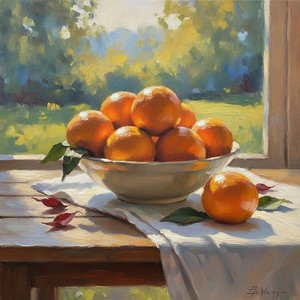
Sun-Drenched Citrus: The Vibrant Beauty of Oranges in Impressionist Masterpieces
Embark on a sensory journey through Impressionist masterpieces. Discover how Renoir and Cézanne captured the vibrant light and luscious textures of sun-drenched oranges in exquisite still life paintings designed to inspire and transform your home.

Moonlight Magic: Capturing the Luminous Glow of Impressionist Nightscapes
Discover the ethereal beauty of Impressionist nightscapes. Explore how masters like Monet and Van Gogh captured moonlight through luminous oil textures. Expert insights for collectors seeking museum-quality, handmade reproductions to transform their homes with timeless nocturnal magic.
Esplora le opere d'arte organizzate per temi, stili e caratteristiche.


