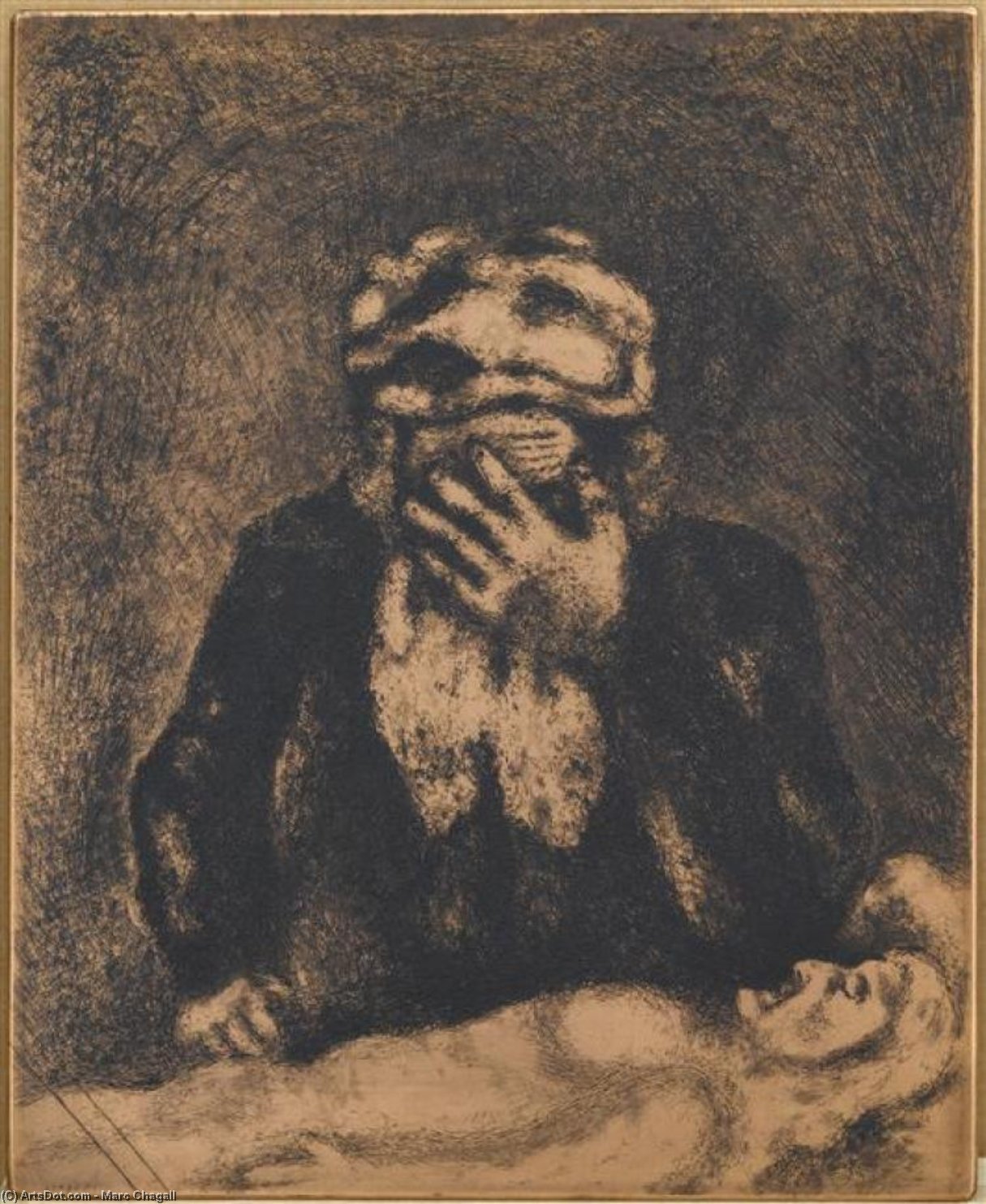
Abraham Weeping for Sarah (Genesis, XIII, 1)
Marc Chagall's etching,
Abraham Weeping for Sarah (Genesis, XIII, 1), is a poignant representation of the biblical narrative where Abraham mourns the death of his beloved wife, Sarah. This piece, created in 1956, exemplifies Chagall's unique blend of Naive Art and Primitivism, styles that he masterfully employed to convey deep emotional and spiritual themes.
The Biblical Context
The story of Abraham weeping for Sarah is rooted in the biblical account found in Genesis. This narrative highlights the profound grief Abraham felt upon losing his wife, a testament to their enduring love and bond. Chagall's interpretation of this moment captures the essence of human sorrow and the spiritual connection that transcends mortality. The etching portrays a scene from the Old Testament where Abraham expresses his anguish over Sarah’s passing—a deeply moving depiction of familial devotion and loss.
Artistic Style and Technique
Chagall's use of Naive Art/Primitivism in
Abraham Weeping for Sarah (Genesis, XIII, 1) is characterized by simplicity, directness, and a focus on emotional expression. The etching technique allows for intricate details and textures, adding depth to the somber atmosphere of the piece. The black and white palette enhances the sense of mourning and solemnity. Chagall’s distinctive style eschews academic conventions, favoring bold lines and flattened perspectives—a deliberate choice that prioritizes conveying feeling over precise realism. This approach aligns perfectly with the biblical tale it illustrates.
Symbolism and Interpretation
The man in the suit with his head covered by a cloth symbolizes Abraham's grief and reverence. His attire suggests a formal occasion, possibly a funeral or a moment of prayer. The background figures are less defined, emphasizing Abraham’s solitary sorrow. This composition reflects Chagall's ability to balance the personal with the universal, making the viewer contemplate their own experiences of loss. The stylized depiction of Sarah—a luminous figure bathed in ethereal light—represents purity and spiritual transcendence, contrasting sharply with Abraham’s earthly despair. These visual elements contribute to a powerful meditation on mortality and faith.
Chagall's Artistic Legacy
Marc Chagall was a prolific artist known for his contributions to various art movements and mediums. His work often blended elements of surrealism, cubism, and folk art, creating a unique visual language.
Marc Chagall, as an artist, is celebrated for his ability to capture the essence of human emotions and spiritual quests. His enduring influence can be seen in countless artists who followed him—a testament to his visionary genius.
To learn more about Naive Art/Primitivism and other styles, visit
The Naïve Art (Primitivism) Art Movement on TopImpressionists.


 Acquista stampa
 Invia
Invia Condividi
 Dettagli opera

 Scarica
 Simili
 Radiografia
 Slideshow


 Scopri di più






































 L'opzione vetro è disponibile solo per dimensioni inferiori a 110 cm



