


 Anteprima in scala reale
 Condividi
 Condividi
 Dettagli
 Guida stampabile

 Scarica
 Articoli simili
 Radiografia
 Slideshow
 Statistiche
Hunters Resting


Discover Martin Johnson Heade’s ‘Hunters Resting,’ a serene 1863 landscape painting. Romanticism meets tranquility in this oil masterpiece – explore its luminous beauty & evocative symbolism.
 Leggi tutto
Scopri Martin Johnson Heade (1819-1904), luminista americano celebre per paesaggi sereni, fiori tropicali e nature morte. Ammira i suoi capolavori riscoperti!
Giclée / Stampe d'arte
Stampa giclée o su tela di qualità museale, con produzione rapida e diverse opzioni di finitura. ( Ordina la riproduzione dipinta a mano Passa all'immagine digitale)




P118B €10

P118H €10

P118W €10

P438Z €10

P508JH €12

P508YH €12

P805H €10

P805Z €10

P919BZ €10

P919G €10

P919XJ €10

P959ZH €10

P968JZ €12

W106C €8

W218G €10

W218JH €8

W218Y €10

W307PJ €10

W316G €10

W316PJ €8

W316Y €10

W398PJ €8

W4111J €10

W500HY €15

W500JH €15

W692G €12

W849H €8

W940BG €15

W953PJ €8




Standard
personalizzato
CM
INCH
Scegli tra le nostre dimensioni predefinite, che rispettano le proporzioni originali dell'opera d'arte.
Loading sizes...

larghezza
altezza
Inserisci la larghezza e l'altezza desiderate, per adattarle alla tua cornice o alla tua parete. Una stampa può essere solo ritagliata, mai resa più grande dell'immagine originale; pertanto, un formato con una forma differente comporterà la perdita di una parte dell'opera. Ti invieremo un mockup digitale da approvare prima di procedere con la stampa. L'immagine mostrata in questa pagina non rappresenta il ritaglio reale — solo il mockup lo mostra.
Consegna in tutto il mondo () in 2 settimane invece delle normali 4/5 settimane. (23 Ottobre)

Spedizione espressa gratuita in tutto il mondo

Tela in lino di alta qualità

Assicurazione completa sulla spedizione

Garanzia di rimborso dei dazi doganali

Garanzia di perfetta fedeltà cromatica

Politica di reso entro 100 giorni (solo per difetti di fabbricazione)

Garanzia di rimborso al 100%

Sconto per acquisti multipli
 L'opzione vetro è disponibile solo per dimensioni inferiori a 110 cm

Hunters Resting
Giclée / Stampe d'arte
Dimensioni della riproduzione
-


Prezzo totale
€ 61
A Moment of Quietude: Martin Johnson Heade’s “Hunters Resting”
Martin Johnson Heade's "Hunters Resting," painted in 1863, isn't merely a landscape; it’s an invitation to pause and contemplate the subtle poetry of nature. This evocative work, now housed at the Museum of Fine Arts, Boston, captures a fleeting moment within the vast expanse of the New England salt marsh – a scene rendered with a luminous quality that speaks volumes about Heade’s mastery of Luminism. The painting depicts two figures, seemingly anonymous and lost in quiet contemplation, seated beside a small, still body of water nestled amongst rolling hills draped in an overcast sky. It's a composition brimming with understated drama, a testament to the artist’s ability to distill profound emotion from the simplest of natural settings.
Heade, born in Pennsylvania and deeply influenced by the Hudson River School, moved beyond the grand vistas often associated with that movement, instead focusing on the intimate details and atmospheric effects of the marshlands. This shift reflects a broader artistic trend – a desire to capture not just what was seen, but also how it *felt*. The muted palette—dominated by soft browns, mossy greens, and hazy blues—creates an atmosphere of tranquility and solitude. The brushstrokes are deliberately loose and visible, contributing to the painting’s sense of immediacy and inviting the viewer to feel as though they're standing within this serene landscape themselves. Notice how Heade uses light not to illuminate a specific subject, but to bathe the entire scene in a diffused glow, suggesting either the pre-dawn or late afternoon hours – times often associated with reflection and introspection.
The Language of Luminism
Heade’s style is quintessential Luminism, an artistic movement characterized by its emphasis on capturing the effects of light and atmosphere. Unlike the more detailed and narrative-driven works of his contemporaries, Heade prioritized creating a sense of luminosity—a shimmering quality that seems to emanate from within the canvas itself. This technique involved layering thin washes of paint, allowing them to dry before adding subsequent layers, resulting in a delicate and almost ethereal effect. The subtle gradations of color and tone create an illusion of depth and distance, drawing the viewer into the scene. The artist’s careful attention to detail—the texture of the grasses, the ripples on the water's surface, the distant hills—is balanced by his willingness to sacrifice precise representation in favor of capturing the overall mood and atmosphere.
Technically, “Hunters Resting” is executed with remarkable skill. Heade’s use of color is particularly noteworthy – he masterfully employs complementary colors (such as blue and orange) to create visual interest and enhance the painting's luminosity. The composition itself is carefully balanced, with the two figures positioned in a way that draws the eye across the canvas. The subtle variations in brushstroke—some areas are more heavily textured than others—add depth and dimension to the scene. It’s a testament to Heade’s understanding of both color theory and painting technique.
Symbolism and Emotional Resonance
Beyond its technical brilliance, “Hunters Resting” is rich in symbolism. The two figures, their faces obscured by shadow, represent humanity's connection to nature—a quiet communion with the vastness and beauty of the natural world. They are not actively engaged in any particular activity; instead, they seem lost in contemplation, suggesting a desire for peace and solitude. The marsh itself – often associated with transition and liminal spaces – further reinforces this theme. The painting evokes feelings of serenity, introspection, and perhaps even melancholy—a recognition of our own mortality within the context of the enduring cycle of nature.
Interestingly, Heade’s fascination with the salt marshes stemmed from his travels to Brazil, where he was captivated by the vibrant colors and textures of the tropical landscape. This experience profoundly influenced his artistic vision, leading him to explore similar themes in his later works. “Hunters Resting” stands as a powerful example of how an artist can transcend geographical boundaries and create universal images that resonate with viewers across cultures and time periods. It’s a painting that invites us to slow down, breathe deeply, and appreciate the quiet beauty of the natural world—a timeless reminder of our place within it.
A Timeless Masterpiece
Reproductions of “Hunters Resting” offer an exceptional opportunity to bring this evocative landscape into your home or office. The luminous quality of the original is faithfully captured in high-resolution prints, allowing you to experience the painting’s beauty and serenity firsthand. Whether displayed as a focal point in a living room or as a calming addition to a workspace, this artwork will undoubtedly serve as a source of inspiration and tranquility for years to come. Consider it not just a decoration, but a window into the artistic vision of Martin Johnson Heade—a master who understood that true beauty lies often in the simplest of moments.
Domande e risposte
L'immagine di "Hunters Resting" di Martin Johnson Heade può essere riprodotta liberamente?
Lo stato del copyright per "Hunters Resting" di Martin Johnson Heade: l'opera è di pubblico dominio - il suo copyright è scaduto. Ciò determina se sia possibile effettuare liberamente riproduzioni dell'immagine.
Cosa rappresenta "Hunters Resting"?
I soggetti di "Hunters Resting" sono landscape, nature, tranquility, reflection, human figures, atmospheric, serene, pastoral.
Posso vedere "Hunters Resting" di Martin Johnson Heade sulla mia parete prima dell'acquisto?
"Hunters Resting" dispone di un'anteprima in realtà aumentata: la pagina Anteprima AR dell'opera ti permette di visualizzarla nel tuo spazio tramite un dispositivo compatibile.
Biografia dell'artista
Primi anni e formazione
Martin Johnson Heade, pittore americano, nacque l'11 agosto 1819 a Lumberville, in Pennsylvania. La sua prima vita fu segnata da una forte inclinazione verso l'arte, che lo portò a studiare sotto la guida di Edward Hicks e possibilmente Thomas Hicks. Questo addestramento fondamentale gettò le basi per i suoi futuri impegni artistici.Carriera Artistica
La carriera artistica di Heade può essere ampiamente suddivisa in diverse fasi, ognuna segnata da un distinto cambiamento nel suo soggetto e stile. Inizialmente si concentrò sulla ritrattistica, con il suo lavoro più noto risalente al 1839. Successivamente viaggiò in Europa, dove fu esposto a varie influenze artistiche.- Il suo lavoro iniziò a mostrare un marcato interesse per la pittura di paesaggi, in particolare dopo aver incontrato artisti della Hudson River School, come John Frederick Kensett e Benjamin Champney.
- I suoi viaggi in Brasile (1863-1864) e i successivi viaggi in Nicaragua, Colombia, Panama e Giamaica (1866 e 1870) influenzarono profondamente il suo lavoro, portando a una serie di piccoli dipinti raffiguranti colibrì.
- Negli anni successivi a St. Augustine, in Florida, Heade si concentrò maggiormente sulla natura morta, in particolare i fiori di magnolia adagiati su panno di velluto.
Stile e Opere Notabili
Lo stile di Martin Johnson Heade è caratterizzato da un approccio romantico ai suoi soggetti, spesso concentrandosi sull'interazione tra luce e ombra. Le sue opere più rinomate includono raffigurazioni delle paludi costiere del New England, che hanno portato alcuni storici a categorizzarlo come pittore luminista.- Le sue opere fanno ora parte di importanti musei e collezioni, inclusa la collezione di Martin Johnson Heade su TopImpressionists.
- Alcuni dei suoi dipinti notevoli, come Forked Tailed Woodnymph, possono essere trovati nella collezione su TopImpressionists.
- Per maggiori informazioni sulla vita e sull'opera di Heade, visita la pagina di Wikipedia su Martin Johnson Heade.
Influenze e Sviluppo Artistico
L’interesse di Heade per i soggetti tropicali fu alimentato almeno in parte dall'impatto del monumentale dipinto di Frederic Edwin Church, "Heart of the Andes" (1859). Heade si discostò dalla tradizione della Hudson River School, che si concentrava su paesaggi grandiosi e topograficamente accurati. Invece, Heade si focalizzò sulla creazione di atmosfere evocative e sull'esplorazione degli effetti della luce, un tratto distintivo del luminismo. La sua evoluzione artistica può essere vista come una transizione dalla ritrattistica all’osservazione attenta della natura, culminando nelle sue celebri rappresentazioni delle paludi costiere e dei fiori esotici.Eredità
Nonostante non sia stato ampiamente riconosciuto durante la sua vita, il lavoro di Martin Johnson Heade ha attirato l'attenzione di studiosi e collezionisti a partire dagli anni '40. Oggi è considerato un importante artista americano, con i suoi dipinti che vengono occasionalmente scoperti in luoghi inaspettati come mercatini delle pulci. La riscoperta del suo talento ha portato ad una maggiore apprezzamento per la sua sensibilità artistica e il suo contributo alla pittura americana del XIX secolo.- Punti chiave:
- Nato: 11 agosto 1819, Lumberville, Pennsylvania
- Morto: 4 settembre 1904
- Opere notevoli: paesaggi delle paludi salmastre, marine, raffigurazioni di uccelli tropicali, fiori di loto e nature morte
- Stile: approccio romantico con un focus su luce e ombra, classificato come pittore luminista
- Collezioni: importanti musei e la collezione Martin Johnson Heade su TopImpressionists

Martin Johnson Heade
1819 - 1904 , Stati Uniti d'America
Informazioni rapide
- Artistic Movement Or Style: Luminismo, Romanticismo
- Artists Who Influenced This Artist:
- Edward Hicks
- Thomas Hicks
- John Frederick Kensett
- Benjamin Champney
- Date Of Birth: 11 agosto 1819
- Date Of Death: 4 settembre 1904
- Full Name: Martin Johnson Heade
- Nationality: Americano
- Notable Artworks:
- Forked Tailed Woodnymph
- Salt Marsh Landscapes
- Magnolia Blossoms on Velvet
- Place Of Birth (City And Country): Lumberville, Stati Uniti
Articoli correlati

Capturing the Soul: The Emotional Magic and Sublime Grandeur of Romantic Landscape Painting
Explore the profound emotional depth of Romantic landscape painting. Discover how masters like Friedrich and Turner captured the sublime through light, shadow, and nature's power in this expert art history retrospective for discerning collectors.

Capturing the Soul of Nature: A Journey Through the Sublime Majesty of American Romanticism
Explore the breathtaking beauty of American Romanticism. Discover how Hudson River School masters captured the sublime spirit of the wilderness through luminous oil landscapes and emotional depth. A journey into the soul of nature for the true art enthusiast.
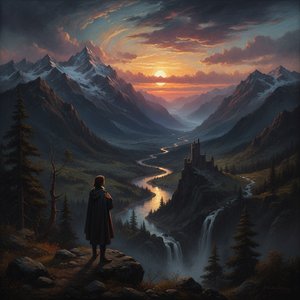
Capturing the Soul: The Emotional Majesty and Sublime Power of Romantic Landscape Painting
Explore the profound emotional depth of Romantic landscape painting. Discover how masters like Turner and Friedrich captured the sublime power of nature through intuition and imagination in this expert art history retrospective.
Esplora le opere d'arte organizzate per temi, stili e caratteristiche.


