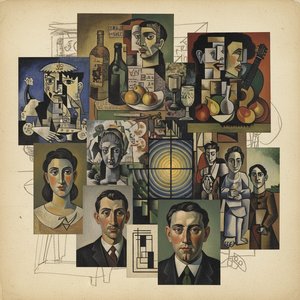
Pablo Picasso: A Revolutionary Artist
Pablo Ruiz y Picasso (1881 – 1973), born in Málaga, Spain, stands as one of the most influential figures in modern art. From his formative years marked by early artistic talent and familial relocation to Barcelona’s vibrant artistic milieu, Picasso relentlessly pursued innovation, reshaping artistic conventions and establishing himself as a pioneer of Cubism alongside Georges Braque.
Early Life and Training (1881-1904)
- Born on October 25, 1881, in Málaga, Picasso demonstrated exceptional aptitude for drawing from childhood. His father, José Ruiz y Blasco, instilled in him a foundational understanding of artistic principles.
- Despite familial hardship following his sister’s untimely death, Picasso persevered at the School of Fine Arts in Barcelona, often challenging academic dogma and prioritizing independent exploration.
The Blue Period (1901-1906)
Characterized by somber hues—primarily blues and greens—the Blue Period reflects Picasso’s preoccupation with themes of poverty, despair, and human suffering. Influenced by Cézanne and Verlaine, this stylistic choice underscores the artist's emotional depth.
The Rose Period (1906-1907)
A shift towards warmer tones—rose hues dominating—marks Picasso’s Rose Period, reflecting a newfound optimism amidst personal relationships. Portraits of his wife Fernande Olivier exemplify this stylistic evolution.
Cubism and Beyond (1907-1973)
Picasso revolutionized art with Cubism alongside Braque, fracturing visual perception into geometric planes and challenging traditional representation. This groundbreaking approach extended beyond painting to sculpture and ceramics, cementing Picasso’s legacy as a transformative force in 20th-century artistic history.
“An Artist” by Pablo Picasso (1967): A Reflection on Creativity
Pablo Picasso's “An Artist,” created in 1967, is a captivating oil painting on canvas measuring 91 x 72 cm. This work represents a fascinating exploration of Naive Art (also known as Primitivism) within the artist’s expansive oeuvre. It offers a poignant glimpse into the mind and emotional state of an artist engaged in his craft.
Style and Technique: Embracing Naive Art
"An Artist" exemplifies Picasso’s foray into Naive Art, characterized by its simplicity, lack of formal training aesthetics, and focus on conveying essence over meticulous detail. Unlike the complex geometric deconstructions of Cubism, this piece adopts a more direct, almost childlike perspective. The brushstrokes are expressive yet controlled, contributing to a sense of immediacy and raw emotion. Picasso’s use of color is notable; the serene blue sky contrasts with the figure's attire and expression, drawing attention to his emotional state. The composition itself is intricate, featuring multiple figures observing or interacting within the scene, adding layers of narrative complexity.
Subject Matter and Symbolism
The central subject of the painting is a man, presumably an artist, depicted playing a violin. His long hair and hat contribute to a bohemian aesthetic. However, it's his facial expression that truly captivates – a palpable sense of sadness or distress emanates from him as he plays. The violin itself can be interpreted as a symbol of artistic expression, but the melancholic portrayal suggests a struggle or burden associated with creativity. The other figures in the background remain somewhat ambiguous, perhaps representing critics, patrons, or simply observers of the artist’s performance. Their presence adds to the painting’s narrative depth, hinting at the pressures and complexities inherent in an artistic life.
Historical Context and Picasso's Artistic Evolution
Created late in Picasso’s career, “An Artist” reflects his ongoing experimentation with different styles and techniques. Having revolutionized art through Cubism, Picasso continually sought new avenues for expression. His exploration of Naive Art demonstrates a desire to return to a more primal form of artistic communication, stripping away the complexities of academic training and embracing a simpler, more direct approach. This period also coincided with a time of personal reflection for Picasso, influencing his thematic choices and emotional depth in his work.
Emotional Impact and Lasting Legacy
"An Artist" is not merely a portrait; it's an exploration of the human condition through the lens of artistic creation. The painting evokes feelings of empathy and introspection, prompting viewers to contemplate the challenges and rewards of pursuing one’s passion. It stands as a testament to Picasso’s enduring legacy – his ability to transcend stylistic boundaries and create works that resonate with audiences across generations. This piece invites contemplation on the nature of art, creativity, and the emotional toll it can take.
Photo Description: The painting is a portrait of a man with long hair, wearing a hat and holding a violin. The man appears to be sad or distressed as he plays the instrument. The background features a blue sky, giving the impression that the scene takes place outdoors. In addition to the main subject, there are several other figures in the painting, including one person on the left side and another on the right side of the image. These figures appear to be engaged in various activities or simply observing the man playing his violin. The overall composition of the painting is quite intricate and captivating, showcasing the artist's skill and creativity.
Size: 91 x 72 cm
Date: 1967
ARTIST INFORMATION:
==================
Artist: Pablo Picasso
Birth Year: 1881
Death Year: 1973
Birth City: Malaga
Birth Country: Spain
Biography:
Pablo Picasso: A Revolutionary Artist
Pablo Ruiz y Picasso (1881 – 1973), born in Málaga, Spain, stands as one of the most influential figures in modern art. From his formative years marked by early artistic talent and familial relocation to Barcelona’s vibrant artistic milieu, Picasso relentlessly pursued innovation, reshaping artistic conventions and establishing himself as a pioneer of Cubism alongside Georges Braque.
Early Life and Training (1881-1904)
- Born on October 25, 1881, in Málaga, Picasso demonstrated exceptional aptitude for drawing from childhood.
- His father, José Ruiz y Blasco, instilled in him a foundational understanding of artistic principles.
The Blue Period (1901-1906)
Characterized by somber hues—primarily blues and greens—the Blue Period reflects Picasso’s preoccupation with themes of poverty, despair, and human suffering. Influenced by Cézanne and Verlaine, this stylistic choice underscores the artist's emotional depth.
The Rose Period (1906-1907)
A shift towards warmer tones—rose hues dominating—marks Picasso’s Rose Period, reflecting a newfound optimism amidst personal relationships. Portraits of his wife Fernande Olivier exemplify this stylistic evolution.
Cubism and Beyond (1907-1973)
Picasso revolutionized art with Cubism alongside Braque, fracturing visual perception into geometric planes and challenging traditional representation. This groundbreaking approach extended beyond painting to sculpture and ceramics, cementing Picasso’s legacy as a transformative force in 20th-century artistic history.
Notable Works: Exploring Picasso's Artistic Universe
- Guernica (1937): A monumental antiwar mural depicting the horrors of the Spanish Civil War.
- Les Demoiselles d’Avignon (1907): Considered a pivotal work in the genesis of Cubism, it depicts five prostitutes with fragmented figures and distorted perspectives.
## Picasso's Influence on Contemporary Art
Picasso’s artistic innovations continue to inspire artists worldwide, shaping movements like Surrealism and Expressionism. His fearless experimentation with form and color remains a benchmark for creative exploration.



 Ordina la riproduzione
 Invia
Invia Condividi
 Dettagli opera

 Scarica
 Simili
 Radiografia
 Slideshow


 Scopri di più






































 L'opzione vetro è disponibile solo per dimensioni inferiori a 110 cm