Café de Royan: Un Frammento Cubista sulla Costa Atlantica
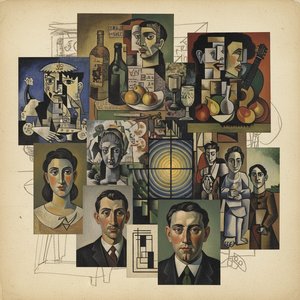
Pablo Picasso’s “Café de Royan” isn't merely a depiction of a seaside bistro; it’s a cornerstone of Cubism, encapsulating the revolutionary spirit of early 20th-century art. Painted in 1940 – a poignant reflection on the artist’s evolving vision amidst wartime anxieties – this oil canvas transcends simple representation, inviting viewers into a fragmented yet harmonious exploration of space and perception.
La Rivoluzione Cubista: Una Nuova Prospettiva
Picasso, alongside Georges Braque, spearheaded Cubism, abandoning traditional perspective to dissect objects into geometric planes. “Café de Royan” exemplifies this radical approach. Instead of striving for realistic depiction, Picasso fractures the building’s façade and figures into interlocking cubes and cylinders, mirroring the influence of Cézanne's explorations of form and volume. This technique isn’t just stylistic; it symbolizes a deliberate rejection of illusionism, prioritizing intellectual engagement over visual comfort—a hallmark of Cubist thought. The artist sought to capture not what *appears* to be there, but rather how the eye perceives it simultaneously from multiple viewpoints.
Colori Vibranti e Composizione Dinamica
Despite its geometric austerity, “Café de Royan” explodes with vibrant hues – reds dominate the roof and interior walls, contrasting sharply with cooler blues and greens that define the surrounding landscape. Picasso’s masterful use of color isn't arbitrary; it contributes to the painting’s dynamism and guides the viewer’s gaze across the composition. The overlapping planes create a sense of depth without resorting to conventional shading, reinforcing the Cubist challenge to traditional spatial representation. Notice how the birds perched atop the building serve as visual anchors, subtly directing attention upwards and adding an element of spontaneity to the scene.
Un Omaggio alla Costa Atlantica e alla Memoria
“Café de Royan” captures a quintessential moment in coastal life—a café overlooking the sea during the summer months. Picasso’s choice of subject matter speaks to his fascination with observation and experimentation, mirroring his earlier explorations of Catalan landscapes. The painting carries an undeniable melancholic undertone, perhaps reflecting Picasso's personal experiences during the turbulent years leading up to World War II. It’s a testament to his ability to distill complex emotions into visual form—a skill that continues to resonate powerfully with audiences today.
Un Eredità Duratura nell'Arte Moderna
Picasso’s influence on subsequent generations of artists is undeniable. “Café de Royan” stands as an enduring symbol of Cubist innovation, demonstrating the transformative potential of artistic experimentation. Its meticulous execution—characterized by layering thin glazes of pigment—further elevates its status as a masterpiece. Consider commissioning a high-quality reproduction to bring this iconic artwork into your home and experience firsthand the captivating beauty of Picasso’s vision.
- Artista: Pablo Picasso
- Nascita: 25 ottobre 1881, Malaga
- Morte: 8 aprile 1973, Parigi
- Paese di nascita: Spagna
- Informazioni aggiuntive: Questo dipinto è stato eseguito nel periodo cubista e rappresenta un punto culminante nella carriera artistica di Picasso.
- Dove vedere l'opera originale: Museo Picasso, Barcelona
- Ulteriori risorse: Wikipedia: Pablo Picasso, WikiArt: Café a Royan



 Preview
 Acquista stampa
 Invia
Invia Condividi
 Dettagli opera

 Scarica
 Simili
 Radiografia
 Slideshow

 Scopri di più






































 L'opzione vetro è disponibile solo per dimensioni inferiori a 110 cm