A Glimpse into Proto-Cubism: Picasso’s Revolutionary Portrait
Pablo Picasso's *Portrait of Man in a Hat*, painted around 1914, is far more than just a likeness; it’s a pivotal work demonstrating the artist’s transition towards – and embodiment of – proto-Cubism. This painting isn’t about capturing a perfect resemblance but rather dissecting perception itself, offering multiple viewpoints simultaneously on a single canvas. It represents a radical departure from traditional portraiture conventions, marking Picasso's decisive step away from representational art toward an experimental aesthetic that would profoundly influence the trajectory of modern art.
Deconstructing Form: Style & Technique
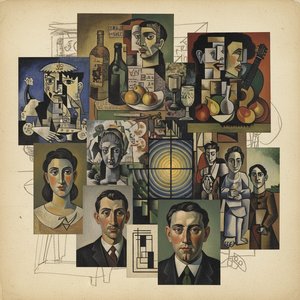
The artwork showcases Picasso’s deliberate move away from traditional portraiture. The subject’s features are fragmented and reassembled in geometric shapes – planes of color intersect and overlap, challenging the viewer’s expectations.
This isn’t an attempt to hide detail; it’s a radical exploration of how we *see*. The muted palette—primarily browns, grays, and ochres—further emphasizes the intellectual nature of the work, shifting focus from vibrant color to structural analysis. The brushwork appears deliberate yet expressive, with visible strokes contributing to the painting's textured surface and dynamic energy. Picasso utilizes a technique characterized by loose impasto – thick layers of paint applied directly onto the canvas – creating palpable physicality and conveying an impression of movement and spontaneity. This approach contrasts sharply with the smooth surfaces favored by earlier artistic traditions.
Influences & Historical Context
This period in Picasso’s career was profoundly influenced by his exposure to African sculpture at the Musée d'Ethnographie du Trocadéro in Paris. He recognized a powerful simplicity and directness in these forms, which resonated with his growing dissatisfaction with Western artistic conventions. Simultaneously, he studied Iberian sculpture, further fueling his interest in geometric abstraction. Proto-Cubism served as a crucial stepping stone towards Analytical Cubism, laying the groundwork for one of the most influential movements in 20th-century art. It directly impacted subsequent styles like Futurism, Suprematism, and Art Deco, establishing Picasso as a true revolutionary. The artistic fervor of the Belle Époque—characterized by optimism and innovation—provided fertile ground for experimentation and challenged established aesthetic norms.
Symbolism & Interpretation
While not overtly symbolic in terms of recognizable imagery, *Portrait of Man in a Hat* embodies a deeper conceptual exploration. The fragmented depiction of the subject’s face can be interpreted as reflecting the complexities of modern identity—the anxieties and uncertainties inherent in navigating an increasingly fractured world.
The hat itself could symbolize social status or perhaps a deliberate attempt to conceal aspects of his personality, representing a barrier between the inner self and external perception. Picasso's masterful manipulation of form and color invites contemplation on themes of psychological depth and artistic innovation.
Emotional Impact & Aesthetic Appeal
Despite its intellectual underpinnings, *Portrait of Man in a Hat* evokes a strong emotional response. The distorted features and unconventional composition create a sense of unease and intrigue—a deliberate provocation designed to unsettle the viewer’s preconceptions about representation. For interior designers seeking to infuse their spaces with artistic sophistication, this piece offers a compelling focal point—its muted tones and abstract form complement contemporary palettes while adding layers of intellectual depth. Collectors recognize it as a cornerstone of modern art history, representing Picasso's groundbreaking contribution to Cubism and cementing his legacy as one of the most influential artists of the 20th century.
Further Exploration
- To learn more about Pablo Picasso and his contributions to modern art:
- Explore other examples of proto-cubist art.



 Anteprima in scala reale
 Ordina la riproduzione dipinta a mano
 Condividi
 Condividi
 Dettagli

 Scarica immagine
 Articoli simili
 Radiografia
 Slideshow

 Leggi tutto






































 L'opzione vetro è disponibile solo per dimensioni inferiori a 110 cm