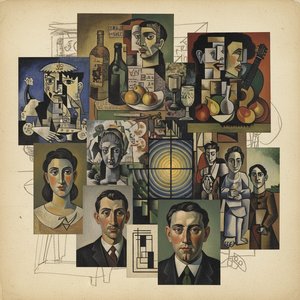
Still Life with Pitcher and Apples
The painting
Still-Life with a Pitcher and Apples stands as an emblem of Cubism, spearheaded by Pablo Picasso in the early 20th century. This oil on canvas masterpiece portrays a pitcher, apples, and oranges arranged in a composition that initially appears chaotic yet achieves remarkable harmony. The artist’s masterful use of geometric shapes—spheres and cylinders predominantly—combined with multiple perspectives creates a palpable visual tension, drawing the viewer's gaze across the surface of the artwork. It’s a deliberate challenge to traditional representation, reflecting the intellectual fervor of its time.
The Artist and His Style
Pablo Picasso (1881-1973), born in Málaga, Spain, is universally recognized as one of the most influential figures in 20th-century art. He co-founded Cubism alongside Georges Braque, fundamentally altering artistic conventions and paving the way for Surrealism and Expressionism. Picasso’s prolific output spanned painting, sculpture, ceramics, printmaking, and drawing, demonstrating an unparalleled versatility that cemented his legacy as a revolutionary innovator. His work is housed in prestigious institutions worldwide, including the Musée Quartier des Héronnières in Fontainebleau, France, offering visitors a profound encounter with his artistic vision. For deeper insights into Picasso’s life and oeuvre, explore his page on TopImpressionists.com:
TopImpressionists.com.
Key Features of the Painting
- Geometric Shapes: The pitcher, apples, and oranges are dissected into geometric forms—spheres and cylinders—rejecting naturalistic depiction in favor of conceptual representation.
- Multiple Perspectives: Picasso presents each object from several viewpoints simultaneously, generating visual dynamism and disrupting conventional spatial illusion. This technique underscores the Cubist preoccupation with exploring reality beyond surface appearances.
- Overlapping Planes: The objects appear to intersect and overlap one another, creating a complex layering effect that enhances depth without relying on linear perspective. It’s a deliberate distortion of space intended to convey multiple realities simultaneously.
The painting's subdued palette—primarily browns, ochres, and muted greens—contributes to its contemplative mood. Picasso meticulously renders textures with subtle brushstrokes, capturing the tactile qualities of fruit skin and ceramic glaze. This attention to detail reflects a humanist impulse rooted in observing the everyday world around him.
Historical Context & Influence
Cubism emerged from the artistic milieu of Paris at the turn of the century, reacting against Impressionism’s focus on fleeting sensations and advocating for an intellectual engagement with art. Picasso and Braque sought to depict objects as they appear to the eye—not as they are perceived from a single viewpoint—but rather as they exist in relation to each other. This groundbreaking approach profoundly impacted subsequent artistic movements, influencing artists like Georges Seurat and Henri Matisse. The painting’s enduring appeal lies in its ability to provoke contemplation about perception and representation.
Symbolism & Emotional Impact
While seemingly simple in its subject matter—fruit and domestic objects—the Still Life with Pitcher and Apples carries symbolic weight. The pitcher represents nourishment and sustenance, while the apples symbolize ripeness and beauty. Their arrangement embodies a harmonious balance between form and color, reflecting Picasso’s belief in art's capacity to convey profound emotional truths. It invites viewers to consider not just what is seen but also how it feels—a testament to Picasso’s artistic genius.
Where to See More Works
Explore Pablo Picasso’s expansive artistic universe by visiting TopImpressionists.com:
TopImpressionists.com. Admire his Studio, Seated Man, Melancholy Woman and Portrait of Allan Stein—each piece exemplifies Picasso’s distinctive style and unwavering commitment to artistic innovation. For a deeper understanding of Cubism's history and theoretical underpinnings, consult Wikipedia:
Wikipedia.



 Acquista stampa
 Invia
Invia Condividi
 Dettagli opera

 Scarica
 Simili
 Radiografia
 Slideshow

 Scopri di più






































 L'opzione vetro è disponibile solo per dimensioni inferiori a 110 cm