

Rappresentato: · Comprese le dimensioni della cornice:
 Anteprima in scala reale
 Invia
Invia Condividi
 Dettagli opera
 Guida
Guida

 Scarica
 Simili
 Radiografia
 Slideshow
 Domande e risposte
 Statistiche

€ 240
Riproduzione a olio fatta a mano
Olio su tela dipinto a mano nelle tue dimensioni e con la tua cornice, realizzato su ordinazione dai nostri artisti. ( Passa alle stampe Passa all'immagine digitale)
Dimensioni
·Formato standard
su misura
CM
INCH
Scegli tra le nostre dimensioni predefinite, che rispettano le proporzioni originali dell'opera d'arte.
Caricamento dimensioni...

larghezza
altezza
Inserisci la larghezza e l'altezza desiderate, per adattarle alla tua cornice o alla tua parete. Trattandosi di un'opera dipinta a mano, in caso di dimensioni con un formato differente, l'artista può estendere leggermente il dipinto oltre i bordi dell'immagine o ritagliare una piccola parte — la scelta spetta a te. Ti invieremo un mockup digitale da approvare prima che la realizzazione abbia inizio. L'immagine mostrata in questa pagina non rappresenta il risultato finale — solo il mockup lo fa.
 Scopri di più
Finitura
·
Bianco €1

Bordi sfumati €1

Bordi estesi €1

P118B €10

P118H €10

P118W €10

P438Z €10

P508JH €12

P508YH €12

P805H €10

P805Z €10

P919BZ €10

P919G €10

P919XJ €10

P959ZH €10

P968JZ €12

W106C €8

W218G €10

W218JH €8

W218Y €10

W307PJ €10

W316G €10

W316PJ €8

W316Y €10

W398PJ €8

W4111J €10

W500HY €15

W500JH €15

W692G €12

W849H €8

W940BG €15

W953PJ €8

H24-GOLD €30

H24-SILVER €30

H36-GOLD €45

H36-SILVER €45
Spedito in un tubo protettivo, pronto per essere incorniciato dal tuo artigiano di fiducia.
Servizi extra
opzionaleCosa includono gli extra?
Esempi di ciò che può essere modificato: Sostituire il volto con la foto del cliente; Aggiungere un animale domestico (ad es. sostituire il gatto con un cane); Inserire un messaggio nascosto nello sfondo; Cambiare il paesaggio o gli elementi dello sfondo.
Dopo l'ordine, il team di TopImpressionists.com invierà un'e-mail al cliente per le istruzioni e fornirà un'anteprima del mockup
Dopo l'ordine, il team di TopImpressionists.com invierà un'e-mail al cliente per le istruzioni e fornirà un'anteprima del mockup
Consegna in tutto il mondo () in 3/4 settimane anziché nelle normali 5 settimane. (9 Novembre). Nessun compromesso sulla qualità.
Vernice protettiva
Didascalia
Dettagli della targhetta in bronzo inciso
This elegant plaque features the artist's name and the title of the artwork, finely engraved for a timeless presentation.
It is made from bronze with a refined, elegant finish. The text is precisely laser-engraved for a sharp and permanent result. Measuring 9x2 cm, the plaque is compact yet easy to read. It's built to be durable and scratch-resistant, offering a professional, museum-quality look. Mounting is simple thanks to the included adhesive backing.
Dettagli della targhetta in acrilico trasparente
The plaque includes essential engraved details such as the artist's name, the title of the artwork, the date it was created, the type of media used-like oil on canvas or watercolor-a brief description of the piece, and a QR code that links to the complete artwork information.
It is crafted from clear acrylic, offering a sleek, modern appearance. The text is UV-engraved in black to ensure strong visual contrast. With a size of 10x15 cm, it ensures optimal readability. It comes equipped with two metal hooks for secure wall mounting. The plaque is designed to be weather-resistant, making it suitable for various environments, and it includes interactive features that work seamlessly with smartphone scanning.
Dettagli della targhetta in acrilico nero
This elegant plaque includes engraved information such as the artist's name, the title of the artwork, the date it was created, the type of media used (like oil on canvas or watercolor), a short description of the artwork, and a QR code for quick access to more information.
The plaque itself is made from refined black acrylic with a premium finish. The text is laser-engraved in white for high contrast and readability. Its size is 10x15 cm, designed to be easy to read. It comes with two metal hooks for professional mounting. The design is sleek and fits any interior style. It is also weather-resistant and durable, with built-in digital integration for mobile compatibility.
L'opzione vetro è disponibile solo per dimensioni inferiori a 110 cm
 L'opzione vetro è disponibile solo per dimensioni inferiori a 110 cm
- Spedizione espressa gratuita in tutto il mondo
- Tela in lino di alta qualità
- Assicurazione completa sulla spedizione
- Garanzia di rimborso dei dazi doganali
- Garanzia di fedeltà cromatica assoluta
- Politica di reso entro 100 giorni (solo per difetti di fabbricazione)
- Garanzia di rimborso al 100%
- Offerta per acquisti multipli


Descrizione del reperto
Scopri 'Bibemus Quarry' di Paul Cézanne: un capolavoro cubista che rivoluziona la rappresentazione del paesaggio. Un'opera iconica tra Impressionismo e avanguardia.
Biografia dell'artista
Esplora l'arte rivoluzionaria di Paul Cézanne (1839-1906), un maestro del Post-Impressionismo che ha colmato il divario tra Impressionismo e Cubismo. Scopri le sue forme geometriche, pennellate uniche, dipinti di natura morta e il suo impatto duraturo sull'arte moderna. #Cézanne #PostImpresionismo
Informazioni sul dipinto
Bibemus Quarry: A Pioneering Vision of Space and Form
Paul Cézanne’s Bibemus Quarry, painted in 1900, stands as a pivotal work—a bridge between the shimmering Impressionism of his earlier years and the revolutionary geometric explorations that would define Cubism. More than simply a landscape depiction, this painting is an intensely personal investigation into the very nature of seeing and representation. Cézanne wasn’t interested in merely mirroring reality; he sought to capture its underlying structure, its essential forms, as if revealing a hidden geometry beneath the surface. The scene depicts a rugged hillside overlooking a quarry near his beloved Aix-en-Provence, dominated by a solitary tree—a subject that would occupy him throughout his career.
The painting’s power lies in Cézanne's masterful manipulation of perspective and color. He abandons the traditional single viewpoint, presenting multiple perspectives simultaneously within a single frame. The trunk of the tree, rendered with thick, tactile brushstrokes, emerges powerfully from the rock face, seemingly pushing through the canvas itself. The background trees and bushes are not blended into a hazy distance but exist as distinct planes, each imbued with its own color and light. This deliberate fragmentation of space—a hallmark of Cézanne’s approach—creates an unsettling yet captivating sense of depth and volume. The use of ochre tones, particularly in the rocks and tree trunk, grounds the composition while the greens and blues of the foliage add vibrancy and a subtle dynamism.
Cubism's Genesis: Breaking Down Reality
Cézanne’s work is widely considered to be the crucial precursor to Cubism. While artists like Pablo Picasso and Georges Braque were developing their own distinct approaches, Cézanne’s exploration of geometric forms—reducing objects to their fundamental shapes – laid the groundwork for this revolutionary movement. He wasn't aiming for a realistic portrayal; instead, he was dissecting nature into its constituent parts, presenting them in an abstracted form that challenged traditional notions of representation. The painting exemplifies this process perfectly: the tree is not simply *seen* as a tree; it’s broken down into cylinders, cones, and planes, reassembled on the canvas in a way that emphasizes its underlying structure.
It's important to note that Cézanne wasn't consciously trying to invent Cubism. Rather, he was driven by an intensely personal desire to understand and depict the world around him in a more truthful and complete manner. His experiments with perspective and form were not merely stylistic choices but rather a profound investigation into the relationship between the artist, the subject, and the viewer. This pursuit of truth through abstraction would profoundly influence generations of artists, including Matisse and Picasso, who acknowledged Cézanne as “the father of us all.”
Proto-Cubism: A Transitional Phase
The period from 1906 to 1910 is often referred to as Proto-Cubism, a crucial transitional phase in Cézanne’s artistic development. During this time, his work became increasingly geometric and simplified, moving further away from Impressionistic color and light. Artists like Juan Gris, Jean Metzinger, and Albert Gleizes were actively experimenting with these new approaches, building upon Cézanne's foundations. The use of conic and cubic shapes becomes more pronounced, creating a sense of dynamism and movement within the composition. The palette also shifts towards a more restrained range of colors, emphasizing form over color.
Bibemus Quarry represents this transitional phase perfectly. While still retaining elements of Impressionism—particularly in its use of light and atmosphere—the painting demonstrates Cézanne’s growing interest in geometric abstraction. It's a work that embodies the tension between tradition and innovation, reflecting the artist’s ongoing quest to redefine the possibilities of representation.
A Legacy of Innovation
The impact of Cézanne’s innovations extended far beyond Cubism, influencing movements such as Futurism, Suprematism, Dada, Constructivism, De Stijl, and Art Deco. He pioneered the use of collage in painting, introducing a new dimension to artistic expression. His emphasis on formal structure and his willingness to challenge traditional conventions paved the way for abstract art and fundamentally altered the course of modern art history. Bibemus Quarry remains a testament to Cézanne’s genius—a powerful and enduring work that continues to inspire artists and captivate viewers today. For those seeking to experience this masterpiece in its full glory, TopImpressionists offers meticulously crafted, hand-painted reproductions that faithfully capture the essence of Cézanne's vision.
Domande e risposte
In che modo il soggetto di "Bibemus Quarry" si relaziona ai temi abituali di Paul Cézanne?
I temi ricorrenti di Paul Cézanne includono impressionism, gauguin, seurat, prehistoric art, transition to cubism, geometric exploration, bridge between styles, nature; "Bibemus Quarry" si concentra su landscape, tree, rock, geometric, perspective, cézanne, quarry, composition.
In che modo tecnica e movimento si fondono in "Bibemus Quarry"?
In "Bibemus Quarry", la tecnica del Olio su tela incontra il movimento Cubism.
Qual è la dimensione di stampa consigliata per "Bibemus Quarry"?
Per "Bibemus Quarry", si consiglia un formato di stampa Grande formato. Sono disponibili altri formati con le stesse proporzioni.
Brevi curiosità e quiz sull'arte
Informazioni su Paul Cézanne

Paul Cézanne
1839 - 1906, Francia
Biografia dell'artista
vitae e influenze
paul cézanne, pittore post-impressionista francese, nacque il 19 gennaio 1839 ad Aix-en-Provence, Francia. La sua giovinezza fu segnata da un forte legame con la famiglia e la sua attività bancaria, che gli fornirono sicurezza finanziaria. Ciò gli permise di concentrarsi sulle sue aspirazioni artistiche senza il peso dello stress finanziario. les nabis, neo-impressionismo e simbolismo influenzarono le prime opere di Cézanne, caratterizzate dall'enfasi sulle forme geometriche e su una tavolozza cromatica limitata. Il suo interesse per le opere di paul gauguin e georges seurat ha ulteriormente consolidato il suo stile post-impressionista.stile artistico e tecniche
L'uso innovativo di Cézanne dei piani cromatici e delle piccole pennellate ripetitive creava campi complessi che esprimevano il suo intenso studio dei soggetti. Il suo approccio spesso esploratorio all’arte portò allo sviluppo di una nuova lingua pittorica, che enfatizzava la struttura sottostante degli oggetti in una composizione.- caratteristiche principali:
- forme geometriche e faccette
- tavolozza cromatica ridotta
- enfasi sull'essenza costruttiva del mondo fisico
- prospettiva multipla e simultaneità
- opere influenti:
- the pond at jas de bouffan (1880)
- portrait of emile zola (1866)
- bosco (1892)
- musei che espongono le opere di Cézanne:
- musée marmottan monet a Parigi, Francia
- the museum of fine arts a Houston, Stati Uniti
eredità e impatto
L'opera pionieristica di Cézanne nel post-impressionismo ha aperto la strada a vari movimenti d’avanguardia, tra cui il cubismo, il fauvismo e il surrealismo. La sua influenza può essere vista nelle opere di pablo picasso, henri matisse e georges braque. L'eredità di Cézanne continua a ispirare artisti ed appassionati d’arte, consolidando il suo posto come figura fondamentale nella storia dell’arte moderna.- movimenti artistici correlati:
- visualizza le opere di Cézanne:
Informazioni rapide su Paul Cézanne
- Artisti Che Hanno Influenzato:
- Paul Gauguin
- Georges Seurat
- Artisti Influenzati:
- Pablo Picasso
- Henri Matisse
- Georges Braque
- Data Di Nascita: 19 gennaio 1839
- Luogo Di Nascita: Aix-en-Provence, Francia
- Movimento Artistico: Post-Impressionismo
- Nazionalità: Francese
- Nome Completo: Paul Cézanne
- Opere Notevoli:
- Lo stagno a Jas de Bouffan
- Ritratto di Émile Zola
- Bosco
- Grandi Bagnanti
Opere simili


Esplora le opere d'arte organizzate per temi, stili e caratteristiche.


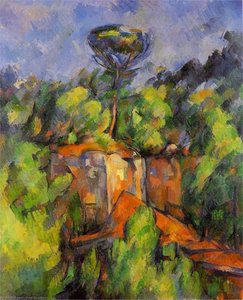
Paul Cézanne
Bibemus Quarry
() ·
Comprese le dimensioni della cornice: · Dipinto a mano con olio su tela di lino
Totale