


 Anteprima in scala reale
 Condividi
 Condividi
 Dettagli
 Guida stampabile

 Scarica
 Articoli simili
 Radiografia
 Slideshow
 Statistiche
Hip, Hip, Hurrah!

 Leggi tutto
Scopri Peder Severin Krøyer (1851-1909), pittore danese maestro del Realismo e dell'Impressionismo, celebre per paesaggi luminosi e opere iconiche come "Estate al tramonto sulla spiaggia meridionale di Skagen".
Giclée / Stampe d'arte
Stampa giclée o su tela di qualità museale, con produzione rapida e diverse opzioni di finitura. ( Ordina la riproduzione dipinta a mano Passa all'immagine digitale)




































Standard
personalizzato
CM
INCH
Scegli tra le nostre dimensioni predefinite, che rispettano le proporzioni originali dell'opera d'arte.
Loading sizes...

larghezza
altezza
Inserisci la larghezza e l'altezza desiderate, per adattarle alla tua cornice o alla tua parete. Una stampa può essere solo ritagliata, mai resa più grande dell'immagine originale; pertanto, un formato con una forma differente comporterà la perdita di una parte dell'opera. Ti invieremo un mockup digitale da approvare prima di procedere con la stampa. L'immagine mostrata in questa pagina non rappresenta il ritaglio reale — solo il mockup lo mostra.
Consegna in tutto il mondo () in 2 settimane invece delle normali 4/5 settimane. (22 Ottobre)

Spedizione espressa gratuita in tutto il mondo

Tela in lino di alta qualità

Assicurazione completa sulla spedizione

Garanzia di rimborso dei dazi doganali

Garanzia di perfetta fedeltà cromatica

Politica di reso entro 100 giorni (solo per difetti di fabbricazione)

Garanzia di rimborso al 100%

Sconto per acquisti multipli
 L'opzione vetro è disponibile solo per dimensioni inferiori a 110 cm

Hip, Hip, Hurrah!
Giclée / Stampe d'arte
Dimensioni della riproduzione
-


Prezzo totale
€ 61
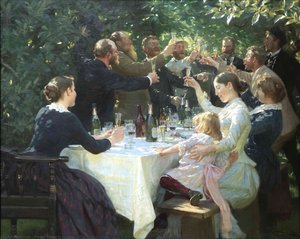
The painting Hip, Hip, Hurrah! by Peder Severin Kroyer is a masterpiece that embodies the spirit of camaraderie and joy. Created in 1888, this oil on canvas painting is a testament to the artistic collaboration and friendship that defined the Skagen colony, a community of artists who gathered in Skagen, Denmark. The painting is now housed at the Goteborgs Konstmuseum in Sweden.
The painting Hip, Hip, Hurrah! is a celebration of life, friendship, and the joy of social gatherings. It is a testament to the artistic collaboration and community that defined the Skagen colony, and it continues to inspire and delight audiences today.
The Painting's Composition
The painting depicts a large group of people gathered around a dining table, celebrating with wine glasses in their hands. There are at least 14 people visible in the scene, some standing while others sit on chairs surrounding the table. The guests appear to be enjoying themselves and engaging in conversation or toasting with their wine glasses. The dining table is set with various items such as wine glasses, cups, bottles, forks, knives, and spoons. Key Features of the painting include:- The use of warm colors to create a cozy atmosphere
- The depiction of everyday life and the joy of social gatherings
- The emphasis on the importance of friendship and community
Artist and Style
Peder Severin Kroyer was a Danish painter known for his vibrant and expressive works. His style is characterized by the use of bold colors and loose brushstrokes, which gives his paintings a sense of energy and spontaneity. Kroyer's work is often associated with the Skagen colony, where he spent many summers painting and socializing with other artists. To learn more about Peder Severin Kroyer and his works, visit https://TopImpressionists.com. You can also explore the Goteborgs Konstmuseum collection and learn more about the painting Hip, Hip, Hurrah! on https://TopImpressionists.com.The painting Hip, Hip, Hurrah! is a celebration of life, friendship, and the joy of social gatherings. It is a testament to the artistic collaboration and community that defined the Skagen colony, and it continues to inspire and delight audiences today.
Domande e risposte
"Hip, Hip, Hurrah!" di Peder Severin Kroyer è di pubblico dominio?
"Hip, Hip, Hurrah!" di Peder Severin Kroyer è di pubblico dominio - il suo copyright è scaduto. Questo stato determina le modalità con cui l'immagine dell'opera può essere riprodotta.
I colori di "Hip, Hip, Hurrah!" appaiono intensi o delicati?
"Hip, Hip, Hurrah!" di Peder Severin Kroyer mostra un'intensità cromatica Monochromatic.
Chi ha realizzato "Hip, Hip, Hurrah!" e in quale anno?
Peder Severin Kroyer ha realizzato "Hip, Hip, Hurrah!" nel 1888.
Opere correlate




Biografia dell'artista
A Life Painted in Light: The World of Peder Severin Krøyer
Peder Severin Krøyer, a name perhaps less instantly recognizable than some of his Impressionist contemporaries, nevertheless occupies a pivotal position within Scandinavian art. Born in Stavanger, Norway, on 23 July 1851 to Ellen Cecilie Gjesdal. He was raised by Gjesdal’s sister, Bertha Cecilie (born 1817) and brother-in-law, the Danish zoologist Henrik Nikolai Krøyer, after his mother was judged unfit to care for him. This unusual upbringing instilled in him a profound appreciation for observation and precision—qualities that would profoundly shape his artistic approach. While details of his earliest years remain somewhat elusive, it’s clear that an aptitude for art was nurtured from a young age, leading to enrollment at the Royal Danish Academy of Art at just fourteen. He quickly distinguished himself, demonstrating a natural talent that promised a successful career. His formal artistic education began at the Academy in Copenhagen where he studied under Frederik Vermehren—a formative experience that cemented his commitment to mastering technique and exploring diverse stylistic possibilities. It was during this period that Krøyer honed his skills as a portrait painter, securing commissions that established him as a respected artist within Danish society. He excelled at capturing likenesses with remarkable accuracy, reflecting the prevailing aesthetic sensibilities of the time—a focus on realism tempered by an awareness of artistic conventions.From Realism to the Shifting Sands of Impressionism
Krøyer’s artistic journey began firmly rooted in realism, particularly portraiture – a genre highly esteemed and financially viable during his formative years. He excelled at capturing likenesses with remarkable accuracy, reflecting the prevailing aesthetic sensibilities of the time—a focus on realism tempered by an awareness of artistic conventions. However, the winds of change were blowing across Europe, carrying with them the revolutionary ideas of Impressionism. Krøyer was not immune to their allure. Several trips to Paris exposed him to the groundbreaking work of Monet, Renoir, Degas, and others, artists who dared to abandon traditional techniques in favor of capturing fleeting moments of light and atmosphere. He absorbed these influences, gradually incorporating them into his own style. This wasn’t a wholesale adoption, however; Krøyer didn't simply replicate Impressionism. Instead, he synthesized it with his existing realist training, creating a distinctive aesthetic that balanced meticulous observation with an evocative sense of mood and transience. He continued to travel throughout his life, constantly drawing inspiration from foreign artists and cultures. His presence in Italy was attested to Ravello in 1890, where he spent considerable time pursuing his artistic interests and cultivating relationships with fellow artists. He married Marie Triepcke in 1889, who herself was a talented painter and frequent subject in his work. It was at Skagen that Krøyer truly found his voice, producing some of his most iconic paintings – scenes of beach life, fishermen at work, and intimate portraits of his fellow artists. Summer Evening on Skagen Sønderstrand, perhaps his most famous work, exemplifies this period; it's a masterful depiction of light, atmosphere, and the camaraderie of the artistic circle. The painting is not merely a representation of a scene but an evocation of a feeling – a sense of peace, belonging, and the ephemeral beauty of summer.Skagen: A Colony of Light and Inspiration
The turning point in Krøyer’s career – and arguably the period for which he is most celebrated – came with his discovery of Skagen, a remote fishing village on the northern tip of Denmark. He first arrived there in 1882, drawn by the dramatic coastal landscapes and the unique quality of light that bathed the region. Skagen quickly became more than just a location; it was an artistic haven, attracting a vibrant colony of painters, writers, and intellectuals. Krøyer became central to this community, forging close friendships with artists like Michael and Anna Ancher, and writer Holger Drachmann. He married Marie Triepcke in 1889, who herself was a talented painter and frequent subject in his work. It was at Skagen that Krøyer truly found his voice, producing some of his most iconic paintings – scenes of beach life, fishermen at work, and intimate portraits of his fellow artists. Summer Evening on Skagen Sønderstrand, perhaps his most famous work, exemplifies this period; it's a masterful depiction of light, atmosphere, and the camaraderie of the artistic circle. The painting is not merely a representation of a scene but an evocation of a feeling – a sense of peace, belonging, and the ephemeral beauty of summer. ## Later Years and Enduring Legacy The final years of Krøyer’s life were marked by personal tragedy and declining health. His marriage to Marie deteriorated, culminating in divorce in 1905. Simultaneously, he began to suffer from failing eyesight, a devastating blow for any artist but particularly poignant for one so dedicated to capturing the nuances of light. Despite these challenges, Krøyer continued to paint, demonstrating remarkable resilience and determination. He adapted his technique to accommodate his diminishing vision, even joking that losing an eye had somehow improved the sight in his remaining one. He died in 1909 at Skagen, leaving behind a rich artistic legacy. While he may not have achieved the same international renown as some of his Impressionist peers, Peder Severin Krøyer remains a towering figure in Scandinavian art. His paintings offer a unique window into a specific time and place – the vibrant artistic community of Skagen and the serene beauty of the Danish coastline. He masterfully blended realism with impressionistic techniques, creating works that are both visually stunning and emotionally resonant.
Peder Severin Kroyer
1851 - 1909 , Norvegia
Informazioni rapide
- Artistic Movement Or Style: Realism, Impressionism
- Artists Who Influenced This Artist: ['Claude Monet']
- Date Of Birth: 1851
- Date Of Death: 1909
- Full Name: Peder Severin Krøyer
- Nationality: Danish
- Notable Artworks:
- Hip, Hip, Hurrah!
- Summer Day at Skagen
- Place Of Birth: Stavanger, Norway