

 Anteprima in scala reale
 Invia
Invia Condividi
 Dettagli opera
 Guida
Guida

 Scarica
 Simili
 Radiografia
 Slideshow
 Q&A
Q&A Statistiche
Chepstow Castle


Philip Wilson Steer's "Chepstow Castle" captures the majestic British landscape with atmospheric watercolors. Explore this iconic work of Impressionist art, showcasing the castle and River Wye.
 Espandi i dettagli
Scopri Philip Wilson Steer (1860-1942), pittore impressionista britannico di paesaggi e marine. Esplora le sue opere illuminate dall'influenza di Manet & Whistler, ora nelle collezioni Tate e Uffizi.
Giclée / Stampe d'arte
Stampa giclée o su tela di qualità museale, con produzione rapida e diverse opzioni di finitura. ( Acquista il dipinto realizzato a mano Passa all'immagine digitale)




P118B €10

P118H €10

P118W €10

P438Z €10

P508JH €12

P508YH €12

P805H €10

P805Z €10

P919BZ €10

P919G €10

P919XJ €10

P959ZH €10

P968JZ €12

W106C €8

W218G €10

W218JH €8

W218Y €10

W307PJ €10

W316G €10

W316PJ €8

W316Y €10

W398PJ €8

W4111J €10

W500HY €15

W500JH €15

W692G €12

W849H €8

W940BG €15

W953PJ €8




Formato standard
su misura
CM
INCH
Scegli tra le nostre dimensioni predefinite, che rispettano le proporzioni originali dell'opera d'arte.
Loading sizes...

larghezza
altezza
Inserisci la larghezza e l'altezza desiderate, per adattarle alla tua cornice o alla tua parete. Una stampa può essere solo ritagliata, mai resa più grande dell'immagine originale; pertanto, un formato con una forma differente comporterà la perdita di una parte dell'opera. Ti invieremo un mockup digitale da approvare prima di procedere con la stampa. L'immagine mostrata in questa pagina non rappresenta il ritaglio reale — solo il mockup lo mostra.
Consegna in tutto il mondo () in 2 settimane invece delle normali 4/5 settimane. (31 Ottobre)

Spedizione espressa gratuita in tutto il mondo

Tela in lino di alta qualità

Assicurazione completa sulla spedizione

Garanzia di rimborso dei dazi doganali

Garanzia di fedeltà cromatica assoluta

Politica di reso entro 100 giorni (solo per difetti di fabbricazione)

Garanzia di rimborso al 100%

Offerta per acquisti multipli
 L'opzione vetro è disponibile solo per dimensioni inferiori a 110 cm

Chepstow Castle
Giclée / Stampe d'arte
Dimensioni riproduzione
-


Prezzo finale calcolato
€ 61
The Canvas as a Window: Philip Wilson Steer’s Chepstow Castle
Philip Wilson Steer's "Chepstow Castle" isn’t merely a depiction of a medieval fortress; it’s an immersion into the very essence of the Welsh landscape and the evocative power of memory. Painted in 1905, this watercolour captures more than just the physical structure of Chepstow Castle perched dramatically upon its limestone cliffs overlooking the River Wye. Instead, Steer offers us a shimmering, almost dreamlike vision—a testament to his profound understanding of light, atmosphere, and the enduring connection between man and nature. The castle itself, rendered with delicate washes of grey and ochre, seems to dissolve into the misty backdrop, becoming less a solid monument and more a spectral presence within the scene.
Steer’s artistic journey was one of constant evolution. Initially influenced by French Impressionism – particularly Manet and Whistler – he later sought inspiration in the works of John Constable and J.M.W. Turner, embracing a style that prioritized capturing fleeting moments and atmospheric effects over precise detail. This shift is powerfully evident here; the painting isn’t concerned with photographic accuracy but rather with conveying a specific mood—a sense of quiet contemplation and timelessness. The artist's deliberate blurring of edges and his masterful use of color create an ethereal quality, inviting the viewer to step into the scene and experience it as if they were standing beside the river themselves.
The Influence of Turner and Constable: A Return to English Roots
Steer’s decision to revisit the styles of Constable and Turner was a deliberate one, representing a conscious move away from the Parisian art world and back towards his British heritage. Constable's focus on the rural landscape—particularly the interplay of light and shadow in fields and waterways—provided Steer with a model for capturing the subtle nuances of the Welsh countryside. Similarly, Turner’s exploration of atmospheric perspective and his ability to evoke mood through color informed Steer’s approach to depicting the misty Wye Valley. The painting's silvery palette, reminiscent of Turner’s seascapes, suggests a sense of mystery and melancholy, while the composition echoes Constable’s emphasis on capturing the beauty of ordinary subjects.
Notably, Steer’s work during this period was heavily influenced by his travels in search of the picturesque. He sought out sites that were popular with eighteenth-century travelers—locations where the natural world could be experienced as a sublime and awe-inspiring spectacle. This pursuit is vividly reflected in "Chepstow Castle," which captures not just the castle itself but also the surrounding landscape, creating a harmonious whole. The inclusion of the River Wye, rendered with delicate washes of blue and grey, adds to the painting’s sense of tranquility and timelessness.
Symbolism and Emotional Resonance
Beyond its purely visual qualities, "Chepstow Castle" is rich in symbolic meaning. The castle itself represents not only a physical structure but also a symbol of power, history, and resilience—a reminder of the enduring legacy of Norman England in Wales. The misty atmosphere surrounding the castle evokes a sense of nostalgia and longing, suggesting that the past is never truly gone but continues to resonate within the present. The figures on the boats add a human element to the scene, hinting at the ongoing connection between people and place.
Steer’s masterful use of light—particularly its ability to transform the landscape—creates an emotional resonance that transcends mere representation. The painting evokes a sense of quiet contemplation and invites the viewer to reflect on their own relationship with history, memory, and the natural world. It's a piece that speaks not just to the eye but also to the heart, offering a glimpse into the artist’s profound understanding of beauty and its power to inspire.
Domande e risposte
Qual è l'atmosfera generale di "Chepstow Castle" di Philip Wilson Steer?
"Chepstow Castle" emana un'atmosfera Calm.
Che atmosfera saprebbe donare Chepstow Castle a un ambiente?
"Chepstow Castle" di Philip Wilson Steer emana un'atmosfera Calm ed è ideale per un Living Room. Il mood rappresenta l'emozione che l'opera dona allo spazio circostante.
Quale soggetto e quale atmosfera si incontrano in "Chepstow Castle" di Philip Wilson Steer?
"Chepstow Castle" mostra castle, river, landscape, wales, boats, 1905, steer, e l'atmosfera che ne scaturisce è Calm.
Opere simili


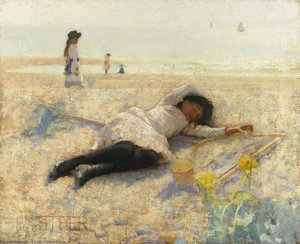


Biografia dell'artista
Gli Albori di un Maestro: Vita e Formazione di Philip Wilson Steer
Philip Wilson Steer, nato a Birkenhead nel 1860, incarnò una nuova sensibilità artistica in un’Inghilterra ancora legata alla tradizione. La sua infanzia, trascorsa inizialmente nella vivace cittadina portuale, fu presto segnata da un trasferimento nella campagna del Monmouthshire, dove la famiglia si stabilì a Whitchurch. Questo contatto primario con la natura inglese avrebbe permeato profondamente la sua arte, diventando una fonte inesauribile di ispirazione. La formazione scolastica iniziale presso l’Hereford Cathedral School fornì le basi culturali necessarie, ma fu l'arte che lo chiamava insistentemente. Steer intraprese studi formali alla Gloucester School of Art e successivamente alle South Kensington Drawing Schools, affinando le sue capacità tecniche e sviluppando un occhio attento all’osservazione del mondo circostante. Tuttavia, il vero punto di svolta nella sua carriera artistica fu il trasferimento a Parigi nel 1882. Lì, presso l'Académie Julian e poi sotto la guida di Alexandre Cabanel all'École des Beaux Arts, Steer entrò in contatto con le avanguardie artistiche del momento, assorbendo le influenze dell’Impressionismo e scoprendo un nuovo modo di concepire la pittura.L’Influenza Parigina e l’Affermazione dello Stile
Parigi fu per Steer una rivelazione. L'incontro con opere di artisti come Édouard Manet e James McNeill Whistler lo segnò profondamente, aprendogli gli occhi a nuove possibilità espressive. Whistler, in particolare, con la sua ricerca di armonia cromatica e l’attenzione alla composizione, esercitò un'influenza duratura sul suo stile. Steer non si limitò ad imitare i maestri francesi, ma seppe rielaborare le loro innovazioni alla luce della propria sensibilità inglese. Tornato a Londra, iniziò a sviluppare uno stile distintivo, caratterizzato da una pennellata sciolta e vibrante, un’attenzione particolare agli effetti di luce e atmosfera, e una predilezione per i soggetti en plein air. Le sue prime opere rivelano già questa ricerca di immediatezza e freschezza, catturando momenti fugaci della vita quotidiana e paesaggi marini avvolti in una luce argentea e traslucida. Opere come The Music Room, realizzata durante il suo periodo formativo, dimostrano la sua precoce maestria nella composizione e nell’uso del colore.Il New English Art Club e l'Impegno per l'Arte Moderna
Steer non fu solo un pittore talentuoso, ma anche un instancabile promotore dell'arte moderna in Gran Bretagna. Consapevole della necessità di creare uno spazio espositivo indipendente dai rigidi canoni accademici, nel 1886 partecipò attivamente alla fondazione del New English Art Club (NEAC). Questo gruppo di artisti progressisti si proponeva di dare visibilità alle nuove tendenze artistiche, promuovendo l'innovazione e la sperimentazione. Steer espose regolarmente con il NEAC, contribuendo a diffondere le idee dell’Impressionismo in un contesto ancora ostile alla modernità. La sua partecipazione all'Esposizione Impressionista di Londra del 1889 fu un momento cruciale per l'affermazione di questo movimento artistico nel Regno Unito. Parallelamente all'attività espositiva, Steer si dedicò anche all’insegnamento, diventando docente alla Slade School of Art, dove influenzò generazioni di giovani artisti con il suo approccio innovativo e la sua passione per la pittura en plein air.Evoluzione Stilistica e Eredità Duratura
Nel corso della sua lunga carriera, lo stile di Philip Wilson Steer subì un’evoluzione graduale. Pur rimanendo fedele ai principi dell'Impressionismo, egli incorporò elementi della pittura inglese tradizionale, rivelando un profondo apprezzamento per il patrimonio artistico del suo paese. I suoi paesaggi e le sue marine divennero sempre più caratterizzati da una maggiore solidità formale e da una pennellata più controllata, pur mantenendo la freschezza cromatica e l'attenzione alla luce che lo avevano contraddistinto fin dall’inizio. Opere come Girls Running: Walberswick Pier, con la sua vivace rappresentazione di una scena balneare, e The Teme at Ludlow, un paesaggio sereno e contemplativo, testimoniano questa maturità artistica. Steer continuò a dipingere fino al 1940, quando problemi di salute lo costrinsero ad abbandonare l'attività. Morì nel 1942 all’età di 81 anni, lasciando un’eredità duratura che continua a ispirare artisti e appassionati d’arte in tutto il mondo. Le sue opere sono oggi conservate in importanti musei come la Tate Gallery e la Uffizi Gallery, testimoniando il suo ruolo fondamentale nella storia dell'arte britannica.
Philip Wilson Steer
1860 - 1942 , Regno Unito
Dettagli rapidi
- Artisti Che Lo Influenzarono:
- Manet
- Whistler
- Constable
- Turner
- Artisti/Movimenti Influenzati: ['Impressionismo britannico']
- Data Di Morte: 18 marzo 1942
- Data Di Nascita: 28 dicembre 1860
- Luogo Di Nascita: Birkenhead, Regno Unito
- Movimento Artistico: Impressionismo
- Nazionalità: Britannico
- Nome Completo: Philip Wilson Steer
- Opere Notevoli:
- The Music Room
- Girls Running
- Convalescent
- The Teme at Ludlow
Articoli correlati

Capturing the Light: A Journey Through the Ethereal Magic of Impressionism and Post-Impressionism
Embark on a cultural journey through the luminous world of Impressionism. Discover the profound beauty of Monet, Van Gogh, and Cézanne through expert art history insights and explore how to bring these timeless masterpieces into your home with museum-quality hand-painted reproductions.
Esplora le opere d'arte organizzate per temi, stili e caratteristiche.


