

Shown: · With its frame:
 Anteprima in scala reale
 Invia
Invia Condividi
 Dettagli opera
 Guida
Guida

 Scarica
 Simili
 Radiografia
 Slideshow
 Q&A
Q&A Statistiche
 Acrylic On Canvas
- WallArt
- German Romanticism
 1809
1809- 19th Century
 225.0 x 189.0 cm
 Hamburger Kunsthalle
€ 239
Riproduzione a olio fatta a mano
Olio su tela dipinto a mano nelle tue dimensioni e con la tua cornice, realizzato su ordinazione dai nostri artisti. ( Passa alle stampe Passa all'immagine digitale)
Size
·Formato standard
su misura
CM
INCH
Scegli tra le nostre dimensioni predefinite, che rispettano le proporzioni originali dell'opera d'arte.
Loading sizes...

larghezza
altezza
Inserisci la larghezza e l'altezza desiderate, per adattarle alla tua cornice o alla tua parete. Trattandosi di un'opera dipinta a mano, in caso di dimensioni con un formato differente, l'artista può estendere leggermente il dipinto oltre i bordi dell'immagine o ritagliare una piccola parte — la scelta spetta a te. Ti invieremo un mockup digitale da approvare prima che la realizzazione abbia inizio. L'immagine mostrata in questa pagina non rappresenta il risultato finale — solo il mockup lo fa.
 Scopri di più
Finish
·
White €1

Blurside €1

Extended €1

P118B €10

P118H €10

P118W €10

P438Z €10

P508JH €12

P508YH €12

P805H €10

P805Z €10

P919BZ €10

P919G €10

P919XJ €10

P959ZH €10

P968JZ €12

W106C €8

W218G €10

W218JH €8

W218Y €10

W307PJ €10

W316G €10

W316PJ €8

W316Y €10

W398PJ €8

W4111J €10

W500HY €15

W500JH €15

W692G €12

W849H €8

W940BG €15

W953PJ €8

H24-GOLD €30

H24-SILVER €30

H36-GOLD €45

H36-SILVER €45
Shipped in a protective tube, ready for your own framer.
Above 105 cm the frame is shipped as a kit for a professional framer — read the details.
Extras
optionalWhat do the extras include?
Examples of what can be changed: Replace face with customer photo; Add pet (e.g., replace cat with dog); Include hidden message in background; Change background landscape or elements.
After order, TopImpressionists.com team will email client for instructions and provide a mockup preview
After order, TopImpressionists.com team will email client for instructions and provide a mockup preview
Consegna in tutto il mondo () in 3/4 settimane anziché nelle normali 5 settimane. (31 Ottobre). Nessun compromesso sulla qualità.
Vernice protettiva
Didascalia
Dettagli della targhetta in bronzo inciso
This elegant plaque features the artist's name and the title of the artwork, finely engraved for a timeless presentation.
It is made from bronze with a refined, elegant finish. The text is precisely laser-engraved for a sharp and permanent result. Measuring 9x2 cm, the plaque is compact yet easy to read. It's built to be durable and scratch-resistant, offering a professional, museum-quality look. Mounting is simple thanks to the included adhesive backing.
Dettagli della targhetta in acrilico trasparente
The plaque includes essential engraved details such as the artist's name, the title of the artwork, the date it was created, the type of media used-like oil on canvas or watercolor-a brief description of the piece, and a QR code that links to the complete artwork information.
It is crafted from clear acrylic, offering a sleek, modern appearance. The text is UV-engraved in black to ensure strong visual contrast. With a size of 10x15 cm, it ensures optimal readability. It comes equipped with two metal hooks for secure wall mounting. The plaque is designed to be weather-resistant, making it suitable for various environments, and it includes interactive features that work seamlessly with smartphone scanning.
Dettagli della targhetta in acrilico nero
This elegant plaque includes engraved information such as the artist's name, the title of the artwork, the date it was created, the type of media used (like oil on canvas or watercolor), a short description of the artwork, and a QR code for quick access to more information.
The plaque itself is made from refined black acrylic with a premium finish. The text is laser-engraved in white for high contrast and readability. Its size is 10x15 cm, designed to be easy to read. It comes with two metal hooks for professional mounting. The design is sleek and fits any interior style. It is also weather-resistant and durable, with built-in digital integration for mobile compatibility.
L'opzione vetro è disponibile solo per dimensioni inferiori a 110 cm
 L'opzione vetro è disponibile solo per dimensioni inferiori a 110 cm
- Spedizione espressa gratuita in tutto il mondo
- Tela in lino di alta qualità
- Assicurazione completa sulla spedizione
- Garanzia di rimborso dei dazi doganali
- Garanzia di fedeltà cromatica assoluta
- Politica di reso entro 100 giorni (solo per difetti di fabbricazione)
- Garanzia di rimborso al 100%
- Offerta per acquisti multipli


Descrizione del reperto
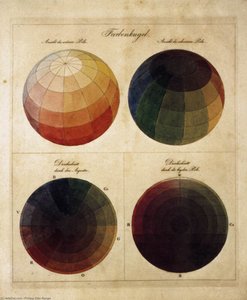
Experience 'Colour Spheres' by Philipp Otto Runge – a mesmerizing 1809 engraving depicting vibrant color spheres arranged in a harmonious circular design. A captivating piece of Romantic art.
Biografia dell'artista
Philipp Otto Runge (1777-1810) è stato un pittore romantico tedesco celebre per i suoi paesaggi simbolici, i ritratti e la teoria del colore ('Sfera del Colore'). Scopri la sua arte mistica e la sua influenza duratura.
About the painting
A Symphony of Color: Philipp Otto Runge’s “Colour Spheres”
Philipp Otto Runge's "Colour Spheres," painted in 1809, isn’t merely a depiction of spheres; it’s an intensely personal and profoundly symbolic exploration of color theory, spirituality, and the very essence of perception. Created during a pivotal moment in German Romanticism – a period grappling with tradition versus innovation, reason versus emotion – Runge sought to move beyond the constraints of academic painting and forge a new visual language rooted in his own deeply felt inner world. The work, now housed within the Kunsthalle in Hamburg, Germany, is a testament to this ambition, radiating an almost palpable sense of contemplative energy.
The composition itself is deceptively simple: four distinct spheres dominate the canvas, each imbued with a unique chromatic harmony. These aren’t static objects; they appear to pulse with light and movement, their surfaces shimmering with subtle gradations of color. Runge masterfully employs a technique reminiscent of both pastel drawing and early Impressionism – delicate layering of translucent washes creates an ethereal quality, while careful attention to value and hue establishes a remarkable sense of depth and luminosity. The spheres aren’t rendered with photographic realism; instead, they are idealized forms, suggesting a connection to the divine or the abstract realms of consciousness. The choice of materials—engraving media—contributes to this luminous effect, allowing for a richness of tone rarely achieved with oil paint alone.
The Roots of Color Theory and Spiritual Symbolism
Runge’s fascination with color stemmed from his deep engagement with the philosophy of Jakob Böhme, a 17th-century German mystic who believed that colors possessed inherent spiritual significance. Böhme posited that each hue corresponded to a specific stage of human development or a particular aspect of the divine. Runge sought to translate these esoteric ideas into visual form, believing that color could be used to unlock deeper levels of understanding and experience. His work reflects this intellectual pursuit, moving beyond mere representation to become a vehicle for conveying complex philosophical concepts.
The arrangement of the spheres themselves is laden with symbolic meaning. The central sphere, predominantly red, often represents passion, energy, and earthly existence – the realm of the senses. The green sphere embodies growth, harmony, and connection to nature. Blue signifies intellect, contemplation, and the spiritual realm. Yellow, positioned furthest from the viewer, evokes joy, enlightenment, and divine grace. The circular arrangement suggests a cyclical process—a journey through different states of consciousness or stages of life. It’s important to note that Runge's color theory was radically different from prevailing scientific understanding at the time; he prioritized subjective experience over objective measurement.
A Dialogue with Goethe and the Romantic Spirit
Runge’s work resonated deeply with his contemporary, Johann Wolfgang von Goethe, who shared a profound interest in color theory. The two artists engaged in extensive correspondence, exchanging ideas about the nature of perception and the expressive potential of color. Indeed, Runge's exploration of color was heavily influenced by Goethe’s theories on optics and aesthetics. This intellectual exchange highlights the vibrant artistic and philosophical ferment of the early 19th century – a period marked by a renewed interest in spirituality, emotion, and the power of individual experience.
Furthermore, “Colour Spheres” embodies the core tenets of German Romanticism: an emphasis on intuition, imagination, and the sublime. It rejects the rationalism of the Enlightenment in favor of a more subjective and emotionally charged approach to art. The painting’s evocative atmosphere—its sense of mystery, wonder, and spiritual yearning—captures the essence of this artistic movement perfectly. It invites the viewer not simply to *see* the colors but to *feel* them, to connect with their own inner world.
Collecting a Timeless Masterpiece
Reproductions of “Colour Spheres” offer a remarkable opportunity to bring Runge’s visionary aesthetic into any interior space. The delicate layering and luminous quality of the original are faithfully reproduced in high-quality prints, allowing the painting's subtle nuances to shine through. Whether displayed as a statement piece or incorporated into a more restrained color scheme, this artwork will undoubtedly serve as a focal point, sparking conversation and inspiring contemplation. Consider commissioning a hand-painted reproduction – a truly unique and authentic representation of this seminal work of German Romantic art.
Domande e risposte
Qual è l'uso consigliato per una stampa di "Colour Spheres"?
L'uso consigliato per una stampa di "Colour Spheres" è Statement.
Quanto è marcato il contrasto in "Colour Spheres" di Philipp Otto Runge?
Il contrasto chiaroscurale di "Colour Spheres" è registrato come Statement. Il contrasto descrive quanto marcata sia la differenza tra le aree chiare e quelle scure.
È possibile visualizzare un'anteprima in realtà aumentata di "Colour Spheres"?
La pagina Anteprima in AR di "Colour Spheres" di Philipp Otto Runge utilizza la realtà aumentata per visualizzare l'opera d'arte nel tuo spazio, tramite un dispositivo compatibile.
Quick facts and art quiz
About Philipp Otto Runge

Philipp Otto Runge
1777 - 1810, Germania
Biografia dell'artista
Una Vita Illuminata dalla Visione Interiore
Philipp Otto Runge, un nome che evoca lo spirito nascente del Romanticismo tedesco, fu un artista la cui vita tragicamente breve smentì la profonda profondità e originalità della sua visione. Nato nel 1777 a Wolgast, all'epoca parte della Pomerania svedese, in una famiglia dedita alla costruzione navale e legata alla nobiltà prussiana, i primi anni di Runge furono segnati dalla malattia, favorendo un temperamento contemplativo che avrebbe profondamente influenzato le sue ricerche artistiche. Questo periodo di fragilità fisica coltivò anche un precoce talento per le *sagome ritagliate*, una pratica che continuò per tutta la vita – una testimonianza della sua innata capacità di distillare forma ed emozione con notevole precisione. La sua formazione formale iniziò più tardi rispetto alla maggior parte, inizialmente attraverso un apprendistato commerciale ad Amburgo presso l'azienda del fratello Daniel. Tuttavia, il richiamo dell'espressione artistica si rivelò troppo forte, portandolo a Copenaghen nel 1799 per studiare pittura con Jens Juel. Questo segnò il vero inizio del percorso di Runge verso la consacrazione come uno dei più innovativi e spiritualmente guidati artisti tedeschi.L'Alba del Simbolismo Romantico
Lo sviluppo artistico di Runge fu profondamente influenzato dal suo trasferimento a Dresda nel 1801, dove incontrò figure chiave come Caspar David Friedrich e Ludwig Tieck. Fu qui che conobbe Pauline Bassenge, che sposò nel 1804. Questo periodo testimoniò un crescente interesse per gli scritti mistici di Jakob Böhme, le cui esplorazioni filosofiche degli armoniosi segreti dell'universo risuonarono profondamente con le inclinazioni spirituali di Runge. Un momento cruciale arrivò nel 1803 quando incontrò inaspettatamente Johann Wolfgang von Goethe a Weimar, stringendo un’amicizia basata su interessi comuni per la teoria del colore e l'espressione artistica. Questo incontro si rivelò trasformativo, incoraggiando Runge ad approfondire il linguaggio simbolico dell'arte ed esplorare l'interconnessione di tutte le cose. Le sue prime opere iniziarono a riflettere questa nascente sensibilità romantica, allontanandosi dalla moderazione neoclassica verso paesaggi e ritratti carichi di emozione e intrisi di significato personale. *I Bambini di Hülsenbeck* (1805), ad esempio, non è semplicemente un ritratto ma una toccante rappresentazione dell'intimità familiare e dell'innocenza infantile, resa con una qualità quasi eterea.Il Colore come Linguaggio Cosmico
L’eredità più duratura di Runge risiede nel suo rivoluzionario lavoro sulla teoria del colore. Credeva che il colore non fosse semplicemente un fenomeno visivo ma una forza fondamentale che plasma la nostra percezione della realtà e riflette l'ordine divino. Questa convinzione lo portò allo sviluppo del suo *Farben-Kugel* (Sfera dei Colori), pubblicato nel 1810, poco prima della sua prematura morte per tubercolosi all’età di trentatré anni. La Sfera dei Colori non era semplicemente un trattato scientifico; fu un tentativo di mappare l'intero spettro del colore su una forma tridimensionale, con il bianco e il nero che rappresentavano i poli opposti e i colori primari – blu, giallo e rosso – che simboleggiavano la Trinità cristiana. Il blu rappresentava Dio e la notte, il rosso simboleggiava il mattino, la sera e Gesù, mentre il giallo incarnava lo Spirito Santo. I meticolosi esperimenti di miscelazione dei colori su disco di Runge furono un tentativo di fornire un supporto empirico al suo quadro teorico, dimostrando come i colori potessero essere armoniosamente mescolati per creare una vasta gamma di tonalità. Questa esplorazione non era isolata; era intrecciata con la sua pratica artistica, influenzando l'uso simbolico del colore nei suoi dipinti e disegni.L’Incompiuta Sinfonia dei ‘Tempi della Giornata’
Runge immaginò un *Gesamtkunstwerk* – un'opera d'arte totale – che avrebbe fuso pittura, poesia, musica e architettura in un'esperienza sensoriale unificata. Questa ambizione trovò la sua espressione più ambiziosa nella sua serie *Tageszeiten* (Tempi della Giornata), iniziata nel 1803. Il progetto comprendeva quattro monumentali dipinti che rappresentavano il mattino, mezzogiorno, sera e notte, ciascuno progettato per essere visto all'interno di un edificio appositamente costruito accompagnato da musica e poesia. Sebbene solo due versioni del “Mattino” siano state completate, i disegni per l’intero ciclo rivelano la profonda comprensione del simbolismo di Runge e il suo desiderio di catturare l'essenza spirituale del tempo stesso. Queste opere segnarono una rottura con la pittura paesaggistica tradizionale, infondendo alla natura un significato religioso ed emotivo. Cercò non semplicemente di rappresentare il mondo esterno ma di trasmettere la sua armonia interiore e la presenza divina. Il concetto fu rivoluzionario per l'epoca, anticipando sviluppi successivi nell’arte astratta e nelle installazioni multimediali.Un’Influenza Duratura
Sebbene la sua carriera sia stata troncata dalla malattia, l'impatto di Philipp Otto Runge sul Romanticismo tedesco e sullo sviluppo dell'arte moderna è innegabile. La sua esplorazione della teoria del colore ha influenzato generazioni di artisti, inclusi quelli associati al movimento Bauhaus. La sua enfasi sul simbolismo e sull’espressione emotiva aprì la strada ai successivi pittori espressionisti. Runge, con la sua singolare fusione di indagine scientifica, convinzione spirituale e innovazione artistica, continua ad affascinare ed ispirare. Rimane una figura chiave nella storia dell'arte – un artista visionario che osò esplorare le profondità nascoste della percezione umana e i misteri dell’universo attraverso il linguaggio del colore, della forma e del simbolismo. Le sue opere non sono semplicemente dipinti; sono finestre su un mondo illuminato dalla visione interiore, invitandoci a contemplare la profonda interconnessione di tutte le cose.Quick facts about Philipp Otto Runge
- Artisti Che Lo Influenzarono:
- Jakob Böhme
- Goethe
- Artisti Influenzati: ['Caspar David Friedrich']
- Data Di Morte: 2 dicembre 1810
- Data Di Nascita: 23 luglio 1777
- Luogo Di Nascita: Wolgast, Germania
- Movimento Artistico: Romanticismo
- Nazionalità: Tedesca
- Nome Completo: Philipp Otto Runge
- Opere Notevoli:
- I bambini Hülsenbeck
- Il grande mattino
Esplora le opere d'arte organizzate per temi, stili e caratteristiche.



Philipp Otto Runge
Colour Spheres
() ·
With its frame: · Hand-painted in oil on linen
Total