Atelier — Spedizione gratuita in tutto il mondo — Consegna in 2–6 settimane
Painting from Photo Lista dei desideri Carrello
PreviewPreview AR previewAR preview Switch to Print Switch to PrintSwitch to hand made Painting Switch to hand made Painting InviaInvia
Dettagli operaDettagli opera Aggiungi ai preferiti Aggiungi ai preferiti ScaricaScarica SimiliSimili RadiografiaRadiografia SlideshowSlideshow

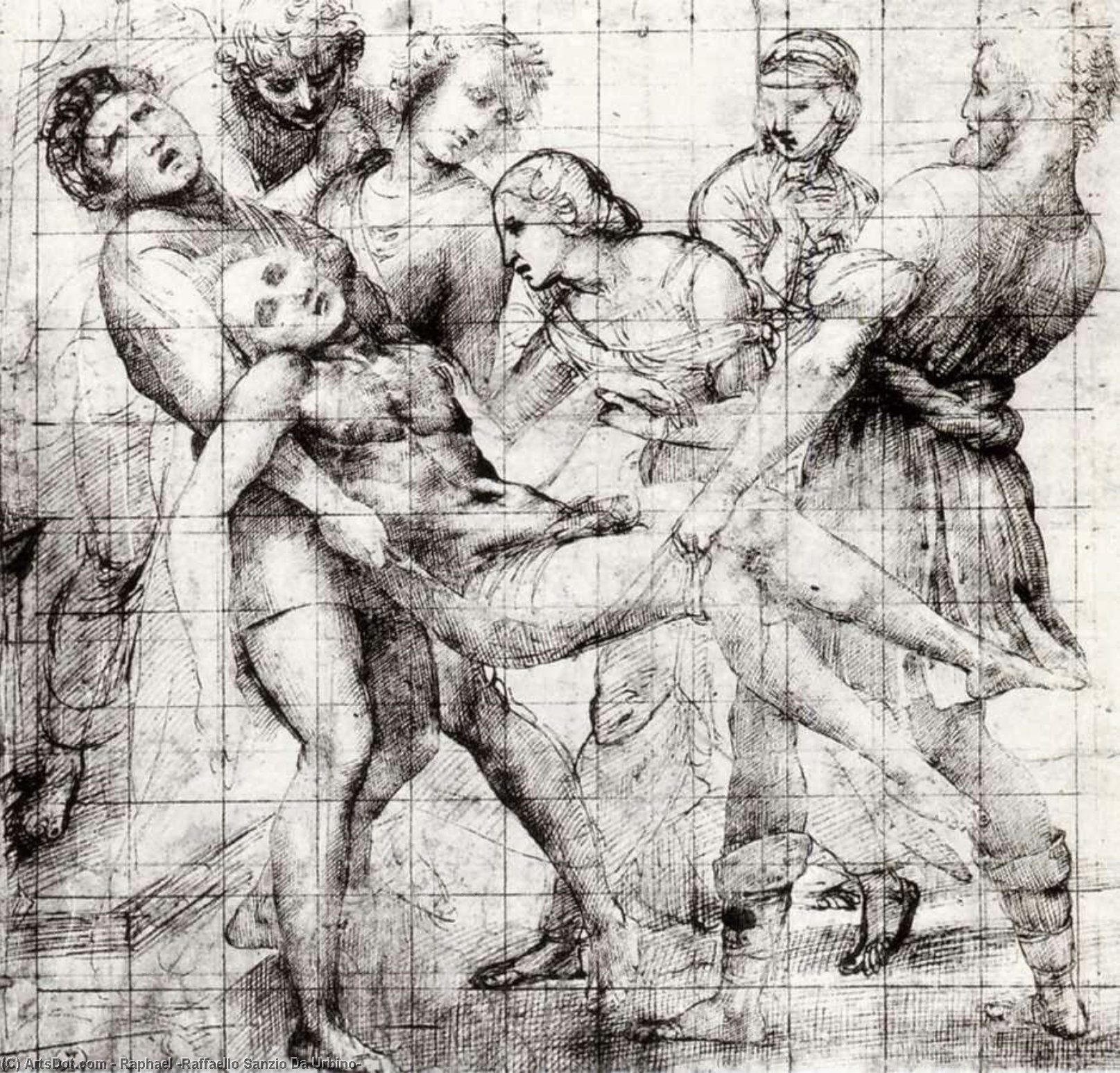
Studio per l'Encarnazione

Raphael's "Studio per l'Encarnazione" è un disegno emozionante che anticipa la maestosa Pala Baglione, simbolo della profonda umanità e del dolore nella creazione artistica rinascimentale.

Scopri Raffaello (1483-1520), il maestro del Rinascimento italiano di spicco, rinomato per la sua grazia, chiarezza e composizioni armoniose. Esplora opere iconiche come 'La Scuola di Atene', Madonne e affreschi che definiscono la bellezza classica. #ArteRinascimentale #Italia

Acquista un'immagine digitale ad alta risoluzione e ottimizzata, di qualità nettamente superiore all'anteprima online.

Ogni file è meticolosamente preparato dai nostri specialisti interni attraverso l'uso di strumenti avanzati e un sapiente ritocco manuale. Garantiamo che ogni immagine presenti una chiarezza eccezionale, una precisione cromatica impeccabile e dettagli raffinati.

Il file finale viene consegnato via e-mail entro 72 ore, ottimizzato per un uso immediato in contesti professionali, editoriali e di stampa. Si tratta della stessa qualità affidata dai più prestigiosi studi di design, editori e gallerie d'arte.

Immagine Digitale

Scarica un file ad alta risoluzione per uso personale, per la stampa e per progetti creativi. (Switch to Print Switch to PrintSwitch to hand made Painting Switch to hand made Painting)

Prezzo totale

$9.99

Incluso in ogni ordine di immagini digitali

Consegna digitale professionale e garantita

Quando scegli TopImpressionists.com, non riceverai solo un'immagine: riceverai un'opera d'arte digitale professionalmente ottimizzata, realizzata con la massima precisione e accompagnata da una garanzia di soddisfazione. Ecco tutto ciò che include il tuo ordine, automaticamente:

shipping_icon
Consegna rapida via email

Riceverai il file dell'immagine digitale ad alta risoluzione via email entro 72 ore dall'ordine, pronto per un uso immediato.

canvas_icon
File digitale ottimizzato dall'IA

La tua opera d'arte viene ottimizzata professionalmente attraverso l'uso di strumenti avanzati di intelligenza artificiale e una revisione manuale, garantendo il massimo livello di dettaglio, nitidezza e accuratezza cromatica.

insurance_icon
Riconsegna gratuita a vita

Hai eliminato o perso accidentalmente il tuo file? Non preoccuparti: te lo invieremo di nuovo in qualsiasi momento, gratuitamente.

tax_icon
Nessun costo di importazione - Sempre

Goditi la tua opera d'arte istantaneamente senza costi doganali, dazi o spese di spedizione: i download digitali sono sempre esenti da tasse.

color_icon
Garanzia di fedeltà cromatica

Garantiamo che la tua immagine digitale rifletta i colori originali con la massima fedeltà, grazie all'uso di strumenti professionali e a una gestione accurata del colore.

return_icon
Garanzia di soddisfazione di 60 giorni

Se non sei soddisfatto della tua immagine digitale, la revisioneremo o ti rimborseremo il 100% entro 60 giorni, senza domande.

guarantee_icon
Garanzia di rimborso al 100%

Non sei soddisfatto? Ricevi un rimborso completo entro 60 giorni dalla ricezione del tuo file digitale, senza dover fornire spiegazioni.

discount_icon
Sconti per ordini multipli

Acquista 3 immagini, risparmia il 10% - Acquista 5, risparmia il 15% - Acquista 10+, risparmia il 20%. Ideale per progetti creativi, gallerie e agenzie.

Informazioni rapide

  • Medium: Drawing
  • Subject or theme: Mourning, Entombment prep.
  • Year: c. 1505
  • Artist: Raphael
  • Movement: High Renaissance

Quiz d'arte

Per ogni domanda è presente una sola risposta corretta.

Domanda 1:
This artwork is a study for a larger composition depicting what event?
Domanda 2:
Who was the artist behind this study?
Domanda 3:
The completed work, for which this is a study, is located in which city?
Domanda 4:
Based on the image description, what is the primary emotional tone conveyed by the scene?
Domanda 5:
The final painting, 'The Deposition', was commissioned by whom?

Descrizione del Collezionabile

Study for the 'Entombment' in the Galleria Borghese, Rome

Raphael’s “Study for the ‘Entombment’” offers a profoundly moving prelude to one of his most celebrated compositions, the altarpiece now housed in the Galleria Borghese in Rome. Executed around 1505, this drawing isn’t merely a preparatory sketch; it is a powerful work in its own right, brimming with emotional intensity and demonstrating Raphael's masterful command of line and composition. The scene depicts the poignant moment following Christ’s descent from the cross, as his body is prepared for burial. A cluster of figures surrounds the lifeless form, their postures conveying a spectrum of grief – from raw despair to quiet contemplation. It’s a study not just of anatomy and drapery, but of human emotion in its most vulnerable state.

The Genesis of a Masterpiece: Context and Creation

To understand this drawing fully, we must consider the circumstances surrounding its creation. Commissioned by Atalanta Baglioni for her family chapel in Perugia, the final painting – known as “The Deposition” or “Pala Baglione” was intended as a memorial to her son, Grifonetto, who had been tragically killed amidst the violent political feuds of the time. This personal context infuses the work with an added layer of sorrow and remembrance. Raphael approached this commission with meticulous care, undertaking extensive preparatory studies like this one. He wasn’t simply illustrating a biblical scene; he was responding to a mother's grief, translating it into a universal expression of loss. The drawing reveals his process – the careful arrangement of figures, the exploration of different poses, and the striving for a dynamic composition that would convey both weight and grace.

Anatomy of Sorrow: Technique and Style

The power of “Study for the ‘Entombment’” lies in its stark simplicity. Rendered in black chalk on paper, Raphael eschews elaborate detail in favor of expressive lines and dramatic chiaroscuro – the interplay of light and shadow. The figures are not idealized; they are rendered with a raw realism that emphasizes their physical and emotional weight. Notice how the artist uses shading to define musculature and drapery, creating a sense of volume and depth despite the two-dimensional medium. The composition is carefully balanced, drawing the viewer’s eye towards the central figure of Christ while simultaneously acknowledging the grief-stricken reactions of those surrounding him. This study showcases Raphael's ability to imbue even preliminary sketches with a remarkable degree of artistic sophistication, foreshadowing the grandeur and emotional resonance of the finished painting.

Echoes of Renaissance Humanism

Raphael’s work is deeply rooted in the humanist ideals of the High Renaissance. He wasn’t merely replicating religious iconography; he was exploring the human condition – our capacity for love, loss, and faith. “Study for the ‘Entombment’” exemplifies this approach by focusing on the emotional responses of the figures to Christ’s death. The drawing invites us to empathize with their sorrow, to contemplate the fragility of life, and to reflect on the enduring power of human connection. It’s a testament to Raphael’s genius that he could transform a deeply personal commission into a timeless work of art that continues to resonate with audiences centuries later. Owning a reproduction of this study allows one to connect with the very genesis of a masterpiece, appreciating not only its aesthetic beauty but also the profound human story it embodies.

  • Artist: Raphael
  • Birth Year: 1483
  • Death Year: 1520
  • Birth City: Urbino
  • Birth Country: Italy

Raphael’s father Giovanni Santi was court painter to the ruler of the small but highly cultured city of Urbino. The reputation of Federico da Montefeltro had been established by Pope Sixtus IV – Urbino formed part of the Papal States – and who died the year before Raphael was born. The emphasis of Federico's court was more literary than artistic, but Giovanni Santi was a poet of sorts as well as a painter, and had written a rhymed chronicle of the life of Federico, and both wrote the texts and produced the decor for masque-like court entertainments. This immersion in a courtly environment, one that valued refinement and intellectual discourse, profoundly shaped the young Raphael's sensibilities.

Federico was succeeded by his son Guidobaldo da Montefeltro, who married Elisabetta Gonzaga, daughter of the ruler of Mantua, the most brilliant of the smaller Italian courts for both music and the visual arts. Under them, the court continued as a centre for literary culture. Growing up in the circle of this small court gave Raphael the excellent manners and social skills stressed by Baldassare Castiglione’s depiction of it in his classic work The Book of the Courtier, published in 1528. Castiglione moved to Urbino in 1504, when Raphael was no longer based there but frequently visited, and they became good friends.

Raphael was enormously productive, running an unusually large workshop and, despite his early death at 37, leaving a large body of work. His career falls naturally into three phases and three styles, first described by Giorgio Vasari: his early years in Umbria, then a period of about four years (1504–1508) absorbing the artistic traditions of Florence, followed by his last hectic and triumphant twelve years in Rome, working for two popes and their close associates. Many of his works are found in the Vatican Palace, where the frescoed Raphael Rooms were the central, and the largest, work of his career. The best known work is The School of Athens in the Vatican Stanza della Segnatura.

After his early years in Rome, much of his work was executed by his workshop from his drawings, with considerable loss of quality. He was extremely influential in his lifetime, though outside Rome his work was mostly known from his collaborative printmaking.


Biografia dell'artista

**primi anni di vita e formazione**

Raphael (Raffaello Sanzio da Urbino), un rinomato pittore e architetto italiano, nacque tra il 28 marzo e il 6 aprile 1483, nella piccola ma culturalmente significativa città di Urbino. Suo padre, Giovanni Santi, era un pittore di corte per il duca, offrendo a Raffaello un'esposizione precoce al mondo dell’arte. Dopo la morte del padre all'età di undici anni, Raffaello probabilmente gestì l'officina familiare, consolidando ulteriormente le sue fondamenta artistiche.

**carriera artistica e influenze**

Il percorso artistico di Raffaello può essere suddiviso in tre fasi distinte, ciascuna caratterizzata da uno stile unico:
  • primi anni a Umbriglia: caratterizzati dall'influenza del padre e dall'atmosfera culturale di Urbino.
  • periodo fiorentino (1504-1508): assorbendo le tradizioni artistiche di Firenze, che hanno profondamente influenzato il suo stile.
  • periodo romano (1508-1520): lavorando per due papi e i loro associati, producendo alcune delle sue opere più celebrate, tra cui La scuola di Atene nella stanza della segnatura Vaticana.

**opere notevoli e eredità**

Alcune delle opere più importanti di Raffaello includono:

**influenza e eredità**

L'influenza di Raffaello sull'arte è profonda, con le sue opere che costituiscono un pilastro del Rinascimento maturo. Il suo stile sereno e armonioso è stato un modello per la pittura neoclassica, come notato da l' storico dell'arte Johann Joachim Winckelmann. Nonostante l'influenza successiva dello stile di Michelangelo, Raffaello rimane uno degli artisti più celebrati della storia. visualizza il profilo di Raffaello su TopImpressionists
Raffaello

Raffaello

1483 - 1520 , Italia

Informazioni rapide

  • Artisti Influenti:
    • Giovanni Santi
    • Pietro Perugino
    • Leonardo da Vinci
    • Michelangelo
  • Artisti Influenzati: ['Neoclassicismo']
  • Data Di Morte: 6 aprile 1520
  • Data Di Nascita: 28 marzo 1483
  • Luogo Di Nascita: Urbino, Italia
  • Movimento Artistico: Rinascimento maturo
  • Nazionalità: Italiana
  • Nome Completo: Raffaello Sanzio da Urbino
  • Opere Notevoli:
    • La Scuola di Atene
    • Madonna Solly
    • Madonna del Cardellino
    • Le Tre Grazie
    • La Messa a Bolsena
© TopImpressionists.com — Tutti i diritti riservati  ·  100% Dipinto a mano · Soddisfazione garantita · Spedizione gratuita in tutto il mondo
VISA MASTERCARD

