Anteprima in scala reale
 Condividi
 Condividi
 Dettagli
 Guida stampabile

 Scarica
 Articoli simili
 Radiografia
 Slideshow
 Statistiche
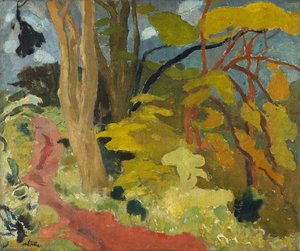
Path through Trees
 Acrylic
- WallArt
- Post-Impressionistic Landscape
 112.0 x 114.0 cm
 Royal Scottish Academy of Art - Architecture
Explore the serene landscapes and evocative still lifes of Sir William George Gillies RA RSA PRSW, a Scottish Colourist celebrated for capturing the beauty of Lothian and Fife with masterful Impressionistic brushstrokes.
 Leggi tutto
Esplora i paesaggi scozzesi e le nature morte di W.G. Gillies. Scopri le sue influenze cubiste, i legami con il gruppo 1922, l'eredità dell'Edinburgh College of Art e il suo profondo impatto sull'arte del XX secolo.
L'opera d'arte visualizzata in questa pagina è protetta dalle leggi sul diritto d'autore, il che significa che non possiamo legalmente creare o vendere una riproduzione identica. Tale protezione è garantita da accordi internazionali quali la Convenzione di Berna e dalle leggi nazionali, incluse quelle stabilite da Legge sul copyright degli Stati Uniti - Titolo 17. Tutti i diritti riservati. Le immagini presenti su questo sito sono protette da copyright e non possono essere riprodotte o utilizzate senza l'autorizzazione scritta di WahooArt.com o dei rispettivi proprietari del copyright.
Questo metodo è pienamente conforme alle normative sul diritto d'autore poiché non prevede la copia o la duplicazione dell'opera protetta. Si tratta invece di una rielaborazione creativa: un nuovo dipinto che trae ispirazione dall'originale, senza tuttavia esserne identico.
Giclée / Stampe d'arte
Stampa giclée o su tela di qualità museale, con produzione rapida e diverse opzioni di finitura. ( Ordina la riproduzione dipinta a mano Passa all'immagine digitale)




P118B €10

P118H €10

P118W €10

P438Z €10

P508JH €12

P508YH €12

P805H €10

P805Z €10

P919BZ €10

P919G €10

P919XJ €10

P959ZH €10

P968JZ €12

W106C €8

W218G €10

W218JH €8

W218Y €10

W307PJ €10

W316G €10

W316PJ €8

W316Y €10

W398PJ €8

W4111J €10

W500HY €15

W500JH €15

W692G €12

W849H €8

W940BG €15

W953PJ €8




Standard
personalizzato
CM
INCH
Scegli tra le nostre dimensioni predefinite, che rispettano le proporzioni originali dell'opera d'arte.
Loading sizes...

larghezza
altezza
Inserisci la larghezza e l'altezza desiderate, per adattarle alla tua cornice o alla tua parete. Una stampa può essere solo ritagliata, mai resa più grande dell'immagine originale; pertanto, un formato con una forma differente comporterà la perdita di una parte dell'opera. Ti invieremo un mockup digitale da approvare prima di procedere con la stampa. L'immagine mostrata in questa pagina non rappresenta il ritaglio reale — solo il mockup lo mostra.
Consegna in tutto il mondo () in 2 settimane invece delle normali 4/5 settimane. (25 Ottobre)

Spedizione espressa gratuita in tutto il mondo

Tela in lino di alta qualità

Assicurazione completa sulla spedizione

Garanzia di rimborso dei dazi doganali

Garanzia di perfetta fedeltà cromatica

Politica di reso entro 100 giorni (solo per difetti di fabbricazione)

Garanzia di rimborso al 100%

Sconto per acquisti multipli
 L'opzione vetro è disponibile solo per dimensioni inferiori a 110 cm

Path through Trees
Giclée / Stampe d'arte
Dimensioni della riproduzione
-


Prezzo totale
€ 61
A Journey Through Light and Texture: Exploring Gillies’ “Path through Trees”
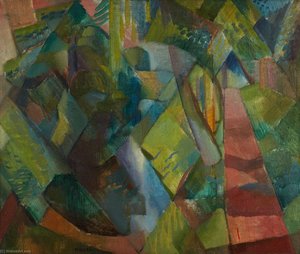
The painting "Path through Trees" by Sir William George Gillies stands as a testament to the enduring allure of Impressionism blended with a distinctly Scottish sensibility. Executed sometime before 1973, this piece captures not merely a visual representation of woodland scenery but delves into a deeper exploration of mood and atmosphere—a hallmark of Gillies’ artistic vision. Measuring 112 x 114 cm, the canvas invites contemplation as much as it pleases the eye with its harmonious blend of color and texture.The Impressionistic Embrace: Style and Technique
Gillies' stylistic choices firmly situate “Path through Trees” within the broader context of early 20th-century art movements. While undeniably influenced by Cubism’s geometric fragmentation – evident in his formative studies under André Lhote – Gillies swiftly moved beyond rigid formalism, prioritizing instead the expressive qualities of color and light. Characteristic Impressionistic brushstrokes dominate the composition, layering pigment onto the canvas with loose, visible marks that convey a palpable sense of spontaneity. Unlike meticulously rendered landscapes of earlier eras, Gillies eschewed detailed botanical accuracy; rather, he sought to distill the essence of the forest into its dominant hues—warm yellows and browns punctuated by subtle blues in the sky and foliage. This technique prioritizes capturing fleeting moments of illumination and shadow, mirroring the artist’s fascination with observing nature directly.Scottish Roots: Historical Context and Inspiration
Gillies' artistic development was profoundly shaped by his upbringing in Haddington, Scotland, where he absorbed the rugged beauty of the Lothian countryside. The painting reflects this connection to place, conveying a feeling of quiet contemplation and reverence for the natural world—a sentiment echoed throughout Gillies’ oeuvre. His encounter with Paul Klee proved particularly influential, prompting him to embrace a more imaginative approach to color palettes and compositional arrangements. Klee's playful use of childlike spontaneity resonated deeply with Gillies, encouraging him to infuse his paintings with an element of wonder and emotional resonance.Symbolism Within the Frame: Layers of Meaning
Beyond its aesthetic appeal, “Path through Trees” possesses symbolic depth. The dominant tree trunk serves as a focal point, representing resilience and strength—qualities associated with Scottish folklore and tradition. The dappled sunlight filtering through the branches symbolizes hope and renewal, mirroring the cyclical rhythms of nature. Furthermore, the fallen leaves at the base of the trunks subtly evoke themes of mortality and transformation, reminding viewers that beauty exists alongside impermanence. Gillies’ masterful manipulation of color and texture contributes to this layered interpretation, inviting contemplation on broader philosophical concepts.Emotional Resonance: A Tranquil Vista
Ultimately, “Path through Trees” succeeds in transporting the viewer into a serene woodland setting. The painting's subdued palette and expressive brushstrokes evoke feelings of peace and tranquility—a deliberate aim reflecting Gillies’ desire to capture not just what he saw but how he felt when observing the natural world. It is precisely this emotive quality, combined with Gillies’ skillful technique and stylistic innovation, that ensures “Path through Trees” continues to captivate audiences today, serving as an enduring emblem of Impressionistic beauty and Scottish artistic heritage.Domande e risposte
Dove posso acquistare una riproduzione dipinta a mano di "Path through Trees" di Sir William George Gillies?
Puoi ordinare una riproduzione dipinta a mano di "Path through Trees" di Sir William George Gillies direttamente sulla sua pagina Riproduzione dipinta a mano: una riproduzione a olio dipinta a mano su tela di lino, realizzata su ordinazione.
In che modo i colori di "Path through Trees" si relazionano tra loro?
L'armonia cromatica di "Path through Trees" è descritta come Balanced Harmony.
In quale movimento e in quale epoca si colloca "Path through Trees" di Sir William George Gillies?
"Path through Trees" di Sir William George Gillies si inserisce nel movimento Post-Impressionistic Landscape, all'interno dell'epoca Età Moderna del suo autore.
Opere correlate


Biografia dell'artista
Sir William George Gillies: Una Vita di Arte in Scozia
Primi Anni e Istruzione
- Nato: Haddington, East Lothian, Regno Unito, 1898.
- Gillies si era inizialmente iscritto all'Edinburgh College of Art ma i suoi studi sono stati interrotti dal servizio durante la Prima Guerra Mondiale con gli Ingegneri Reali.
- Dopo la guerra, è tornato a completare la sua istruzione all'Edinburgh College of Art, laureandosi e successivamente diventando un insegnante dedicato lì per oltre 40 anni.
Sviluppo Artistico e Influenze
- Il percorso artistico di Gillies è iniziato con un'esplorazione del Cubismo dopo aver studiato sotto André Lhote a Parigi (1923) e viaggiando in Italia (1924).
- Le opere iniziali, come “Due pentole, sottotape e frutta” (1933), dimostrano questa influenza, mostrando un arrangiamento ispirato a Cézanne con palette di colori sobrie di Braque e Picasso.
- Un momento decisivo è arrivato nel 1934 quando ha incontrato il lavoro di Paul Klee, ispirandolo ad adottare un uso più immaginativo del colore e qualità infantili nelle sue composizioni.
- Ha gradualmente abbandonato il Cubismo rigoroso, sviluppando uno stile distintivo radicato nei paesaggi scozzesi e nelle tradizioni di natura morta.
Il Gruppo 1922 e Spirito Collaborativo
- Nel 1922, Gillies ha co-fondato il “Gruppo 1922” insieme ad altri artisti tra cui William Crozier, William Geissler e William MacTaggart.
- Questa società espositiva ha fornito una piattaforma per gli emergenti artisti scozzesi per mostrare il loro lavoro alla New Gallery di Edimburgo per un decennio.
- Il gruppo ha promosso un senso di comunità e innovazione nel panorama artistico scozzese.
Temi e Soggetti
- Paesaggi: Gillies è rinomato per le sue rappresentazioni delle regioni di Lothian, Fife e Border in Scozia. Ha catturato l'essenza di questi paesaggi con un occhio attento.
- Nature Morti: Le nature morte sono state un'altra area significativa di interesse, spesso caratterizzate da ceramiche create dalla sua sorella minore, Emma Smith Gillies, la cui prematura morte nel 1936 lo ha profondamente colpito.
- Ritratto: Sebbene abbia sperimentato con il ritratto all'inizio della sua carriera, i paesaggi e le nature morte sono diventati i suoi soggetti principali.
Realizzazioni Principali e Riconoscimenti
- Gillies ha ricoperto la carica di Principal dell'Edinburgh College of Art dal 1959 al suo pensionamento nel 1966.
- Il suo prolifico output e la sua dedizione all'insegnamento hanno avuto una profonda influenza sulle generazioni di pittori scozzesi.
- È stato eletto Royal Academician (RA), segnando un significativo riconoscimento nel mondo dell'arte.
Significato Storico e Eredità
- Sir William George Gillies è considerato uno dei più importanti pittori del XX secolo in Scozia.
- Il suo lavoro colma il divario tra il modernismo precoce e un'identità artistica scozzese distinta.
- Eredità: La sua influenza si estende oltre i suoi dipinti, plasmando la direzione dell'arte scozzese attraverso l'insegnamento e la guida.
- È morto nel 1973, lasciando dietro di sé un ricco corpo di lavoro che continua ad essere celebrato per la sua bellezza, sensibilità e rilevanza duratura.

Sir William George Gillies
1898 - 1973 , United Kingdom
Informazioni rapide
- Artistic Movement Or Style: Cubism
- Artists Or Movements Influenced By This Artist: ['Scottish Colourists']
- Artists Who Influenced This Artist:
- André Lhote
- Paul Klee
- Cézanne
- Country: United Kingdom
- Date Of Birth: 1898
- Full Name: Sir William George Gillies
- Nationality: Scottish
- Notable Artworks:
- Young Boy with a Teapot
- Mediterranean Landscape with Overcast Sky
- Still Life – Yellow Jug and Striped Cloth
- Place Of Birth: Haddington
Articoli correlati

Beyond the Light: Discovering the Soul and Emotional Depth of Post-Impressionism
Embark on a cultural journey through Post-Impressionism. Discover the profound emotional depth of masters like Van Gogh and Cézanne, exploring how they moved beyond light to capture the very soul of human experience through vibrant color and symbolic form.

Beyond the Light: Capturing Raw Emotion and Subjective Vision in Post-Impressionist Landscapes
Explore the profound emotional depth of Post-Impressionist landscapes. Discover how masters like Van Gogh moved beyond light to capture raw human feeling through vibrant color and expressive texture in this expert art history retrospective.
Esplora le opere d'arte organizzate per temi, stili e caratteristiche.