

 Anteprima in scala reale
 Invia
Invia Condividi
 Dettagli opera
 Guida
Guida

 Scarica
 Simili
 Radiografia
 Slideshow
 Domande e risposte
 Statistiche
The Rocks

- 46.0 x 55.0 cm


Experience Theo van Rysselberghe’s mesmerizing Pointillist seascape, 'The Rocks,' capturing the raw power of ocean waves against imposing rocks—a masterpiece from 1908 that embodies Impressionism's luminous exploration of light and invites you to explore more.
 Espandi i dettagli
Scopri Theo van Rysselberghe: pittore neo-impressionista belga! Paesaggi vibranti, ritratti e scene marocchine che fondono luce e colore. Figura chiave de Les XX.
Giclée / Stampe d'arte
Stampa giclée o su tela di qualità museale, con produzione rapida e diverse opzioni di finitura. ( Acquista il dipinto realizzato a mano Passa all'immagine digitale)




P118B €10

P118H €10

P118W €10

P438Z €10

P508JH €12

P508YH €12

P805H €10

P805Z €10

P919BZ €10

P919G €10

P919XJ €10

P959ZH €10

P968JZ €12

W106C €8

W218G €10

W218JH €8

W218Y €10

W307PJ €10

W316G €10

W316PJ €8

W316Y €10

W398PJ €8

W4111J €10

W500HY €15

W500JH €15

W692G €12

W849H €8

W940BG €15

W953PJ €8




Formato standard
su misura
CM
INCH
Scegli tra le nostre dimensioni predefinite, che rispettano le proporzioni originali dell'opera d'arte.
Loading sizes...

larghezza
altezza
Inserisci la larghezza e l'altezza desiderate, per adattarle alla tua cornice o alla tua parete. Una stampa può essere solo ritagliata, mai resa più grande dell'immagine originale; pertanto, un formato con una forma differente comporterà la perdita di una parte dell'opera. Ti invieremo un mockup digitale da approvare prima di procedere con la stampa. L'immagine mostrata in questa pagina non rappresenta il ritaglio reale — solo il mockup lo mostra.
Consegna in tutto il mondo () in 2 settimane invece delle normali 4/5 settimane. (6 Novembre)

Spedizione espressa gratuita in tutto il mondo

Tela in lino di alta qualità

Assicurazione completa sulla spedizione

Garanzia di rimborso dei dazi doganali

Garanzia di fedeltà cromatica assoluta

Politica di reso entro 100 giorni (solo per difetti di fabbricazione)

Garanzia di rimborso al 100%

Offerta per acquisti multipli
 L'opzione vetro è disponibile solo per dimensioni inferiori a 110 cm

The Rocks
Giclée / Stampe d'arte
Dimensioni riproduzione
-


Prezzo finale calcolato
€ 62
A Symphony of Light and Texture: Exploring Theo van Rysselberghe’s “The Rocks”
Theo van Rysselberghe's "The Rocks," painted in 1908, stands as a cornerstone of Belgian Neo-Impressionism—a movement that sought to elevate Impressionism beyond mere optical observation into a deeper exploration of color and emotion. More than just a depiction of the ocean’s turbulent beauty, it embodies van Rysselberghe's philosophical preoccupation with capturing the elusive essence of light itself, a pursuit born from his extensive travels throughout Europe and fueled by intellectual dialogues with thinkers like Henri Bergson. Initially trained in realism under Theo Canneel and honing his skills at the Académie Royale des Beaux-Arts in Brussels—institutions that reflected the artistic sensibilities of their time—van Rysselberghe’s early portraits demonstrated a meticulous attention to detail, mirroring the academic tradition. Yet, he swiftly recognized the limitations of traditional methods in conveying the dynamism inherent in nature and the transformative power of color.- Style & Technique: Van Rysselberghe's masterful application of Pointillism—a technique pioneered by Georges Seurat—is immediately apparent. Rather than blending pigments on a palette, he meticulously placed tiny dots of pure color onto the canvas, allowing viewers’ eyes to optically blend them together. This method wasn’t merely stylistic; it represented a profound conceptual shift toward perceiving color as an independent element capable of generating emotional resonance.
- Historical Context: The painting emerged during a period of significant artistic ferment in Europe, coinciding with the burgeoning influence of Bergsonian philosophy—which championed intuition and subjective experience. This intellectual climate encouraged artists to move beyond representational accuracy toward conveying inner feelings and capturing fleeting moments of perception.
- Resources for Further Exploration: For deeper insights into Theo van Rysselberghe’s life and oeuvre, visit /art/list/?Filter=8YDRY5-Theo-Van-Rysselberghe-The-Rocks. Explore related artworks by the artist at /art/list/?Filter=the+rocks+of+per+kiridec,rocks,kiridec&. Consider visiting Musée National d’Histoire et de d’Art (Luxembourg) to immerse yourself in European art history—a treasure trove of inspiration for collectors and designers alike.
Domande e risposte
Quale ambiente si abbina ai colori di "The Rocks" di Theo van Rysselberghe?
Grazie alla sua palette di colori Neutrals, si consiglia di inserire "The Rocks" in un/una Living Room.
Quali sono la tecnica e lo stile di "The Rocks"?
"The Rocks" è realizzata in Oil On Canvas, nello stile Neo-Impressionistic Pointillism.
Da quale paese proviene l'opera del Neo-Impressionistic Pointillism "The Rocks"?
"The Rocks" è stata creata da Theo van Rysselberghe, nato in Belgio, nell'ambito del movimento Neo-Impressionistic Pointillism. L'origine dell'artista lega l'opera al Neo-Impressionistic Pointillism così come praticato dagli artisti di Belgio.
Opere simili


Biografia dell'artista
**Primi anni e formazione**
Theo van Rysselberghe, figura di spicco della scena artistica europea alla fine del XIX secolo, nacque il 23 novembre 1862 a Gand, in Belgio, da una famiglia borghese francofona. Iniziò il suo percorso artistico sotto la guida di Theo Canneel all'Accademia di Gand e successivamente studiò all’Académie Royale des Beaux-Arts di Bruxelles dal 1879.**Evoluzione artistica e influenze**
Il primo lavoro di van Rysselberghe, come Ritratto con pipa (1880), era caratterizzato da colori cupi, che riflettevano la tradizione realista belga dell'epoca. Tuttavia, il suo dipinto Bambino in una radura del bosco (1880) segnò una rottura con questo stile e un primo passo verso l’impressionismo. I suoi successivi viaggi in Marocco (1882-1888) influenzarono significativamente la sua opera, come si può notare in Ciabattino arabo (1882), Ragazzo arabo (1882) e Guardia in riposo (1883).**Fondazione de Les XX e opere significative**
In qualità di co-fondatore del circolo artistico belga Les XX il 28 ottobre 1883, van Rysselberghe svolse un ruolo fondamentale nella scena artistica europea. La sua opera Fantasia araba (1884), un dipinto esotico di grandi dimensioni, è la sua opera più conosciuta di questo periodo, che mostra la sua ossessione per la luce.- Opere chiave:
- Donna spagnola (1881)
- Donna sivigliana (1882)
- Abraham Sicsu, interprete a Tangeri (1884)
**Eredità e collezioni museali**
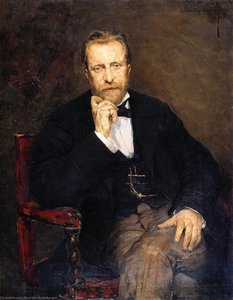
L'eredità di van Rysselberghe può essere vista in varie collezioni museali, tra cui il Museum voor Schone Kunsten di Gand (Belgio), che ospita diverse delle sue opere, come Una lettura e lo schizzo Autoritratto con pipa. La sua influenza sullo sviluppo del neoimpressionismo in Europa è innegabile.- Collezioni museali:
- Museo del Lussemburgo (Francia) - che presenta Pointe-Saint-Pierre, Saint-Tropez
- La collezione di Theo van Rysselberghe su TopImpressionists
**Conclusione**
Theo van Rysselberghe, pittore neoimpressionista belga, ha lasciato un segno indelebile nella scena artistica europea. La sua evoluzione artistica, influenzata dai suoi viaggi e dalle interazioni con altri artisti, ha dato vita a uno stile unico che continua ad affascinare il pubblico. Esplora altre sue opere e la sua eredità su TopImpressionists.
Theo van Rysselberghe
1862 - 1926 , Belgio
Dettagli rapidi
- Artistic Movement Or Style: Neoimpressionismo, Puntinismo
- Artists Or Movements Influenced By This Artist:
- Jan Toorop
- Piet Mondrian
- Artists Who Influenced This Artist:
- Georges Seurat
- Paul Signac
- Frans Hals
- Date Of Birth: 23 novembre 1862
- Date Of Death: 13 dicembre 1926
- Full Name: Theo van Rysselberghe
- Nationality: Belga
- Notable Artworks:
- Arcobaleno
- Donna Spagnola
- Sevillan Woman
- Arabian Street Cobbler
- Place Of Birth (City And Country): Gand, Belgio
Articoli correlati

I 10 Capolavori della Pittura Fiamminga Antica: Arte, Storia e Stile per la Tua Casa
Esplora i 10 capolavori della pittura fiamminga antica! Jan van Eyck, Rogier van der Weyden e altri maestri rinascimentali. Scopri storia, tecnica e simbolismo di questi dipinti iconici. Trova riproduzioni d'arte di alta qualità per la tua casa su TopImpressionists.com.

Théo van Rysselberghe: Luce, Colore e Innovazione nel Pointillismo Belga
Esplora la vita e l'opera di Théo van Rysselberghe, pioniere del pointillismo belga. Approfondisci le sue tecniche innovative, il ruolo in Les XX e l'influenza sull'arte moderna. Scopri i capolavori di questo artista straordinario.

The Allure of the Horizon: A Comprehensive Exploration of Seascape Art Through History & Emotion
Explore the captivating world of seascape art! Discover its history, key artists & movements – from Dutch Masters to Impressionism. Expert insights for collectors and enthusiasts at TopImpressionists.

Luce e Ombra: i 25 capolavori più incredibili di Rembrandt
Scopri i 25 capolavori di Rembrandt tra luce e ombra. Esplora la collezione su TopImpressionists.com per riproduzioni da museo d'eccellenza.

I 10 Capolavori del Rinascimento Netherlandese: Arte, Storia e Decorazioni di Lusso
Esplora i 10 capolavori del Rinascimento Netherlandese: Jan van Eyck, Rogier van der Weyden e altri maestri fiamminghi. Scopri la storia, le tecniche e il simbolismo di questi dipinti iconici. Riproduzioni d'arte di lusso su TopImpressionists.com.
Esplora le opere d'arte organizzate per temi, stili e caratteristiche.

![Autoritratto con pipa [schizzo]](/media/artworks/images-thumb/7e/ef/7eefa5079c911ff86b92e42e2518becb.jpg)


