Venus and Adonis: A Renaissance Reverie
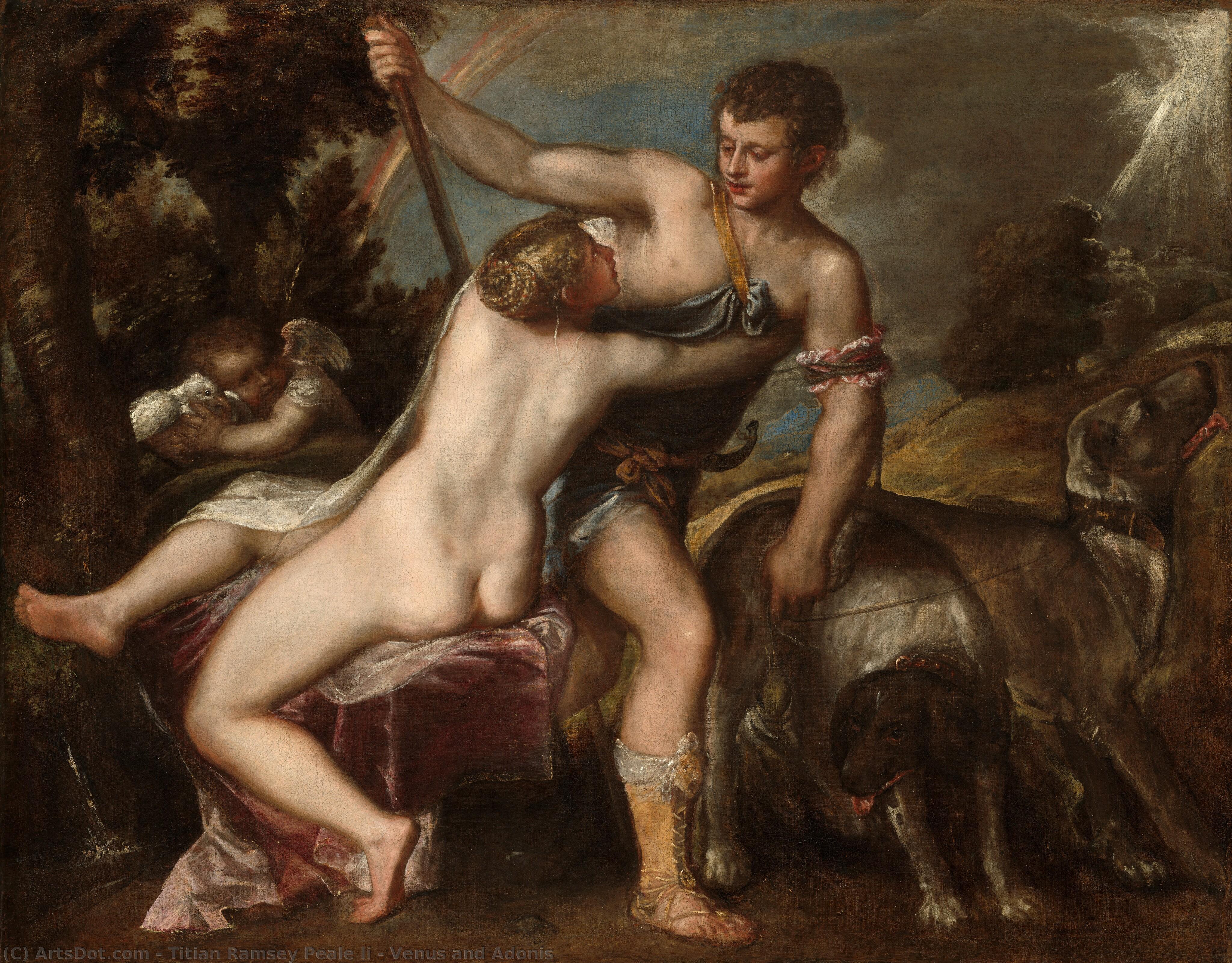
“Venus and Adonis” by Titian Ramsey Peale II stands as a testament to the enduring fascination with classical mythology within the artistic landscape of the 16th century. Created in 1565, this monumental oil painting—measuring 135 x 164 cm—now resides at The Forsyth Wickes Museum of Fine Arts in Boston, offering visitors an unparalleled glimpse into a pivotal moment in European art history.
Composition and Symbolism: A Dance Between Eros and Mortality
The scene depicts Venus, the goddess of love and beauty, passionately embracing Adonis, a youthful mortal seduced by her allure. This dynamic interplay is skillfully conveyed through Peale II’s masterful composition. A winged child—representing innocence and purity—holds a dove aloft, symbolizing divine grace and hope—a poignant counterpoint to the impending doom faced by Adonis. Two dogs flank Venus and Adonis, embodying loyalty and fidelity, guarding them against the encroaching threat of death.
- The Embrace: Venus’s outstretched arms dominate the canvas, conveying her unwavering desire for Adonis's affection.
- Adonis’s Struggle: His hesitant steps away from Venus underscore his vulnerability and the irresistible pull of mortality.
- The Dove: The dove symbolizes divine compassion and reassurance amidst the drama unfolding before the viewer.
- The Dogs: Their presence reinforces themes of protection and steadfast devotion.
Artistic Style: Renaissance Precision Meets Emotional Depth
Peale II’s artistic style aligns seamlessly with the tenets of the High Renaissance, characterized by meticulous detail and a profound understanding of human anatomy. He employs chiaroscuro—the dramatic interplay of light and shadow—to sculpt Adonis's form and imbue Venus’s gaze with palpable emotion. The artist’s palette is rich in hues reminiscent of Venetian painting, reflecting the influence of Titian himself—a master of color and texture.
Comparison with Other Works: Peale II’s Legacy
Considered alongside “Liggie Venus” by Titian Ramsey Peale II—another captivating depiction of Aphrodite—and “Allegory of Time Governed by Prudence” by the same artist—Peale II distinguishes himself through his ability to capture complex psychological states. While “Liggie Venus” showcases idealized beauty, “Allegory of Time” delves into philosophical contemplation. These comparative pieces illuminate Peale II’s artistic versatility and his commitment to exploring both sensual pleasure and intellectual inquiry.
Conclusion: An Icon of Renaissance Romance
"Venus and Adonis" transcends mere visual representation; it embodies the very essence of Renaissance romanticism—a celebration of beauty, desire, and the ephemeral nature of life. Peale II’s meticulous technique and evocative symbolism solidify its place as a cornerstone of Western art history, continuing to inspire admiration and contemplation centuries later.


 Acquista stampa
 Invia
Invia Condividi
 Dettagli opera

 Scarica
 Simili
 Radiografia
 Slideshow


 Scopri di più






































 L'opzione vetro è disponibile solo per dimensioni inferiori a 110 cm