

Rappresentato: · Comprese le dimensioni della cornice:
 Anteprima in scala reale
 Invia
Invia Condividi
 Dettagli opera
 Guida
Guida

 Scarica
 Simili
 Radiografia
 Slideshow
 Domande e risposte
 Statistiche
- 70.0 x 75.0 cm


€ 241
Riproduzione a olio fatta a mano
Olio su tela dipinto a mano nelle tue dimensioni e con la tua cornice, realizzato su ordinazione dai nostri artisti. ( Passa alle stampe Passa all'immagine digitale)
Dimensioni
·Formato standard
su misura
CM
INCH
Scegli tra le nostre dimensioni predefinite, che rispettano le proporzioni originali dell'opera d'arte.
Caricamento dimensioni...

larghezza
altezza
Inserisci la larghezza e l'altezza desiderate, per adattarle alla tua cornice o alla tua parete. Trattandosi di un'opera dipinta a mano, in caso di dimensioni con un formato differente, l'artista può estendere leggermente il dipinto oltre i bordi dell'immagine o ritagliare una piccola parte — la scelta spetta a te. Ti invieremo un mockup digitale da approvare prima che la realizzazione abbia inizio. L'immagine mostrata in questa pagina non rappresenta il risultato finale — solo il mockup lo fa.
 Scopri di più
Finitura
·
Bianco €1

Bordi sfumati €1

Bordi estesi €1

P118B €10

P118H €10

P118W €10

P438Z €10

P508JH €12

P508YH €12

P805H €10

P805Z €10

P919BZ €10

P919G €10

P919XJ €10

P959ZH €10

P968JZ €12

W106C €8

W218G €10

W218JH €8

W218Y €10

W307PJ €10

W316G €10

W316PJ €8

W316Y €10

W398PJ €8

W4111J €10

W500HY €15

W500JH €15

W692G €12

W849H €8

W940BG €15

W953PJ €8

H24-GOLD €30

H24-SILVER €30

H36-GOLD €45

H36-SILVER €45
Spedito in un tubo protettivo, pronto per essere incorniciato dal tuo artigiano di fiducia.
Servizi extra
opzionaleCosa includono gli extra?
Esempi di ciò che può essere modificato: Sostituire il volto con la foto del cliente; Aggiungere un animale domestico (ad es. sostituire il gatto con un cane); Inserire un messaggio nascosto nello sfondo; Cambiare il paesaggio o gli elementi dello sfondo.
Dopo l'ordine, il team di TopImpressionists.com invierà un'e-mail al cliente per le istruzioni e fornirà un'anteprima del mockup
Dopo l'ordine, il team di TopImpressionists.com invierà un'e-mail al cliente per le istruzioni e fornirà un'anteprima del mockup
Consegna in tutto il mondo () in 3/4 settimane anziché nelle normali 5 settimane. (11 Novembre). Nessun compromesso sulla qualità.
Vernice protettiva
Didascalia
Dettagli della targhetta in bronzo inciso
This elegant plaque features the artist's name and the title of the artwork, finely engraved for a timeless presentation.
It is made from bronze with a refined, elegant finish. The text is precisely laser-engraved for a sharp and permanent result. Measuring 9x2 cm, the plaque is compact yet easy to read. It's built to be durable and scratch-resistant, offering a professional, museum-quality look. Mounting is simple thanks to the included adhesive backing.
Dettagli della targhetta in acrilico trasparente
The plaque includes essential engraved details such as the artist's name, the title of the artwork, the date it was created, the type of media used-like oil on canvas or watercolor-a brief description of the piece, and a QR code that links to the complete artwork information.
It is crafted from clear acrylic, offering a sleek, modern appearance. The text is UV-engraved in black to ensure strong visual contrast. With a size of 10x15 cm, it ensures optimal readability. It comes equipped with two metal hooks for secure wall mounting. The plaque is designed to be weather-resistant, making it suitable for various environments, and it includes interactive features that work seamlessly with smartphone scanning.
Dettagli della targhetta in acrilico nero
This elegant plaque includes engraved information such as the artist's name, the title of the artwork, the date it was created, the type of media used (like oil on canvas or watercolor), a short description of the artwork, and a QR code for quick access to more information.
The plaque itself is made from refined black acrylic with a premium finish. The text is laser-engraved in white for high contrast and readability. Its size is 10x15 cm, designed to be easy to read. It comes with two metal hooks for professional mounting. The design is sleek and fits any interior style. It is also weather-resistant and durable, with built-in digital integration for mobile compatibility.
L'opzione vetro è disponibile solo per dimensioni inferiori a 110 cm
 L'opzione vetro è disponibile solo per dimensioni inferiori a 110 cm
- Spedizione espressa gratuita in tutto il mondo
- Tela in lino di alta qualità
- Assicurazione completa sulla spedizione
- Garanzia di rimborso dei dazi doganali
- Garanzia di fedeltà cromatica assoluta
- Politica di reso entro 100 giorni (solo per difetti di fabbricazione)
- Garanzia di rimborso al 100%
- Offerta per acquisti multipli


Descrizione del reperto
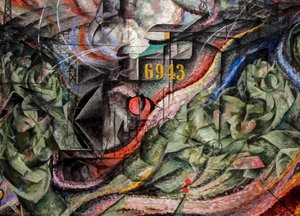
Scopri "Visioni Simultanee", capolavoro futurista di Umberto Boccioni (1911). Questo olio su tela rappresenta la velocità e il dinamismo della città, simbolo del movimento artistico del Novecento.
Biografia dell'artista
Leader del Futurismo, Boccioni catturò il movimento in Uniche forme della continuità nello spazio. Scopri i suoi capolavori dinamici.
Informazioni sul dipinto
Simultaneous Visions: A Symphony of Motion and Fragmentation
Umberto Boccioni’s “Simultaneous Visions,” painted in 1911, stands as an emblem of Futurism—a movement that vehemently rejected academic tradition and embraced the dynamism inherent in modern life. Housed at the Von Der Heydt Museum in Wuppertal, Germany, this oil on canvas masterpiece isn't merely a depiction of a cityscape; it’s an assertion of artistic innovation, capturing the very essence of speed, technology, and the fractured perception of reality characteristic of the early 20th century.- Subject Matter: The painting portrays a bustling urban scene dominated by a woman positioned centrally, framed by figures at varying distances—a deliberate strategy to convey multiple viewpoints simultaneously. Alongside her is a car, symbolizing the burgeoning influence of industrial machinery and propelling the viewer into the heart of Futurist ideology.
- Style & Technique: Boccioni’s approach defied conventional representation. He employed “mass deconstruction,” fracturing forms into geometric planes that overlap and intersect, mirroring the fragmentation experienced during rapid movement. Diagonal lines dominate the composition, creating a palpable sense of energy and propelling the eye across the canvas.
- Historical Context: Futurism emerged in Italy in 1909, fueled by poets like Filippo Tommaso Marinetti who championed speed, violence, and the glorification of machines. “Simultaneous Visions” directly reflects these core tenets, positioning itself within a broader artistic rebellion against established norms.
Influences Beyond Futurism: Cubist Roots
Boccioni’s stylistic choices weren't born in isolation; they drew heavily from the principles of Cubism pioneered by Pablo Picasso and Georges Braque. Like Cubists, Boccioni dissected objects into geometric fragments, presenting multiple perspectives simultaneously—a technique that challenged viewers to reconsider their understanding of space and form. However, Futurism infused this approach with an unprecedented surge of energy, transforming it into a visceral expression of movement.
Symbolism & Emotional Resonance
Beyond its formal innovations, “Simultaneous Visions” carries profound symbolic weight. The woman’s posture—leaning out the window—represents contemplation amidst chaos, suggesting an attempt to grasp fleeting moments and capture the dynamism of urban life. The car embodies progress and technological advancement, yet it also hints at the dehumanizing effects of industrialization. Ultimately, Boccioni sought to evoke a feeling of disorientation and exhilaration—a reflection of the transformative experience of encountering modernity.
Legacy & Reproduction Availability
Despite his untimely death in 1916, Umberto Boccioni’s impact on subsequent generations of artists remains undeniable. “Simultaneous Visions” continues to inspire creativity and serves as a cornerstone of Futurist art history. For those desiring to experience the beauty and precision of this iconic artwork firsthand, TopImpressionists offers meticulously crafted oil painting reproductions—a chance to bring Boccioni's vision into your home or studio.
Discover More:Simultaneous Visions by Umberto BoccioniDomande e risposte
Come posso acquistare una versione digitale di "Visioni Simultanee" di Umberto Boccioni?
Per ottenere una versione digitale di "Visioni Simultanee" di Umberto Boccioni, puoi ordinare download di un'immagine digitale ad alta risoluzione direttamente sulla pagina Immagine digitale ad alta risoluzione.
Dove posso acquistare una riproduzione dipinta a mano di "Visioni Simultanee" di Umberto Boccioni?
Le riproduzioni dipinte a mano di "Visioni Simultanee" di Umberto Boccioni sono disponibili su questo sito web: una riproduzione a olio dipinta a mano su tela di lino, ordinabili tramite la pagina Riproduzione dipinta a mano.
Qual è la tonalità dominante di "Visioni Simultanee" di Umberto Boccioni?
La tonalità dominante di "Visioni Simultanee" di Umberto Boccioni è Toni caldi del tramonto, un colore che costituisce il tono di fondo dell'intera tavolozza.
Brevi curiosità e quiz sull'arte
Informazioni su Umberto Boccioni

Umberto Boccioni
1882 - 1916, Italia
Biografia dell'artista
Giovinezza e Formazione Artistica
Per comprendere l'energia cinetica di Umberto Boccioni, è necessario osservare le fondamenta disciplinate, quasi scientifiche, che egli ha costruito prima che il caos del Futurismo prendesse il sopravvento. Nato a Reggio Calabria, in Italia, il 19 ottobre 1882, il suo sviluppo iniziale fu definito da un'educazione tecnica rigorosa. Non si è limitato a inciampare nell'arte; ha costruito la sua maestria attraverso una progressione strutturata che ebbe inizio nello studio di Giacomo Balla. Tra il 1898 e il 1902, Boccioni operò all'interno di questo specifico ambiente, assorbendo la tecnica divisionista. Questo periodo fu cruciale: apprese ad applicare il colore secondo il metodo dei puntinisti, un approccio che privilegiava la separazione dei singoli tratti per creare un senso di luce e vibrazione. Questa precisione tecnica avrebbe successivamente fornito la logica strutturale necessaria per la decostruzione della forma.
Il suo trasferimento a Roma nel 1899 segnò un cambiamento significativo verso una formazione accademica formale. Frequentando la Scuola Libera del Nudo e l'Accademia di Belle Arti di Roma, Boccioni si mosse oltre l'ambiente dello studio privato, entrando nel cuore delle istituzioni artistiche italiane. Questa doppia educazione — l'istruzione specializzata e densa di tecnica sotto la guida di Balla e il più ampio rigore accademico delle accademie romane — creò una tensione intrinseca nella sua opera. Egli possedeva la capacità di trattare soggetti tradizionali, sviluppando simultaneamente gli strumenti per smantellarli. La sua formazione giovanile non mirava a catturare un momento statico, bensì a padroneggiare la meccanica della luce e del colore che, infine, gli avrebbe permesso di rappresentare la sensazione stessa del movimento.
L'Ascesa del Futurismo Italiano
Boccioni non si limitò a partecipare al Futurismo italiano; egli ne definì la logica visiva. L'incontro con il poeta F. T. Marinetti a Milano nel 1907 fornì la scintilla necessaria per questa trasformazione. Mentre Marinetti infuocava il dibattito con la sua carica letteraria, Boccioni traduceva quelle idee aggressive e anti-tradizionaliste in un linguaggio visivo concreto. Egli divenne il principale teorico del movimento, superando la semplice pittura per stabilire l'impalcatura filosofica di un'intera era del modernismo.
Il movimento trovò il suo primo assestamento formale nel 1910. In quell'anno, Boccioni e un gruppo di compagni pittori pubblicarono il Manifesto dei Pittori Futuristi. Questo documento rappresentò un attacco diretto al peso soffocante della tradizione, esigendo un'arte che abbracciasse la violenza, la velocità e la potenza dell'era meccanica. Il contributo fondamentale di Boccioni fu la riuscita trasposizione di queste provocazioni letterarie in un rigoroso sistema estetico. Egli spostò il discorso dalle semplici parole alla meccanica reale di come una tela o una scultura potessero rappresentare l'energia frenetica della vita moderna.
Tecnica e Stile Artistico
L'approccio di Umberto Boccioni alla tela fu un assalto calcolato alla natura statica della rappresentazione tradizionale. Nel suo primo periodo futurista, egli utilizzò le tecniche divisioniste, applicando pennellate di colore per costruire la superficie pittorica. Questo metodo gli permise di andare oltre la mera descrizione, muovendosi verso la rappresentazione di stati psicologici e dell'energia caotica delle scene urbane. Non era interessato all'apparenza superficiale di una città, bensì alla tensione interna che essa generava. La sua opera cercava di catturare l'esperienza del flusso e l'interpenetrazione degli oggetti, quel momento in cui i confini tra un soggetto e il suo ambiente iniziano a dissolversi.
L'evoluzione dell'artista fu guidata dal rifiuto dei metodi razionali e descrittivi tipici del Cubismo. Al contrario, egli si affidò alle filosofie di Henri Bergson, dando priorità all'intuizione e all'esperienza soggettiva della realtà. Questa attenzione alla "forza interiore" degli oggetti faceva sì che le sue composizioni apparissero spesso frammentate ed esplosive. Integrò influenze del Simbolismo e dell'Espressionismo per garantire che le sue raffigurazioni della vita moderna non fossero semplici registri visivi, ma espressioni di una realtà inquieta e in movimento. Si allontanò dall'approccio "cinematografico" di dividere il moto in fasi sequenziali, optando invece per la rappresentazione della continuità del movimento stesso.
Nella scultura, le teorie di Umberto Boccioni si rivelarono ancora più dirompenti. Egli spinse per una rottura totale con il tradizionale bronzo e il marmo, sostenendo l'uso di materiali non convenzionali come il vetro, il legno, il cemento, il tessuto e persino le luci elettriche. Desiderava che la scultura modellasse e racchiudesse lo spazio circostante, invece di limitarsi a occuparlo. Si trattava di un tentativo diretto di creare un ambiente scultoreo che rispecchiasse il dinamismo dell'era moderna.
Opere Chiave e Capolavori
Guardando indietro dal punto di vista dell'era moderna, la produzione di Umberto Boccioni rivela una spinta incessante nel tradurre la velocità in forma fisica. La sua opera del 1909, Riot in the Gallery, rimane un punto di transizione critico; essa si aggrappa ancora alle tecniche divisioniste, pur adottando una composizione dinamica che segnala l'arrivo dell'energia futurista. Quando produsse The City Rises (1910–11), il cambiamento era ormai completo. Questo dipinto è ampiamente riconosciuto come la prima opera autenticamente futurista, capace di utilizzare una scala monumentale per catturare il movimento caotico e vorticoso del lavoro urbano e della luce.
La sua capacità di decostruire la realtà raggiunse l'apice attraverso l'integrazione di diverse influenze europee. The Street Enters the House dimostra un chiaro debito sia verso l'Espressionismo che verso il Cubismo, utilizzando la distorsione geometrica per simulare il sovraccarico sensoriale di una città che irrompe in uno spazio domestico. Egli esplorò anche gli stati psicologici attraverso la sua serie di dipinti, iniziando con States of Mind I: The Farewells, che cercava di mappare le emozioni interne sul mondo esterno.
Nel regno della forma tridimensionale, il 1913 produsse un cambiamento definitivo nel modo in cui lo spazio viene occupato. Unique Forms of Continuity in Space funge da esempio primario della scultura moderna precoce, andando oltre la rappresentazione statica per raffigurare una figura in uno stato di costante e fluido movimento. Quest'opera non si limita a rappresentare un corpo; essa rappresenta il movimento di un corpo attraverso lo spazio.
- Riot in the Gallery (1909)
- The City Rises (1910–11)
- States of Mind I: The Farewells (1911)
- The Street Enters the House (1911)
- Unique Forms of Continuity in Space (1913)
Gli ultimi anni e la morte prematura
La traiettoria della carriera di Umberto Boccioni fu bruscamente interrotta dall'insorgere della Prima Guerra Mondiale. Arruolato nell'esercito, l'artista si trovò a passare dai dibattiti teorici dello studio alle realtà fisiche del servizio militare. Questo passaggio dalla costruzione intellettuale del movimento alla violenza letterale della guerra moderna segnò l'ultimo capitolo della sua vita. Morì a Verona il 16 agosto 1916, a seguito di una caduta da cavallo durante un'esercitazione di cavalleria. Aveva solo trentatré anni.
Questa fine improvvisa avvenne proprio mentre le sue teorie sulla scultura stavano raggiungendo la loro applicazione più radicale. L'incidente fisico rappresentò una conclusione cruda e priva di poesia per una vita trascorsa a tentare di catturare l'essenza fluida del movimento. La sua morte segnò di fatto la conclusione del periodo più intenso del movimento futurista. L'energia che egli cercava di rappresentare nel bronzo e nell'olio fu troncata da un singolo, accidentale momento di impatto.
Eredità e Impatto Duraturo
La morte di Umberto Boccioni nel 1916 ha segnato, di fatto, la fine del periodo più intenso del movimento futurista. La sua assenza ha lasciato un vuoto che il movimento ha faticato a colmare, eppure le sue intuizioni teoriche e visive hanno continuato a esercitare una pressione costante sulla traiettoria dell'arte moderna. Boccioni non si è limitato a ritrarre il movimento; egli ha fornito un paradigma su come l'arte potesse interagire con la velocità frenetica dell'era meccanica. Questo passaggio cruciale dalla rappresentazione statica alla celebrazione del flusso ha trasformato radicalmente gli obiettivi fondamentali di molti creatori successivi.
L'influenza del suo genio si estende ben oltre la cerchia originaria dei futuristi. La frammentazione della forma e l'enfasi sul dinamismo hanno contribuito a gettare le basi del Costruttivismo e hanno successivamente informato gli sviluppi dell'Espressionismo Astratto. Decostruendo l'oggetto fisico per rivelarne l'energia interiore, egli ha imposto un confronto diretto tra lo spettatore e la realtà percepita del moto. Questo approccio ha allontanato l'arte dalla mera funzione descrittiva per condurla verso una dimensione puramente esperienziale.
Il peso duraturo della sua opera risiede nel modo in cui ha sfidato la necessità di una prospettiva fissa. I suoi esperimenti con materiali non convenzionali e l'integrazione dello spazio all'interno delle forme tridimensionali hanno anticipato gran parte dell'evoluzione scultorea del XX secolo. Umberto Boccioni rimane una figura centrale per chiunque studi la transizione dalla rappresentazione tradizionale verso l'astrazione radicale dell'era moderna.
Informazioni rapide su Umberto Boccioni
- Artisti Influenti:
- Giovanni Mataloni
- Giacomo Balla
- Artisti Influenzati:
- Costruttivismo
- Espressionismo astratto
- Data Di Nascita: 19 ottobre 1882
- Luogo Di Nascita: Reggio Calabria, Italia
- Movimento Artistico: Futurismo
- Nazionalità: Italiana
- Nome Completo: Umberto Boccioni
- Opere Notevoli:
- Dinamismo di un corpo umano
- Forme Uniche della Continuità
- La città si alza
- Idolo Moderno
Esplora le opere d'arte organizzate per temi, stili e caratteristiche.




Umberto Boccioni
Visioni Simultanee
() ·
Comprese le dimensioni della cornice: · Dipinto a mano con olio su tela di lino
Totale