Anteprima in scala reale
 Condividi
 Condividi
 Dettagli
 Guida stampabile

 Scarica
 Articoli simili
 Radiografia
 Slideshow
 Statistiche
Parrotto e viti d'uva


Scopri il celebre 'Parrotto e viti d'uva' di Hiroshige, un capolavoro dell'ukiyoe giapponese che cattura la bellezza della natura con colori vibranti e dettagli raffinati.
 Leggi tutto
Scopri Utagawa Hiroshige (1797-1858), ultimo grande maestro dell'ukiyo-e giapponese! Ammira i suoi paesaggi iconici, lo stile poetico e l'influenza sull'Impressionismo.
Giclée / Stampe d'arte
Stampa giclée o su tela di qualità museale, con produzione rapida e diverse opzioni di finitura. ( Ordina la riproduzione dipinta a mano Passa all'immagine digitale)




P118B €10

P118H €10

P118W €10

P438Z €10

P508JH €12

P508YH €12

P805H €10

P805Z €10

P919BZ €10

P919G €10

P919XJ €10

P959ZH €10

P968JZ €12

W106C €8

W218G €10

W218JH €8

W218Y €10

W307PJ €10

W316G €10

W316PJ €8

W316Y €10

W398PJ €8

W4111J €10

W500HY €15

W500JH €15

W692G €12

W849H €8

W940BG €15

W953PJ €8




Standard
personalizzato
CM
INCH
Scegli tra le nostre dimensioni predefinite, che rispettano le proporzioni originali dell'opera d'arte.
Loading sizes...

larghezza
altezza
Inserisci la larghezza e l'altezza desiderate, per adattarle alla tua cornice o alla tua parete. Una stampa può essere solo ritagliata, mai resa più grande dell'immagine originale; pertanto, un formato con una forma differente comporterà la perdita di una parte dell'opera. Ti invieremo un mockup digitale da approvare prima di procedere con la stampa. L'immagine mostrata in questa pagina non rappresenta il ritaglio reale — solo il mockup lo mostra.
Consegna in tutto il mondo () in 2 settimane invece delle normali 4/5 settimane. (22 Ottobre)

Spedizione espressa gratuita in tutto il mondo

Tela in lino di alta qualità

Assicurazione completa sulla spedizione

Garanzia di rimborso dei dazi doganali

Garanzia di perfetta fedeltà cromatica

Politica di reso entro 100 giorni (solo per difetti di fabbricazione)

Garanzia di rimborso al 100%

Sconto per acquisti multipli
 L'opzione vetro è disponibile solo per dimensioni inferiori a 110 cm

Parrotto e viti d'uva
Giclée / Stampe d'arte
Dimensioni della riproduzione
-


Prezzo totale
€ 60
A Vision of Tranquility Amidst Edo’s Blossoming Landscape
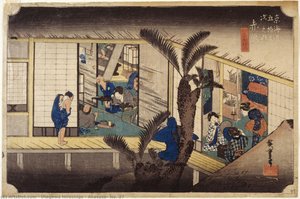
Utagawa Hiroshige's “Parrot and Grape Vines,” created circa 1832-34, transcends mere depiction; it embodies the poetic spirit characteristic of Hiroshige’s oeuvre—a hallmark of *ukiyo-e*, or “pictures of the floating world.” This stunning woodblock print captures a serene moment in Edo Japan, reflecting the artist's profound understanding of nature and its role in shaping human experience.
The Artist’s Technique: Mastering Color Woodblock Printing
Hiroshige was a master of *tsukemono-hanga*, or “multi-color woodblock printing,” a technique that demanded meticulous planning and execution. Each sheet of paper would be painstakingly covered with multiple layers of ink—typically five colors—applied in stages to achieve breathtaking tonal gradations and luminous hues. The artist’s skillful manipulation of color creates an illusion of depth and atmosphere, transporting the viewer into the lush greenery of Japan’s countryside.
A Landscape Reverie: Symbolism and Composition
The scene unfolds within a meticulously crafted landscape—a stylized representation of Tokuyama Province. Dominating the composition is a vibrant parrot perched atop a branch laden with plump grape vines, symbolizing longevity and prosperity – motifs frequently employed in *ukiyo-e* to convey auspicious wishes. Scattered birds throughout the print further emphasize the harmony between humanity and the natural world. The placement of two figures—one subtly positioned at the upper left corner and another near the lower right—adds a human element, grounding the fantastical imagery within a tangible reality.
Historical Context: Edo Japan’s Artistic Flourishing
Hiroshige's work emerged during a period of remarkable artistic innovation in Edo Japan. The Tokugawa shogunate fostered patronage of the arts, encouraging artists to explore themes of beauty and contemplation. However, Hiroshige wasn’t simply documenting the visual world; he sought to evoke emotion—to capture the ephemeral qualities of light and color—a stylistic ambition that foreshadowed Impressionism decades later. His influence extended beyond Japan's borders, inspiring artists across Europe who embraced his expressive approach.
Emotional Resonance: Capturing a Moment in Time
"Parrot and Grape Vines" isn’t merely a beautiful image; it’s an invitation to pause and appreciate the tranquility of Edo Japan. Hiroshige's masterful use of color and composition achieves a remarkable balance between realism and imagination, creating a scene that resonates with viewers long after they’ve gazed upon it. It exemplifies the enduring power of *ukiyo-e* to convey profound emotional truths—a testament to Hiroshige’s artistic genius.
Domande e risposte
Quale colore domina la composizione di "Parrotto e viti d'uva" di Utagawa Hiroshige?
Il colore che risalta maggiormente in "Parrotto e viti d'uva" è Grigio tortora (#eadabd). Il colore dominante è utile per abbinare un'opera d'arte a un ambiente interno.
È disponibile una presentazione a diapositiva per "Parrotto e viti d'uva" di Utagawa Hiroshige?
Puoi visualizzare "Parrotto e viti d'uva" di Utagawa Hiroshige in un formato slideshow nella pagina Slideshow dell'opera.
Quale posto occupa "Parrotto e viti d'uva" tra i soggetti ricorrenti di Utagawa Hiroshige?
"Parrotto e viti d'uva" raffigura japanese art, woodblock print, landscape painting, birds, grape vines, floral composition, edo period, hiroshige style, mentre i temi ricorrenti di Utagawa Hiroshige sono romantic landscape tradition, symbolic edo aesthetics, nature’s tranquility reflection, hiroshige signature style, tokai series influence. Il confronto tra i due evidenzia come l'opera si relazionazioni con i soggetti abituali dell'artista.
Biografia dell'artista
La Vita e l'Opera di Utagawa Hiroshige
Hiroshige, nato Andō Tokutarō nel 1797 a Tokyo e scomparso nel 1858, è considerato l'ultimo grande maestro dell'arte *ukiyo-e* giapponese. La sua eredità artistica si distingue per un approccio poetico e atmosferico che lo differenzia dai suoi contemporanei, noti per stampe più audaci e formali. Hiroshige ha lasciato un segno indelebile nella storia dell’arte, influenzando profondamente il movimento *Japonisme* in Occidente.Stile Artistico e Tecniche
L'uso del colore da parte di Hiroshige era sottile ma fondamentale per le sue stampe. Spesso impiegava più impressioni nella stessa area, utilizzando la tecnica del *bokashi*, ovvero la gradazione del colore. Questa tecnica, laboriosa, creava un effetto visivo unico e caratteristico. Tra le sue opere più celebri figurano la serie "Le Cinquantatré Stazioni della Tōkaidō" e "Cento Vedute Famose di Edo", entrambe testimonianze della sua maestria nella rappresentazione del paesaggio. Hiroshige non si limitava a riprodurre fedelmente ciò che vedeva, ma infondeva nelle sue opere un'atmosfera suggestiva, quasi onirica, attraverso l’uso sapiente dei colori e delle luci.Influenze e Sviluppo Artistico
La carriera artistica di Hiroshige iniziò sotto la guida di Utagawa Toyohiro, dove apprese le basi della tecnica *ukiyo-e*. Tuttavia, fu il suo interesse per i paesaggi a guidare il suo sviluppo artistico. L'influenza di Katsushika Hokusai, con la sua serie "Trentasei Vedute del Monte Fuji", è evidente nella scelta dei soggetti da parte di Hiroshige, sebbene quest’ultimo adottasse un approccio più poetico e atmosferico rispetto alla formalità di Hokusai. La sua capacità di catturare l'essenza della natura, le sue sfumature e i suoi cambiamenti stagionali, lo distinse dagli altri artisti del suo tempo.Opere Principali e Riconoscimenti
* Le Cinquantatré Stazioni della Tōkaidō: Questa serie di stampe raffigura le stazioni lungo la strada principale che collegava Edo a Kyoto, offrendo uno spaccato della vita quotidiana dei viaggiatori e degli abitanti delle città. * Cento Vedute Famose di Edo: Un'altra serie iconica che celebra la bellezza della capitale giapponese, mostrando i suoi quartieri, i suoi templi e i suoi paesaggi naturali. * Influenza su Vincent van Gogh: Hiroshige ebbe un impatto significativo sull’opera di Vincent van Gogh, che ammirava profondamente il suo stile e ne copiò alcune stampe nella sua serie "Japonaiserie".Significato Storico e Eredità
Dopo la morte di Hiroshige nel 1858, il genere *ukiyo-e* conobbe un rapido declino a causa della modernizzazione del Giappone dopo la Restaurazione Meiji. Nonostante ciò, l'influenza di Hiroshige sull’arte occidentale rimane significativa. La sua capacità di catturare la bellezza effimera della natura e di trasmettere emozioni attraverso le sue opere continua ad ispirare artisti in tutto il mondo. Il suo lavoro ha contribuito a diffondere l'estetica giapponese in Occidente, aprendo nuove prospettive artistiche e influenzando profondamente i movimenti artistici del XIX secolo.
Utagawa Hiroshige
1797 - 1858 , Giappone
Informazioni rapide
- Artistic Movement Or Style: Ukiyo-e
- Artists Or Movements Influenced By This Artist:
- Édouard Manet
- Claude Monet
- Vincent van Gogh
- Impressionismo
- Post-impressionismo
- Art Nouveau
- Artists Who Influenced This Artist:
- Utagawa Toyohiro
- Hokusai Katsushika
- Date Of Birth: 1797
- Date Of Death: 1858
- Full Name: Utagawa Hiroshige
- Nationality: Giapponese
- Notable Artworks:
- Le Cinquantatre Stazioni del Tōkaidō
- Cento Vedute Famose di Edo
- Place Of Birth: Tokyo, Giappone
Articoli correlati

The Soul of the Carved Line: Discovering the Timeless Magic of Japanese Woodblock Prints
Embark on a cultural journey through the delicate beauty of Japanese woodblock prints. Explore the mastery of Ukiyo-e, from Hokusai's dramatic lines to Obata's serene designs, and discover the enduring soul of this timeless art form for the discerning collector.
Esplora le opere d'arte organizzate per temi, stili e caratteristiche.