Anteprima in scala reale
 Condividi
 Condividi
 Dettagli
 Guida stampabile

 Scarica
 Articoli simili
 Radiografia
 Slideshow
 Statistiche
Wakasa


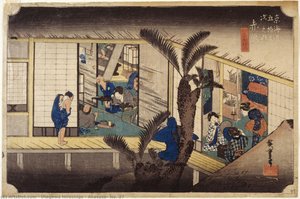
Utagawa Hiroshige’s “Wakasa” depicts a picturesque fishing boat traversing calm waters, populated by thirteen figures enjoying the day. Inspired by the Fifty-Three Stations of the Tokaido highway, this masterpiece embodies Hiroshige's signature style—a harmonious blend of observation and artistic interpretation—influencing Impressionist painters like Monet and Van Gogh.
 Leggi tutto
Scopri Utagawa Hiroshige (1797-1858), ultimo grande maestro dell'ukiyo-e giapponese! Ammira i suoi paesaggi iconici, lo stile poetico e l'influenza sull'Impressionismo.
Giclée / Stampe d'arte
Stampa giclée o su tela di qualità museale, con produzione rapida e diverse opzioni di finitura. ( Ordina la riproduzione dipinta a mano Passa all'immagine digitale)




P118B €10

P118H €10

P118W €10

P438Z €10

P508JH €12

P508YH €12

P805H €10

P805Z €10

P919BZ €10

P919G €10

P919XJ €10

P959ZH €10

P968JZ €12

W106C €8

W218G €10

W218JH €8

W218Y €10

W307PJ €10

W316G €10

W316PJ €8

W316Y €10

W398PJ €8

W4111J €10

W500HY €15

W500JH €15

W692G €12

W849H €8

W940BG €15

W953PJ €8




Standard
personalizzato
CM
INCH
Scegli tra le nostre dimensioni predefinite, che rispettano le proporzioni originali dell'opera d'arte.
Loading sizes...

larghezza
altezza
Inserisci la larghezza e l'altezza desiderate, per adattarle alla tua cornice o alla tua parete. Una stampa può essere solo ritagliata, mai resa più grande dell'immagine originale; pertanto, un formato con una forma differente comporterà la perdita di una parte dell'opera. Ti invieremo un mockup digitale da approvare prima di procedere con la stampa. L'immagine mostrata in questa pagina non rappresenta il ritaglio reale — solo il mockup lo mostra.
Consegna in tutto il mondo () in 2 settimane invece delle normali 4/5 settimane. (21 Ottobre)

Spedizione espressa gratuita in tutto il mondo

Tela in lino di alta qualità

Assicurazione completa sulla spedizione

Garanzia di rimborso dei dazi doganali

Garanzia di perfetta fedeltà cromatica

Politica di reso entro 100 giorni (solo per difetti di fabbricazione)

Garanzia di rimborso al 100%

Sconto per acquisti multipli
 L'opzione vetro è disponibile solo per dimensioni inferiori a 110 cm

Wakasa
Giclée / Stampe d'arte
Dimensioni della riproduzione
-


Prezzo totale
€ 60
A Poetic Vision of Edo Japan: The Life and Art of Utagawa Hiroshige
Utagawa Hiroshige (1797-1858) stands as an unparalleled luminary in the realm of *ukiyo-e*, or “pictures of the floating world,” forever etching his name into the annals of Japanese art history. More than merely capturing visual impressions, Hiroshige possessed a singular ability to distill the spirit of Edo Japan—a period characterized by burgeoning urban growth, social stratification, and an evolving cultural landscape—into breathtaking landscapes imbued with profound emotional resonance. His artistic journey began humbly, apprenticed under Utagawa Toyohiro, mastering the intricate craft of woodblock printing while simultaneously cultivating a deeply personal aesthetic rooted in observation and contemplation. This formative experience would ultimately shape his distinctive style and propel him to become Japan’s final great *ukiyo-e* master, leaving an indelible mark on both Japanese artistic tradition and its subsequent influence on Western art movements like Impressionism.- Subject Matter & Composition: Hiroshige's canvases rarely depict grand narratives or heroic figures; instead, he favored serene scenes of nature—mountain vistas, riverscapes, cherry blossoms in bloom—often populated by solitary travelers or fishermen. These subjects were deliberately chosen to evoke feelings of tranquility and contemplation, mirroring the philosophical currents prevalent during his time.
- Style & Technique: Hiroshige’s signature style is defined by its meticulous attention to detail and masterful use of perspective—particularly *ma*, or negative space—to create a sense of depth and atmosphere. He employed a technique known as *bokashi*, blending tonal gradations with subtle shading to achieve remarkable realism while simultaneously conveying an ethereal quality.
The Fifty-Three Stations of the Tōkaidō: A Journey Through Time & Landscape
Perhaps Hiroshige’s most celebrated series, “The Fifty-Three Stations of the Tōkaidō,” exemplifies his artistic prowess and captures the essence of Edo Japan's commercial artery. This ambitious undertaking involved painstakingly documenting each station along the Tokaido highway—the main route connecting Kyoto and Tokyo—resulting in sixty-six prints that offer a panoramic view of the region’s topography, flora, and fauna. Each print is rendered with breathtaking precision, capturing not only the physical environment but also the subtle nuances of daily life—farmers tending their fields, merchants traversing the road, pilgrims embarking on sacred pilgrimages.- Symbolism & Emotion: Hiroshige’s landscapes are laden with symbolic meaning. Cherry blossoms represent impermanence and beauty fleetingly grasped; mountains symbolize strength and resilience—themes central to Zen Buddhism, which profoundly influenced Japanese culture during Hiroshige's lifetime.
- Influence on Impressionism: Hiroshige’s innovative use of *ma* and tonal gradations captivated European artists like Claude Monet and Vincent van Gogh who were experimenting with new approaches to painting. They recognized in Hiroshige’s work a kindred spirit—a desire to capture the immediacy of experience and convey emotion through color and light, mirroring the core tenets of Impressionism.
Hiroshige's Legacy: An Enduring Aesthetic Influence
Despite the decline of *ukiyo-e* by the late 19th century due to shifting economic conditions and Western artistic dominance, Hiroshige’s influence continues to resonate today. His landscapes remain admired for their beauty, tranquility, and masterful execution—inspiring artists and designers alike. Reproductions of his prints adorn homes and galleries worldwide, testifying to the enduring power of his vision—a testament to a Japanese artist who transformed landscape painting into an art form capable of conveying profound emotional depth and capturing the sublime spirit of Edo Japan.Domande e risposte
Che atmosfera trasmette "Wakasa"?
L'atmosfera generale di "Wakasa" di Utagawa Hiroshige è Serene. Il tono descrive l'atmosfera complessiva dell'opera.
Qual è la dimensione di stampa consigliata per "Wakasa" di Utagawa Hiroshige?
Per "Wakasa" di Utagawa Hiroshige, si consiglia una riproduzione di Large. Le dimensioni possono essere modificate mantenendo invariate le proporzioni.
Dove posso acquistare un'immagine digitale di "Wakasa" di Utagawa Hiroshige?
"Wakasa" è disponibile come download di un'immagine digitale ad alta risoluzione, acquistabile direttamente sulla sua pagina Immagine Digitale.
Biografia dell'artista
La Vita e l'Opera di Utagawa Hiroshige
Hiroshige, nato Andō Tokutarō nel 1797 a Tokyo e scomparso nel 1858, è considerato l'ultimo grande maestro dell'arte *ukiyo-e* giapponese. La sua eredità artistica si distingue per un approccio poetico e atmosferico che lo differenzia dai suoi contemporanei, noti per stampe più audaci e formali. Hiroshige ha lasciato un segno indelebile nella storia dell’arte, influenzando profondamente il movimento *Japonisme* in Occidente.Stile Artistico e Tecniche
L'uso del colore da parte di Hiroshige era sottile ma fondamentale per le sue stampe. Spesso impiegava più impressioni nella stessa area, utilizzando la tecnica del *bokashi*, ovvero la gradazione del colore. Questa tecnica, laboriosa, creava un effetto visivo unico e caratteristico. Tra le sue opere più celebri figurano la serie "Le Cinquantatré Stazioni della Tōkaidō" e "Cento Vedute Famose di Edo", entrambe testimonianze della sua maestria nella rappresentazione del paesaggio. Hiroshige non si limitava a riprodurre fedelmente ciò che vedeva, ma infondeva nelle sue opere un'atmosfera suggestiva, quasi onirica, attraverso l’uso sapiente dei colori e delle luci.Influenze e Sviluppo Artistico
La carriera artistica di Hiroshige iniziò sotto la guida di Utagawa Toyohiro, dove apprese le basi della tecnica *ukiyo-e*. Tuttavia, fu il suo interesse per i paesaggi a guidare il suo sviluppo artistico. L'influenza di Katsushika Hokusai, con la sua serie "Trentasei Vedute del Monte Fuji", è evidente nella scelta dei soggetti da parte di Hiroshige, sebbene quest’ultimo adottasse un approccio più poetico e atmosferico rispetto alla formalità di Hokusai. La sua capacità di catturare l'essenza della natura, le sue sfumature e i suoi cambiamenti stagionali, lo distinse dagli altri artisti del suo tempo.Opere Principali e Riconoscimenti
* Le Cinquantatré Stazioni della Tōkaidō: Questa serie di stampe raffigura le stazioni lungo la strada principale che collegava Edo a Kyoto, offrendo uno spaccato della vita quotidiana dei viaggiatori e degli abitanti delle città. * Cento Vedute Famose di Edo: Un'altra serie iconica che celebra la bellezza della capitale giapponese, mostrando i suoi quartieri, i suoi templi e i suoi paesaggi naturali. * Influenza su Vincent van Gogh: Hiroshige ebbe un impatto significativo sull’opera di Vincent van Gogh, che ammirava profondamente il suo stile e ne copiò alcune stampe nella sua serie "Japonaiserie".Significato Storico e Eredità
Dopo la morte di Hiroshige nel 1858, il genere *ukiyo-e* conobbe un rapido declino a causa della modernizzazione del Giappone dopo la Restaurazione Meiji. Nonostante ciò, l'influenza di Hiroshige sull’arte occidentale rimane significativa. La sua capacità di catturare la bellezza effimera della natura e di trasmettere emozioni attraverso le sue opere continua ad ispirare artisti in tutto il mondo. Il suo lavoro ha contribuito a diffondere l'estetica giapponese in Occidente, aprendo nuove prospettive artistiche e influenzando profondamente i movimenti artistici del XIX secolo.
Utagawa Hiroshige
1797 - 1858 , Giappone
Informazioni rapide
- Artistic Movement Or Style: Ukiyo-e
- Artists Or Movements Influenced By This Artist:
- Édouard Manet
- Claude Monet
- Vincent van Gogh
- Impressionismo
- Post-impressionismo
- Art Nouveau
- Artists Who Influenced This Artist:
- Utagawa Toyohiro
- Hokusai Katsushika
- Date Of Birth: 1797
- Date Of Death: 1858
- Full Name: Utagawa Hiroshige
- Nationality: Giapponese
- Notable Artworks:
- Le Cinquantatre Stazioni del Tōkaidō
- Cento Vedute Famose di Edo
- Place Of Birth: Tokyo, Giappone
Articoli correlati

Zen on Canvas: The Timeless Artistry and Spiritual Depth of Japanese Landscape Painting
Explore the profound beauty of Japanese landscape painting. From Hokusai's iconic vistas to Zen-inspired compositions, discover the spiritual depth and historical mastery of Ukiyo-e art in this expert cultural retrospective.

Ephemeral Landscapes: Hiroshige's Poetics of Transient Beauty in Edo Japan
Explore the captivating world of Utagawa Hiroshige's ukiyo-e landscapes. Discover his artistic innovations, influence on Western art, and the poetics of transient beauty in Edo period Japan. A guide for collectors & enthusiasts.

Katsushika Hokusai: Le 25 Opere Più Iconiche per Amare l'Arte Giapponese
Esplora le 25 opere più iconiche di Katsushika Hokusai, maestro dell'ukiyo-e. Scopri la storia dietro 'La Grande Onda', il Monte Fuji e altre stampe giapponesi senza tempo. Trova riproduzioni d'arte di alta qualità per decorare la tua casa su TopImpressionists.com.

Visioni Fluttuanti del Giappone Ottocentesco: Ando Hiroshige e la Trasformazione del Paesaggio nell'Arte Ukiyo-e
Esplora il mondo affascinante dell'Ukiyo-e con Ando Hiroshige. Scopri la sua vita, le tecniche innovative e l'influenza sull'arte occidentale come Van Gogh. Approfondimenti storici e artistici su TopImpressionists.

Beyond the Great Wave: The High-Impact Visual Revolution of Japanese Landscape Art
Go beyond Hokusai's Great Wave. Explore the high-impact, graphic world of Japanese Ukiyo-e landscapes and urban prints. Discover how these bold, vibrant woodblock masterpieces continue to shape modern pop culture and contemporary design aesthetics.
Esplora le opere d'arte organizzate per temi, stili e caratteristiche.