Anteprima in scala reale
 Condividi
 Condividi
 Dettagli
 Guida stampabile

 Scarica
 Articoli simili
 Radiografia
 Slideshow
 Statistiche
Ion-3


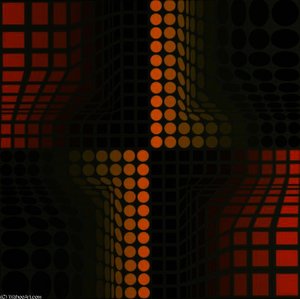
"Ion-3" di Victor Vasarely: un'opera d'Op Art che cattura l'essenza della geometria e delle illusioni ottiche con colori vibranti e forme organizzate. Scopri questo straordinario esempio dell'arte moderna!
 Leggi tutto
Scopri Victor Vasarely (1906-1997), pioniere dell'Op Art! Illusioni ottiche, geometrie e arte cinetica che hanno rivoluzionato il design moderno. Esplora la sua eredità su TopImpressionists.
L'opera d'arte visualizzata in questa pagina è protetta dalle leggi sul diritto d'autore, il che significa che non possiamo legalmente creare o vendere una riproduzione identica. Tale protezione è garantita da accordi internazionali quali la Convenzione di Berna e dalle leggi nazionali, incluse quelle stabilite da Legge sul copyright degli Stati Uniti - Titolo 17. Tutti i diritti riservati. Le immagini presenti su questo sito sono protette da copyright e non possono essere riprodotte o utilizzate senza l'autorizzazione scritta di WahooArt.com o dei rispettivi proprietari del copyright.
Questo metodo è pienamente conforme alle normative sul diritto d'autore poiché non prevede la copia o la duplicazione dell'opera protetta. Si tratta invece di una rielaborazione creativa: un nuovo dipinto che trae ispirazione dall'originale, senza tuttavia esserne identico.
Giclée / Stampe d'arte
Stampa giclée o su tela di qualità museale, con produzione rapida e diverse opzioni di finitura. ( Ordina la riproduzione dipinta a mano Passa all'immagine digitale)




P118B €10

P118H €10

P118W €10

P438Z €10

P508JH €12

P508YH €12

P805H €10

P805Z €10

P919BZ €10

P919G €10

P919XJ €10

P959ZH €10

P968JZ €12

W106C €8

W218G €10

W218JH €8

W218Y €10

W307PJ €10

W316G €10

W316PJ €8

W316Y €10

W398PJ €8

W4111J €10

W500HY €15

W500JH €15

W692G €12

W849H €8

W940BG €15

W953PJ €8




Standard
personalizzato
CM
INCH
Scegli tra le nostre dimensioni predefinite, che rispettano le proporzioni originali dell'opera d'arte.
Loading sizes...

larghezza
altezza
È possibile inserire dimensioni personalizzate per adattare l'opera a una cornice o a uno spazio specifico. Se la dimensione selezionata non corrisponde alle proporzioni dell'immagine originale, procederemo al ritaglio dell'opera o all'estensione dell'immagine con un bordo specchiato o a tinta unita. Un mockup digitale ti verrà inviato per approvazione prima dell'inizio della produzione.
Si prega di notare che l'anteprima a schermo non riflette il ritaglio o l'estensione effettivi. Solo il mockup mostrerà accuratamente la composizione finale.
Sebbene siano disponibili dimensioni personalizzate, si raccomanda di selezionare una dimensione dall'elenco predefinito per preservare le proporzioni originali.
Consegna in tutto il mondo () in 2 settimane invece delle normali 4/5 settimane. (11 Ottobre)

Spedizione espressa gratuita in tutto il mondo

Tela in lino di alta qualità

Assicurazione completa sulla spedizione

Garanzia di rimborso dei dazi doganali

Garanzia di perfetta fedeltà cromatica

Politica di reso entro 100 giorni (solo per difetti di fabbricazione)

Garanzia di rimborso al 100%

Sconto per acquisti multipli
 L'opzione vetro è disponibile solo per dimensioni inferiori a 110 cm

Ion-3
Giclée / Stampe d'arte
Dimensioni della riproduzione
-


Prezzo totale
€ 59
Ion-3: A Geometric Symphony of Perception
Victor Vasarely’s “Ion-3,” created in 1967, stands as a cornerstone of Op Art – Optical Art – a movement that revolutionized visual perception during the mid-20th century. This striking painting embodies the core principles of Vasarely's artistic philosophy: exploring how our eyes perceive color and form simultaneously, challenging traditional notions of representation, and generating an illusion of movement despite static imagery. The artwork’s allure lies not merely in its aesthetic beauty but also in its intellectual stimulation.- Subject Matter: “Ion-3” presents a meticulously crafted geometric pattern composed of overlapping circles and squares. These shapes are arranged with deliberate precision, creating an intricate visual tapestry that captivates the viewer’s gaze.
- Style: Vasarely firmly established himself as a pioneer of Op Art, rejecting realism in favor of abstraction. His canvases prioritize visual sensation over literal depiction, aiming to provoke a perceptual experience akin to motion or vibration. This style aligns perfectly with the burgeoning interest in psychology and neuroscience during the era.
- Technique: Vasarely employed a technique known as “hydrostatic printing,” which involved applying ink onto a flexible mesh stretched across a frame. The resulting print was then carefully peeled off, leaving behind an imprint that retained the original shape of the stencil – a method that ensured exceptional accuracy and consistency in reproducing his designs.
Domande e risposte
Quale posto occupa "Ion-3" all'interno della produzione artistica di Victor Vasarely?
All'interno della produzione di Victor Vasarely, "Ion-3" si inserisce nello stile Optical Abstraction, affiancandosi ai temi di geometric forms & perception, bauhaus aesthetic principles, hungarian modern art legacy, optical illusion exploration, vasarely’s iconic vision.
Quanti anni aveva Victor Vasarely quando è stata creata "Ion-3"?
Victor Vasarely ha realizzato "Ion-3" all'età di 61. L'artista è nato nel 1906 e l'opera è datata 1967.
Chi è l'artista dietro "Ion-3"?
L'artista che ha creato "Ion-3" è Victor Vasarely. L'opera è catalogata sotto il nome di Victor Vasarely.
Dove posso acquistare un'immagine digitale di "Ion-3" di Victor Vasarely?
Per ottenere un file digitale di "Ion-3" di Victor Vasarely, ordina download di un'immagine digitale ad alta risoluzione su questa pagina.
In che anno è stata realizzata "Ion-3"?
"Ion-3" di Victor Vasarely è stata creata nel 1967.
Dove posso acquistare una riproduzione dipinta a mano di "Ion-3" di Victor Vasarely?
"Ion-3" è disponibile come una riproduzione a olio dipinta a mano su tela di lino. L'ordine può essere effettuato su questa pagina, con la possibilità di scegliere diverse dimensioni.
Quale artista e quale stile si celano dietro "Ion-3"?
Victor Vasarely ha creato "Ion-3" all'interno del movimento Optical Abstraction.
Biografia dell'artista
Victor Vasarely: Pioniere dell'Op Art e dell'Esplorazione Cinetica
- Nato: 9 aprile 1906, Pécs, Croazia
- Morto: 15 marzo 1997, Parigi, Francia
- Nazionalità: Ungaro-Francese
Victor Vasarely (nato Károly Vaszary) è stato una figura fondamentale nello sviluppo dell'Op Art e dell'arte cinetica. La sua opera mirava a trascendere la pittura tradizionale esplorando illusioni ottiche e creando esperienze visive dinamiche. Nato a Pécs, all'epoca parte dell'Austria-Ungheria (ora Croazia), la sua prima vita vide lo studio della medicina presso l'Università Eötvös Loránd di Budapest prima di dedicarsi completamente all'arte.
Primi Influssi e Sviluppo Artistico
- Formazione Iniziale: Vasarely studiò inizialmente la pittura accademica tradizionale presso l'Accademia Podolini-Volkmann.
- Influenza Bauhaus: Un punto di svolta cruciale fu la sua iscrizione al laboratorio di Sándor Bortnyik (Műhely) a Budapest, una scuola fortemente influenzata dai principi del Bauhaus che enfatizzavano il design funzionale e l'astrazione geometrica. Questa esposizione plasmò la sua futura direzione artistica.
- Astrazione Geometrica: Alla fine degli anni '20 e all'inizio degli anni '30, Vasarely sperimentò con forme geometriche e relazioni cromatiche, allontanandosi dall'arte rappresentazionale verso l'astrazione pura. Opere chiave come "Studio Blu" (1929) e "Studio Verde" (1929) dimostrano questa transizione.
- Influenza di Mondrian & Malevich: Pur sviluppando il suo stile unico, Vasarely fu influenzato dalle astrazioni geometriche di Piet Mondrian e Kazimir Malevich, sebbene cercasse in definitiva di andare oltre le loro composizioni statiche.
L'Ascesa dell'Op Art e l'Esplorazione Cinetica
- Definizione dell'Op Art: Victor Vasarely è ampiamente considerato una figura fondatrice dell'Op Art (Optical Art), un movimento emerso negli anni '60 caratterizzato da opere d'arte che creano illusioni ottiche attraverso precise disposizioni di forme, colori e linee.
- Approccio Sistematico: A differenza di alcuni artisti che si affidavano all'intuizione, Vasarely sviluppò un approccio sistematico alla sua arte, utilizzando griglie e principi matematici per generare schemi e creare effetti visivi dinamici. Mirava alla riproducibilità e all'appeal popolare.
- Arte Cinetica & Installazioni su Larga Scala: In seguito nella sua carriera, Vasarely esplorò l'arte cinetica – opere d'arte che incorporano movimento o sembrano muoversi. "Georges Pompidou" (1976), un grande oggetto cinematico installato al Centre Pompidou di Parigi, esemplifica questa ambizione e dimostra il suo interesse per integrare l'arte con l'architettura e il design urbano.
- Imprese Commerciali: Vasarely è stato anche un innovatore nell'applicazione dei suoi progetti a prodotti commerciali. La sua collaborazione con la porcellana Rosenthal ha dato vita alla serie di stoviglie "Suomi", dimostrando la sua capacità di tradurre concetti astratti in oggetti funzionali.
Principali Realizzazioni e Eredità
- Fondazione Vasarely: La creazione della Fondazione Vasarely ad Aix-en-Provence, in Francia, ha garantito la conservazione e la promozione del suo vasto corpus di opere.
- Esplorazione Spaziale: Un momento significativo è stato quando delle serigrafie di Vasarely sono state portate nello spazio a bordo della navicella franco-sovietica Salyut 7 (1982), vendute in seguito a beneficio dell'UNESCO – una testimonianza del riconoscimento globale della sua arte.
- Influenza sul Design: L'approccio sistematico e lo stile geometrico di Vasarely hanno profondamente influenzato il graphic design, la moda e l'interior design. Il suo lavoro ha dimostrato come i principi astratti potessero essere applicati per creare ambienti visivamente coinvolgenti e funzionali.
- Eredità Duratura: La legacy di Victor Vasarely risiede nella sua pionieristica esplorazione delle illusioni ottiche, dell'arte cinetica e dell'intersezione tra arte e tecnologia. Rimane una figura significativa nella storia dell'arte moderna, ispirando generazioni di artisti e designer con la sua visione innovativa.
Significato Storico
Il contributo di Vasarely alla storia dell'arte è multiforme. Ha superato le tecniche pittoriche tradizionali per creare opere che coinvolgono attivamente la percezione dello spettatore. Il suo approccio sistematico ha sfidato le nozioni convenzionali di creatività artistica e ha aperto la strada all'arte generata al computer e al design digitale. Abbracciando la riproducibilità e le applicazioni commerciali, Vasarely ha offuscato i confini tra arte figurativa e cultura popolare, lasciando un segno duraturo in entrambi.

Victor Vasarely
1906 - 1997 , Croazia
Informazioni rapide
- Artistic Movement Or Style: Op Art, Astrazione geometrica
- Artists Who Influenced This Artist:
- Piet Mondrian
- Kazimir Malevich
- Date Of Birth: 9 aprile 1906
- Date Of Death: 15 marzo 1997
- Full Name: Victor Vasarely
- Nationality: Ungaro-Francese
- Notable Artworks:
- Blue Study (1929)
- Green Study (1929)
- Georges Pompidou (1976)
- Place Of Birth: Pécs, Croazia
Articoli correlati

The Beauty of Less: A Sophisticated Guide to the Soul of Minimalist Art and Geometric Harmony
Discover the profound elegance of minimalist art. Explore how geometric abstraction and the beauty of reduction create serene, sophisticated spaces through our expert guide to finding soul and harmony in every line and shape.
Esplora le opere d'arte organizzate per temi, stili e caratteristiche.