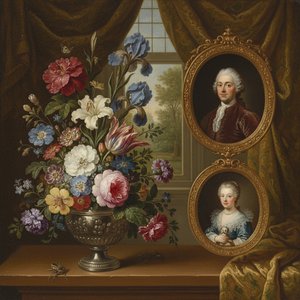
Still Life with Coffee Pot – A Window Into Post-Impressionist Vision
Vincent van Gogh’s Still Life with Coffee Pot stands as an arresting testament to the transformative power of Impressionism, evolving into a cornerstone of Expressionism and captivating audiences worldwide. Painted in 1888 during his prolific Parisian period, this oil on canvas masterpiece isn't merely a depiction of everyday objects; it’s a carefully orchestrated exploration of color, emotion, and artistic innovation.
Composition & Style: Bold Strokes and Complementary Harmony
The scene unfolds with remarkable simplicity—a coffee pot perched atop a wooden table alongside two cups and a sugar bowl. However, this apparent austerity belies the dynamism inherent in Van Gogh’s approach. He abandons Impressionistic pastel hues for vibrant, saturated colors, prioritizing emotional resonance over photographic accuracy. The dominant blue background serves as an anchor, juxtaposed against fiery orange accents emanating from the coffee pot itself—a deliberate use of complementary color theory championed by Eugène Delacroix and furthering the movement's rejection of academic conventions.
Technique: Thick Impasto – Capturing Texture and Feeling
What distinguishes Still Life with Coffee Pot is Van Gogh’s masterful technique—thick impasto. He applies paint in bold, textured strokes that build up layers upon layers, creating a palpable sense of physicality. This method isn't just about visual representation; it’s about conveying emotion directly onto the canvas. The ridges and swirls of pigment capture not only the surface appearance of the objects but also the artist’s inner turmoil—a reflection of his psychological state during this pivotal moment in his artistic journey.
Historical Context: Embracing Modernity Amidst Artistic Debate
Painted against a backdrop of burgeoning artistic experimentation, Still Life with Coffee Pot embodies the spirit of Post-Impressionism. Artists like Cézanne and Gauguin were actively challenging Impressionistic ideals, seeking to express subjective experience rather than objective observation. Van Gogh’s bold color palette and expressive brushwork aligned perfectly with this trend, establishing him as a pivotal figure in shaping the trajectory of modern art.
Symbolic Resonance: Everyday Objects Illuminated by Emotion
Beyond its formal qualities, Still Life with Coffee Pot carries profound symbolic significance. The coffee pot itself represents warmth, comfort, and ritual—elements that Van Gogh frequently explored in his work as a means of conveying human connection and spiritual contemplation. Similarly, the orange hues symbolize vitality and optimism, offering a counterpoint to the darker shades dominating the composition. Taken together, these elements invite viewers to contemplate not just what is seen but also what is felt—a hallmark of Expressionist art’s ambition to communicate inner states.
Experiencing Still Life with Coffee Pot: Reproductions That Capture Genius
High-quality reproductions of Vincent van Gogh's Still Life with Coffee Pot allow admirers to immerse themselves in the beauty and emotional depth of this iconic artwork. Available at /art/list/?Filter=8XZ5FS-, these handmade oil paintings faithfully recreate Van Gogh’s vision, transporting viewers into the heart of Post-Impressionist artistry.



 Acquista stampa
 Invia
Invia Condividi
 Dettagli opera

 Scarica
 Simili
 Radiografia
 Slideshow

 Scopri di più






































 L'opzione vetro è disponibile solo per dimensioni inferiori a 110 cm