

 Anteprima in scala reale
 Invia
Invia Condividi
 Dettagli opera
 Guida
Guida

 Scarica
 Simili
 Radiografia
 Slideshow
 Domande e risposte
 Statistiche
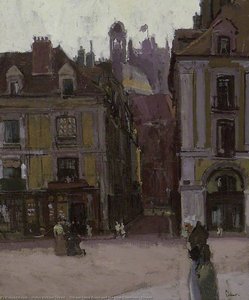
The Bar Parlour

- 104.0 x 158.0 cm


Explore 'The Bar Parlour' by Walter Richard Sickert – an evocative Impressionist painting capturing London nightlife and featuring three figures in a dimly lit bar setting.
 Espandi i dettagli
Scopri Walter Richard Sickert (1860-1942), pittore britannico e figura chiave dell'arte d'avanguardia! Scene di music hall, ritratti e interni in uno stile unico.
Giclée / Stampe d'arte
Stampa giclée o su tela di qualità museale, con produzione rapida e diverse opzioni di finitura. ( Acquista il dipinto realizzato a mano Passa all'immagine digitale)




P118B €10

P118H €10

P118W €10

P438Z €10

P508JH €12

P508YH €12

P805H €10

P805Z €10

P919BZ €10

P919G €10

P919XJ €10

P959ZH €10

P968JZ €12

W106C €8

W218G €10

W218JH €8

W218Y €10

W307PJ €10

W316G €10

W316PJ €8

W316Y €10

W398PJ €8

W4111J €10

W500HY €15

W500JH €15

W692G €12

W849H €8

W940BG €15

W953PJ €8




Formato standard
su misura
CM
INCH
Scegli tra le nostre dimensioni predefinite, che rispettano le proporzioni originali dell'opera d'arte.
Loading sizes...

larghezza
altezza
Inserisci la larghezza e l'altezza desiderate, per adattarle alla tua cornice o alla tua parete. Una stampa può essere solo ritagliata, mai resa più grande dell'immagine originale; pertanto, un formato con una forma differente comporterà la perdita di una parte dell'opera. Ti invieremo un mockup digitale da approvare prima di procedere con la stampa. L'immagine mostrata in questa pagina non rappresenta il ritaglio reale — solo il mockup lo mostra.
Consegna in tutto il mondo () in 2 settimane invece delle normali 4/5 settimane. (5 Novembre)

Spedizione espressa gratuita in tutto il mondo

Tela in lino di alta qualità

Assicurazione completa sulla spedizione

Garanzia di rimborso dei dazi doganali

Garanzia di fedeltà cromatica assoluta

Politica di reso entro 100 giorni (solo per difetti di fabbricazione)

Garanzia di rimborso al 100%

Offerta per acquisti multipli
 L'opzione vetro è disponibile solo per dimensioni inferiori a 110 cm

The Bar Parlour
Giclée / Stampe d'arte
Dimensioni riproduzione
-


Prezzo finale calcolato
€ 63
A Glimpse into London's Twilight: The Soul of Sickert's Bar Parlour
In the quiet, amber-hued corners of early twentieth-century London, Walter Richard Sickert found his most profound muses. The Bar Parlorp, painted in 1922, serves as a masterful window into a world that exists in the soft periphery of the bustling metropolis. This evocative piece captures a fleeting moment of repose within a dimly lit establishment, where the boundaries between public life and private intimacy begin to blur. Through his distinctive lens, Sickert does not merely document a scene; he invites the viewer to sit at the table, to feel the weight of the afternoon shadows, and to become a silent participant in this intimate tableau of everyday existence.
The composition is anchored by three figures who inhabit the space with a natural, unforced grace. Two women are seated at a table, their presence suggesting a shared confidence or perhaps a momentary respite from the world outside, while a man leans against the counter behind them, his posture embodying the weary yet watchful character of the urban dweller. There is a profound sense of theatricality in this arrangement—a nod to Sickert’s own early ambitions on the London stage. Every element, from the scattered bottles on the counter to the humble loaf of bread resting on the table, contributes to a narrative of domesticity found within the public sphere, creating a scene that feels both deeply personal and universally recognizable.
The Mastery of Impressionistic Light and Texture
Technically, The Bar Parlour is a triumph of late Impressionist sensibility. Sickert eschews the sharp, clinical lines of realism in favor of loose, expressive brushstrokes that prioritize atmosphere over anatomical precision. This technique allows the light to perform its own magic; rather than being a harsh, direct force, the illumination is soft and diffused, as if filtering through a haze of tobacco smoke and dust motes. The color palette is a sophisticated study in earth tones—deep ochres, warm umbers, and muted shadows—which coalesce to create an inviting, nostalgic warmth that wraps around the viewer like a heavy velvet curtain.
For the discerning collector or interior designer, this painting offers more than mere decoration; it provides a focal point of profound emotional depth. The texture of the paint itself adds a tactile dimension to the work, suggesting the weathered surfaces of the bar and the soft fabrics of the figures' attire. When rendered as a high-quality reproduction, the interplay of light and shadow retains its ability to transform a room, lending an air of sophisticated melancholy and timeless elegance to any curated space. It is a piece that does not demand attention through loudness, but rather commands it through a quiet, irresistible magnetism.
A Legacy of Shadows and Human Connection
To understand the emotional resonance of this work, one must consider Sickert’s unique position as an artist caught between German heritage and British urbanity. His fascination with the "marginalized" and the "unseen" is palpable here. There is no grand historical drama unfolding in The Bar Parlour; instead, the drama lies in the subtle psychological tension between the characters and the heavy, comforting stillness of their environment. It is a celebration of the mundane, elevated to the level of high art through sheer observational genius.
Owning or displaying a reproduction of this masterpiece allows one to bring a piece of London's historical soul into the modern home. It serves as a reminder of the beauty found in the quiet intervals of life—the moments of stillness amidst the chaos of progress. For those seeking to infuse their interiors with a sense of history, warmth, and intellectual depth, Sickert’s vision offers an unparalleled source of inspiration, bridging the gap between the fleeting present and the enduring past.
Domande e risposte
È possibile riprodurre legalmente l'opera "The Bar Parlour" di Walter Richard Sickert, conservata presso Fitzwilliam College?
"The Bar Parlour" di Walter Richard Sickert, conservata presso Fitzwilliam College, è di pubblico dominio - il copyright è scaduto. Questo stato determina se sia possibile realizzare riproduzioni dell'immagine.
Cosa rappresenta "The Bar Parlour" di Walter Richard Sickert e quale atmosfera trasmette?
"The Bar Parlour" di Walter Richard Sickert ritrae london life, bar parlour scene, interior painting, early 20th century, figure composition, earth tones palette, domestic setting, con un'atmosfera Elegant. Il soggetto e l'atmosfera insieme descrivono l'opera.
"The Bar Parlour" di Walter Richard Sickert è di pubblico dominio?
Stato del copyright per "The Bar Parlour" di Walter Richard Sickert: l'opera è di pubblico dominio - il copyright è scaduto. Ciò determina se sia possibile effettuare liberamente riproduzioni dell'immagine.
Opere simili




Biografia dell'artista
Primi anni e formazione
Walter Richard Sickert, pittore anglo-tedesco, nacque il 31 maggio 1860 a Monaco di Baviera. La sua famiglia si trasferì in Inghilterra nel 1868, dopo l'annessione tedesca dello Schleswig-Holstein. Ricevette la sua prima istruzione presso l’University College School e il King’s College School, studiando fino all'età di 18 anni.Sviluppo artistico
Il percorso artistico di Sickert iniziò con un breve periodo come attore, seguito dall'iscrizione alla Slade School nel 1881. Successivamente divenne allievo di James Abbott McNeill Whistler, che influenzò significativamente la sua opera. I suoi primi dipinti furono piccoli studi tonali realizzati "alla prima" dalla natura, seguendo l’esempio di Whistler.Opere significative e controversie
Le sue prime opere importanti, risalenti alla fine degli anni '80 dell'Ottocento, raffiguravano scene dei teatri musicali londinesi. Uno dei suoi dipinti più noti, Katie Lawrence at Gatti's, suscitò polemiche per la sua rappresentazione di una cantante dei teatri musicali, ritenuta "brutta e volgare" dalla critica.Influenze e il Gruppo Camden Town
Sickert fu un’importante influenza sugli stili d'avanguardia britannici del XX secolo. Nel 1888 si unì alla New English Art Club, un gruppo di artisti influenzati dall'arte realista francese, e successivamente divenne membro del Gruppo Camden Town.Eredità
Le opere di Sickert sono esposte in vari musei, tra cui il museo Kunstsalon Franke Schenk, che presenta opere dal XVI al XX secolo. La sua eredità si estende oltre la sua arte stessa, influenzando gli stili d'avanguardia britannici della metà e della fine del XX secolo.- Visionare i dipinti di Sickert su TopImpressionists: Walter Richard Sickert
- Scoprire di più sul Gruppo Camden Town su Wikipedia: Wyndham Lewis
- Esplorare la collezione del museo Kunstsalon Franke Schenk su TopImpressionists: Il Museo Kunstsalon Franke Schenk
- Approfondire la vita e l'opera di Sickert su Wikipedia: Walter Sickert
- 31 maggio 1860: nascita a Monaco di Baviera, Regno della Baviera
- 1888: aderisce alla New English Art Club
- 1903-04: sviluppa un approccio distintivo ai tableaux con figure multiple durante il suo ultimo viaggio di pittura a Venezia
Conclusione
Il lavoro pionieristico di Walter Richard Sickert nell'arte d'avanguardia britannica ha lasciato un segno indelebile nel mondo dell'arte. La sua eredità continua ad ispirare e influenzare gli artisti, rendendolo una figura cruciale nella storia dell’arte moderna.
Walter Richard Sickert
1860 - 1942 , Germania
Dettagli rapidi
- Artisti Influenti: ['James Abbott McNeill Whistler']
- Artisti Influenzati: ['Wyndham Lewis']
- Data Di Nascita: 31 maggio 1860
- Luogo Di Nascita: Monaco, Germania
- Movimento Artistico: Post-impressionismo, Realismo
- Nazionalità: Britannico (di origine tedesca)
- Nome Completo: Walter Richard Sickert
- Opere Notevoli:
- Katie Lawrence at Gatti's
- Gaieté Montparnasse
Articoli correlati

Walter Sickert: Ombre e Realismo nella Tela Britannica Moderna
Esplora la vita e l'opera di Walter Sickert, figura chiave del Camden Town Group e pioniere del realismo britannico moderno. Analisi approfondite, stile unico e guida al collezionismo.

Impressionismo: I 10 Capolavori che Rivoluzionarono la Pittura | TopImpressionists
Esplora i 10 capolavori dell'Impressionismo con TopImpressionists. Scopri Monet, Renoir e Degas: storia, tecnica e colori che hanno rivoluzionato l'arte. Stampe di alta qualità per la tua casa! Esplora la collezione online.

Richard Hayley Lever: A Study in British Impressionism & Coastal Light
Explore the captivating world of Richard Hayley Lever (1876-1958), a master of Impressionism renowned for his vibrant coastal scenes. Discover his life, style & legacy with TopImpressionists.

Impressionismo e Postimpressionismo: Evoluzione, Caratteristiche Distintive e Influenze Reciproche
Esplora l'evoluzione dell'Impressionismo e del Postimpressionismo con la nostra guida esperta. Scopri i maestri, le tecniche e l'influenza di questi movimenti artistici rivoluzionari.

25 Capolavori da non perdere alla National Gallery di Londra
Scopri i 25 capolavori della National Gallery tra Caravaggio e Van Gogh. Esplora la collezione su TopImpressionists.com.
Esplora le opere d'arte organizzate per temi, stili e caratteristiche.


