

Shown: · With its frame:
 Anteprima in scala reale
 Invia
Invia Condividi
 Dettagli opera
 Guida
Guida

 Scarica
 Simili
 Radiografia
 Slideshow
 Q&A
Q&A Statistiche


€ 239
Riproduzione a olio fatta a mano
Olio su tela dipinto a mano nelle tue dimensioni e con la tua cornice, realizzato su ordinazione dai nostri artisti. ( Passa alle stampe Passa all'immagine digitale)
Size
·Formato standard
su misura
CM
INCH
Scegli tra le nostre dimensioni predefinite, che rispettano le proporzioni originali dell'opera d'arte.
Loading sizes...

larghezza
altezza
Inserisci la larghezza e l'altezza desiderate, per adattarle alla tua cornice o alla tua parete. Trattandosi di un'opera dipinta a mano, in caso di dimensioni con un formato differente, l'artista può estendere leggermente il dipinto oltre i bordi dell'immagine o ritagliare una piccola parte — la scelta spetta a te. Ti invieremo un mockup digitale da approvare prima che la realizzazione abbia inizio. L'immagine mostrata in questa pagina non rappresenta il risultato finale — solo il mockup lo fa.
 Scopri di più
Finish
·
White €1

Blurside €1

Extended €1

P118B €10

P118H €10

P118W €10

P438Z €10

P508JH €12

P508YH €12

P805H €10

P805Z €10

P919BZ €10

P919G €10

P919XJ €10

P959ZH €10

P968JZ €12

W106C €8

W218G €10

W218JH €8

W218Y €10

W307PJ €10

W316G €10

W316PJ €8

W316Y €10

W398PJ €8

W4111J €10

W500HY €15

W500JH €15

W692G €12

W849H €8

W940BG €15

W953PJ €8

H24-GOLD €30

H24-SILVER €30

H36-GOLD €45

H36-SILVER €45
Shipped in a protective tube, ready for your own framer.
Above 105 cm the frame is shipped as a kit for a professional framer — read the details.
Extras
optionalWhat do the extras include?
Examples of what can be changed: Replace face with customer photo; Add pet (e.g., replace cat with dog); Include hidden message in background; Change background landscape or elements.
After order, TopImpressionists.com team will email client for instructions and provide a mockup preview
After order, TopImpressionists.com team will email client for instructions and provide a mockup preview
Consegna in tutto il mondo () in 3/4 settimane anziché nelle normali 5 settimane. (1 Novembre). Nessun compromesso sulla qualità.
Vernice protettiva
Didascalia
Dettagli della targhetta in bronzo inciso
This elegant plaque features the artist's name and the title of the artwork, finely engraved for a timeless presentation.
It is made from bronze with a refined, elegant finish. The text is precisely laser-engraved for a sharp and permanent result. Measuring 9x2 cm, the plaque is compact yet easy to read. It's built to be durable and scratch-resistant, offering a professional, museum-quality look. Mounting is simple thanks to the included adhesive backing.
Dettagli della targhetta in acrilico trasparente
The plaque includes essential engraved details such as the artist's name, the title of the artwork, the date it was created, the type of media used-like oil on canvas or watercolor-a brief description of the piece, and a QR code that links to the complete artwork information.
It is crafted from clear acrylic, offering a sleek, modern appearance. The text is UV-engraved in black to ensure strong visual contrast. With a size of 10x15 cm, it ensures optimal readability. It comes equipped with two metal hooks for secure wall mounting. The plaque is designed to be weather-resistant, making it suitable for various environments, and it includes interactive features that work seamlessly with smartphone scanning.
Dettagli della targhetta in acrilico nero
This elegant plaque includes engraved information such as the artist's name, the title of the artwork, the date it was created, the type of media used (like oil on canvas or watercolor), a short description of the artwork, and a QR code for quick access to more information.
The plaque itself is made from refined black acrylic with a premium finish. The text is laser-engraved in white for high contrast and readability. Its size is 10x15 cm, designed to be easy to read. It comes with two metal hooks for professional mounting. The design is sleek and fits any interior style. It is also weather-resistant and durable, with built-in digital integration for mobile compatibility.
L'opzione vetro è disponibile solo per dimensioni inferiori a 110 cm
 L'opzione vetro è disponibile solo per dimensioni inferiori a 110 cm
- Spedizione espressa gratuita in tutto il mondo
- Tela in lino di alta qualità
- Assicurazione completa sulla spedizione
- Garanzia di rimborso dei dazi doganali
- Garanzia di fedeltà cromatica assoluta
- Politica di reso entro 100 giorni (solo per difetti di fabbricazione)
- Garanzia di rimborso al 100%
- Offerta per acquisti multipli


Descrizione del reperto
Explore Walter Ufer’s evocative landscape painting ‘On the Rio Grande,’ capturing the tranquility of Taos Pueblo and showcasing his masterful use of color and composition.
Biografia dell'artista
Scopri 'L'Hotel Royal, Dieppe, Francia' di Walter Richard Sickert: una finestra sulla Belle Époque francese, tra eleganza e vita quotidiana. Un capolavoro da Sheffield City Art Galleries.
About the painting
A Symphony of Light and Solitude
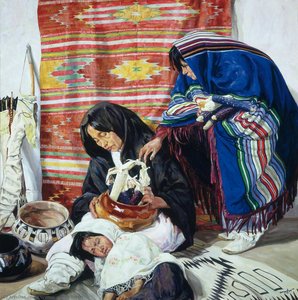
In the quietude of 1927, Walter Ufer captured a moment of profound stillness in his masterpiece, On the Rio Grande. This evocative landscape serves as more than just a depiction of a river valley; it is a window into a soul-stirifying encounter with the American Southwest. The painting presents a solitary man, often identified as Ufer’s favorite model, Jim Mirabel, seated upon weathered rocks. As he gazes toward the water, the viewer is invited to share in his contemplative silence. The scene is bathed in the golden, honeyed hues of a late afternoon sun, which illuminates the river valley and casts a soft, ethereal glow over the distant, majestic mountains that dominate the horizon.
The atmosphere is one of deep tranquility, where the natural world feels both expansive and intimate. Beyond the central figure, the landscape breathes with life; trees frame the composition, adding layers of texture and organic beauty, while the subtle presence of birds in flight and a small boat drifting along the river enhances the sense of a living, breathing ecosystem. It is a scene that captures the very heartbeat of the Taos Pueblo spirit, blending the grandeur of the New Mexican wilderness with a deeply personal, human connection to the earth.
The Impressionistic Touch and Technical Mastery
Ufer’s technical approach in On the Rio Grande demonstrates his unique ability to bridge European Impressionist traditions with the rugged reality of the American West. Utilizing the rich, tactile medium of oil on canvas, the artist employs a high-keyed palette and loose, energetic brushstrokes that prioritize atmosphere over rigid anatomical or geological precision. This technique allows for a magnificent play of light and shadow, where the textures of the rocks and the fluidity of the water are rendered through subtle gradations of color rather than sharp outlines.
The composition is masterfully balanced, employing a sense of symmetry that draws the eye inward toward the reflective figure before allowing it to wander across the sweeping vistas. This careful arrangement creates a rhythmic harmony between the foreground elements and the dramatic backdrop of the mountains. For the collector or interior designer, this painting offers a sophisticated interplay of color and form, making it an ideal centerpiece for spaces that require a sense of calm, prestige, and timelessness.
A Legacy of Cultural Connection
To understand On the Rio Grande is to understand the historical significance of the Taos Society of Artists. Ufer, a trained artist who journeyed through Germany and Europe, brought a refined, cosmopolitan sensibility to the landscapes of New Mexico. His work during this period was characterized by a deep respect for the Pueblo Indians and an artistic mission to document their lives and lands with dignity and vibrancy. This painting stands as a testament to that mission, capturing a landscape that is both a physical place and a spiritual sanctuary.
The emotional impact of the piece lies in its ability to evoke nostalgia and peace. It speaks to the universal human desire for connection with nature and the beauty found in moments of quiet reflection. Whether displayed in a private gallery or as a focal point in a curated interior, this reproduction brings the luminous spirit of the Rio Grande into the modern home, offering an enduring sense of wonder and a profound connection to the American artistic heritage.
Domande e risposte
"On the Rio Grande" presenta forti contrasti chiaroscurali?
Il livello di contrasto di "On the Rio Grande" di Walter Ufer è Gentle.
Qual è la palette cromatica di "On the Rio Grande" di Walter Ufer?
"On the Rio Grande" è caratterizzato da una tavolozza Neutrals dominata dal Sap Green (#6d6641).
Che tipo di opera è "On the Rio Grande"?
Nel catalogo, "On the Rio Grande" di Walter Ufer è classificato come WallArt. La categoria permette di trovare opere simili.
Quick facts and art quiz
About Walter Ufer

Walter Ufer
1876 - 1936, Germania
Biografia dell'artista
L'Anima del Sud-ovest: La Vita e l'Eredità di Walter Ufer
Walter Ufer si erge come una figura cardine dell'Impressionismo americano, un pittore le cui pennellate fecero molto più che catturare la luce; esse catturarono il battito vitale stesso di una cultura. Nato nel 1876 a Hückeswagen, in Germania, il viaggio di Ufer verso gli alti deserti del New Mexico fu preparato da un rigoroso addestramento europeo e da una profonda curiosità per la condizione umana. I suoi primi anni furono plasmati dalla diaspora tedesco-americana a Louisville, Kentucky, dove iniziò ad assorbire le ricche trame della sua eredità. Questo periodo formativo, segnato dagli studi nella litografia e nella stampa, gli donò una precisione tecnica che gli avrebbe permesso, in seguito, di navigare le complessità di luce e ombra con un maestria senza pari.
La sua ricerca dell'eccellenza artistica lo condusse in un'odissea trasformativa attraverso l'Europa. Come artista itinerante, Ufer si immerse nelle diverse tradizioni artistiche del continente, perfezionando la sua tecnica presso le prestigiose accademie di Amburgo e Dresda. Questo periodo di intensa espansione intellettale e creativa culminò nel suo soggiorno a Monaco, dove si dedicò a una intensa pratica di studio. Quando finalmente tornò negli Stati Uniti nel 1911, portava con sé una sofisticata sensibilità europea, pronta per un incontro profondo con i paesaggi aspri e inondati dal sole dell'Ovest americano.
Un Visionario dei Taos Ten
L'anno 1914 segnò un punto di svolta definitivo nella vita di Ufer e nella traiettoria dell'arte americana. Avventurandosi nel Taos Pueblo, in New Mexico, si ritrovò parte di un'extraordinaria rivoluzione artistica. Unendosi all'influente gruppo noto come i "Taos Ten," Ufer divenne una figura centrale in un collettivo che cercava di andare oltre la semplice pittura di paesaggio per approdare a un ritratto più autentico e viscerale della vita dei nativi americani. A differenza di molti suoi contemporanei, che osservavano il Sud-ovest attraverso una lente romantica o coloniale, Ufer si avvicinò ai suoi soggetti con un profondo rispetto e uno sguardo attento alla dignità dell'esistenza quotidiana.
La sua opera divenne un ponte tra le tecniche impressioniste europee e l'energia cruda e spirituale del popolo Pueblo. Non era un semplice osservatore, ma un cronista di rituali, paesaggi e dei ritmi silenziosi della vita comunitaria. Centrale in questa evoluzione creativa fu il suo rapporto con Jim Mirabal, un indiano di Taos che funse sia da musa che da collaboratore per Ufer. Attraverso questo legame, l'artista acquisì una comprensione intima delle sfumature culturali che definiscono la regione, permettendogli di infondere le sue tele un senso di verità vissuta che risuonò ben oltre i confini del New Mexico.
Tecnica, Simbolismo e Significato Storico
L'opera di Ufer è caratterizzata da un comando magistrale del colore e da un'applicazione del colore audace ed espressiva. Il suo stile, pur radicato nei principi dell'Impressionismo americano, tendeva spesso verso un approccio più robusto e materico, capace di catturare il calore del sole del deserto e il peso della terra. Egli utilizzava la luce non solo per illuminare la forma, ma per evocare emozioni, creando scene in cui l'atmosfera appare carica di storia e tradizione.
Il significato storico di Walter Ufer risiede nella sua capacità di elevare la pittura di genere a una profonda dichiarazione sociale e culturale. I suoi traguardi includono:
- Rappresentazione Autentica: L'allontanamento dagli stereotipi "pittoreschi" della vita dei nativi americani per presentare un ritratto più sfumato e umanizzato del popolo di Taos.
- Sintesi Artistica: La riuscita fusione della formazione accademica formale tedesca con lo spirito vibrante e incontrollato del Sud-ovest americano.
- L'Eredità dei Taos Ten: Il ruolo cruciale nel stabilire Taos come destinazione primaria per il modernismo americano e centro vitale per l'arte focalizzata sulle popolazioni indigene.
Ancora oggi, i dipinti di Ufer rimangono testimonianze durature di un periodo di intenso incontro culturale. La sua capacità di intrecciare il rigore tecnico della sua educazione europea con la profondità spirituale della cultura Pueblo assicura che il suo lavoro continui a affascinare, invitando gli spettatori moderni a testimoniare lo spirito senza tempo della Valle di Taos attraverso i suoi occhi evocativi e magistrali.
Quick facts about Walter Ufer
- Artistic Movement Or Style: Impressionismo Taos
- Artists Or Movements Influenced By This Artist: ['Taos Society']
- Date Of Birth: 1876
- Date Of Death: 1936
- Full Name: Walter Ufer
- Nationality: German-American
- Notable Artworks:
- Her Daughter
- Builders Of The Desert
- After Them
- Place Of Birth: Hückeswagen, Germania
Opere simili


Esplora le opere d'arte organizzate per temi, stili e caratteristiche.

Walter Ufer
On the Rio Grande
() ·
With its frame: · Hand-painted in oil on linen
Total