Anteprima in scala reale
 Invia
Invia Condividi
 Dettagli opera
 Guida
Guida

 Scarica
 Simili
 Radiografia
 Slideshow
 Domande e risposte
 Statistiche
Twilight

Meta Description:
"Scopri 'Twilight' di Wassily Kandinsky: un affascinante dipinto astratto che celebra l'espressionismo e la potenza del colore. Acquista una riproduzione originale su Wahoo Art!"
 Espandi i dettagli
Scopri Kandinsky (1866-1944), pioniere dell'arte astratta! Esplora il suo espressionismo vibrante, temi spirituali e l'eredità Bauhaus con riproduzioni straordinarie.
Giclée / Stampe d'arte
Stampa giclée o su tela di qualità museale, con produzione rapida e diverse opzioni di finitura. ( Acquista il dipinto realizzato a mano Passa all'immagine digitale)




































Formato standard
su misura
CM
INCH
Scegli tra le nostre dimensioni predefinite, che rispettano le proporzioni originali dell'opera d'arte.
Loading sizes...

larghezza
altezza
Inserisci la larghezza e l'altezza desiderate, per adattarle alla tua cornice o alla tua parete. Una stampa può essere solo ritagliata, mai resa più grande dell'immagine originale; pertanto, un formato con una forma differente comporterà la perdita di una parte dell'opera. Ti invieremo un mockup digitale da approvare prima di procedere con la stampa. L'immagine mostrata in questa pagina non rappresenta il ritaglio reale — solo il mockup lo mostra.
Consegna in tutto il mondo () in 2 settimane invece delle normali 4/5 settimane. (8 Novembre)

Spedizione espressa gratuita in tutto il mondo

Tela in lino di alta qualità

Assicurazione completa sulla spedizione

Garanzia di rimborso dei dazi doganali

Garanzia di fedeltà cromatica assoluta

Politica di reso entro 100 giorni (solo per difetti di fabbricazione)

Garanzia di rimborso al 100%

Offerta per acquisti multipli
 L'opzione vetro è disponibile solo per dimensioni inferiori a 110 cm

Twilight
Giclée / Stampe d'arte
Dimensioni riproduzione
-


Prezzo finale calcolato
€ 62
Twilight: An Exploration of Kandinsky’s Expressionist Vision
Wassily Wassilyevich Kandinsky (1866-1944) stands as a monumental figure in the history of art, irrevocably reshaping our understanding of visual expression. His journey began far from the grand pronouncements of artistic genius; initially destined for law and economics at Moscow University, it was a transformative encounter with Claude Monet’s “Haystacks” – a pivotal moment that instilled within him an unwavering fascination for color and its capacity to convey emotion.
This formative experience coincided with witnessing Wagner's opera "Lohengrin," triggering a profound shift in Kandinsky’s perspective. Suddenly, he recognized the power of art to transcend mere representation, yearning instead for a realm where color and form could communicate directly with the soul. Around age thirty, he embarked on this audacious quest, relocating to Munich and enrolling at the Academy of Fine Arts under Franz von Stuck – though even within formal training, Kandinsky’s spirit stubbornly resisted conventional constraints.
The Birth of Abstract Expressionism
Early influences included Russian folk art, which instilled in him a deep appreciation for spontaneous gesture and intuitive symbolism. However, it was his immersion in the burgeoning artistic movement of Der Blaue Reiter – “The Blue Rider” – that truly cemented Kandinsky’s place as a pioneer. Founded in Munich in 1908 by Franz Münz and Alexej von Jawlensky, Der Blaue Reiter championed abstraction as a vehicle for spiritual exploration.
This movement rejected the academic traditions of realism and naturalism, prioritizing instead the primacy of color and form. Kandinsky’s paintings from this period exemplify the expressive fervor characteristic of Expressionism – a reaction against the perceived materialism and pessimism of bourgeois society. Bold hues clash and intertwine, creating dynamic compositions that evoke feelings of turbulence and ecstasy.
Twilight: Decoding Kandinsky's Color Theory
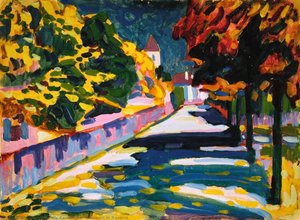
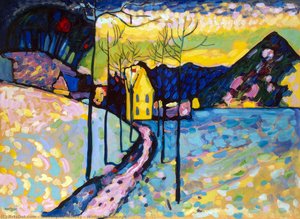
"Twilight," created in 1943, embodies Kandinsky’s unwavering commitment to color theory and his belief in its ability to communicate profound emotional truths. The painting depicts a striking blue landscape punctuated by amorphous shapes – birds, figures, and an umbrella – arranged against a textured surface.
Kandinsky's masterful manipulation of color is central to the artwork’s impact. Deep blues dominate the canvas, conveying a sense of melancholy and contemplation, yet vibrant splashes of violet and yellow inject energy into the composition. These colors aren’t merely decorative; they represent fundamental forces – darkness and light – interacting in harmony.
The painting's textured surface contributes to its emotional resonance, mirroring the artist’s desire to capture not just what he sees but also what he feels. “Twilight” serves as a testament to Kandinsky’s pioneering vision—a profound exploration of color and form as instruments of spiritual expression.
If you aspire to own a piece of this artistic legacy, explore high-quality reproductions from Wahoo Art at https://www.wikiart.org/en/wassily-kandinsky/twilight-1943.
Domande e risposte
In quale ambiente della casa si adatterebbe bene una riproduzione di "Twilight"?
Una riproduzione di "Twilight" si adatta perfettamente a un/una Zona giorno.
È possibile ordinare una riproduzione a olio di "Twilight"?
"Twilight" è disponibile come una riproduzione a olio dipinta a mano su tela di lino. È possibile effettuare l'ordine nella pagina Riproduzione dipinta a mano, scegliendo tra diverse dimensioni.
Quale emozione e quale stato d'animo trasmette "Twilight" di Wassily Wassilyevich Kandinsky?
L'atmosfera che traspare da "Twilight" di Wassily Wassilyevich Kandinsky è Sereno, e il suo tono emotivo è Enigmatico.
Biografia dell'artista
Wassily Wassilyevich Kandinsky: Pioniere dell'Astrazione
- Nato: 16 dicembre 1866, Mosca, Russia
- Morto: 13 dicembre 1944
- Nazionalità: Russo
Primi Anni e Sviluppo Artistico
- La prima parte della vita di Kandinsky fu segnata da una formazione diversificata, studiando inizialmente legge ed economia all'Università di Mosca.
- All'età di 30 anni, si dedicò all'arte, iscrivendosi alla Accademia di Monaco sotto Franz von Stuck. Questa svolta significò un profondo impegno nell'espressione artistica.
- I suoi primi lavori furono influenzati dall'arte popolare russa, in particolare dal suo viaggio etnografico nella regione di Vologda nel 1889.
- Sviluppò un interesse per il simbolismo del colore e la psicologia, che divennero elementi fondamentali delle sue successive composizioni astratte.
Periodi Artistici Chiave e Stili
- Espressionismo Primitivo: Caratterizzato da colori vivaci e intensità emotiva, evidente in opere come "Papeln (Pioppi)" (1902).
- Transizione all'Astrazione: Kandinsky si allontanò gradualmente dall'arte rappresentazionale, esplorando il rapporto tra colore, forma ed emozione.
- Astrazione Geometrica: Questo periodo vide un focus su forme geometriche e composizioni, esemplificato da "Several Circles" (140 x 140 cm).
- Astrazione Spirituale: Kandinsky credeva che l'arte potesse esprimere verità spirituali attraverso forme non rappresentative. Le sue opere miravano a evocare emozioni ed esperienze interiori piuttosto che raffigurare la realtà esterna.
Influenza e Eredità
- Influenza del Bauhaus: In qualità di docente presso la scuola Bauhaus in Germania, Kandinsky influenzò profondamente generazioni di artisti con le sue teorie sul colore, sulla forma e sull'astrazione.
- Scritti Teorici: I suoi scritti, in particolare "Lo Spirituale nell'Arte," articolavano la sua filosofia artistica e contribuirono significativamente allo sviluppo della teoria dell'arte astratta.
- Impatto sull'Arte Moderna: Kandinsky è ampiamente riconosciuto come un pioniere dell'arte astratta, aprendo la strada a numerosi movimenti e artisti successivi.
- Collezioni Museali: Le sue opere sono conservate in importanti musei di tutto il mondo, tra cui la Galleria Tretyakov a Mosca, che ospita il suo monumentale "Composizione VII."
Opere Notabili
- Composizione VII: Un'opera astratta su larga scala considerata un culmine dello sviluppo artistico di Kandinsky.
- Quadrato Nero (in collaborazione con Kazimir Malevich): Un'opera fondamentale nella storia dell'astrazione, che rappresenta una rottura radicale dalle forme artistiche tradizionali.
- Several Circles: Dimostra il suo uso innovativo di forme geometriche e colori vivaci per creare composizioni dinamiche.
- Murnau con una Chiesa: Bilancia elementi astratti con immagini rappresentative, mostrando il suo stile in evoluzione.
- Una Festa Intima: Un'opera successiva che presenta astrazione geometrica e impasto stratificato, riflettendo la sua continua esplorazione di temi spirituali.

Wassily Wassilyevich Kandinsky
1866 - 1944 , Russia
Dettagli rapidi
- Artistic Movement Or Style: Espressionismo Astratto
- Date Of Birth: 16 dicembre 1866
- Date Of Death: 13 dicembre 1944
- Full Name: Wassily Wassilyevich Kandinsky
- Nationality: Russo
- Notable Artworks:
- Composizione VII
- Quadrato Nero
- Several Circles
- Murnau con una chiesa
- An Intimate Party
- Place Of Birth: Mosca, Russia
Articoli correlati

L'Anima dell'Espressionismo Astratto: Gesto, Colore e la Rivoluzione di New York
Scopri l'essenza dell'Espressionismo Astratto tra Pollock e Rothko. Esplora la rivoluzione di New York con i nostri esperti.

The Visceral Canvas: Exploring the Raw Emotion and Historical Power of Abstract Expressionism
Embark on a profound journey through Abstract Expressionism. Discover the raw emotion, historical significance, and visceral power of the New York School's greatest masters in this expert exploration of mid-century modern art history.

The Soul of Color: A Journey into the Emotional Resonance of Lyrical Abstraction
Embark on a cultural journey through Lyrical Abstraction. Explore how masters like Kandinsky used color and motion to translate emotion into visual poetry. Discover the profound beauty of abstract expressionism and learn to curate emotional resonance in your own art collection.
Esplora le opere d'arte organizzate per temi, stili e caratteristiche.