


 Anteprima in scala reale
 Invia
Invia Condividi
 Dettagli opera
 Guida
Guida

 Scarica
 Simili
 Radiografia
 Slideshow
 Statistiche
Children Roller Skating


William Glackens' "Children Roller Skating" (1918) captures a lively street scene of kids enjoying their pastime, showcasing the artist’s signature realism and vibrant style.
 Espandi i dettagli
Scopri William James Glackens (1870-1938), pioniere dell'Ashcan School! Realismo vibrante e scene di vita quotidiana nella New York e Parigi del '900.
Riproduzione a olio fatta a mano
Olio su tela dipinto a mano nelle tue dimensioni e con la tua cornice, realizzato su ordinazione dai nostri artisti. ( Passa alle stampe Passa all'immagine digitale)




P118B €10

P118H €10

P118W €10

P438Z €10

P508JH €12

P508YH €12

P805H €10

P805Z €10

P919BZ €10

P919G €10

P919XJ €10

P959ZH €10

P968JZ €12

W106C €8

W218G €10

W218JH €8

W218Y €10

W307PJ €10

W316G €10

W316PJ €8

W316Y €10

W398PJ €8

W4111J €10

W500HY €15

W500JH €15

W692G €12

W849H €8

W940BG €15

W953PJ €8




Formato standard
su misura
CM
INCH
Scegli tra le nostre dimensioni predefinite, che rispettano le proporzioni originali dell'opera d'arte.
Loading sizes...

larghezza
altezza
Inserisci la larghezza e l'altezza desiderate, per adattarle alla tua cornice o alla tua parete. Trattandosi di un'opera dipinta a mano, in caso di dimensioni con un formato differente, l'artista può estendere leggermente il dipinto oltre i bordi dell'immagine o ritagliare una piccola parte — la scelta spetta a te. Ti invieremo un mockup digitale da approvare prima che la realizzazione abbia inizio. L'immagine mostrata in questa pagina non rappresenta il risultato finale — solo il mockup lo fa.
Esempi di ciò che può essere modificato: sostituire il volto con una foto del cliente; aggiungere un animale domestico (ad esempio, sostituire un gatto con un cane); inserire un messaggio nascosto nello sfondo; cambiare il paesaggio o gli elementi dello sfondo.
Dopo l'ordine, il team di TopImpressionists.com contatterà il cliente via e-mail per ricevere le istruzioni e fornirà un'anteprima del mockup
Dopo l'ordine, il team di TopImpressionists.com contatterà il cliente via e-mail per ricevere le istruzioni e fornirà un'anteprima del mockup
Consegna in tutto il mondo () in 3/4 settimane anziché nelle normali 5 settimane. (26 Ottobre). Nessun compromesso sulla qualità.

Spedizione espressa gratuita in tutto il mondo

Tela in lino di alta qualità

Assicurazione completa sulla spedizione

Garanzia di rimborso dei dazi doganali

Garanzia di fedeltà cromatica assoluta

Politica di reso entro 100 giorni (solo per difetti di fabbricazione)

Garanzia di rimborso al 100%

Offerta per acquisti multipli
 L'opzione vetro è disponibile solo per dimensioni inferiori a 110 cm

Children Roller Skating
Tecnica di riproduzione
Dimensioni riproduzione
-


Prezzo finale calcolato
€ 236
William James Glackens’ “Children Roller Skating” – A Snapshot of Urban Joy
“Children Roller Skating,” painted in 1918 by William James Glackens, isn't merely a depiction of children enjoying an afternoon pastime; it’s a vibrant distillation of early 20th-century American life—a fleeting moment of unadulterated joy captured amidst the grit and bustle of New York City. Glackens, a key figure in the Ashcan School movement, rejected the idealized portrayals favored by the National Academy of Design, instead choosing to focus on the realities of everyday existence, often portraying it with a distinctive, almost frenetic energy. This painting exemplifies his talent for imbuing ordinary scenes with an extraordinary sense of life and movement.
The scene unfolds on a busy city street, likely in Greenwich Village, a neighborhood known for its bohemian spirit during this period. A group of children, rendered in Glackens’ characteristic bold brushstrokes and rich, dark palette, are engaged in spirited roller skating. Their faces are alight with laughter and excitement, their limbs moving with an infectious energy that spills out onto the canvas. The composition is dynamic—a swirling mass of movement and color—reflecting the lively atmosphere of the street. Glackens masterfully uses loose brushwork to convey a sense of spontaneity and immediacy, as if he’s capturing the scene in real-time.
A Window into the Ashcan School
Glackens' work is deeply rooted in the principles of the Ashcan School, an artistic movement that emerged in New York City around 1908. Rejecting the polished surfaces and mythological subjects favored by academic art, the Ashcan artists sought to portray the realities of urban life—the crowded streets, the working-class neighborhoods, and the everyday struggles of ordinary people. Glackens’ “Children Roller Skating” perfectly embodies this ethos. It's a far cry from the carefully staged portraits that dominated the art world at the time; instead, it offers an unfiltered glimpse into the lives of New Yorkers.
The painting’s style is distinctly American—a blend of realism and impressionism. Glackens employs a vibrant color palette, using dark blues, greens, and browns to create a sense of depth and atmosphere. He also utilizes broken brushstrokes and contrasting colors to capture the movement and energy of the scene. The figures are not rendered with meticulous detail but rather suggested through loose brushwork and expressive gestures. This technique contributes to the painting’s overall dynamism and immediacy.
Symbolism and Context
Beyond its immediate depiction of children roller skating, the painting carries a subtle layer of symbolism. Roller skating was a popular pastime in early 20th-century America, particularly among young people. It represented freedom, recreation, and a break from the constraints of Victorian society. The scene captures a moment of carefree joy—a reminder that even amidst the challenges of urban life, there is always room for laughter and play.
Furthermore, the painting reflects the changing social landscape of New York City at the turn of the century. The city was undergoing rapid industrialization and urbanization, leading to overcrowding, poverty, and social unrest. However, despite these challenges, there was also a sense of optimism and progress—a belief in the potential for a brighter future. “Children Roller Skating” captures this duality—the juxtaposition of hardship and hope, chaos and joy.
A Timeless Image of American Life
“Children Roller Skating” is more than just a painting; it’s a snapshot of a bygone era—a vibrant testament to the spirit of New York City in 1918. Glackens' masterful use of color, brushwork, and composition creates an image that is both captivating and emotionally resonant. It invites us to step back in time and experience the joy and energy of a group of children roller skating on a busy city street. Reproductions of this work offer a beautiful way to bring a piece of American history into your home or office, reminding us of the simple pleasures of life and the enduring power of art.
Domande e risposte
I colori di "Children Roller Skating" di William James Glackens sono vivaci o tenui?
I colori di "Children Roller Skating" di William James Glackens presentano una saturazione Clear Color Presence e un'intensità Vivid.
Quale colore risalta di più in "Children Roller Skating"?
Il colore dominante di "Children Roller Skating" di William James Glackens è Walnut (#705535).
Quale emozione trasmette "Children Roller Skating"?
"Children Roller Skating" di William James Glackens trasmette un tono emotivo Nostalgic.
Opere simili


Biografia dell'artista
Un pioniere dell'Ashcan School
William James Glackens, una figura di spicco nell'arte americana, ha lasciato un segno indelebile sulla tela della storia con i suoi affascinanti dipinti realistici. Nato a Philadelphia, Pennsylvania, nel 1870, il percorso artistico di Glackens è stato una testimonianza della sua incrollabile passione per catturare l’essenza della vita quotidiana.Vita e influenze iniziali
Gli anni formativi di Glackens furono segnati da una naturale inclinazione verso l'arte, che lo portò a iscriversi alla Pennsylvania Academy of the Fine Arts. Sotto la guida di Thomas Anshutz, un rinomato realista, Glackens affinò le sue capacità, diventando infine uno dei fondatori dell'Ashcan School. Questo movimento rifiutava i confini convenzionali della bellezza artistica, concentrandosi invece sulle aspre realtà della vita metropolitana.Carriera Artistica
Il lavoro di Glackens è caratterizzato dalle sue scene di strada dai toni scuri e vibranti e dalle raffigurazioni della vita quotidiana nella New York e Parigi pre-belliche. I suoi pezzi successivi, influenzati da Renoir, presentavano un tono più luminoso, riflettendo la sua crescita come artista. Notabilmente, Glackens lavorò anche come illustratore per giornali e riviste a Philadelphia e New York City.- Vista di Haarlem con terreni di sbiancamento, un dipinto di Jacob Isaakszoon van Ruisdael (Ruisdael), esemplifica il livello di dettaglio e maestria che definisce l'opera di Glackens. Questo pezzo fa ora parte della collezione del Chrysler Museum of Art.
- Il capolavoro di Glackens, The Shoppers, è una testimonianza della sua abilità nel catturare l'essenza della vita urbana. Questo dipinto può essere trovato nella collezione New Realism su TopImpressionists.com.
Evoluzione e Sviluppo Artistico
Nel corso della sua carriera, Glackens ha dimostrato una notevole capacità di adattamento e crescita artistica. Inizialmente influenzato dal realismo di Anshutz e dall'approccio diretto dell'Ashcan School, il suo stile si è evoluto incorporando elementi dell’impressionismo francese, in particolare l’opera di Renoir. Questa influenza è evidente nei suoi dipinti successivi, che presentano una tavolozza più luminosa e un approccio più libero alla pennellata, pur mantenendo la sua attenzione per i soggetti della vita quotidiana. La sua esperienza come illustratore gli ha fornito anche una solida base nella composizione e nel disegno, elementi che sono evidenti in tutta la sua opera.Eredità e Significato Storico
I contributi di Glackens all'arte americana sono molteplici, estendendosi oltre il suo lavoro personale. Ha svolto un ruolo fondamentale nell’aiutare Albert C. Barnes ad acquisire dipinti europei per la Barnes Foundation a Philadelphia. Questa collezione è diventata un pilastro della storia dell'arte americana. Opere chiave e collezioni: * The Shoppers (New Realism, olio su tela, Chrysler Museum of Art) * Vista di Haarlem con terreni di sbiancamento (Ruisdael, Castello Sforzesco, Milano, Italia) Letture consigliate: * [https://TopImpressionists.com/@/william-james-glackens](https://TopImpressionists.com/@/william-james-glackens) - Esplora l'ampia collezione di opere di Glackens su TopImpressionists.com. * [https://en.wikipedia.org/wiki/william_glackens](https://en.wikipedia.org/wiki/william_glackens) - Approfondisci la biografia dettagliata di William James Glackens su Wikipedia.
William James Glackens
1870 - 1938 , Stati Uniti d'America
Dettagli rapidi
- Artistic Movement Or Style: Ashcan School, Realismo Americano
- Artists Or Movements Influenced By This Artist: ['Albert C. Barnes']
- Artists Who Influenced This Artist:
- Thomas Anshutz
- Renoir
- Date Of Birth: 1870
- Date Of Death: 1938
- Full Name: William James Glackens
- Nationality: Americano
- Notable Artworks:
- The Shoppers
- View of Haarlem with Bleaching Grounds
- Place Of Birth (City And Country): Filadelfia, Stati Uniti
Articoli correlati

Capturing the Light: A Journey Through the Soul of American Impressionism and the Hudson River School
Explore the luminous beauty of American Impressionism and the Hudson River School. Discover a curated journey through light, landscape, and history, celebrating the enduring legacy of masters through exquisite, hand-painted oil reproductions for the discerning art lover.
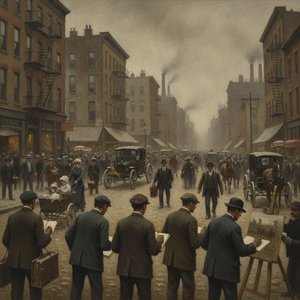
The Ashcan School: Capturing the Raw, Unfiltered Soul of Urban Life through American Realism
Discover the raw beauty of the Ashcan School. Explore how masters like Bellows and Henri captured the gritty, vibrant soul of early 20th-century New York through profound American Realism and evocative urban landscapes.

The Unvarnished Truth: A Cultural Journey Through the Soul of American Realism
Explore the profound beauty of American Realism. From the Ashcan School's urban grit to intimate portraits, discover how artists captured the authentic soul of a nation through unvarnished truth and masterful observation.
Esplora le opere d'arte organizzate per temi, stili e caratteristiche.


