
 2017
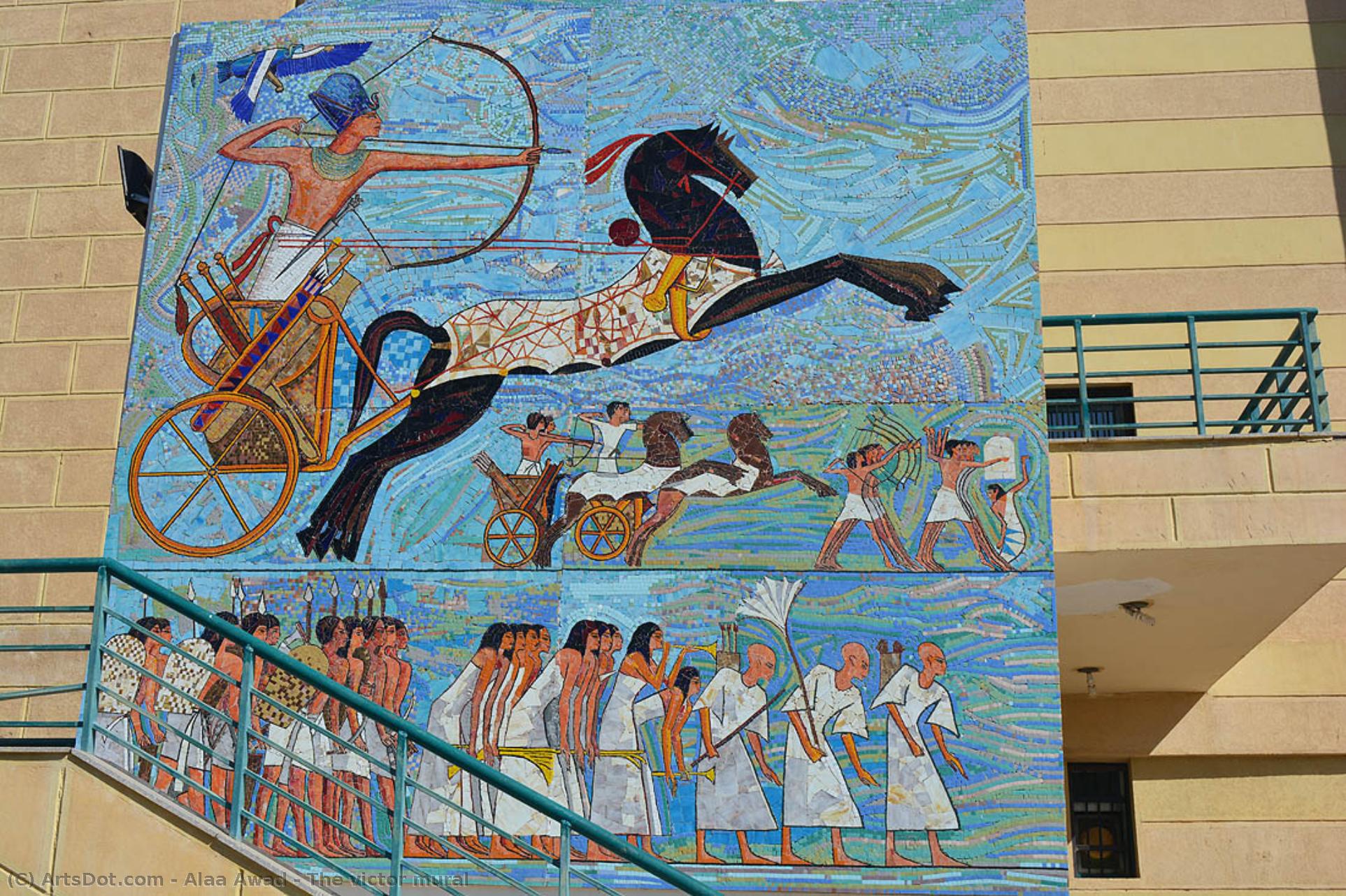
2017 600.0 x 480.0 cm
迅速な制作と多彩な仕上げオプションを備えた、ミュージアムクオリティのジークレーまたはキャンバスプリント。 ( 手描きの絵画を購入 画像を購入)
作品のオリジナル比率に合わせた、当店の規定サイズからお選びください。

特定のフレームやスペースに合わせて、ご自身でサイズを指定することも可能です。選択されたサイズが元の画像の比率と一致しない場合、作品をトリミングするか、鏡面反射または単色での塗りつぶしによって画像を拡張いたします。制作を開始する前に、ご確認用のデジタルモックアップをお送りいたします。
画面上のプレビューには、実際のトリミングや拡張は反映されませんのでご注意ください。最終的な構図を正確に確認できるのは、モックアップのみとなります。
カスタムサイズも承っておりますが、元の比率を維持するためには、あらかじめ用意されたリストからサイズを選択することをお勧めいたします。

The victor mural
複製画のサイズ
In the heart of Luxor, where the golden sands of Egypt meet the timeless flow of the Nile, the work of Alaa Awad emerges as a profound dialogue between the ancient past and the turbulent present. Born in 1981, Awad is not merely a painter but a visual chronicler of his nation's enduring spirit. His artistry serves as a bridge, connecting the monumental grandeur of Pharaonic reliefs with the raw, visceral energy of contemporary social struggle. To witness an Awad mural is to experience a profound engagement with Egyptian identity, where every brushstroke carries the weight of history and the pulse of revolution.
Awad’s academic foundation provided the technical rigor necessary to translate such immense themes onto public canvases. After earning his Bachelor of Arts from South Valley University in 2004, he pursued advanced studies at Helwan University, eventually securing a Master of Arts in 2012 and a PhD in 2019. His scholarly pursuits were never detached from his practice; rather, they informed his deep exploration of symbolism. His doctoral dissertation, titled Artistic Vision Inspired by the Murals of War and Peace in Ancient Egyptian Art, reflects a lifelong commitment to understanding how the visual language of antiquity can be repurposed to speak to modern human experiences of conflict and resilience.
The world first turned its eyes toward Awad during the transformative period of the Arab Spring. As Egypt navigated the seismic shifts of 2011 and 2012, the artist moved from the quiet academic halls to the front lines of Mohamed Mahmoud Street in Cairo. Near the epicenter of the revolution at Tahrir Square, his murals became a living newspaper for a nation in flux. He did not merely document events; he transmuted the grief and fervor of the protestors into enduring icons of resistance.
One of his most hauntingly beautiful contributions to this era was his depiction of funeral marches and wailing women, works that captured the collective mourning of a country. Through these public interventions, Awad transformed the urban landscape of Cairo into a sacred space for memory. His ability to capture the dignity and charisma of the Egyptian people during moments of extreme vulnerability solidified his reputation as an artist whose work is inseparable from the political and social heartbeat of his homeland.
While many contemporary street artists rely on the rapid-fire application of stencils and spray paint, Awad maintains a steadfast devotion to traditional methods. He approaches the wall with the patience of an ancient artisan, utilizing brushes and acrylic paints to achieve intricate details that demand time and meticulous handwork. This choice is deeply symbolic; by eschewing modern shortcuts, he honors the painstaking craftsmanship found in the temples of Luxor.
His stylistic repertoire is a sophisticated blend of influences:
Through this synthesis of the old and the new, Alaa Awad has secured a legacy that transcends borders. Whether through his international solo exhibitions of oil paintings or his monumental public murals, he continues to invite the world to witness the echoes of the Pharaohs resonating within the modern Egyptian soul.

1981 - , Egypt


最新の美術ニュース、限定オファー、そしてインテリアのアイデアをいち早くお届けします。
お客様のプロジェクトについてお聞かせください。当社の美術専門家が、お客様に合わせた3つのパーソナライズされた芸術提案をご提供いたします。
あなたにぴったりの3作品を無料で厳選いたします

 プレビュー
プレビュー
 シェアする
シェアする シェアする
シェアする
 詳細を見る
詳細を見る

 ダウンロード
 似ている作品
 X線調査
X線調査 スライドショー
 詳細を見る
詳細を見る






































 ガラスオプションは、110cm未満のサイズでのみご利用いただけます。


