


 設置イメージを確認
 送る
送る シェア
シェア
 詳細情報
詳細情報 ガイドを表示

 画像をダウンロード
 似ている作品
 X線調査
X線調査 スライドショー
 統計情報
統計情報Louis Pasteur
 Acrylic On Canvas
- WallArt
- Realist Painting
 1885
1885- 19th Century
 154.0 x 126.0 cm
 オルセー美術館
Albert Edelfelt's iconic 1885 portrait of Louis Pasteur captures the scientist’s dedication to science within his laboratory. A masterpiece reflecting the era's advancements and scientific spirit.
 続きを読む
続きを読む
フィンランドの先駆的な画家アルベルト・エデルフェルト(1854-1905)は、肖像画や風景画で知られ、写実主義を代表します。「ルイ・パスツールの肖像」や「白樺林の下」など、フィンランド美術に大きな影響を与えました。
手描き油彩複製画
当社のアーティストが、お客様のご希望のサイズと額縁に合わせて、キャンバスに手描きで制作する油彩画です。 ( プリント版に切り替え デジタル画像販売へ切り替え)




P118B $10

P118H $10

P118W $10

P438Z $10

P508JH $12

P508YH $12

P805H $10

P805Z $10

P919BZ $10

P919G $10

P919XJ $10

P959ZH $10

P968JZ $12

W106C $8

W218G $10

W218JH $8

W218Y $10

W307PJ $10

W316G $10

W316PJ $8

W316Y $10

W398PJ $8

W4111J $10

W500HY $15

W500JH $15

W692G $12

W849H $8

W940BG $15

W953PJ $8




標準サイズ
カスタムサイズ
CM
INCH
作品のオリジナル比率に合わせた、当店の規定サイズからお選びください。
Loading sizes...

横幅
高さ
特定のフレームやスペースに合わせて、ご希望のサイズをご入力いただけます。選択されたサイズが元の画像の比率と異なる場合、アートワークをトリミングするか、手描きで要素を追加して絵画を拡張いたします。デジタルモックアップ を制作し、制作開始前にご確認(承認)をいただきます。
画面上のプレビューは、実際のトリミングや拡張を正確に反映しているものではありません。最終的な構図は、モックアップによってのみ正確にご確認いただけます。
カスタムサイズもご利用いただけますが、元の比率を維持するためには、あらかじめ用意されたリストからサイズを選択することをお勧めいたします。
カスタマイズの例:顔をお客様の写真に置き換える、ペットを追加する(例:猫を犬に変更)、背景に隠れたメッセージを入れる、背景の風景や要素を変更するなど。
ご注文後、TopImpressionists.com チームより詳細な指示をお送りするとともに、仕上がりイメージ(モックアップ)をご提供いたします。
ご注文後、TopImpressionists.com チームより詳細な指示をお送りするとともに、仕上がりイメージ(モックアップ)をご提供いたします。


 ガラスオプションは、110cm未満のサイズでのみご利用いただけます。

Louis Pasteur
再現技法
複製画サイズ一覧
-


合計金額
$ 269
The Genesis of a Masterpiece
Albert Edelfelt’s “Louis Pasteur,” painted in 1885, isn't merely a portrait; it’s a meticulously crafted distillation of an era – the burgeoning age of scientific discovery and the quiet revolution taking place within the laboratories of France. Commissioned during a period of intense intellectual ferment, this oil-on-canvas work transcends simple representation to embody Pasteur’s unwavering commitment to unraveling the mysteries of life and disease. Edelfelt, a Finnish artist deeply influenced by Northern European realism, chose to capture Pasteur not as a celebrated figure in public acclaim, but as a man profoundly engaged in his craft – a scientist immersed in the focused intensity of his laboratory.
The painting’s genesis lies within the context of Pasteur's groundbreaking work. His pioneering research into germ theory, vaccination against rabies and anthrax, and pasteurization were fundamentally reshaping medicine and public health. Edelfelt, keenly aware of this transformative impact, sought to immortalize not just Pasteur’s physical presence but also the spirit of relentless inquiry that defined his legacy. The choice of setting – a meticulously rendered laboratory filled with scientific instruments – immediately establishes this intellectual atmosphere, suggesting a space dedicated to observation, experimentation, and the pursuit of knowledge.
A Symphony of Detail: Technique and Style
Edelfelt’s masterful technique is evident in every brushstroke. He employs a rich, layered impasto—a thick application of paint—that lends texture and depth to the scene. The careful rendering of light and shadow creates a palpable sense of realism, drawing the viewer into Pasteur's world. Notice particularly the subtle gradations of color applied to the various glass bottles and scientific equipment; each element is rendered with painstaking detail, reflecting Edelfelt’s dedication to accuracy. The composition itself is carefully balanced, guiding the eye through the scene – from Pasteur himself, deeply absorbed in his work, to the surrounding apparatus that speaks volumes about his research.
- Color Palette: A muted palette of browns, greens, and blues dominates, reflecting the laboratory’s atmosphere.
- Brushwork: Edelfelt's brushstrokes are visible and deliberate, contributing to the painting's textured surface.
- Lighting: The use of chiaroscuro (strong contrasts between light and dark) emphasizes Pasteur’s figure and highlights the details of his workspace.
Symbolism and the Portrait of a Mind
Beyond its technical brilliance, “Louis Pasteur” is laden with symbolic meaning. The bottles scattered around the laboratory represent the countless experiments and observations that constitute Pasteur's scientific journey. The focused gaze of Pasteur himself embodies his intellectual rigor and unwavering dedication to his work. He’s not a triumphant hero; he’s a man consumed by curiosity, driven by an insatiable desire to understand the natural world. The inclusion of specific instruments—beakers, flasks, and retorts—are not merely decorative elements but rather visual cues that underscore Pasteur's scientific pursuits.
The painting subtly suggests the transformative power of science – a quiet revolution unfolding within the confines of the laboratory, with profound implications for humanity’s future.A Legacy Preserved: Emotional Resonance and Artistic Significance
“Louis Pasteur” is more than just a portrait; it's a testament to the enduring legacy of scientific innovation. It captures not only the likeness of a brilliant mind but also the spirit of inquiry that defines the modern era. The painting’s emotional resonance lies in its portrayal of focused concentration and unwavering dedication—qualities that continue to inspire scientists, artists, and thinkers today. It serves as a poignant reminder of the transformative power of knowledge and the profound impact one individual can have on the world. Reproductions of this iconic work offer a beautiful way to bring this powerful image into your home or office, celebrating both artistic mastery and scientific achievement.
関連作品


アーティストについて
幼少期と芸術への目覚め
1854年7月21日、フィンランドのポーヴォーで生まれたアルベルト・エデルフェルトは、カール・アルベルト・エデルフェルトとアレクサンドラ・エデルフェルト(旧姓ブラント)を両親に持ちます。スウェーデン語を話すフィンランド人家庭に育った彼は、幼い頃から芸術への強い情熱を抱き、1869年にはフィンランド美術協会の絵画学校で正式な教育を受けるようになりました。ポーヴォーの美しい自然は彼の初期の作品に大きな影響を与え、その繊細な色彩感覚と風景描写の才能を開花させました。芸術的旅路:アントワープからパリへ
エデルフェルトの芸術的な探求は、様々な名門機関での研鑽へと繋がります。1873年から1874年にはアントワープ王立美術アカデミーで歴史画の技術を磨き、その後、1874年から1878年までパリ国立美術学校(École Nationale des Beaux-Arts)に入学しました。そこで彼はジャン=レオン・ジェロームに師事し、その写実的な技法と構図力を深く学びました。また、サンクトペテルブルクにも短期間滞在し、多様な芸術的影響を受けながら独自のスタイルを確立していきました。パリでの経験は、彼の作品に新たな視点と洗練された表現をもたらしました。名声の獲得と代表作
1889年のパリ万国博覧会で金メダルを受賞したことが、エデルフェルトの名声を決定づけました。この頃から、彼の作品は国際的に評価されるようになります。代表作としては、ルイ・パスツール像が挙げられ、この作品によって彼はフランスのレジオン・ドヌール勲章を授与されました。また、ブー דוワールに佇む若い女性は、彼の女性描写における繊細さと優雅さを際立たせる傑作であり、白樺林の下はフィンランドの風景を情感豊かに表現した作品として知られています。リアリズム運動への貢献と後世への影響
エデルフェルトは、フィンランドで最初に国際的な名声を得た芸術家の一人であり、フィンランドのリアリズム運動に大きく貢献しました。彼の作品は、当時の社会情勢や人々の生活を忠実に描き出し、多くの人々に感動を与えました。また、アクセリ・ガレン=カレラやグンナル・ベンドストロムといった若いフィンランド人画家たちに多大な影響を与え、彼らのパリでの活躍を支援しました。エデルフェルトの存在は、フィンランド美術界における重要な転換点となりました。美術館コレクションと記念
エデルフェルトの作品は、ヘルシンキのアテネウム美術館をはじめとする様々な美術館に所蔵されています。彼の遺産を称えるため、2004年には彼の生誕150周年を記念して100ユーロのエデルフェルト記念硬貨が発行されました。 主要な作品と美術館コレクション: さらに詳しく:
アルベルト・エデルフェルト
1854 - 1905 , 日本
アーティスト情報
- Artistic Movement Or Style: 写実主義
- Artists Or Movements Influenced By This Artist:
- アクセリ・ガレン=カレラ
- グンナル・ベンドスト
- Artists Who Influenced This Artist: ['ジャン=レオン・ジェローム']
- Date Of Birth: 1854年7月21日
- Date Of Death: 1905年
- Full Name: アルベルト・グスタフ・アリスティデス・エデルフェルト
- Nationality: フィンランド人
- Notable Artworks (List Of Titles):
- ルイ・パスツールの肖像
- 若い女性のブードワール
- 白樺林の下
- Place Of Birth (City And Country): フィンランド ポルヴォー
関連記事
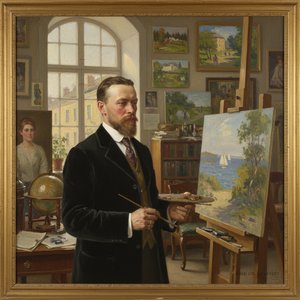
Albert Edelfelt: A Pioneer of Finnish Realism & International Impressionist Circles
Explore the life & work of Albert Edelfelt, a pioneering Finnish Realist painter who bridged Impressionism & national identity. Discover his masterpieces and lasting influence on art history.

Morris Louis: Pioneering Color Field Painting & Abstract Expressionism's Legacy
Explore the groundbreaking abstract expressionism of Morris Louis, a pioneer of Color Field painting. Discover his innovative techniques, influential series & lasting legacy in post-war American art. Learn more at TopImpressionists.

Albert Charles Lebourg: A Study in Atmospheric Impressionism & Rural France
Explore the serene landscapes of Albert Charles Lebourg, a master of the Rouen School Impressionists. Discover his atmospheric paintings of the Seine and enduring legacy in 19th-century French art.

Anne-Louis Girodet: Bridging Neoclassicism & Romanticism with Emotional Truth
Explore the captivating world of Anne-Louis Girodet, a pivotal figure bridging Neoclassicism & Romanticism. Discover his masterpieces and unique artistic vision with TopImpressionists.

Albert Goodwin: Capturing Victorian Light & Atmosphere – A Study in Landscape Painting
Explore the captivating landscapes of Albert Goodwin (1845-1932), a celebrated Victorian watercolourist influenced by Turner & Ruskin. Discover his techniques, prolific collection, and lasting legacy in British art history.
