

Shown: · With its frame:
 設置イメージを確認
 送る
送る シェア
シェア
 詳細情報
詳細情報 ガイドを表示

 画像をダウンロード
 似ている作品
 X線調査
X線調査 スライドショー
 Q&A
Q&A 統計情報
統計情報 Impressionism
 20.0 x 36.0 cm
 アシュモリアン美術館
¥ 42323
手描き油彩複製画
当社のアーティストが、お客様のご希望のサイズと額縁に合わせて、キャンバスに手描きで制作する油彩画です。 ( プリント版に切り替え デジタル画像販売へ切り替え)
Size
·標準サイズ
カスタムサイズ
CM
INCH
作品のオリジナル比率に合わせた、当店の規定サイズからお選びください。
Loading sizes...

横幅
高さ
フレームや壁のスペースに合わせて、ご希望の幅と高さを入力してください。本作品は手描きのため、異なる比率のサイズをご希望の場合、絵画の周囲を少し広げて描くか、あるいは端を少しカットして調整することが可能です。お客様のご要望に合わせます。制作を開始する前に、仕上がりを確認するためのデジタルモックアップをお送りいたします。このページに表示されている画像は完成品の実物ではなく、あくまでモックアップによるイメージです。
 詳細を見る
詳細を見るFinish
·
White ¥1

Blurside ¥1

Extended ¥1

P118B ¥10

P118H ¥10

P118W ¥10

P438Z ¥10

P508JH ¥12

P508YH ¥12

P805H ¥10

P805Z ¥10

P919BZ ¥10

P919G ¥10

P919XJ ¥10

P959ZH ¥10

P968JZ ¥12

W106C ¥8

W218G ¥10

W218JH ¥8

W218Y ¥10

W307PJ ¥10

W316G ¥10

W316PJ ¥8

W316Y ¥10

W398PJ ¥8

W4111J ¥10

W500HY ¥15

W500JH ¥15

W692G ¥12

W849H ¥8

W940BG ¥15

W953PJ ¥8

H24-GOLD ¥30

H24-SILVER ¥30

H36-GOLD ¥45

H36-SILVER ¥45
Shipped in a protective tube, ready for your own framer.
Above 105 cm the frame is shipped as a kit for a professional framer — read the details.
Extras
optionalWhat do the extras include?
Examples of what can be changed: Replace face with customer photo; Add pet (e.g., replace cat with dog); Include hidden message in background; Change background landscape or elements.
After order, TopImpressionists.com team will email client for instructions and provide a mockup preview
After order, TopImpressionists.com team will email client for instructions and provide a mockup preview
世界中への配送()は、通常の5週間ではなく、3〜4週間でお届けいたします。(29 10月)。品質には一切妥協いたしません。
保護用ワニス
銘板
刻印入りブロンズプレートの詳細
This elegant plaque features the artist's name and the title of the artwork, finely engraved for a timeless presentation.
It is made from bronze with a refined, elegant finish. The text is precisely laser-engraved for a sharp and permanent result. Measuring 9x2 cm, the plaque is compact yet easy to read. It's built to be durable and scratch-resistant, offering a professional, museum-quality look. Mounting is simple thanks to the included adhesive backing.
透明アクリル銘板の詳細
The plaque includes essential engraved details such as the artist's name, the title of the artwork, the date it was created, the type of media used-like oil on canvas or watercolor-a brief description of the piece, and a QR code that links to the complete artwork information.
It is crafted from clear acrylic, offering a sleek, modern appearance. The text is UV-engraved in black to ensure strong visual contrast. With a size of 10x15 cm, it ensures optimal readability. It comes equipped with two metal hooks for secure wall mounting. The plaque is designed to be weather-resistant, making it suitable for various environments, and it includes interactive features that work seamlessly with smartphone scanning.
黒アクリル製銘板の詳細
This elegant plaque includes engraved information such as the artist's name, the title of the artwork, the date it was created, the type of media used (like oil on canvas or watercolor), a short description of the artwork, and a QR code for quick access to more information.
The plaque itself is made from refined black acrylic with a premium finish. The text is laser-engraved in white for high contrast and readability. Its size is 10x15 cm, designed to be easy to read. It comes with two metal hooks for professional mounting. The design is sleek and fits any interior style. It is also weather-resistant and durable, with built-in digital integration for mobile compatibility.
ガラスオプションは、110cm未満のサイズでのみご利用いただけます。
 ガラスオプションは、110cm未満のサイズでのみご利用いただけます。
- 世界中へ無料エクスプレス配送
- 高品質なリネンキャンバス
- 配送時完全保険付
- 関税・輸入税の払い戻し保証
- 忠実な色彩再現の保証
- 100日間返品保証(製造上の欠陥がある場合のみ)
- 100% 全額返金保証
- まとめ買い割引のご案内


コレクション詳細
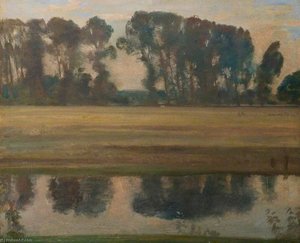
Admire 'River Landscape' by Alfred William Parsons – an atmospheric Impressionist painting of a serene river scene. Explore its muted colors & loose brushstrokes.
アーティストプロフィール
Alfred William Parsons (1847-1920) was a celebrated English landscape painter, illustrator & garden designer. Known for idyllic scenes of the English countryside, botanical illustrations for William Robinson, and designs blending art with nature. #En
About the painting
Quick facts and art quiz
About Alfred William Parsons

Alfred William Parsons
1847 - 1920
アーティストについて
The Verdant Vision of Alfred William Parsons
In the golden age of Victorian landscape painting, few artists captured the quiet majesty of the English countryside with as much botanical precision and poetic grace as Alfred William Parsons. Born on December 2nd, 1847, in the picturesque village of Beckington, Somerset, Parsons was destined to become a bridge between the worlds of fine art and horticultural science. He descended from a lineage deeply rooted in the earth; his father, Joshua Parsons, was a noted alpinist and a close correspondent to the legendary garden designer William Robinson. This early immersion in the rhythms of nature provided the foundational palette for a career that would eventually define the aesthetic of the English pastoral ideal.
Though his professional journey began far from the easel—serving as a clerk at the Post Office starting in 1867—the call of creative expression proved too potent to ignore. Driven by a desire for a more dynamic existence, Parsons abandoned the sedentary life of bureaucracy to pursue formal training at the prestigious Kensington School of Art. It was here that his technical prowess began to coalesce, blending the meticulous observation required for botanical illustration with the atmospheric sensitivity of landscape painting. His emergence into the London art scene was marked by regular exhibitions at the Royal Academy and the Grosvenor Gallery, establishing him as a vital voice in a community that sought to find divinity in the natural world.
A Symbiosis of Art and Nature
The true brilliance of Parsons lay in his ability to treat the landscape not merely as a backdrop, but as a living, breathing protagonist. His work often functioned as a seamless dialogue between the wildness of nature and the curated beauty of the garden. This dual identity as both an illustrator and a garden designer allowed him to approach his canvases with a unique scientific eye. He was particularly renowned for his fine botanical illustrations, which brought him into close collaboration with William Robinson. Through these works, Parsons helped popularize a style of gardening that favored naturalistic, flowing arrangements over the rigid, formal structures of previous eras.
His artistic technique was characterized by an exquisite use of light and texture. Whether working in oils or watercolours, Parsons possessed a remarkable ability to render the soft, diffused light of an English afternoon, capturing the way it filtered through heavy foliage or shimmered upon a serene river. His paintings often feature:
- Idyllic English landscapes that evoke a sense of timeless tranquility and nostalgic peace.
- Meticulous botanical detail that honors the specific flora of the British Isles.
- Atmospheric depth achieved through subtle, muted color palettes and masterful brushwork.
- Architectural harmony where stately manor houses are depicted as organic extensions of their verdant surroundings.
Legacy and Artistic Triumph
As his career progressed, Parsons’s influence extended far beyond the borders of England. His expertise in garden design saw him shaping significant landscapes in Scotland and even across the Atlantic in the United States. This period of his life reflected a growing belief among his contemporaries that an artist possessed the unique vision necessary to design gardens that were true works of art. His accolades were numerous and reflected his standing in the upper echelons of the British art world, including winning the prestigious Chantrey Bequest in 1887 and serving as the President of the Society of Painters in Watercolours in 1905.
Beyond his formal titles, Parsons was a man of profound curiosity and literary talent. His publication, Notes From Japan (1896), demonstrated a breadth of interest that mirrored his artistic versatility. Even as the world moved toward the more fragmented styles of the early 20th century, Parsons remained a steadfast guardian of the romantic and the real. When he passed away on January 16th, 1920, he left behind a legacy of harmony—a body of work that continues to remind us of a time when art and nature were viewed as an inseparable, sacred whole.
Quick facts about Alfred William Parsons
- Full Name: Alfred William Parsons
- Nationality: English
- Date Of Birth: 1847
- Date Of Death: 1920
- Place Of Birth: Bекington, Somerset
- Notable Artworks:
- American Apples
- The Pear Orchard
- The Manor Park
- Artistic Movement Or Style: Victorian Landscape Painting
- Artists Who Influenced This Artist: ['William Robinson']
- Artists Or Movements Influenced By This Artist: ['Romanticism']
関連作品



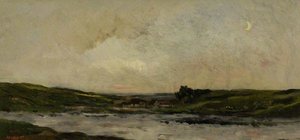


Alfred William Parsons
River Landscape
() ·
With its frame: · Hand-painted in oil on linen
Total