
作品のオリジナル比率に合わせた、当店の規定サイズからお選びください。

特定のフレームやスペースに合わせて、ご希望のサイズをご入力いただけます。選択されたサイズが元の画像の比率と異なる場合、アートワークをトリミングするか、手描きで要素を追加して絵画を拡張いたします。デジタルモックアップ を制作し、制作開始前にご確認(承認)をいただきます。
画面上のプレビューは、実際のトリミングや拡張を正確に反映しているものではありません。最終的な構図は、モックアップによってのみ正確にご確認いただけます。
カスタムサイズもご利用いただけますが、元の比率を維持するためには、あらかじめ用意されたリストからサイズを選択することをお勧めいたします。

The capon tree
複製画のサイズ
The life of Arthur Perigal serves as a poignant window into the heart of the British Romantic movement, capturing a period when the landscape was viewed not merely as scenery, but as a profound vessel for emotion and the sublime. Born in London on January 10, 1784, to François Perigal and Marie Ogier, his early years were steeped in the burgeoning artistic energy of the English capital. His path was irrevocably shaped by his studies under the legendary Henry Fuseli at the Royal Academy. From Fuseli, Perigal inherited a fascination with dramatic composition and an ability to infuse even the most tranquil scenes with a sense of underlying tension and expressive power. This foundational training allowed him to master the delicate balance between meticulous realism and the sweeping, atmospheric idealism that defined the era.
While his initial forays into the art world were centered on the intimate and character-driven realm of portraiture in London, Perigal’s spirit was eventually drawn toward the expansive grandeur of the natural world. Around 1820, a period of significant transition saw him move through Northampton and Manchester, yet it was the rugged, evocative landscapes of Scotland that would ultimately define his legacy. Settling in Edinburgh, he became an integral part of the vibrant Scottish art scene, teaching drawing and exhibiting his works at the Royal Scottish Academy. This relocation allowed his brush to wander through the Highlands, where he found endless inspiration in the interplay of light, mist, and ancient terrain.
Perigal’s artistic technique was a sophisticated blend of oil on canvas and evocative watercolor, characterized by an extraordinary ability to manipulate light to create depth and mood. His works are often celebrated for their atmospheric density; he did not simply paint mountains or lakes, but rather the very air that surrounded them. In masterpieces such as “Loch Ness, Highlands” and “Stepping Stones On The Jed,” one can observe his skill in using color palettes that evoke the shifting moods of the British countryside—from the somber, brooding tones of a storm-swept moor to the soft, diffused glow of a highland morning. His approach often utilized an impasto texture that lent a tactile, living quality to the earth and water he depicted.
Beyond mere topography, Perigal’s oeuvre frequently touched upon the historical and the mythological. He possessed a unique talent for weaving narrative into the landscape, making the viewer feel as though they were witnessing a moment of quiet history. This is evident in his dramatic watercolor “Pompeii,” where he captures the tragic grandeur of Roman ruins amidst the looming threat of Vesuvius, blending Romanticism with historical tragedy. Whether depicting the architectural heritage of England or the wilder reaches of Scotland, his work remains a meditation on solitude and the enduring beauty of the natural world.
Though history sometimes remembers the more flamboyant figures of the Romantic era, Arthur Perigal holds a significant place in the canon of 19th-century British art. His ability to bridge the gap between the structured portraiture of his early career and the emotive, sweeping landscapes of his later years reflects the broader evolution of British art during the Victorian period. He remains a vital figure for those studying the transition from classical precision to Romantic expression.
The enduring appeal of Perigal’s work lies in its ability to transport the observer to a bygone era of discovery and reverence for nature. His contributions can be summarized through several key artistic pillars:

1860 - 1900 , United Kingdom

Explore the profound emotion of Romantic Realism. Discover how 19th-century masters blended meticulous observation with raw human feeling to capture the soul through breathtaking oil paintings and timeless artistic legacies.
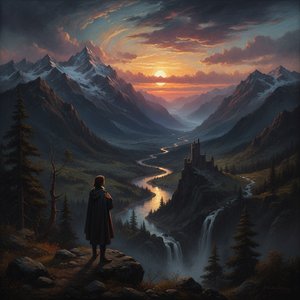
Explore the profound emotional depth of Romantic landscape painting. Discover how masters like Turner and Friedrich captured the sublime power of nature through intuition and imagination in this expert art history retrospective.

Explore the profound emotional depth of Romantic landscape painting. Discover how masters like Friedrich and Turner captured the sublime through light, shadow, and nature's power in this expert art history retrospective for discerning collectors.


最新の美術ニュース、限定オファー、そしてインテリアのアイデアをいち早くお届けします。
お客様のプロジェクトについてお聞かせください。当社の美術専門家が、お客様に合わせた3つのパーソナライズされた芸術提案をご提供いたします。
あなたにぴったりの3作品を無料で厳選いたします


 プレビュー
プレビュー
 プリントを購入
 シェアする
シェアする シェアする
シェアする
 詳細を見る
詳細を見る

 ダウンロード
 似ている作品
 X線調査
X線調査 スライドショー
 詳細を見る
詳細を見る






































 ガラスオプションは、110cm未満のサイズでのみご利用いただけます。


