
 シェアする
シェアする シェアする
シェアする
 詳細を見る
詳細を見る ガイドを表示

 ダウンロード
 似ている作品
 スライドショーを表示
 Q&A
Q&A 統計情報
統計情報Oval Sculpture


Dame Barbara Hepworth (1903-1975) was a celebrated English artist and sculptor who revolutionized modern sculpture. Educated at Leeds School of Art and awarded a scholarship to the Royal College of Art, she co-founded Unit One Art Movement alongside Ben Nicholson and Paul Nash.
 詳細を表示
詳細を表示
バーバラ・ヘップワース(1903-1975)のモダニズム彫刻を探索しましょう。抽象芸術の先駆者である彼女の作品は、「Oval Form」や「Two Forms」など、シュルレアリスムと抽象を融合させています。ヘップワース・ウェイクフィールドで彼女の遺産を見つけましょう。
このページに掲載されている作品は著作権法によって保護されており、当社の許可なく同一の複製物を制作または販売することは法律で禁じられています。この保護は、以下のような国際条約に基づき執行されます。 ベルヌ条約 および、以下の条項に定められたものを含む各国の法律により、 米国著作権法 第17編。
この手法は、著作権で保護された作品の複製や複写を伴わないため、著作権法に完全に準拠しています。これは単なる模倣ではなく、創造的な再解釈です。元の作品からインスピレーションを受けつつも、それとは異なる、全く新しい絵画を生み出すものです。
ジークレー/アートプリント
スピーディーな制作と多彩な仕上げオプションが魅力の、ミュージアムクオリティなジークレー・キャンバスプリント。 ( 手描き複製画を注文する デジタル画像販売へ切り替え)




































標準サイズ
オーダーメイド
CM
INCH
作品のオリジナル比率に合わせた、当店の規定サイズからお選びください。
Loading sizes...

横幅
高さ
額縁や壁のスペースに合わせて、ご希望の幅と高さを入力してください。プリントはカットすることは可能ですが、元の画像より大きくすることはできないため、異なる比率のサイズを選択された場合は、画像の一部が欠けることになります。印刷を開始する前に、内容を確認していただくためのデジタルモックアップをお送りいたします。このページに表示されている画像は、実際のカット後の状態を示すものではありません。実際の仕上がりはモックアップにてご確認ください。


 ガラスオプションは、110cm未満のサイズでのみご利用いただけます。

Oval Sculpture
ジークレー/アートプリント
複製画サイズ一覧
-


合計金額
¥ 11078
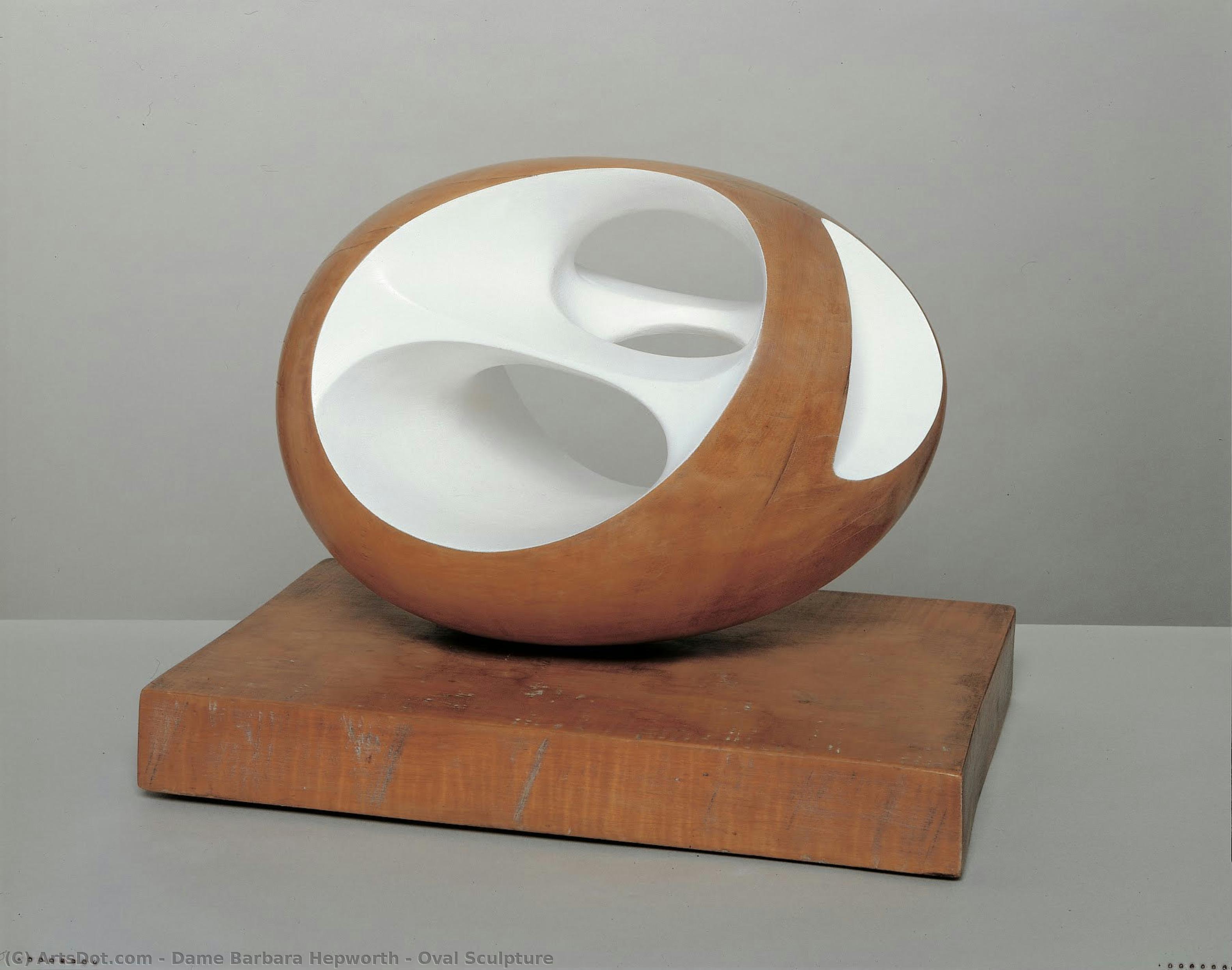
Oval Sculpture: A Meditation on Form and Space by Barbara Hepworth
Dame Barbara Hepworth’s “Oval Sculpture,” created in 1943, stands as a testament to the profound influence of modernist sculpture on British art during its formative years. This deceptively simple piece—a cast bronze version produced in 1958—captures an essence of geometric abstraction that transcends mere visual representation.
The sculpture’s core is comprised of two interlocking bowls crafted from wood, positioned vertically atop one another. At first glance, the arrangement might appear straightforward; however, Hepworth skillfully employs a technique rooted in illusionism to generate a mesmerizing effect. The subtle curvature and hollow interior of each bowl create an optical paradox—a suggestion of a larger form contained within, prompting viewers to contemplate the relationship between solid and void.
Hepworth’s artistic journey began at Leeds School of Art in 1920, where she honed her skills before securing a prestigious scholarship to study at the Royal College of Art. Her involvement with the Unit One art movement—a collaborative effort uniting Surrealism and Abstraction—established her reputation as a trailblazer within British modernism.
- Style: Hepworth’s work embodies the principles of geometric abstraction, prioritizing form and space over traditional depiction.
- Technique: The sculpture utilizes wood carving combined with bronze casting – a masterful fusion that emphasizes texture and materiality.
- Historical Context: Produced during World War II, “Oval Sculpture” reflects the anxieties and aspirations of its time—a desire to explore new aesthetic languages amidst global upheaval.
Beyond its formal qualities, "Oval Sculpture" resonates with deeper symbolic meanings. The bowl form itself has been associated with containment and receptivity – concepts that align with Hepworth’s broader exploration of the human condition. Its stillness invites contemplation, encouraging viewers to consider the interplay between internal experience and external perception.
The sculpture's placement within the Kimbell Art Museum collection underscores its enduring significance as a cornerstone of modern art history. It serves as an inspiration for interior designers seeking to infuse spaces with elegance and intellectual depth—a reminder that beauty can reside in understated geometric forms and thoughtful artistic expression.
Q&A
「Oval Sculpture」にはどのような技法が用いられ、いつ制作されたものですか?
「Oval Sculpture」は、1943年にSculpture Bronze技法を用いて制作されました。技法と制作年は、原画がどのような手法で、いつ描かれたかを示すものです。
バーバラ・ヘップワース作「Oval Sculpture」には何が描かれ、どのような情緒が漂っていますか?
バーバラ・ヘップワース作「Oval Sculpture」は、sculpture, abstraction, form, space, british art, hepworth, minimalismを描き出し、Minimalistな情緒を湛えています。主題と雰囲気が相まって、作品の物語を形作っています。
バーバラ・ヘップワース作「Oval Sculpture」のスライドショーはありますか?
スライドショーはこちら:バーバラ・ヘップワース作「Oval Sculpture」のスライドショーページ。
作家プロフィール
生い立ちと教育
バーバラ・ヘプワース卿は、イギリスの彫刻家および芸術家としてその名を馳せた人物であり、1903年1月10日、ヨークシャーのウェイクフィールドに生を受けました。彼女の芸術への道は、1920年にリーズ・スクール・オブ・アートに入学したことから始まり、その後、郡の奨学金を得てロンドンのロイヤル・カレッジ・オブ・アート(RCA)へと進みました。1921年から学びを深め、1924年には見事にディプロマを授与されました。芸術的キャリア
- バーバラ・ヘプワース卿の作品は、モダニズム、とりわけ近代彫刻の真髄を体現しています。彼女は、国際的な名声を手にした数少ない女性芸術家の一人でした。
- 1933年、彼女はベン・ニッコールやポール・ナッシュらと共に「ユニット・ワン」という芸術運動を共同設立しました。これは、イギリスの芸術界においてシュルレアリスムと抽象表現を融合させることを目的とした挑戦的な試みでした。
- ヘプワースの初期の作品は、抽象的な性質を特徴としており、パリを拠点とする芸術運動「アブストラクション・クレアシオン」への関わりも、彼女の作風形成に大きな影響を与えました。
代表作と展覧会
- ブロンズ彫刻である「Oval Form (Trezion)」は、アメリカ合衆国フォートワースにあるキンベル美術館のコレクションとして収蔵されています。(TopImpressionistsで詳細を見る)
- 彫刻作品である「Two Forms」は、イギリスのウェイクフィールドにあるヘプワース・ウェイクフィールドにて展示されています。(TopImpressionistsで詳細を見る)
- 大理石の彫刻である「Totem」もまた、ヘプワース・ウェイクフィールドのコレクションの一部を構成しています。(TopImpressionistsで詳細を見る)
遺産と美術館コレクション
バーバラ・ヘプワースの作品は世界的に高く評価されており、彼女の彫刻や絵画は、世界各地の様々な美術館のコレクションに組み込まれています。彼女の名を冠したヘプワース・ウェイクフィールドには、ヘプワース自身の傑作をはじめ、著名な芸術家たちによる数多くの名品が収蔵されています。(ヘプワース・ウェイクフィールドについて詳しくはこちら(TopImpressionists))結び
バーバラ・ヘプワース卿が近代イギリス彫刻において切り拓いた先駆的な業績は、美術史に消えることのない足跡を残しました。彼女の遺志は、今なお多くの芸術家や愛好家たちにインスピレーションを与え続けており、その作品群は、彼女の革新的な精神と芸術的才能を物語る不朽の証として輝き続けています。 バーバラ・ヘプワースの詳細(Wikipedia)
バーバラ・ヘップワース
1903 - 1975 , イギリス
プロフィール概要
- Artistic Movement Or Style: モダニズム、抽象主義
- Artists Or Movements Influenced By This Artist:
- アブストラクション・クレアシオン
- ユニット・ワン
- Artists Who Influenced This Artist:
- ヘンリー・ムーア
- ベン・ニッコール
- Date Of Birth: 1903-01-10
- Date Of Death: 1975-05-20
- Full Name: バーバラ・ヘップワース
- Nationality: イギリス
- Notable Artworks:
- オーバル・フォーム (トレジオン)
- トゥー・フォームズ
- トーテム
- Place Of Birth: イギリス、ウェイクフィールド
関連記事

The Soul of Color: A Journey into the Emotional Resonance of Lyrical Abstraction
Embark on a cultural journey through Lyrical Abstraction. Explore how masters like Kandinsky used color and motion to translate emotion into visual poetry. Discover the profound beauty of abstract expressionism and learn to curate emotional resonance in your own art collection.


