

 設置イメージを確認
 送る
送る シェア
シェア
 詳細情報
詳細情報 ガイドを表示

 画像をダウンロード
 似ている作品
 X線調査
X線調査 スライドショー
 統計情報
統計情報Harvesting Towards Morehampton
 1910
1910 38.0 x 52.0 cm
 続きを読む
続きを読む
ジークレー/アートプリント
スピーディーな制作と多彩な仕上げオプションが魅力の、ミュージアムクオリティなジークレー・キャンバスプリント。 ( 手描きの複製画を注文する デジタル画像販売へ切り替え)




































標準サイズ
カスタムサイズ
CM
INCH
作品のオリジナル比率に合わせた、当店の規定サイズからお選びください。
Loading sizes...

横幅
高さ
額縁や壁のスペースに合わせて、ご希望の幅と高さを入力してください。プリントはカットすることは可能ですが、元の画像より大きくすることはできないため、異なる比率のサイズを選択された場合は、画像の一部が欠けることになります。印刷を開始する前に、内容を確認していただくためのデジタルモックアップをお送りいたします。このページに表示されている画像は、実際のカット後の状態を示すものではありません。実際の仕上がりはモックアップにてご確認ください。


 ガラスオプションは、110cm未満のサイズでのみご利用いただけます。

Harvesting Towards Morehampton
ジークレー/アートプリント
複製画サイズ一覧
-


合計金額
¥ 10949
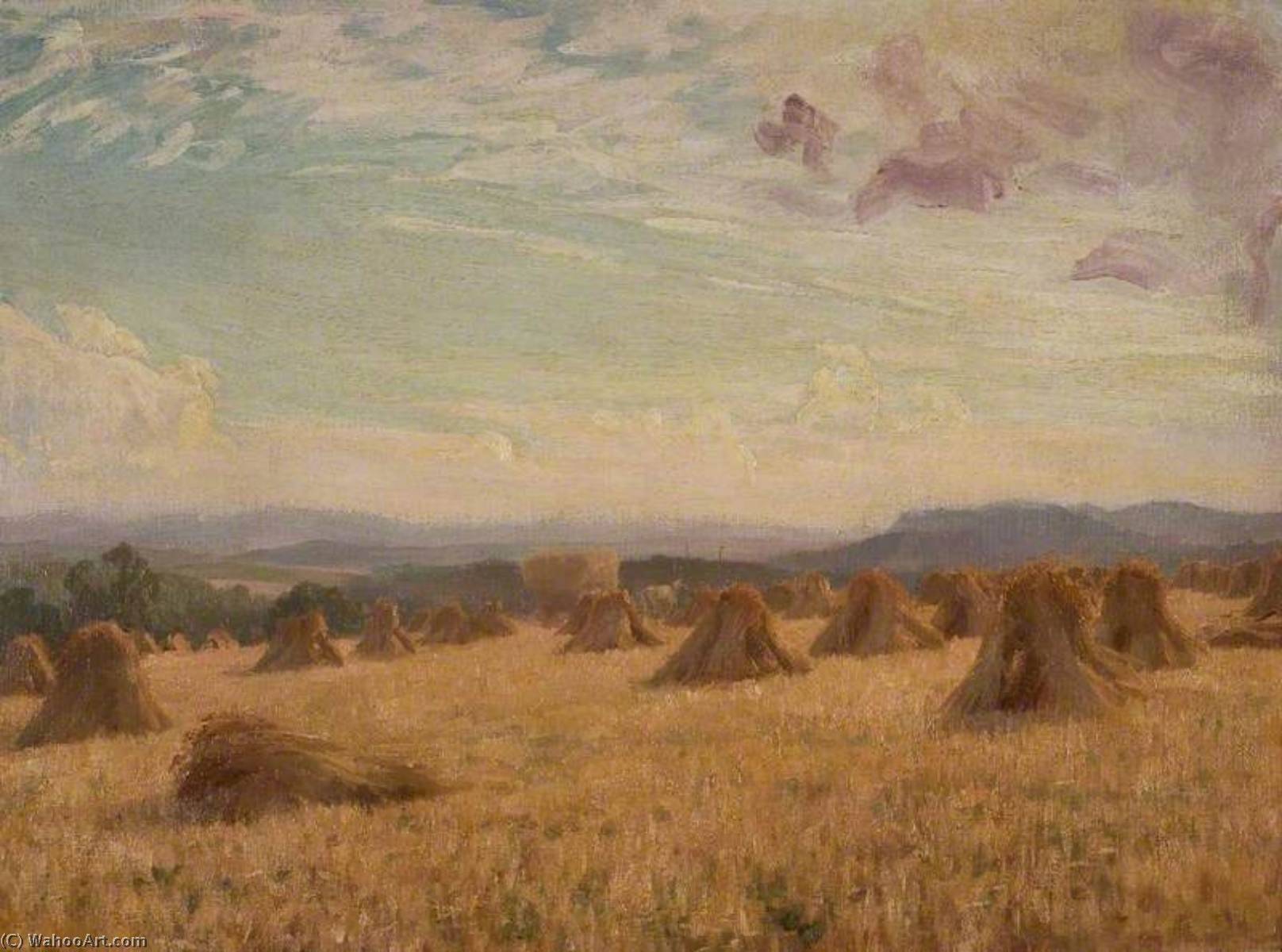
The painting Harvesting Towards Morehampton by Brian Hatton is a beautiful representation of rural life in the early 20th century. Created in 1910, this oil on canvas piece measures 38 x 52 cm and is currently housed at the Hereford Museum and Art Gallery in the United Kingdom.
The Hereford Museum and Art Gallery is a must-visit destination for art lovers, with a collection of artworks that includes pieces by Brian Hatton and other notable artists. For more information on the museum and its collection, visit the TopImpressionists.com page on the museum.
Composition and Style
The painting depicts a serene landscape with a field of wheat as the main subject. The sky above is cloudy, adding to the overall atmosphere of the scene. Several stacks of hay are scattered throughout the field, with some closer to the foreground and others further away. Trees can be seen in the distance, adding depth to the composition. The use of warm colors and soft brushstrokes creates a sense of tranquility, inviting the viewer to step into the peaceful world of the painting. Key elements of the painting include the use of light and shadow, which adds volume and texture to the scene. The artist's attention to detail is also evident in the way the wheat stalks are depicted, with each one carefully rendered to create a sense of movement and energy.Artist and Inspiration
Brian Hatton was a British artist known for his landscapes and rural scenes. His work is characterized by a sense of calmness and serenity, which is evident in Harvesting Towards Morehampton. The painting is reminiscent of other works by artists such as Winslow Homer, who was known for his American Realist paintings.- For more information on Brian Hatton and his work, visit the Alfred East Art Gallery page on TopImpressionists.com.
- To see more paintings by Brian Hatton, visit the Brian Hatton page on TopImpressionists.com.
The Hereford Museum and Art Gallery is a must-visit destination for art lovers, with a collection of artworks that includes pieces by Brian Hatton and other notable artists. For more information on the museum and its collection, visit the TopImpressionists.com page on the museum.
よくあるご質問
Brian Hatton作「Harvesting Towards Morehampton」の配色(パレット)はどのように表現されていますか?
Brian Hatton作「Harvesting Towards Morehampton」は、Earthyなカラーパレットを使用しています。この配色が、作品全体の色彩的特徴を象徴しています。
Brian Hatton作「Harvesting Towards Morehampton」の画像は自由に複製できますか?
Brian Hatton作「Harvesting Towards Morehampton」 の著作権について:本作品はパブリックドメイン(著作権消滅)です。これにより、画像の複製が自由に行えるかどうかが決まります。
「Harvesting Towards Morehampton」において、コントラストと調和はどのように組み合わさっているのでしょうか?
Brian Hatton作「Harvesting Towards Morehampton」の色彩構成は、SereneなコントラストとUnified Paletteな調和を併せ持っています。


アーティストについて
A Lost Voice of the English Countryside
The story of Brian Hatton is one of remarkable, if tragically curtailed, artistic promise. Born in 1887 amidst the idyllic landscapes of Broomy Hill, Herefordshire, Hatton emerged as a significant figure in British landscape painting during the formative years of the twentieth century. His life and work were inextricably linked to the rural traditions of his homeland, yet his vision was shaped by much broader horizons. Though his career was cut short by his untimely death in action during the First World War at just twenty-eight years old, he left behind a profoundly moving body of work that offers a poignant glimpse into a disappearing world—a testament to the power of capturing beauty amidst impending change.
Hatton’s artistic journey began with an early fascination for drawing and sketching, nurtured by a supportive family who recognized his burgeoning talent. As he matured, his sensibilities were profoundly shaped by exposure to influential European movements. Through visits to Paris, he encountered the transformative techniques of Impressionism and Neo-Romanticism, absorbing the methods of masters such as Monet and Sisley. These encounters encouraged him to prioritize the capture of fleeting moments of light and atmosphere, a hallmark of his distinctive approach that would define his later mastery.
Technique, Light, and the Human Element
In his execution, Hatton skillfully blended meticulous observation with a rich, imaginative spirit. His canvases were not merely topographical records of the Worcestershire countryside; they were emotive explorations of texture and mood. He possessed a unique ability to render the physical world—the rugged textures of hedgerows, the weathered stone of walls, and the sprawling fields of Morehampton Manor—with such precision that the viewer can almost feel the dampness of the earth or the warmth of the sun. His style often utilized bold brushstrokes and a vivid yet balanced palette to create depth and visual tension.
Beyond the purely pastoral, Hatton’s oeuvre is notable for its deep humanist element. He frequently infused his landscapes with figures engaged in the quiet dignity of everyday life. Whether through figure studies or more narrative scenes like “Saddling Up,” he portrayed a profound connection between humanity and the land. His portraits and figure paintings, such as the serene “Reclining Nude” (1912), demonstrate a sensitive touch regarding gesture and expression, revealing a psychological depth that complemented his technical accuracy.
Legacy and Historical Significance
The trajectory of Hatton’s career was marked by significant milestones, most notably his exhibition at the Hereford Museum in 1913. This showcase served as a pivotal moment, garnering recognition for his ability to synthesize local identity with modern artistic sensibilities. His work, ranging from the Post-Impressionist echoes in “The Falcon” (1909) to the evocative autumn tones of “The Wye, Belmont Woods,” showcases an artist constantly evolving and pushing the boundaries of British landscape tradition.
Today, Brian Hatton is remembered as a "lost voice" of the early twentieth century. His death in 1916 represents more than just the loss of a single talented individual; it symbolizes the silencing of a promising artistic movement that might have bridged the gap between traditional ruralism and modernism. His surviving works remain vital pieces of British art history, preserved in collections such as the Hereford Museum and Art Gallery, serving as enduring echoes of a landscape and a way of life that were forever altered by the dawn of the modern age.

Brian Hatton
1887 - 1916
アーティスト情報
- Full Name: Brian Hatton
- Nationality: British
- Date Of Birth: 1887
- Date Of Death: 1916
- Place Of Birth: Herefordshire, England
- Notable Artworks:
- Reclining Nude
- Harvesting Towards Morehampton
- Saddling Up
- Artistic Movement Or Style: Early 20th Century Landscape Painting