


 設置イメージを確認
 送る
送る シェア
シェア
 詳細情報
詳細情報 ガイドを表示

 画像をダウンロード
 似ている作品
 X線調査
X線調査 スライドショー
 統計情報
統計情報エイプゼーの眺め
 キャンバスにアクリル絵具
- ウォールアート
- Romantic Landscape Painting
 1825
1825 76.0 x 100.0 cm
 ネオピナコテカ
 続きを読む
続きを読む
ジークレー/アートプリント
スピーディーな制作と多彩な仕上げオプションが魅力の、ミュージアムクオリティなジークレー・キャンバスプリント。 ( 手描きの複製画を注文する デジタル画像販売へ切り替え)




P118B ¥10

P118H ¥10

P118W ¥10

P438Z ¥10

P508JH ¥12

P508YH ¥12

P805H ¥10

P805Z ¥10

P919BZ ¥10

P919G ¥10

P919XJ ¥10

P959ZH ¥10

P968JZ ¥12

W106C ¥8

W218G ¥10

W218JH ¥8

W218Y ¥10

W307PJ ¥10

W316G ¥10

W316PJ ¥8

W316Y ¥10

W398PJ ¥8

W4111J ¥10

W500HY ¥15

W500JH ¥15

W692G ¥12

W849H ¥8

W940BG ¥15

W953PJ ¥8




標準サイズ
カスタムサイズ
CM
INCH
作品のオリジナル比率に合わせた、当店の規定サイズからお選びください。
Loading sizes...

横幅
高さ
額縁や壁のスペースに合わせて、ご希望の幅と高さを入力してください。プリントはカットすることは可能ですが、元の画像より大きくすることはできないため、異なる比率のサイズを選択された場合は、画像の一部が欠けることになります。印刷を開始する前に、内容を確認していただくためのデジタルモックアップをお送りいたします。このページに表示されている画像は、実際のカット後の状態を示すものではありません。実際の仕上がりはモックアップにてご確認ください。


 ガラスオプションは、110cm未満のサイズでのみご利用いただけます。

エイプゼーの眺め
ジークレー/アートプリント
複製画サイズ一覧
-


合計金額
¥ 10736
カール・アントン・ヨーゼフ・ロトマンの「アイプゼー」について
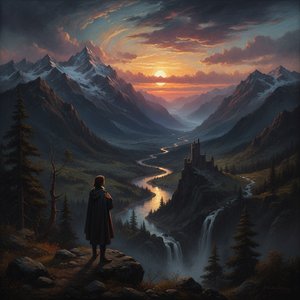
アイプゼーはドイツのバイエルン州にある美しい湖で、この絵画はその風景を捉えたロトマンの傑作です。1825年に制作されたこの作品は、ロマン主義芸術の代表的な画家の一人として知られています。特に彼の風景画は、当時の自然観や芸術家の精神性を反映しており、見る人に深い感動を与えます。- 絵画の詳細: ロトマンのアイプゼーは、雪を抱く山々が背景に広がる壮大な湖畔の風景を描いています。画面中央には小さなボートがあり、湖面に水の反射を見せています。左側に立つ人物は湖のほとりに立ち止まり、景色を楽しむ様子です。ロトマンはこれらの要素を巧みに配置することで、アイプゼーの美しさを最大限に表現しています。
- ロトマンのスタイルと技法: ロトマンはバイエルンにおける風景画の伝統を受け継ぎながらも、独自の表現方法を確立しました。彼は特に光の描写にこだわり、雪山の白い輝きや湖面の水面反射を効果的に描き出しています。この絵画では、広大な山々と静かな湖が対比され、見る人に圧倒的なスケール感と神秘的な雰囲気を醸し出します。
- 歴史的背景: ロトマンが生きた時代は産業革命の最中にあり、社会全体が急速に変化していました。ロトマンはこれらの変化を反映した作品を多く制作しており、「アイプゼー」もその中でも特に重要な作品の一つです。彼は風景画を通して、自然に対する畏敬の念と同時に、人間の活動が環境に与える影響について考えさせます。
- 絵画における象徴性: アイプゼーは純粋な自然美を表現するだけでなく、ロマン主義的な思想や感情を反映しています。雪山の白い輝きは純潔や霊性を象徴し、湖面は静寂と調和を表しています。これらの要素は、ロトマンが描いた絵画に深みを与え、見る人にさまざまな解釈の可能性を提供します。
- 現代におけるアイプゼー: ロトマンの「アイプゼー」は現在でも多くの人々を魅了し続けています。その美しい風景と繊細な技法は、インテリアデザイナーや愛好家にとってインスピレーションの源となっています。高品質な複製版は、この傑作芸術作品の世界観を自宅に持ち帰り、日常の中に自然の美しさを取り戻すことができます。
よくあるご質問
「エイプゼーの眺め」は、Carl Anton Joseph Rottmannのテーマやスタイルとどのように結びついているのでしょうか?
Carl Anton Joseph Rottmannの作品群において、「エイプゼーの眺め」はRomantic Landscape Painting様式に属しており、romanticism, alpine landscape, german art, wright’s style, nature sublimeというテーマを共有しています。
「エイプゼーの眺め」に似た作品はありますか?
Carl Anton Joseph Rottmann作「エイプゼーの眺め」の似ている作品ページでは、関連する作品をご紹介しています。
「エイプゼーの眺め」(1825)は、Carl Anton Joseph Rottmannのキャリアにおけるどの時期の作品にあたりますか?
1825年という制作時期は、Carl Anton Joseph Rottmannの画業におけるRomantic Landscape Paintingに「エイプゼーの眺め」を位置づけています。
アーティストについて
The Visionary Landscapes of Carl Rottmann
Born in the tranquil setting of Handschuhsheim, Germany, in 1797, Carl Anton Joseph Rottmann emerged as a profound voice within the movement of German Romanticism. His life and artistry were deeply intertwined with the shifting landscapes of 19th-century Europe, reflecting a period where the sublime beauty of nature met the burgeoning spirit of national identity. Unlike many of his contemporaries who focused on the intimate or the domestic, Rottmann possessed an expansive vision, seeking to capture the monumental scale of the world through sweeping vistas and mythic atmospheres. His journey was one of constant movement, traveling through the rugged terrains of Greece, Italy, and the Bavarian Alps, each location leaving an indelible mark on his palette and his perception of the divine within the natural world.
The development of Rottmann’s style was a masterful evolution from classical precision to a more emotive, atmospheric approach. Influenced by the grand traditions of landscape painting, he moved beyond mere topographical accuracy to embrace the sublime—that specific Romantic quality of awe and terror inspired by the vastness of nature. His technique involved a sophisticated understanding of light and shadow, using them not just to define form, and shape, but to evoke a sense of historical weight and mythic presence. In his hands, a mountain range was never just stone and ice; it was a silent witness to antiquity, a stage for the legends of old. This ability to infuse physical geography with spiritual and historical narrative became the hallmark of his mature period.
A Legacy of Light and Myth
Rottmann’s achievements are most notably seen in his ability to bridge the gap between the tangible world and the realm of imagination. His works often serve as windows into a lost era, where the ruins of ancient civilizations seem to breathe under the soft glow of a Mediterranean sun or the misty shroud of a northern forest. Through his meticulous attention to the interplay of light upon textures—the roughness of weathered stone, the translucency of water, and the softness of clouds—he achieved a level of luminosity that captivated the art world of his time.
The historical significance of his oeuvre lies in its role as a cornerstone of Romantic landscape art. His contributions can be summarized through several key artistic pillars:
- The Synthesis of History and Nature: He pioneered a method of painting where the landscape itself acts as a vessel for historical memory, blending archaeological interest with poetic expression.
- Mastery of Atmospheric Perspective: His use of color temperature and clarity to create depth allowed viewers to feel immersed in the vastness of his depicted scenes.
- Cultural Documentation: Through his travels, he provided a visual record of the European landscapes that were central to the Romantic identity, particularly the Greek and Bavarian vistas.
Ultimately, the work of Carl Rottmann remains a testament to the power of the gaze to transform the ordinary into the extraordinary. He did not merely paint what he saw; he painted what he felt in the presence of greatness. His legacy continues to resonate with those who find beauty in the monumental and meaning in the silent, enduring features of our earth, ensuring his place as a vital figure in the tapestry of 19th-century European art.

Carl Anton Joseph Rottmann
1797 - 1850 , Germany
アーティスト情報
- Full Name: Joseph Wright of Derby
- Nationality: English
- Date Of Birth: 1797
- Date Of Death: 1850
- Place Of Birth: Handschuhsheim, Germany
- Notable Artworks:
- An Experiment on a Bird in the Air Pump
- The Slaughtered Horse
- A Man Defending His Cart
- Artistic Movement Or Style: Romanticism, Neoclassicism
- Artists Who Influenced This Artist:
- Janys Zedres
- Rembrandt
- Artists Or Movements Influenced By This Artist:
- Joshua Reynolds
- Romanticism
関連記事

Capturing the Soul of Nature: A Journey Through the Sublime Majesty of American Romanticism
Explore the breathtaking beauty of American Romanticism. Discover how Hudson River School masters captured the sublime spirit of the wilderness through luminous oil landscapes and emotional depth. A journey into the soul of nature for the true art enthusiast.
Capturing the Soul: The Emotional Majesty and Sublime Power of Romantic Landscape Painting
Explore the profound emotional depth of Romantic landscape painting. Discover how masters like Turner and Friedrich captured the sublime power of nature through intuition and imagination in this expert art history retrospective.

Capturing the Soul: The Emotional Magic and Sublime Grandeur of Romantic Landscape Painting
Explore the profound emotional depth of Romantic landscape painting. Discover how masters like Friedrich and Turner captured the sublime through light, shadow, and nature's power in this expert art history retrospective for discerning collectors.

