
オンラインプレビューをはるかに凌ぐ、高解像度で鮮明なデジタル画像をご購入いただけます。
各ファイルは、社内の専門家が高度なツールと熟練した手作業によるレタッチを用いて、細心の注意を払って準備されています。すべての画像において、卓越した鮮明度、正確な色彩再現性、そして繊細なディテールを保証いたします。
最終ファイルは、プロフェッショナルな編集・印刷環境ですぐにご利用いただけるよう最適化された状態で、72時間以内にメールにてお届けいたします。これは、一流のデザインスタジオ、出版社、ギャラリーから信頼されているものと同等の品質です。
TopImpressionists.com を選ぶことは、単に画像を手に入れることではありません。それは、プロの手によって精密に仕上げられ、満足保証が付いた高品質なデジタルアートワークを受け取ることを意味します。ご注文いただいた際に自動的に付随する内容は、以下の通りです:

ご注文から72時間以内に、高解像度のデジタル画像ファイルがメールでお手元に届きます。すぐにそのままご利用いただけます。

お客様の作品は、高度なAIツールと専門家による手作業の編集を組み合わせてプロフェッショナルに最適化されており、細部のディテール、鮮明さ、そして正確な色再現性を最大限に引き出しています。

ファイルを誤って削除したり、紛失してしまったりしましたか?ご安心ください。いつでも無料で再送いたします。

関税や手数料、配送料を気にすることなく、お気に入りのアートワークをすぐにお楽しみいただけます。デジタルダウンロードは常に免税です。

プロ仕様のツールとカラーマネジメント技術を用いることで、デジタル画像が元の色を最大限に忠実に再現することを保証いたします。

ご購入いただいたデジタル画像にご満足いただけない場合は、60日以内であれば、修正または100%の返金(理由を問う必要はありません)をさせていただきます。

ご満足いただけない場合は、デジタルファイルを受け取ってから60日以内であれば、理由を問わず全額返金いたします。

3枚購入で10%OFF - 5枚購入で15%OFF - 10枚以上購入で20%OFF。クリエイティブなプロジェクト、ギャラリー、エージェンシーに最適です。
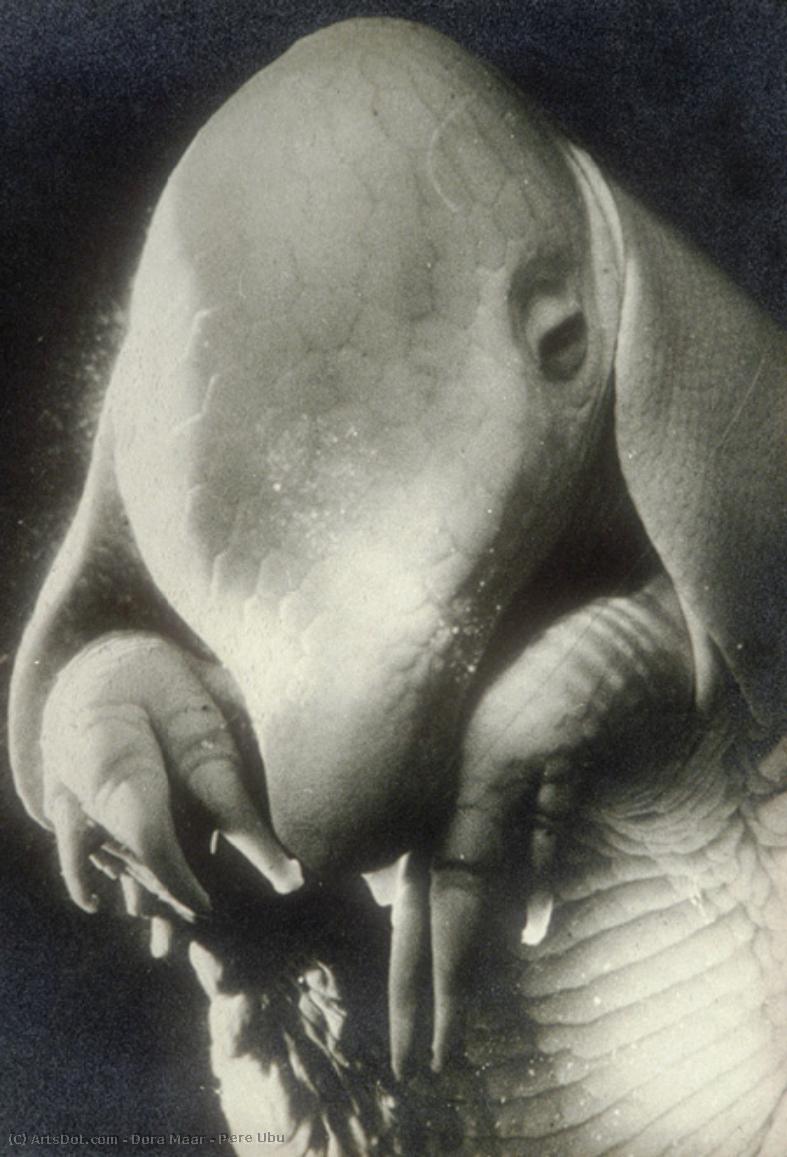
Dora Maar’s “Pere Ubu,” painted in 1936, isn't merely a portrait; it’s an unsettling plunge into the subconscious, a meticulously crafted tableau of primal fear and distorted humanity. This arresting image, rendered in stark monochrome with a dramatic interplay of light and shadow, captures the essence of Surrealism at its most potent – a deliberate disruption of reality designed to evoke profound emotional responses. The painting immediately confronts the viewer with a hybrid creature, a grotesque amalgamation of human and animal features, embodying the spirit of Alfred Jarry’s chaotic and darkly humorous play, “Ubu Roi.” Maar masterfully translates this theatrical absurdity into a tangible visual experience, forcing us to confront uncomfortable questions about identity, power, and the darker aspects of our own nature.
The composition itself is deliberately jarring. The subject, positioned slightly off-center within a tightly cropped frame, dominates the space, creating an immediate sense of intimacy and unease. Maar’s use of texture is particularly striking; the skin appears rough and uneven, almost scabrous in places, while patches of fur or hair add to the creature's unsettling physicality. This tactile quality invites close inspection, drawing the viewer into a world where the boundaries between human and animal blur, and where the familiar becomes disturbingly alien. The sharp angles of the teeth, prominently displayed, contribute significantly to the painting’s menacing aura – a silent threat lurking beneath the surface.
Maar's technical skill is evident in her masterful manipulation of light and shadow. A single, powerful light source, positioned seemingly above and slightly to the left, casts deep shadows across the creature’s face, emphasizing its contours and creating a sense of dramatic depth. This strategic use of chiaroscuro not only highlights key features but also contributes significantly to the painting's overall mood – a blend of mystery, menace, and psychological intensity. The flattened perspective, characteristic of Surrealist art, further intensifies this effect, drawing the viewer’s attention directly to the subject’s face and its unsettling expression.
The creature’s form itself is a carefully constructed distortion of reality. Maar employs angular lines to define the features – the sharp cheekbones, the elongated limbs, the gaping mouth filled with menacing teeth – creating an image that feels both vaguely familiar and profoundly disturbing. The overall effect is one of fragmentation and instability, mirroring the chaotic themes explored in Jarry’s play. It's a deliberate rejection of traditional portraiture, prioritizing emotional impact over realistic representation.
“Pere Ubu” resonates deeply within the context of its time – the turbulent years leading up to World War II. Surrealism emerged as a direct response to the horrors of the First World War and the growing anxieties surrounding fascism and political instability. Maar’s work, like that of many other artists of her generation, reflects this atmosphere of uncertainty and disillusionment. The creature in “Pere Ubu” can be interpreted as a symbol of societal decay, representing the breakdown of traditional values and the rise of irrationality and violence.
Furthermore, the painting’s connection to Jarry's play is crucial to understanding its symbolic weight. "Ubu Roi" satirizes power, greed, and ignorance, portraying a monstrous figure who embodies the worst aspects of human nature. Maar’s portrait captures this essence perfectly, transforming the theatrical caricature into a tangible image of primal fear. The inclusion of the reference “Portrait d'Ubu” on the mount further emphasizes this connection, grounding the painting within its literary and artistic lineage.
Ultimately, "Pere Ubu" is more than just a portrait; it’s an exploration of the unconscious mind. Maar skillfully utilizes distortion, symbolism, and dramatic lighting to create an image that taps into our deepest fears and anxieties. It's a testament to her artistic vision and her ability to translate complex psychological themes into a visually arresting work of art. Reproductions of this powerful piece offer a unique opportunity to bring this unsettling yet captivating world into your home or office, serving as a constant reminder of the enduring power of Surrealism and its profound insights into the human condition.
Dora Maar (Henriette Theodora Markovitch, 1907-1997) remains a captivating figure in the annals of 20th-century art – a photographer, painter, and intellectual whose life was inextricably intertwined with the turbulent currents of Surrealism, political activism, and the passionate intensity of her relationship with Pablo Picasso. Often overshadowed by the brilliance of her collaborator, Maar’s unique vision, marked by psychological depth, social critique, and a strikingly unconventional approach to both photography and painting, deserves far greater recognition. Her story is not merely one of a muse; it's that of an artist who forged her own path amidst a world grappling with war, revolution, and the shifting landscapes of artistic expression.
Maar's involvement in the Surrealist movement was profound, extending beyond mere aesthetic affiliation to encompass a deep engagement with its political ideals. Following her introduction to Pablo Picasso in 1935, she became deeply involved in leftist groups like “masses” and the Union of Intellectuals against Fascism, reflecting a commitment to social justice that permeated much of her work. This period witnessed a significant shift in her artistic practice, influenced by both Picasso’s mentorship and her own evolving sensibilities.
Maar’s photographic output spanned a diverse range of subjects, from glamorous fashion shoots to poignant depictions of social unrest. Her portraits are particularly striking – characterized by their psychological intensity, fragmented forms, and often unsettling gazes. She possessed an uncanny ability to capture the essence of her subjects, revealing both their beauty and their vulnerability.
While often remembered primarily as Picasso's muse and lover, Dora Maar’s artistic legacy extends far beyond this association. Her pioneering work in photography – particularly her exploration of psychological themes and unconventional techniques – established her as a significant figure within the Surrealist movement. Her commitment to social justice and political activism further enriched her artistic practice, imbuing her work with a powerful sense of empathy and critical awareness. Today, Maar’s photographs continue to resonate with viewers, offering a glimpse into a complex and fascinating life—a testament to an artist who defied expectations and left an indelible mark on the world of art.

1907 - 1973 , France


最新の美術ニュース、限定オファー、そしてインテリアのアイデアをいち早くお届けします。
お客様のプロジェクトについてお聞かせください。当社の美術専門家が、お客様に合わせた3つのパーソナライズされた芸術提案をご提供いたします。
あなたにぴったりの3作品を無料で厳選いたします

 プリントを購入
 シェアする
シェアする シェアする
シェアする
 詳細を見る
詳細を見る

 ダウンロード
 似ている作品
 スライドショー


 詳細を見る
詳細を見る