
オンラインプレビューをはるかに凌ぐ、高解像度で鮮明なデジタル画像をご購入いただけます。
各ファイルは、社内の専門家が高度なツールと熟練した手作業によるレタッチを用いて、細心の注意を払って準備されています。すべての画像において、卓越した鮮明度、正確な色彩再現性、そして繊細なディテールを保証いたします。
最終ファイルは、プロフェッショナルな編集・印刷環境ですぐにご利用いただけるよう最適化された状態で、72時間以内にメールにてお届けいたします。これは、一流のデザインスタジオ、出版社、ギャラリーから信頼されているものと同等の品質です。
TopImpressionists.com を選ぶことは、単に画像を手に入れることではありません。それは、プロの手によって精密に仕上げられ、満足保証が付いた高品質なデジタルアートワークを受け取ることを意味します。ご注文いただいた際に自動的に付随する内容は、以下の通りです:

ご注文から72時間以内に、高解像度のデジタル画像ファイルがメールでお手元に届きます。すぐにそのままご利用いただけます。

お客様の作品は、高度なAIツールと専門家による手作業の編集を組み合わせてプロフェッショナルに最適化されており、細部のディテール、鮮明さ、そして正確な色再現性を最大限に引き出しています。

ファイルを誤って削除したり、紛失してしまったりしましたか?ご安心ください。いつでも無料で再送いたします。

関税や手数料、配送料を気にすることなく、お気に入りのアートワークをすぐにお楽しみいただけます。デジタルダウンロードは常に免税です。

プロ仕様のツールとカラーマネジメント技術を用いることで、デジタル画像が元の色を最大限に忠実に再現することを保証いたします。

ご購入いただいたデジタル画像にご満足いただけない場合は、60日以内であれば、修正または100%の返金(理由を問う必要はありません)をさせていただきます。

ご満足いただけない場合は、デジタルファイルを受け取ってから60日以内であれば、理由を問わず全額返金いたします。

3枚購入で10%OFF - 5枚購入で15%OFF - 10枚以上購入で20%OFF。クリエイティブなプロジェクト、ギャラリー、エージェンシーに最適です。
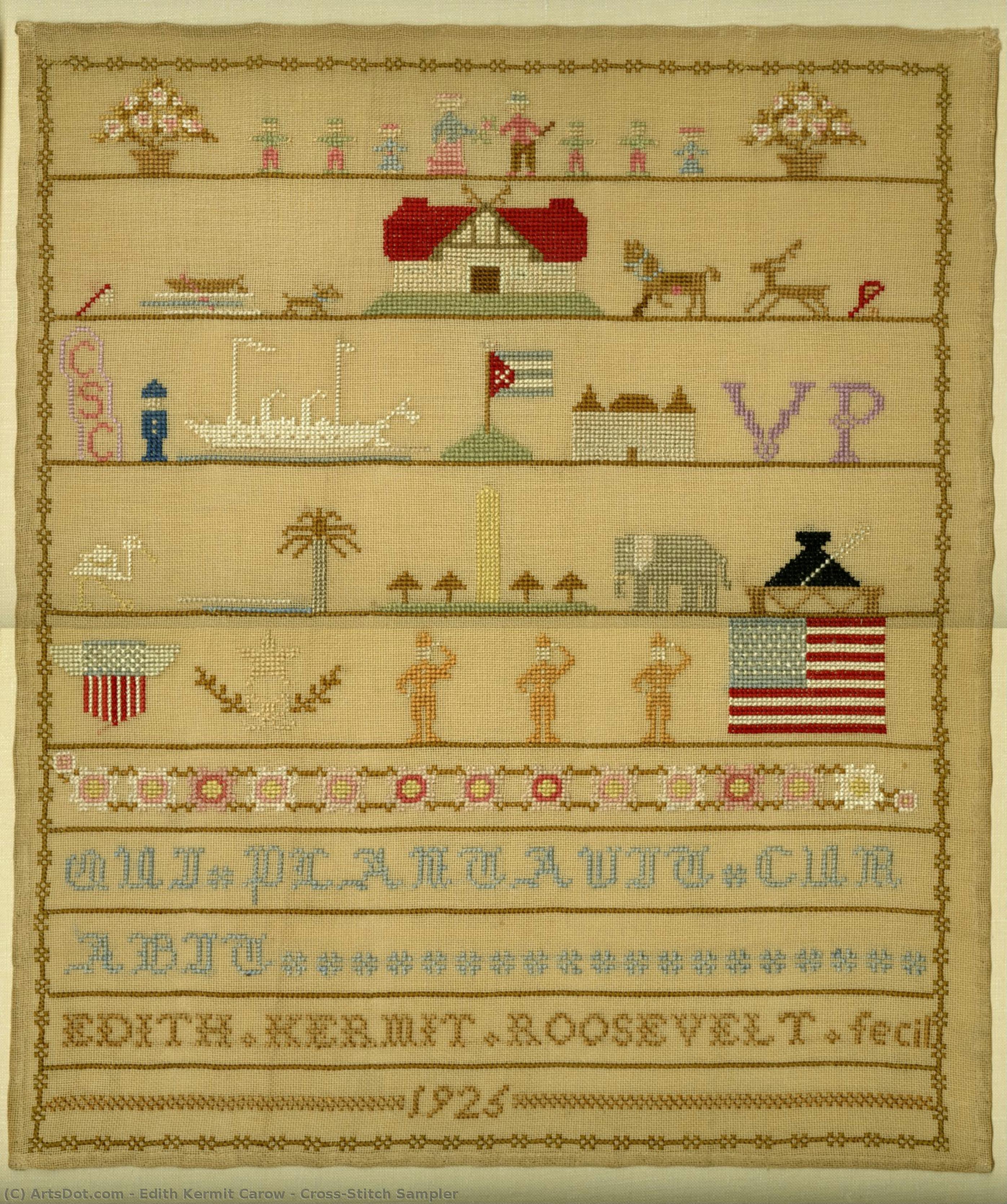
In the delicate, meticulous stitches of Edith Kermit Carow’s 1925 Cross-Stitch Sampler, one finds much more than a mere display of needlework; it is a vibrant, woven encyclopedia of a world in transition. This extraordinary piece serves as a visual narrative, capturing a profound appreciation for the diverse tapestry of human culture and the natural world. Through the disciplined medium of cross-stitch, Carow has orchestrated a complex symphony of symbols, ranging from the fluttering flags of distant nations to the quiet dignity of pastoral life. Each tiny X of thread acts as a pixel in a larger story, where people, animals, and architecture converge to celebrate a global interconnectedness that feels both intimate and expansive.
The composition is a masterclass in balanced complexity. As the eye wanders across the fabric, it encounters a lively cast of characters—at least nine distinct figures emerge from the weave, some gathered in quiet companionship while others stand as solitary sentinels within the design. The artist breathes life into the textile by populating it with the fauna of the earth; horses gallop through imagined landscapes, dogs linger near their human companions, and birds flit across the periphery like scattered notes of music. This rhythmic placement of life forms creates a sense of movement that defies the static nature of the medium, inviting the viewer to embark on a journey through a miniature, embroidered universe.
To behold this sampler is to witness the extraordinary patience and technical virtuosity of Edith Kermit Carow. The technique of cross-stitch, often relegated to the realm of domestic craft, is elevated here to the status of fine art. Carow utilizes the precision of her needle to render architectural details, such as a central house and distant buildings, with remarkable clarity. The interplay of color and texture within the thread allows for a subtle shading that gives depth to the figures and landscapes, transforming a flat surface into a multidimensional window onto a storied past.
For the discerning collector or interior designer, this piece offers a unique opportunity to introduce a sense of historical depth and artisanal warmth into a space. A high-quality reproduction of this sampler does not merely decorate a wall; it anchors a room with a sense of heritage and worldly sophistication. The intricate patterns and the nostalgic charm of the 1920s aesthetic provide a perfect focal point for classical, eclectic, or even modern minimalist interiors, where the complexity of the artwork can serve as a sophisticated counterpoint to clean lines. It is an investment in a piece that evokes emotion, sparking conversations about history, travel, and the enduring beauty of handmade artistry.
Frederic Sackrider Remington, born in Canton, New York, on October 4, 1861, wasn’t merely an artist; he was a vital interpreter of a rapidly changing America. His life and work are inextricably linked to the mythologized frontier – a world of cowboys, Native Americans, cavalrymen, and the vast, untamed landscapes of the American West. Remington's legacy rests not just on his stunning visual depictions but also on his ability to capture a romanticized yet undeniably powerful narrative of this era, solidifying his place as one of America’s most iconic Western artists.
Remington’s early life instilled in him a deep appreciation for the outdoors and a fascination with the West. His father, Seth Remington, was a newspaper editor and postmaster, exposing young Frederic to storytelling and illustration from an early age. The Civil War experiences recounted by his father— tales of cavalry charges and frontier skirmishes— profoundly shaped Remington’s artistic vision. Despite expectations for a college education, Remington enrolled at Yale University in 1878, but left after only three semesters following his father's death. This departure marked the beginning of his independent journey west, a pivotal moment that would define his career.
Remington’s formal artistic training was surprisingly limited. He received instruction at the School of Fine Arts at Yale and spent a brief period studying drawing with John Henry Niemeyer at the Art Students League in New York City. However, his true education came from direct experience – sketching soldiers on horseback during the Civil War, observing ranch life in Kansas, and immersing himself in the landscapes of Arizona, Texas, and New Mexico. This hands-on approach, combined with a keen eye for detail and dramatic composition, became hallmarks of his style.
Remington’s career began to gain momentum when he secured commissions from *Harper's Weekly* in 1882, illustrating scenes of the West for the prestigious magazine. His evocative depictions of cowboys, Native Americans, and cavalrymen quickly captivated readers and established him as a leading chronicler of frontier life. He skillfully blended romanticism with realism, creating images that resonated deeply with the public’s fascination with the American West – a period often idealized and imbued with notions of rugged individualism and heroic adventure.
Remington's early paintings demonstrate an indebtedness to French academic painters, particularly Ernest Meissonier and Édouard Detaille, known for their dramatic historical scenes. His use of tight brushwork, strong lighting, and meticulously rendered details reflects this influence. However, Remington quickly developed a distinctive style that transcended mere imitation. He masterfully employed color and composition to convey movement, emotion, and the vastness of the Western landscape.
As his career progressed, Remington experimented with watercolor painting and sculpture, showcasing remarkable versatility. His sculptures, particularly those created using the lost wax method, are characterized by their dynamic poses and lifelike quality. He continued to refine his technique throughout his life, always striving for a heightened sense of realism and dramatic narrative.
Remington’s work is deeply rooted in the themes of westward expansion, conflict between settlers and Native Americans, and the changing landscape of the American West. His illustrations often presented a romanticized view of frontier life, emphasizing heroism, courage, and the spirit of adventure. However, his later works also explored the darker aspects of this era – the displacement of Native populations, the harsh realities of ranching, and the environmental impact of westward growth.
Frederic Remington’s influence on American art and popular culture is undeniable. His images have been reproduced countless times in books, magazines, and advertisements, shaping public perceptions of the West for generations. His work continues to be studied and admired today as a testament to his artistic skill, his keen observation of the American frontier, and his enduring contribution to the visual narrative of America’s past. The “Marlboro Man” advertisement, inspired by one of Remington's illustrations, stands as a particularly potent example of his lasting impact on American iconography.

1861 - 1948 , United States of America


最新の美術ニュース、限定オファー、そしてインテリアのアイデアをいち早くお届けします。
お客様のプロジェクトについてお聞かせください。当社の美術専門家が、お客様に合わせた3つのパーソナライズされた芸術提案をご提供いたします。
あなたにぴったりの3作品を無料で厳選いたします

 プリントを購入
 シェアする
シェアする シェアする
シェアする
 詳細を見る
詳細を見る

 ダウンロード
 似ている作品
 スライドショー


 詳細を見る
詳細を見る