

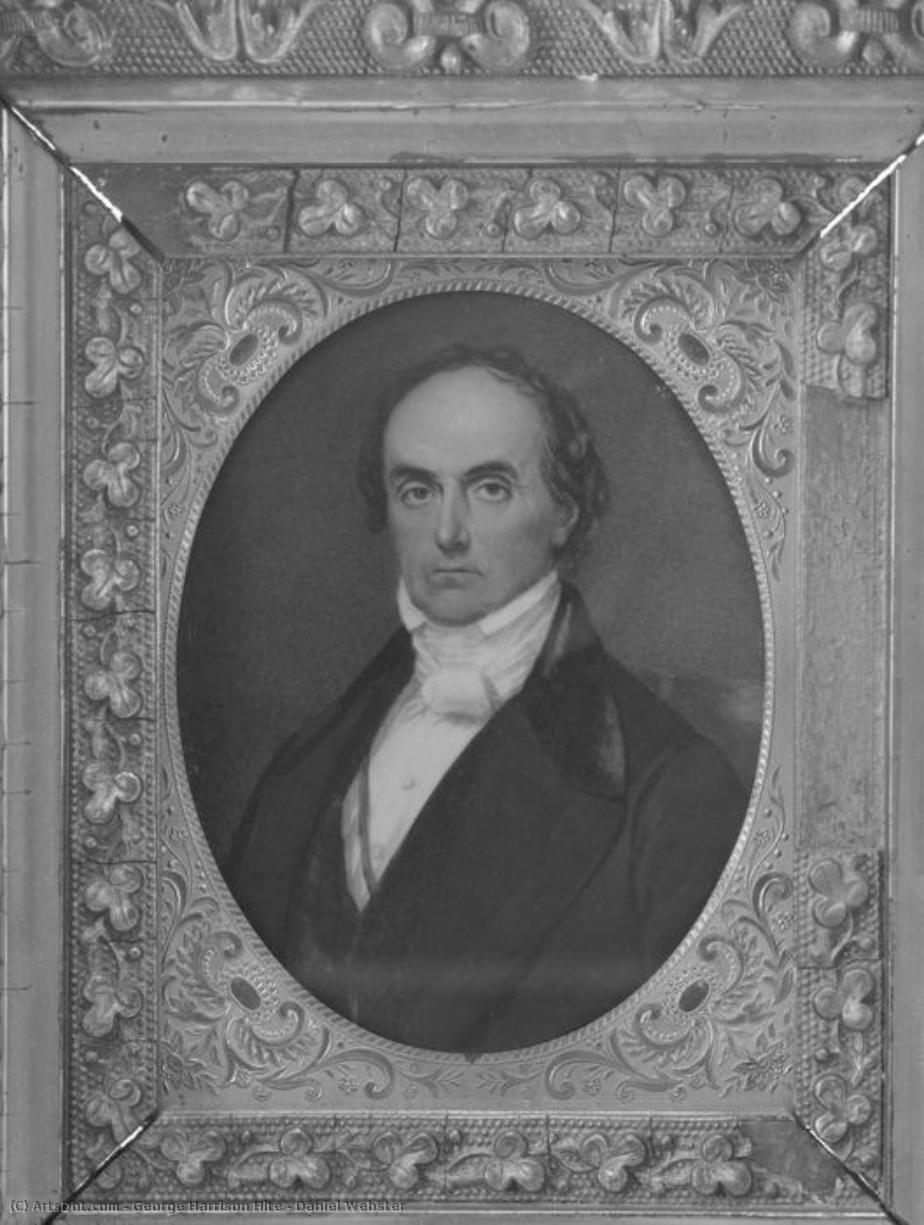
 1844
1844 12.0 x 9.0 cm
作品のオリジナル比率に合わせた、当店の規定サイズからお選びください。

特定のフレームやスペースに合わせて、ご希望のサイズをご入力いただけます。選択されたサイズが元の画像の比率と異なる場合、アートワークをトリミングするか、手描きで要素を追加して絵画を拡張いたします。デジタルモックアップ を制作し、制作開始前にご確認(承認)をいただきます。
画面上のプレビューは、実際のトリミングや拡張を正確に反映しているものではありません。最終的な構図は、モックアップによってのみ正確にご確認いただけます。
カスタムサイズもご利用いただけますが、元の比率を維持するためには、あらかじめ用意されたリストからサイズを選択することをお勧めいたします。

Daniel Webster
複製画のサイズ
George Harrison Hite (1807-1880), a name perhaps less familiar than many of his contemporaries, nevertheless represents a fascinating and significant chapter in 19th-century American art. Born in Urbana, Ohio, Hite’s journey to becoming an artist was remarkably unconventional – he largely taught himself, developing a distinctive style rooted in observation and a keen understanding of the Appalachian landscape. While often categorized as a portraitist due to his notable works featuring figures like Daniel Webster and Henry L. Taylor, Hite's true legacy lies in his evocative depictions of the American frontier, capturing its rugged beauty and the lives intertwined with it.
Hite’s early career is shrouded in some mystery, though accounts suggest he began exhibiting his work as early as 1835 in Charleston, South Carolina, presenting himself as a “native and self-taught artist of Kentucky.” This deliberate construction of an origin story speaks to the challenges faced by artists operating outside established artistic circles. The lack of formal training forced Hite to rely entirely on his own observation skills and artistic intuition – a process that undoubtedly shaped the unique character of his work. His style, characterized by loose brushwork, vibrant colors, and a palpable sense of atmosphere, stands apart from the more polished techniques prevalent in academic art circles at the time.
Hite’s fame initially stemmed from his portraiture, and he quickly gained recognition for his ability to capture not just physical likeness but also the essence of his subjects. His portraits of prominent figures like Daniel Webster, a towering figure in American politics, and Henry L. Taylor, a wealthy planter and politician, demonstrate a remarkable skill in conveying character and presence. These works are notable for their immediacy and lack of idealization; Hite doesn’t shy away from portraying the wrinkles of age or the weariness of experience, instead presenting his subjects with an honest and dignified realism.
The technique employed in these portraits is particularly noteworthy. Hite utilized a relatively quick painting process, often working *alla prima* – directly on the canvas without extensive underpainting. This approach resulted in a sense of spontaneity and energy that imbues the portraits with life. His use of color was equally expressive, employing bold hues to capture the light and shadow of his subjects’ faces and clothing.
While portraiture provided a steady income, Hite's true passion lay in depicting the landscapes of Kentucky and surrounding areas. His paintings of mountain scenes, farms, and rural communities offer a compelling glimpse into the lives of early Americans who carved out a living from the land. These works are not simply topographical representations; they’re infused with a deep sense of place and an appreciation for the beauty of the natural world.
Hite's landscapes often feature dramatic lighting, capturing the shifting moods of the Appalachian mountains – the golden light of dawn, the brooding shadows of twilight. He skillfully rendered the textures of the terrain—the rough bark of trees, the weathered stone walls of farmhouses, and the undulating contours of the hillsides. His depictions of frontier life—farmers tending their fields, families gathered around a hearth, hunters tracking game—portray a world of hard work, resilience, and close-knit community.
George Harrison Hite’s story is one of remarkable self-determination. He defied the conventions of his time by forging a successful artistic career without formal training, relying instead on his own observation, talent, and unwavering dedication. His work stands as a testament to the power of individual vision and the enduring appeal of depicting the American experience.
Hite’s influence extends beyond his individual paintings. He represents a crucial link in the development of American landscape painting, demonstrating that compelling art could emerge from outside the established artistic institutions. His work provides valuable insights into the lives and landscapes of 19th-century America, offering a poignant reminder of a time when the frontier was still being shaped by human hands.
Further research into Jacob Hite, his family history, and the circumstances surrounding his financial difficulties offers additional context to understanding the artist’s life and motivations. His story is intertwined with broader themes of westward expansion, economic hardship, and the complex relationship between settlers and Native American populations in early America.

1807 - 1880 , United States of America


最新の美術ニュース、限定オファー、そしてインテリアのアイデアをいち早くお届けします。
お客様のプロジェクトについてお聞かせください。当社の美術専門家が、お客様に合わせた3つのパーソナライズされた芸術提案をご提供いたします。
あなたにぴったりの3作品を無料で厳選いたします
 プリントを購入
 シェアする
シェアする シェアする
シェアする
 詳細を見る
詳細を見る

 ダウンロード
 似ている作品
 X線調査
X線調査 スライドショー
 詳細を見る
詳細を見る






































 ガラスオプションは、110cm未満のサイズでのみご利用いただけます。


