

 設置イメージを確認
 送る
送る シェア
シェア
 詳細情報
詳細情報 ガイドを表示

 画像をダウンロード
 似ている作品
 X線調査
X線調査 スライドショー
 統計情報
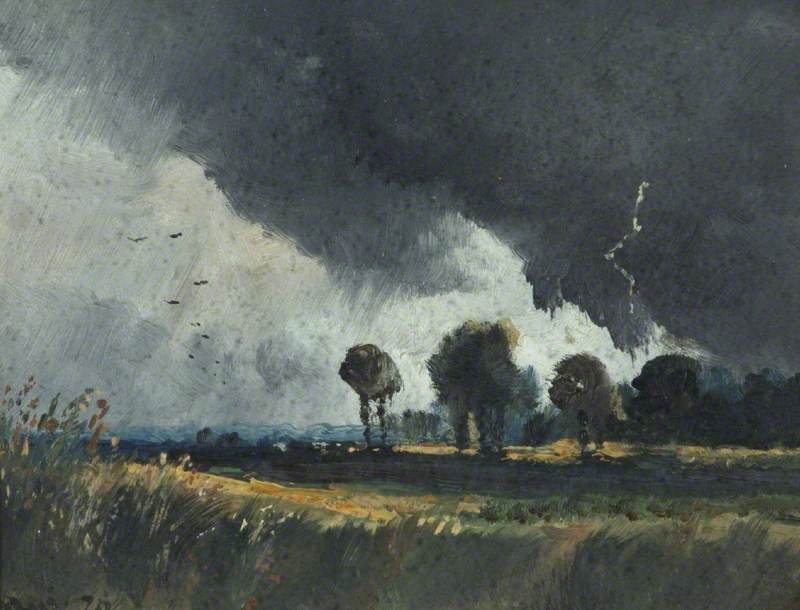
統計情報Stormy Landscape
 Romanticism
 1878
1878 18.0 x 22.0 cm
 Victoria Art Gallery
Admire "Stormy Landscape" by George Hornblower Simms (1878). A Romantic/Luminist oil painting featuring dramatic skies, silhouetted trees & expressive brushwork. Explore this captivating artwork!
George Hornblower Simms (1878) was a British landscape painter known for his Romantic/Luminist style capturing dramatic coastal scenes and atmospheric moods. Explore his evocative paintings of beaches, storms, and rural landscapes – a testament to Victorian art's fascination with nature.
 続きを読む
続きを読む
ジークレー/アートプリント
スピーディーな制作と多彩な仕上げオプションが魅力の、ミュージアムクオリティなジークレー・キャンバスプリント。 ( 手描きの複製画を注文する デジタル画像販売へ切り替え)




































標準サイズ
カスタムサイズ
CM
INCH
作品のオリジナル比率に合わせた、当店の規定サイズからお選びください。
Loading sizes...

横幅
高さ
特定のフレームやスペースに合わせて、ご自身でサイズを指定することも可能です。選択されたサイズが元の画像の比率と一致しない場合、作品をトリミングするか、鏡面反射または単色での塗りつぶしによって画像を拡張いたします。制作を開始する前に、ご確認用のデジタルモックアップをお送りいたします。
画面上のプレビューには、実際のトリミングや拡張は反映されませんのでご注意ください。最終的な構図を正確に確認できるのは、モックアップのみとなります。
カスタムサイズも承っておりますが、元の比率を維持するためには、あらかじめ用意されたリストからサイズを選択することをお勧めいたします。


 ガラスオプションは、110cm未満のサイズでのみご利用いただけます。

Stormy Landscape
ジークレー/アートプリント
複製画サイズ一覧
-


合計金額
$ 69
アーティストについて
A Romantic Vision of Coastal England
George Hornblower Simms, a British landscape painter born in 1818, remains a poignant voice from the Victorian era, capturing the sublime and often turbulent beauty of the English coastline. His artistic journey was deeply rooted in the burgeoning Romantic movement, a period defined by an intense fascination with the power of nature and the emotional resonance of the landscape. Through his meticulous observations, Simms did more than merely document scenery; he translated the fleeting atmospheric conditions of the British Isles into enduring, emotive compositions that speak to the soul of the viewer.
The foundations of Simms’ technique were laid in Newcastle upon Tyne, where his early training under the prominent Romantic painter William Henry Haydon provided him with a sophisticated understanding of tonal painting. From Haydon, he inherited an appreciation for the expressive potential of color and the ability to use subtle gradations to create depth and drama. This formative period instilled in him a lifelong pursuit of capturing light—whether it be the golden, tranquil glow of a seaside hamlet or the brooding, heavy shadows of an approaching tempest.
Mastery of Light and Atmosphere
As his career progressed, Simms moved from the industrial heart of Newcastle to the coastal serenity of Brighton in 1853, a transition that profoundly influenced his subject matter. His oeuvre, consisting of approximately 200 paintings, serves as a testament to his devotion to seascapes and rural landscapes. He became a master of the Luminist style, utilizing light not just as an illumination, but as a central protagonist in his narratives. In works such as “Beach with Village,” one can witness his ability to bathe a tranquil scene in a warmth that evokes a sense of peace and nostalgia.
Conversely, Simms was equally adept at portraying the more violent aspects of nature. His “Stormy Landscape” stands as a powerful example of his ability to convey turbulent energy through expressive brushwork and dramatic, silhouetted forms against heavy, churning skies. In these pieces, the boundaries between realism and impressionism begin to blur, as he uses impasto textures and vigorous strokes to mimic the raw power of wind and water. This duality—the ability to pivot from the serene to the catastrophic—is what defines his unique artistic identity.
Legacy and Artistic Significance
Throughout his life, Simms achieved significant recognition within the prestigious art circles of his time, exhibiting extensively at the Royal Academy and the Tate Gallery. His work resonated with a Victorian public that was increasingly captivated by the dramatic interplay between man and the natural world. By blending the precision of traditional landscape painting with the emotional depth of Romanticism, he carved out a niche that remains highly regarded by collectors of nineteenth-century British art.
The historical significance of George Hornblower Simms lies in his role as a chronicler of an era's aesthetic sensibilities. His paintings, such as “River with Windmill, Stormy Sky,” offer more than just visual beauty; they provide a window into the Victorian fascination with the sublime. Through his mastery of tonal gradations and atmospheric perspective, Simms ensured that the fleeting moments of the English coast—the shifting clouds, the rising tides, and the play of light upon the waves—would be preserved in a state of eternal, evocative grace.

george hornblower simms
1818 - 1889
アーティスト情報
- Artistic Movement Or Style: Romantic/Luminist
- Artists Or Movements Influenced By This Artist: ['Hudson River School']
- Artists Who Influenced This Artist: ['Turner']
- Date Of Death: 1889
- Full Name: George Hornblower Simms
- Nationality: British
- Notable Artworks:
- Beach with Village
- Stormy Landscape
- Place Of Birth: London, England
関連記事

Capturing the Soul: The Emotional Majesty and Sublime Power of Romantic Landscape Painting
Explore the profound emotional depth of Romantic landscape painting. Discover how masters like Turner and Friedrich captured the sublime power of nature through intuition and imagination in this expert art history retrospective.

Capturing the Soul: The Emotional Magic and Sublime Grandeur of Romantic Landscape Painting
Explore the profound emotional depth of Romantic landscape painting. Discover how masters like Friedrich and Turner captured the sublime through light, shadow, and nature's power in this expert art history retrospective for discerning collectors.