アトリエ — 世界中へ送料無料 — お届けまで2〜6週間
写真を絵画に ウィッシュリスト カート
プレビュープレビュー ARで試着ARで試着 手描き画への切り替え 手描き画への切り替え画像に切り替え 画像に切り替え シェアするシェアする
詳細を見る詳細を見る お気に入りに追加 お気に入りに追加 ダウンロードダウンロード 似ている作品似ている作品 X線調査X線調査 スライドショースライドショー

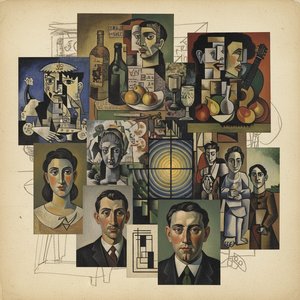
untitled (3690)

Delve into 'Untitled (3690)' by Georges Braque – a pivotal work of Cubism. Experience fragmented forms, a study in disarray, and the artist’s revolutionary approach to space and perception. Hand-painted reproduction available.

キュビスムの創始者の一人、ジョルジュ・ブラック(1882-1963)。「エスタックの家々」や「ギターを抱く男」など、パブロ・ピカソとの共同で革新的な芸術を生み出しました。分析的キュビスムからコラージュまで、モダニズム美術に多大な影響を与えた画家です。

ジークレー/アートプリント

迅速な制作と多彩な仕上げオプションを備えた、ミュージアムクオリティのジークレーまたはキャンバスプリント。 (手描き画への切り替え 手描き画への切り替え画像に切り替え 画像に切り替え)

P118B $10
P118H $10
P118W $10
P438Z $10
P508JH $12
P508YH $12
P805H $10
P805Z $10
P919BZ $10
P919G $10
P919XJ $10
P959ZH $10
P968JZ $12
W106C $8
W218G $10
W218JH $8
W218Y $10
W307PJ $10
W316G $10
W316PJ $8
W316Y $10
W398PJ $8
W4111J $10
W500HY $15
W500JH $15
W692G $12
W849H $8
W940BG $15
W953PJ $8

Standard
custom
CM
INCH

作品のオリジナル比率に合わせた、当店の規定サイズからお選びください。

高さ

特定のフレームやスペースに合わせて、ご自身でサイズを指定することも可能です。選択されたサイズが元の画像の比率と一致しない場合、作品をトリミングするか、鏡面反射または単色での塗りつぶしによって画像を拡張いたします。制作を開始する前に、ご確認用のデジタルモックアップをお送りいたします。
画面上のプレビューには、実際のトリミングや拡張は反映されませんのでご注意ください。最終的な構図を正確に確認できるのは、モックアップのみとなります。
カスタムサイズも承っておりますが、元の比率を維持するためには、あらかじめ用意されたリストからサイズを選択することをお勧めいたします。

世界中への配送()は、標準の4〜5週間ではなく、2週間でお届けいたします。(31 7月)

why_choose_icon
世界中へ無料エクスプレス配送
why_choose_icon
高品質なリネンキャンバス
why_choose_icon
配送時完全保険付
why_choose_icon
関税・輸入税の払い戻し保証
why_choose_icon
忠実な色彩再現保証
why_choose_icon
60日間返品保証(製造上の欠陥のみ)
why_choose_icon
100% 全額返金保証
why_choose_icon
まとめ買い割引のご案内

合計金額

$ 69

reproduction

untitled (3690)

ジークレー/アートプリント

複製画のサイズ

-

合計金額

$ 69

作品詳細

  • Medium: Painting
  • Notable elements: Door, papers, book
  • Movement: Cubism
  • Artist: Georges Braque
  • Influences:
    • Cézanne
    • Fauvism
  • Title: untitled (3690)

アート・クイズ

各質問の正解は1つだけです。

問題 1:
Based on the image description, what is the primary impression conveyed by the scene?
問題 2:
The presence of scattered papers and a book suggests what about the depicted environment?
問題 3:
Georges Braque was a key figure in the development of which art movement?
問題 4:
What artistic influence is most strongly associated with Georges Braque's work during the period leading up to his involvement in Cubism?
問題 5:
According to the biographical information, what was a significant aspect of Braque's early training that shaped his artistic approach?

作品詳細説明

A Study in Disarray: Georges Braque’s ‘Untitled (3690)’

Georges Braque's “Untitled (3690),” a captivating work that seems to simultaneously invite and repel, offers a glimpse into the artist’s intensely productive period at the dawn of Cubism. Painted around 1910-1912, this piece isn’t merely a depiction of a room; it's an exploration of perception, fragmentation, and the very nature of representation. The image presents a seemingly chaotic scene: a weathered wooden door, its brown frame hinting at age and solidity, stands slightly ajar, revealing a shadowy interior. Scattered across the floor and surfaces are fragments of paper – sketches, notes, perhaps even preliminary studies – alongside a solitary book, anchoring the composition with an element of quiet contemplation amidst the surrounding disorder. The overall effect is one of controlled chaos, a deliberate disruption of traditional spatial relationships that speaks directly to the core tenets of Braque’s revolutionary approach to art. It's a visual embodiment of the intellectual and emotional turmoil characteristic of the era, reflecting the shifting realities of modern life as experienced through the lens of artistic innovation.

The Roots of Fragmentation: Braque’s Early Influences

Georges Braque’s journey toward becoming a pivotal figure in 20th-century art began not within the rarefied atmosphere of Parisian studios but in his family's workshop, where he learned the craft of house painting and decoration. This practical grounding—a deep understanding of materials, structure, and the manipulation of space – proved invaluable as he later dismantled and reimagined traditional artistic conventions. Born in Argenteuil in 1882, Braque’s upbringing instilled a keen eye for form and an appreciation for the technical aspects of visual representation. Crucially, his early exposure to Cézanne's work, particularly through the 1907 retrospective at the Salon d'Automne, proved transformative. Cézanne’s exploration of multiple perspectives and geometric forms laid the groundwork for Braque’s later experiments with Cubism, prompting him to question the established rules of pictorial space and delve into a more fractured, multi-dimensional approach to depicting reality. This lineage—a blend of artisanal skill and academic study—is evident in “Untitled (3690),” where the seemingly random arrangement of objects is governed by an underlying geometric logic.

Cubism’s Delicate Dance: Collaboration with Picasso

“Untitled (3690)” stands as a testament to the collaborative spirit that fueled the development of Cubism alongside Pablo Picasso. During this period, Braque and Picasso engaged in a dynamic exchange of ideas, each pushing the boundaries of artistic expression while simultaneously influencing the other. Initially, their work was almost indistinguishable, a phenomenon documented by art historian John Rewie who noted that “the effect of his encounter with Picasso was more to accelerate and intensify Braque’s exploration of Cézanne’s ideas, rather than to divert his thinking in any essential way.” This intense partnership resulted in a shared vocabulary of fragmented forms, overlapping planes, and multiple viewpoints – techniques vividly demonstrated in "Untitled (3690)." The painting's monochromatic palette—likely influenced by the desire to strip away superficial details and focus on underlying structure—further emphasizes this geometric exploration. The deliberate ambiguity of the interior space, glimpsed through the open door, mirrors the Cubist principle of presenting multiple perspectives simultaneously, challenging the viewer’s perception of depth and spatial relationships.

Symbolism in the Everyday: The Language of Disarray

Beyond its formal innovations, “Untitled (3690)” is rich with symbolic potential. The open door suggests a transition, an invitation into an unknown space—perhaps representing the anxieties and uncertainties of modern life. The scattered papers, reminiscent of a scholar’s workspace or an artist's studio, hint at intellectual activity, creative process, and the accumulation of knowledge. The solitary book offers a counterpoint to the surrounding chaos, suggesting a yearning for order, reflection, and perhaps even escape. Braque wasn’t simply depicting a room; he was exploring the relationship between the tangible world and the realm of ideas, capturing the essence of a mind grappling with complex concepts. The deliberate lack of clear narrative or emotional content allows the viewer to project their own interpretations onto the scene, making “Untitled (3690)” a profoundly personal and evocative work.

Bringing Braque’s Vision Home: A High-Quality Reproduction

TopImpressionists offers meticulously crafted hand-painted reproductions of Georges Braque's "Untitled (3690)," allowing you to experience the power and complexity of this seminal artwork in your own space. Our skilled artisans faithfully recreate Braque’s distinctive style, capturing the subtle nuances of color, texture, and composition with exceptional detail. Whether adorning a contemporary living room or a sophisticated study, this reproduction serves as a powerful reminder of Braque's revolutionary contribution to modern art—a testament to his ability to transform the ordinary into the extraordinary through the language of fragmentation and geometric abstraction. Explore our selection today and bring a piece of art history into your world.

アーティストの略歴

Georges Braque (1882-1963): キュビズムのパイオニアとファウヴィスムの巨匠

Georges Braqueはフランスで生まれ、1882年にアルジェンテイルで誕生しました。彼の幼少期は画家や職工の家族の中で育ち、素材に対する技術的な熟練さと形状への初期的な認識を培いました。父親の職業に従うことよりも、彼は芸術的な欲求がすぐに現れ、レハーヴ美術学院で美術教育を受けることで、20世紀における最も影響力のある画家の一人になるための旅立ちを果たしました。これは実践的な職人の技術とアカデミックな学習の融合であり、後に伝統的な芸術形式を破壊し書き換えながら、彼がより後の世代に影響を与えることを可能にする基礎となりました。 パリへ移住した1902年には、美術都市で美術教育を受け続けました。彼はマリー・ローランシンやフランシス・ピカビアなど、彼の初期の開発を形作ったつながりを築いたアーティストたちと出会いました。彼の最初の作品は印象主義とポスト印象主義の影響を受けていましたが、1905年にファウヴィズムの鮮やかな色彩と表現的な自由に遭遇したことで、彼の芸術的探求は新たな方向へ進みました。彼はファウヴィストの原則を採用し、鮮やかなパレットと簡素化された形態を特徴とする絵画でその影響を示しています。例えば、『エスタークの家』です。この時期には、ヘンリー・マティスやアン ドレ・ドランなどとともに働き、鮮やかな色彩と簡素化された形態を試みました。しかし、彼はファウヴィズムの熱狂的なエネルギーをより抑制的で分析的なアプローチで和らげながら、この動きの独自性を反映しました。

ファウヴィズムへの傾倒とキュビズムの誕生

彼の芸術的探求は印象主義とポスト印象主義の影響を受けましたが、彼は特に絵画『パチエンス』においてファウヴィストの原則を採用し、鮮やかな色彩と表現的な自由を特徴とする絵画でその影響を示しています。この時期にはヘンリー・マティスやアン ドレ・ドランなどとともに働き、鮮やかな色彩と簡素化された形態を試みました。彼はファウヴィズムの熱狂的なエネルギーをより抑制的で分析的なアプローチで和らげながら、この動きの独自性を反映しました。彼の初期の作品は印象主義とポスト印象主義の影響を受けていましたが、彼は特に絵画『パチエンス』においてファウヴィストの原則を採用し、鮮やかな色彩と表現的な自由を特徴とする絵画でその影響を示しています。この時期にはヘンリー・マティスやアン ドレ・ドランなどとともに働き、鮮やかな色彩と簡素化された形態を試みました。彼はファウヴィズムの熱狂的なエネルギーをより抑制的で分析的なアプローチで和らげながら、この動きの独自性を反映しました。彼はファウヴィストの原則を採用し、鮮やかなパレットと簡素化された形態を特徴とする絵画でその影響を示しています。この時期にはヘンリー・マティスやアン ドレ・ドランなどとともに働き、鮮やかな色彩と簡素化された形態を試みました。彼はファウヴィズムの熱狂的なエネルギーをより抑制的で分析的なアプローチで和らげながら、この動きの独自性を反映しました。彼はファウヴィストの原則を採用し、鮮やかなパレットと簡素化された形態を特徴とする絵画でその影響を示しています。この時期にはヘンリー・マティスやアン ドレ・ドランなどとともに働き、鮮やかな色彩と簡素化された形態を試みました。彼はファウヴィズムの熱狂的なエネルギーをより抑制的で分析的なアプローチで和らげながら、この動きの独自性を反映しました。彼はファウヴィストの原則を採用し、鮮やかなパレットと簡素化された形態を特徴とする絵画でその影響を示しています。この時期にはヘンリー・マティスやアン ドレ・ドランなどとともに働き、鮮やかな色彩と簡素化された形態を試みました。彼はファウヴィズムの熱狂的なエネルギーをより抑制的で分析的なアプローチで和らげながら、この動きの独自性を反映しました。彼はファウヴィストの原則を採用し、鮮やかなパレットと簡素化された形態を特徴とする絵画でその影響を示しています。この時期にはヘンリー・マティスやアン ドレ・ドランなどとともに働き、鮮やかな色彩と簡素化された形態を試みました。彼はファウヴィズムの熱狂的なエネルギーをより抑制的で分析的なアプローチで和らげながら、この動きの独自性を反映しました。彼はファウヴィストの原則を採用し、鮮やかなパレットと簡素化された形態を特徴とする絵画でその影響を示しています。この時期にはヘンリー・マティスやアン ドレ・ドランなどとともに働き、鮮やかな色彩と簡素化された形態を試みました。彼はファウヴィズムの熱狂的なエネルギーをより抑制的で分析的なアプローチで和らげながら、この動きの独自性を反映しました。彼はファウヴィストの原則を採用し、鮮やかなパレットと簡素化された形態を特徴とする絵画でその影響を示しています。彼はファウヴィストの原則を採用し、鮮やかなパレットと簡素化された形態を特徴とする絵画でその影響を示しています。彼はファウヴィストの原則を採用し、鮮やかなパレットと簡素化された形態を特徴とする絵画でその影響を示しています。彼はファウヴィストの原則を採用し、鮮やかなパレットと簡素化された形態を特徴とする絵画でその影響を示しています。彼はファウヴィストの原則を採用し、鮮やかなパレットと簡素化された形態を特徴とする絵画でその影響を示しています。彼はファウヴィストの原則を採用し、鮮やかなパレットと簡素化された形態を特徴とする絵画でその影響を示しています。彼はファウヴィストの原則を採用し、鮮やかなパレットと簡素化された形態を特徴とする絵画でその影響を示しています。彼はファウヴィストの原則を採用し、鮮やかなパレットと簡素化された形態を特徴とする絵画でその影響を示しています。彼はファウヴィストの原則を採用し、鮮やかなパレットと簡素化された形態を特徴とする絵画でその影響を示しています。彼はファウヴィストの原則を採用し、鮮やかなパレットと簡素化された形態を特徴とする絵画でその影響を示しています。彼はファウヴィストの原則を採用し、鮮やかなパレットと簡素化された形態を特徴とする絵画でその影響を示しています。彼はファウヴィストの原則を採用し、鮮やかなパレットと簡素化された形態を特徴とする絵画でその影響を示しています。彼はファウヴィストの原則を採用し、鮮やかなパレットと簡素化された形態を特徴とする絵画でその影響を示しています。彼はファウヴィストの原則を採用し、鮮やかなパレットと簡素化された形態を特徴とする絵画でその影響を示しています。彼はファウヴィストの原則を採用し、鮮やかなパレットと簡素化された形態を特徴とする絵画でその影響を示しています。彼はファウヴィストの原則を採用し、鮮やかなパレットと簡素化された形態を特徴とする絵画でその影響を示しています。彼はファウヴィストの原則を採用し、鮮やかなパレットと簡素化された形態を特徴とする絵画でその影響を示しています。彼はファウヴィストの原則を採用し、鮮やかなパレットと簡素化された形態を特徴とする絵画でその影響を示しています。彼はファウヴィストの原則を採用し、鮮やかなパレットと簡素化された形態を特徴とする絵画でその影響を示しています。彼はファウヴィストの原則を採用し、鮮やかなパレットと簡素化された形態を特徴とする絵画でその影響を示しています。彼はファウヴィストの原則を採用し、鮮やかなパレットと簡素化された形態を特徴とする絵画でその影響を示しています。彼はファウヴィストの原則を採用し、鮮やかなパレットと簡素化された形態を特徴とする絵画でその影響を示しています。彼はファウヴィストの原則を採用し、鮮やかなパレットと簡素化された形態を特徴とする絵画でその影響を示しています。彼はファウヴィストの原則を採用し、鮮やかなパレットと簡素化された形態を特徴とする絵画でその影響を示しています。彼はファウヴィストの原則を採用し、鮮やかなパレットと簡素化された形態を特徴とする絵画でその影響を示しています。彼はファウヴィストの原則を採用し、鮮やかなパレットと簡素化された形態を特徴とする絵画でその影響を示しています。彼はファウヴィストの原則を採用し、鮮やかなパレットと簡素化された形態を特徴とする絵画でその影響を示しています。彼はファウヴィストの原則を採用し、鮮やかなパレットと簡素化された形態を特徴とする絵画でその影響を示
ジョルジュ・ブラクエ

ジョルジュ・ブラクエ

1882 - 1963 , フランス

基本情報

  • Artistic Movement Or Style: キュビズム、ファウヴィスム
  • Artists Or Movements Influenced By This Artist: ['パブロ・ピカソ']
  • Artists Who Influenced This Artist:
    • ピエール・マティス
    • アンリ・ドラン
    • パウル・セザンヌ
  • Date Of Birth: 1882年5月13日
  • Date Of Death: 1963年
  • Full Name: Georges Braque
  • Nationality: フランス人
  • Notable Artworks:
    • エルスタックの家
    • 忍耐
  • Place Of Birth: フランス アルジェンテュイユ
テーマ、スタイル、特徴別に分類された作品を探索しましょう。
© © TopImpressionists.com All Rights Reserved  ·  100% 手描き · 満足保証 · 全世界送料無料
VISA MASTERCARD