
迅速な制作と多彩な仕上げオプションを備えた、ミュージアムクオリティのジークレーまたはキャンバスプリント。 ( 手描きの絵画を購入 画像を購入)





























作品のオリジナル比率に合わせた、当店の規定サイズからお選びください。

特定のフレームやスペースに合わせて、ご自身でサイズを指定することも可能です。選択されたサイズが元の画像の比率と一致しない場合、作品をトリミングするか、鏡面反射または単色での塗りつぶしによって画像を拡張いたします。制作を開始する前に、ご確認用のデジタルモックアップをお送りいたします。
画面上のプレビューには、実際のトリミングや拡張は反映されませんのでご注意ください。最終的な構図を正確に確認できるのは、モックアップのみとなります。
カスタムサイズも承っておりますが、元の比率を維持するためには、あらかじめ用意されたリストからサイズを選択することをお勧めいたします。

Ram
複製画のサイズ
Georgia O’Keeffe’s “Ram,” painted in 1938, isn’t merely a depiction of an animal; it’s a profound meditation on life, death, and the enduring spirit of the American Southwest. This oil-on-canvas work, currently residing within the Georgia O'Keeffe Museum in Santa Fe, immediately commands attention with its stark simplicity and arresting composition. The ram itself—a powerful, almost skeletal figure—dominates the center of the picture plane, its head held high against a muted, atmospheric backdrop. The color palette is deliberately restrained: predominantly earthy browns, ochres, and grays punctuated by the startling blue of a single flower nestled within the creature’s mouth. This deliberate lack of vibrant hues amplifies the painting's emotional weight, forcing the viewer to confront the subject with an unblinking gaze.

O’Keeffe’s technique is characterized by a meticulous attention to detail and an almost obsessive rendering of texture. She employed a dry brushstroke, building up layers of paint to create a palpable sense of surface—the rough wool of the ram's coat, the delicate petals of the blue morning glory, even the subtle contours of the landscape behind. This tactile quality invites close inspection, encouraging the viewer to lose themselves in the intricacies of the painting. The composition itself is deceptively simple; O’Keeffe masterfully utilizes negative space—the vast expanse of sky and earth surrounding the ram—to heighten its presence and emphasize its isolation. The placement of the flower within the mouth isn't accidental; it serves as a poignant symbol, often interpreted as representing both life and death – the fleeting beauty of existence held within the jaws of mortality.
“Ram” was created during a pivotal period in O’Keeffe’s career—a time when she was increasingly experimenting with abstraction and exploring themes of nature, sexuality, and the American West. Influenced by Arthur Wesley Dow's teachings on color and line, O’Keeffe moved away from traditional representational painting toward a more subjective and emotionally resonant approach. This work reflects her growing interest in the stark beauty of the New Mexico landscape—a region that would become inextricably linked to her artistic vision. The painting can be seen as a precursor to her later, even more iconic works, such as “Jimson Weed/White Flower No. 1,” which similarly explored themes of mortality and the female form.
Beyond its formal qualities, "Ram" resonates with profound symbolic meaning. The ram itself is a powerful symbol of strength, virility, and leadership—qualities often associated with masculinity. However, in O’Keeffe's hands, the animal takes on a distinctly vulnerable quality, its head held high but its form rendered skeletal and almost ghostly. The blue flower, a rare splash of color within the composition, adds an element of fragility and beauty to this otherwise austere scene. It suggests that even in the face of mortality, there is still room for grace and wonder. The painting evokes a sense of quiet contemplation—a reminder of our own fleeting existence and the enduring power of nature.

1887 - 1986 , アメリカ合衆国

Explore the captivating world of Georgia O'Keeffe! Discover her groundbreaking flower paintings, New Mexico landscapes & lasting impact on American Modernism. Expert analysis and insights.

Immerse yourself in the captivating world of slate blue! Explore 10 iconic paintings by Monet, Van Gogh & Renoir. Discover their stories, techniques & find museum-quality art reproductions for your home at .
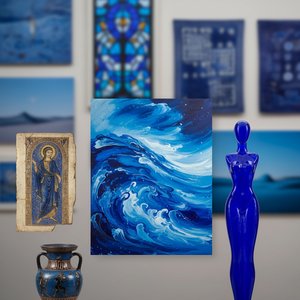
Explore the rich history of blue in art! Discover its symbolism, from ancient pigments to modern masterpieces by Kandinsky & Seurat. Uncover the psychological impact and cultural meanings behind this captivating hue.

Explore the rich history of flower symbolism in Western painting! Discover how artists from the Renaissance to Modernism used blossoms to convey meaning, emotion & beauty. Learn about iconic artworks and movements.

Explore the rich history of floral painting! Discover symbolism, techniques & masterpieces from Van Huysum to O'Keeffe. Expert insights for art lovers & collectors at TopImpressionists.


最新の美術ニュース、限定オファー、そしてインテリアのアイデアをいち早くお届けします。
お客様のプロジェクトについてお聞かせください。当社の美術専門家が、お客様に合わせた3つのパーソナライズされた芸術提案をご提供いたします。
あなたにぴったりの3作品を無料で厳選いたします


 プレビュー
プレビュー
 シェアする
シェアする シェアする
シェアする
 詳細を見る
詳細を見る

 ダウンロード
 似ている作品
 X線調査
X線調査 スライドショー


 詳細を見る
詳細を見る









 ガラスオプションは、110cm未満のサイズでのみご利用いただけます。


