

 設置イメージを確認
 送る
送る シェア
シェア
 詳細情報
詳細情報 ガイドを表示

 画像をダウンロード
 似ている作品
 X線調査
X線調査 スライドショー
 統計情報
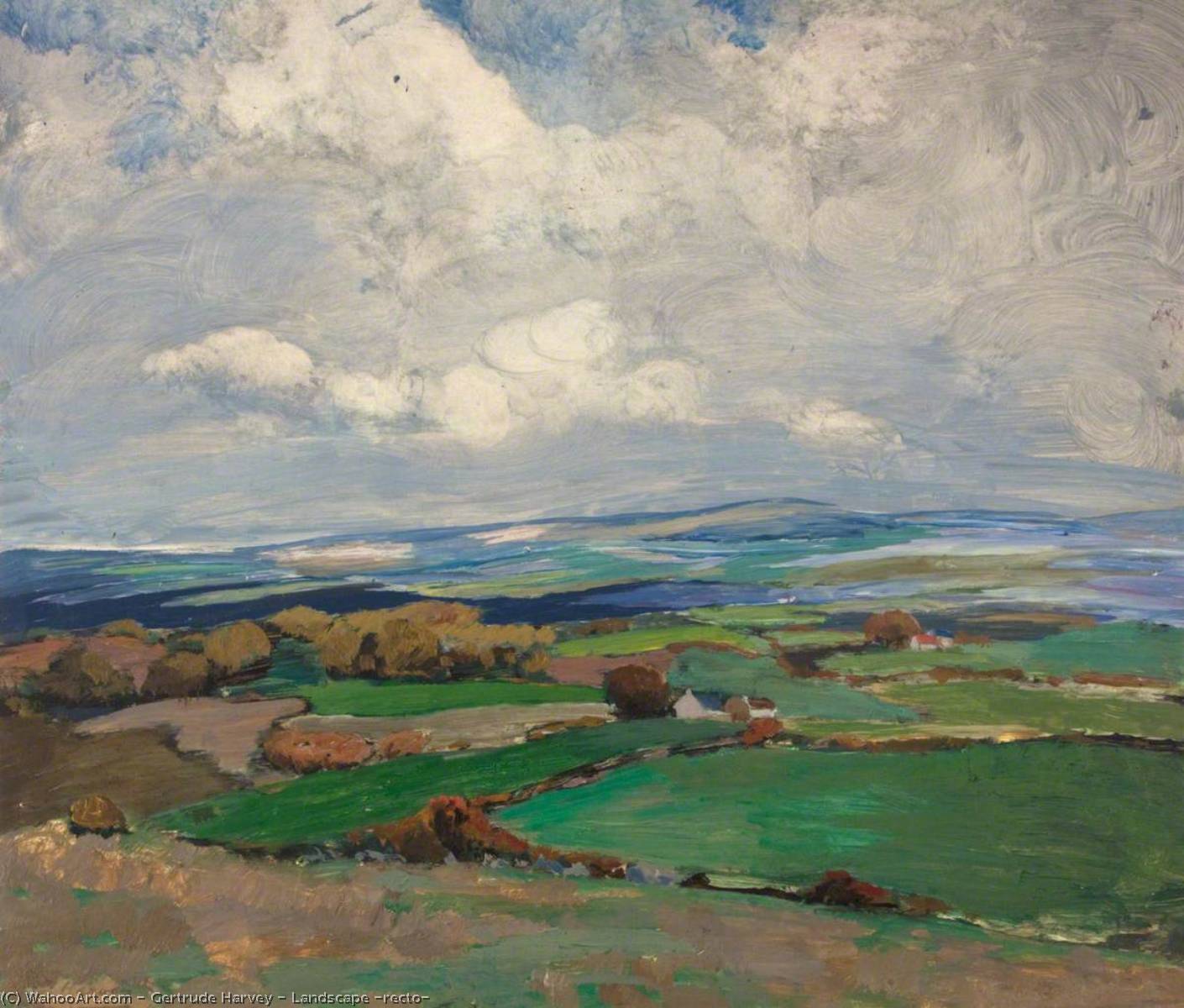
統計情報Landscape (recto)
 45.0 x 52.0 cm
Discover Gertrude Harvey, a British artist of the Newlyn School. Known for evocative landscapes & still lifes, her work reflects Cornish life & featured in Royal Academy exhibitions.
 続きを読む
続きを読む
このページに掲載されている作品は著作権法によって保護されており、当社の許可なく同一の複製物を制作または販売することは法律で禁じられています。この保護は、以下のような国際条約に基づき執行されます。 ベルヌ条約 および、以下の条項に定められたものを含む各国の法律により、 米国著作権法 第17編。
この手法は、著作権で保護された作品の複製や複写を伴わないため、著作権法に完全に準拠しています。これは単なる模倣ではなく、創造的な再解釈です。元の作品からインスピレーションを受けつつも、それとは異なる、全く新しい絵画を生み出すものです。
ジークレー/アートプリント
スピーディーな制作と多彩な仕上げオプションが魅力の、ミュージアムクオリティなジークレー・キャンバスプリント。 ( 手描きの複製画を注文する デジタル画像販売へ切り替え)




































標準サイズ
カスタムサイズ
CM
INCH
作品のオリジナル比率に合わせた、当店の規定サイズからお選びください。
Loading sizes...

横幅
高さ
額縁や壁のスペースに合わせて、ご希望の幅と高さを入力してください。プリントはカットすることは可能ですが、元の画像より大きくすることはできないため、異なる比率のサイズを選択された場合は、画像の一部が欠けることになります。印刷を開始する前に、内容を確認していただくためのデジタルモックアップをお送りいたします。このページに表示されている画像は、実際のカット後の状態を示すものではありません。実際の仕上がりはモックアップにてご確認ください。


 ガラスオプションは、110cm未満のサイズでのみご利用いただけます。

Landscape (recto)
ジークレー/アートプリント
複製画サイズ一覧
-


合計金額
¥ 10911
アーティストについて
Gertrude Harvey: A Cornish Visionary Bridging Impressionism and Spiritual Renewal
In the salt-sprayed landscapes of early twentieth-century Cornwall, Gertrude Harvey (née Bodinnar, 1879–1966) emerged as a profound voice within the Newlyn School, a collective renowned for its devotion to the rugged coastal beauty and the intimate rhythms of local life. Her artistry was far more than a mere recording of scenery; it was a deeply personal dialogue between the external world and an internal landscape of faith and observation. Born into a family where the natural world was intimately understood—her maternal grandfather, William Curnow, being a notable botanist and market gardener—Gertrude possessed an innate sensitivity to the botanical intricacies and atmospheric shifts that define the Cornish peninsula. This early immersion in the textures of flora and earth provided the foundational vocabulary for a career defined by meticulous detail and an evocative use of light.
The trajectory of her creative life was irrevocably altered through her connection with Harold Harvey, a fellow artist whose professional and personal partnership would become a cornerstone of her legacy. Initially entering the artistic circle as a model for students at the Forbes School of Painting in Newlyn, Gertrude’s presence in the studio was transformative. Her role as a muse for Harold did not merely provide subject matter; it fostered a shared spiritual conviction and an aesthetic synergy that permeated their collaborative existence. Under the guidance of mentors like Norman Garstin at the Penzance School of Arts, she embraced the tenets of Impressionism, learning to manipulate loose brushstrokes and vibrant palettes to capture the ephemeral, fleeting qualities of light as it dances across the Atlantic swells and settles upon the rolling hills of her homeland.
Artistic Mastery and the Newlyn Legacy
Gertrude Harvey’s work is characterized by a remarkable ability to balance the structural integrity of her subjects with the atmospheric fluidity of the Impressionist style. Her paintings often serve as windows into a tranquil, pastoral world, where the boundaries between the earth and sky seem to dissolve in the mist. Whether depicting a solitary landscape or a delicate still life, her hand is evident in the nuanced textures that suggest both the weight of the Cornish soil and the lightness of coastal air. Her membership in the Newlyn School placed her at the heart of a movement dedicated to truth in painting, yet she infused this realism with a spiritual introspection that set her work apart.
Her achievements were recognized by the most prestigious institutions of her era, including regular exhibitions at the Royal Academy, which solidified her standing within the British art establishment. Her oeuvre remains a testament to several key artistic pillars:
- Impressionistic Technique: A mastery of light and color that captures the transient moods of the Cornish landscape.
- Botanical Precision: An inherited passion for the natural world, visible in her detailed floral compositions and verdant landscapes.
- Spiritual Depth: The integration of Christian faith and quiet contemplation into the very fabric of her visual narratives.
- Cultural Connection: A profound engagement with the Newlyn School’s mission to document the authentic character of Cornish life.
Today, the significance of Gertrude Harvey lies in her ability to have bridged the gap between the observational rigor of the Newlyn tradition and the emotive freedom of Impressionism. She remains a vital figure for those studying the evolution of British landscape painting, representing a period where art served as both a mirror to the natural world and a vessel for the enduring human spirit.

アーティスト情報
- Artistic Movement Or Style: Newlyn School
- Artists Or Movements Influenced By This Artist: ['George Bernard Shaw']
- Artists Who Influenced This Artist: ['Harold Harvey']
- Date Of Birth: 1879 Cornwall, United Kingdom
- Date Of Death: 1966 St Just, Cornwall
- Full Name: Gertrude Harvey Bodinnar
- Nationality: British
- Notable Artworks:
- Landscape (verso)
- Landscape (recto)
- Farmhouse on a Mound
- Place Of Birth: Cornwall