

展示内容: · 額縁を含むサイズ:
 設置イメージを表示
 シェアする
シェアする シェアする
シェアする
 詳細を見る
詳細を見る ガイドを表示

 ダウンロード
 似ている作品
 X線調査
X線調査 スライドショーを表示
 Q&A
Q&A 統計情報
統計情報

¥ 42541
手描き油彩複製画
当社のアーティストが、ご希望のサイズと額縁に合わせてキャンバスに手描きで制作する、オーダーメイドの油彩画です。 ( プリント版に切り替え デジタル画像販売へ切り替え)
サイズ
·標準サイズ
オーダーメイド
CM
INCH
作品のオリジナル比率に合わせた、当店の規定サイズからお選びください。
サイズを読み込み中...

横幅
高さ
フレームや壁のスペースに合わせて、ご希望の幅と高さを入力してください。本作品は手描きのため、異なる比率のサイズをご希望の場合、絵画の周囲を少し広げて描くか、あるいは端を少しカットして調整することが可能です。お客様のご要望に合わせます。制作を開始する前に、仕上がりを確認するためのデジタルモックアップをお送りいたします。このページに表示されている画像は完成品の実物ではなく、あくまでモックアップによるイメージです。
 詳しく読む
詳しく読む仕上げ
·
白の側面仕上げ ¥1

エッジぼかし仕上げ ¥1

回り込み仕上げ ¥1

P118B ¥10

P118H ¥10

P118W ¥10

P438Z ¥10

P508JH ¥12

P508YH ¥12

P805H ¥10

P805Z ¥10

P919BZ ¥10

P919G ¥10

P919XJ ¥10

P959ZH ¥10

P968JZ ¥12

W106C ¥8

W218G ¥10

W218JH ¥8

W218Y ¥10

W307PJ ¥10

W316G ¥10

W316PJ ¥8

W316Y ¥10

W398PJ ¥8

W4111J ¥10

W500HY ¥15

W500JH ¥15

W692G ¥12

W849H ¥8

W940BG ¥15

W953PJ ¥8

H24-GOLD ¥30

H24-SILVER ¥30

H36-GOLD ¥45

H36-SILVER ¥45
保護用の筒に入れてお届けしますので、お客様ご自身でフレーム(額縁)をご用意いただく形となります。
オプションサービス
任意特典の内容について
変更可能な例:顔をお客様の写真に差し替え、ペットの変更(例:猫を犬に変更)、背景に隠しメッセージを追加、背景の風景や要素の変更。
ご注文後、TopImpressionists.com のチームより詳細な手順についてメールをお送りし、仕上がりイメージ(モックアップ)をご提示いたします。
ご注文後、TopImpressionists.com のチームより詳細な手順についてメールをお送りし、仕上がりイメージ(モックアップ)をご提示いたします。
世界中への配送()は、通常の5週間ではなく、3〜4週間でお届けいたします。(4 11月)。品質には一切妥協いたしません。
保護用ワニス
キャプション
刻印入りブロンズプレートの詳細
This elegant plaque features the artist's name and the title of the artwork, finely engraved for a timeless presentation.
It is made from bronze with a refined, elegant finish. The text is precisely laser-engraved for a sharp and permanent result. Measuring 9x2 cm, the plaque is compact yet easy to read. It's built to be durable and scratch-resistant, offering a professional, museum-quality look. Mounting is simple thanks to the included adhesive backing.
透明アクリル銘板の詳細
The plaque includes essential engraved details such as the artist's name, the title of the artwork, the date it was created, the type of media used-like oil on canvas or watercolor-a brief description of the piece, and a QR code that links to the complete artwork information.
It is crafted from clear acrylic, offering a sleek, modern appearance. The text is UV-engraved in black to ensure strong visual contrast. With a size of 10x15 cm, it ensures optimal readability. It comes equipped with two metal hooks for secure wall mounting. The plaque is designed to be weather-resistant, making it suitable for various environments, and it includes interactive features that work seamlessly with smartphone scanning.
黒アクリル製銘板の詳細
This elegant plaque includes engraved information such as the artist's name, the title of the artwork, the date it was created, the type of media used (like oil on canvas or watercolor), a short description of the artwork, and a QR code for quick access to more information.
The plaque itself is made from refined black acrylic with a premium finish. The text is laser-engraved in white for high contrast and readability. Its size is 10x15 cm, designed to be easy to read. It comes with two metal hooks for professional mounting. The design is sleek and fits any interior style. It is also weather-resistant and durable, with built-in digital integration for mobile compatibility.
ガラスオプションは、110cm未満のサイズでのみご利用いただけます。
 ガラスオプションは、110cm未満のサイズでのみご利用いただけます。
- 世界中へ無料エクスプレス配送
- 高品質なリネンキャンバス
- 配送時完全保険付
- 関税・輸入税の払い戻し保証
- 真の色彩再現に関する保証
- 100日間返品保証(製造上の欠陥がある場合のみ)
- 100% 全額返金保証
- まとめ買い割引のご案内


作品解説
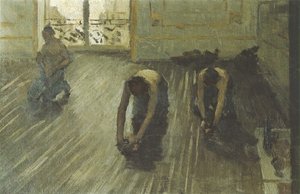
Gustave Caillebotte's 'The Floor Scrapers (study)' captures Parisian laborers with striking realism and light. Explore this iconic Impressionist work depicting urban life, showcasing Caillebotte’s unique perspective.
作品について
The Floor Scrapers (Study) 02: A Glimpse into Parisian Labor
Gustave Caillebotte’s “The Floor Scrapers (Study) 02,” painted in 1875, isn't merely a depiction of three men diligently working; it’s a meticulously observed and subtly powerful portrait of urban life in late 19th-century Paris. This early work, often considered a pivotal piece in Caillebotte’s artistic development, offers a rare and intimate view into the lives of the city's working class – a subject largely absent from the grand narratives of the era. The painting immediately draws the eye with its stark contrast: the muted tones of the darkened room, punctuated by the bright white of the freshly sanded floorboards, create an almost photographic realism that was revolutionary for its time.
Caillebotte’s artistic journey began with a formal training in law and engineering, but it was his encounter with photography – particularly the work of Nadar – that profoundly shaped his approach to painting. He recognized the power of capturing fleeting moments and precise details, mirroring the photographic process. This influence is evident in the meticulous rendering of the men’s postures, their tools, and the textures of the wood. The composition itself feels deliberately staged, reminiscent of a photograph, with its careful attention to perspective and lighting. The figures are not idealized; they are presented as ordinary laborers, their faces obscured by shadow, emphasizing their anonymity within the bustling city.
Impressionistic Techniques and a Revolutionary Perspective
“The Floor Scrapers” exemplifies Caillebotte’s early embrace of Impressionism, though with a distinct realism that sets him apart from many of his contemporaries. He employed broken brushstrokes to capture the play of light on the wood and the men's clothing, creating a sense of movement and atmosphere. The use of complementary colors – the cool blues and greens of the shadows against the warm browns and yellows of the floor – adds depth and vibrancy to the scene. Notably, Caillebotte’s decision to depict these laborers in a darkened room, bathed in the diffused light of an unseen window, was a bold departure from traditional studio settings. This choice immediately imbued the painting with a sense of immediacy and authenticity.
Furthermore, Caillebotte's innovative perspective—a low-angle shot that emphasizes the scale of the men and their work—was groundbreaking. It forces the viewer to confront the scene directly, fostering a feeling of intimacy and engagement. The composition isn’t about glorifying labor; it’s about presenting it as a fundamental aspect of urban existence. The painting's technical mastery lies in its ability to convey both the physical reality of the work and the emotional weight of the men’s efforts.
Symbolism and Social Commentary
While seemingly straightforward, “The Floor Scrapers” carries subtle layers of symbolism. The act of scraping floors represents a repetitive, demanding task – a symbol of the daily grind endured by countless working-class individuals in Paris at the time. The absence of any discernible hierarchy or leadership among the men suggests a shared experience of labor and resilience. It’s important to note that Caillebotte was one of the first artists to depict urban proletariat, a subject rarely addressed in art during this period. This choice speaks volumes about his desire to challenge conventional artistic norms and offer a more nuanced representation of Parisian society.
The painting's historical context is crucial to understanding its significance. Paris in the 1870s was undergoing rapid industrialization, leading to significant social and economic changes. The working class faced harsh conditions, long hours, and low wages. Caillebotte’s work serves as a poignant reminder of these realities, offering a glimpse into the lives of those often overlooked by history.
A Timeless Reflection on Labor and Urban Life
“The Floor Scrapers (Study) 02” remains a powerful and evocative artwork. It's not just a depiction of three men working; it’s a meditation on labor, poverty, and the human condition. Caillebotte’s meticulous observation, innovative perspective, and subtle symbolism combine to create a work that continues to resonate with viewers today. Reproductions of this painting offer an opportunity to appreciate Caillebotte's artistic vision and gain a deeper understanding of Parisian life in the 19th century – a testament to the enduring power of art to illuminate social realities.
Q&A
「The Floor Scrapers (study) 02」の素材とスタイルについて教えてください。
「The Floor Scrapers (study) 02」は、Impressionist Painting様式のAcrylic On Canvasで制作されています。
学生向けのギュスターヴ・カイユボット作「The Floor Scrapers (study) 02」に関するファクトシートはありますか?
ギュスターヴ・カイユボット作「The Floor Scrapers (study) 02」の解説資料ページでは、印刷して活用できる2枚構成のファクトシートを提供しています。これには、作品の詳細をまとめたデータテーブル、アーティストの生涯における時代背景を示す年代チャート、同アーティストによる他の作品、抽出されたカラーパレット、そしてそのままコピーして使用できる4つの形式の引用文献情報が含まれています。
「The Floor Scrapers (study) 02」の中で、最も際立っている色はどれですか?
「The Floor Scrapers (study) 02」の中で最も際立っている色はEspresso (#504d40)です。作品の主色(メインカラー)を知ることは、インテリアとのコーディネートを考える際に役立ちます。
作品の豆知識とアートクイズ
ギュスターヴ・カイユボットについて

ギュスターヴ・カイユボット
1848 - 1894, フランス
作家プロフィール
新時代のパリ人:ギュスターヴ・カイユボットの生涯と芸術
1848年、パリの裕福な家庭に生を受けたギュスターヴ・カイユボットは、変わりゆく自らの街の劇的な変貌を捉えるべく、比類なき立場に置かれた芸術家でした。父マルシャル・カイユボットは、成功したテキスタイル事業を継承し、裁判官を務める人物であり、ギュスターヴに経済的な安定と、勃興する近代世界を観察するための絶好の視点を与えました。当初、彼は法学の道に進み、1868年と1870年には法学士号を取得していますが、彼の真の天職は芸術の世界にありました。レオン・ボナールのもとで本格的な修行を開始し、絵画に没頭する一方で、当時登場したばかりのメディアである写真にも深い関心を寄せました。この写真技術への初期の接触――フレーミング、遠近法、そして一瞬の光景を切り取る手法――は、彼の独特なスタイルの象徴となりました。カイユボットは単に変化を記録していたのではありません。彼は、その変化が提示する新たな美学的可能性に対して、能動的に向き合っていたのです。印象派の光を纏った写実主義
カイユボットの芸術的歩みは、厳格なアカデミズムの伝統とは一線を画していましたが、同時に、多くの印象派の仲間たちが追求した純粋に光学的な探求を完全に取り入れたわけでもありませんでした。彼はエドガー・ドガやジュゼッペ・デ・ニッティスといった画家たちと親交を結び、近代生活への情熱を共有しながらも、緻密な写実主義というレンズを通してその世界にアプローチしました。1875年のサロンで発表された初期の傑作床磨きをする人々(Les Raboteurs de Parquet)は、大胆かつ型破りな画家としての彼の名声を瞬時に確立しました。木製の床を丹念に削る三人の労働者を描いたこの作品は、見る者を驚かせるほどの剥き出しの誠実さで描かれ、一部の人々を魅了しました。単に、高尚な芸術のキャンバスには滅多に登場しない「労働者階級」という主題を選んだことだけでなく、切り取られたような、時に衝撃を与えるほど直接的な構図、そして感傷的な美化を排した姿勢こそが重要だったのです。現代生活を飾ることなく描き出すこの決意は、鉄橋のような作品にも引き継がれ、急速に変貌を遂げるパリの工業化された風景を見事に捉えました。しかし、カイユボットもまた印象派の影響から逃れることはできませんでした。彼のパレットは次第に明るさを増し、筆致を分割させ、大気の効果を実験的に用いるようになります。それは、雪の屋根(View of Rooftops (Snow))に見られるような、雪に覆われたパリの屋根の素晴らしい情景に顕著に表れています。パトロンとして、そして先駆者として:芸術界を切り拓く
自らの創作活動にとどまらず、カイユボットは印象派運動を支える上で極めて重要な役割を果たしました。彼の経済的な自立は、彼を重要なパトロンへと変えました。モネ、ルノワール、ピサロ、セザンヌ、ドガといった画家たちの作品が、当時の公式なサロンから拒絶されていた時代に、彼は積極的にそれらを購入したのです。彼は単なるコレクターではありませんでした。従来の芸術規範に抗う印象派の展覧会を自ら組織し、資金を提供することで、これらの画家たちを積極的に擁護したのです。この革新を育む献身は、自身のコレクションにも及びました。1894年に彼が亡くなった際、そのコレクションはフランス国家に遺贈されました。当初はこの遺贈に対して抵抗もありましたが、最終的にはオルセー美術館の誇る印象派コレクションの礎となりました。カイユバーットの独自の視点は、その構図にも現れています。1880年に描かれた上から見た大通り(Boulevard vu d’en haut)などの作品は、高所からの視点とダイナミックなトリミングを用い、20世紀の写真的な遠近法を予見させるような、驚くほどモダンな感性を示しています。日本美術の影響や自身の写真実験から得られたであろうこの革新的な構図のアプローチは、彼を真の先駆者として際立たせています。遺産と再発見:蘇る近代の巨匠
彼の死後、数十年にわたりカイユボットの作品は、より有名な印象派の巨匠たちの影に隠れ、比較的目立たない存在でした。しかし、20世紀後半になり、学術的な研究や大規模な展覧会に後押しされ、彼の芸術に対する包括的な再評価が始まりました。この再発見によって明らかになったのは、卓越した技術、知的な深み、そして先見的な洞察力を備えた芸術家の姿でした。カイユボットの絵画は、単なる近代生活の描写ではありません。それは、都市生活の複雑さ、変化する社会情勢、そして芸術と現実との進化し続ける関係についての深い瞑想なのです。写実主義と印象派の手法をシームレスに融合させる能力、革新的な構図、そして周囲の世界を描き出そうとする揺るぎない信念は、彼を19世紀美術における極めて重要な人物として確立させました。今日、カイユボットの作品は、その独自の視点、見事な技法、そして時代を超えた普遍性によって称賛されています。それは、新しい時代の精神を捉えようと果敢に挑んだ芸術家の、不滅の証なのです。代表作
- 床磨きをする人々(Les Raboteurs de Parquet) (1875): カイユボットの写実主義と型破りな構図を示す画期的な作品。
- 雪の屋根(View of Rooftops (Snow)) (1878): 写真や日本美術の影響を受けた、高所からの視点と大気の効果を駆使した作品。
- 上から見た大通り(Boulevard vu d’en haut) (1880): ダイナミックな遠近法を用いた、驚くほどモダンな構図。
- 雨の日のパリ街(Paris Street; Rainy Day) (1877): おそらく彼の最も有名な作品であり、パリの賑やかなエネルギーを独特かつ情緒的な手法で捉えている。
- ベジークのゲーム(The Bezique Game) (1881): パリの余暇を描いた、魅惑的な印象派の絵画。
ギュスターヴ・カイユボットについてのクイック・ファクト
- Artistic Movement Or Style: 写実主義、印象派
- Artists Or Movements Influenced By This Artist: 印象派
- Artists Who Influenced This Artist:
- エドガー・ドガ
- ジュゼッペ・デ・ニティス
- Date Of Birth: 1848年8月19日
- Date Of Death: 1894年2月21日
- Full Name: ギュスターヴ・カイユボット
- Nationality: フランス人
- Notable Artworks (List Of Titles):
- 「床削り職人たち」
- 「雪の屋根裏部屋」、「大通りの眺め」
- Place Of Birth (City And Country): パリ、フランス
関連作品


テーマ、スタイル、特徴別に分類された作品を探索しましょう。


ギュスターヴ・カイユボット
The Floor Scrapers (study) 02
() ·
額縁を含むサイズ: · リネンに油彩で手描き
合計