






























作品のオリジナル比率に合わせた、当店の規定サイズからお選びください。

特定のフレームやスペースに合わせて、ご自身でサイズを指定することも可能です。選択されたサイズが元の画像の比率と一致しない場合、作品をトリミングするか、鏡面反射または単色での塗りつぶしによって画像を拡張いたします。制作を開始する前に、ご確認用のデジタルモックアップをお送りいたします。
画面上のプレビューには、実際のトリミングや拡張は反映されませんのでご注意ください。最終的な構図を正確に確認できるのは、モックアップのみとなります。
カスタムサイズも承っておりますが、元の比率を維持するためには、あらかじめ用意されたリストからサイズを選択することをお勧めいたします。

Ibis
複製画のサイズ
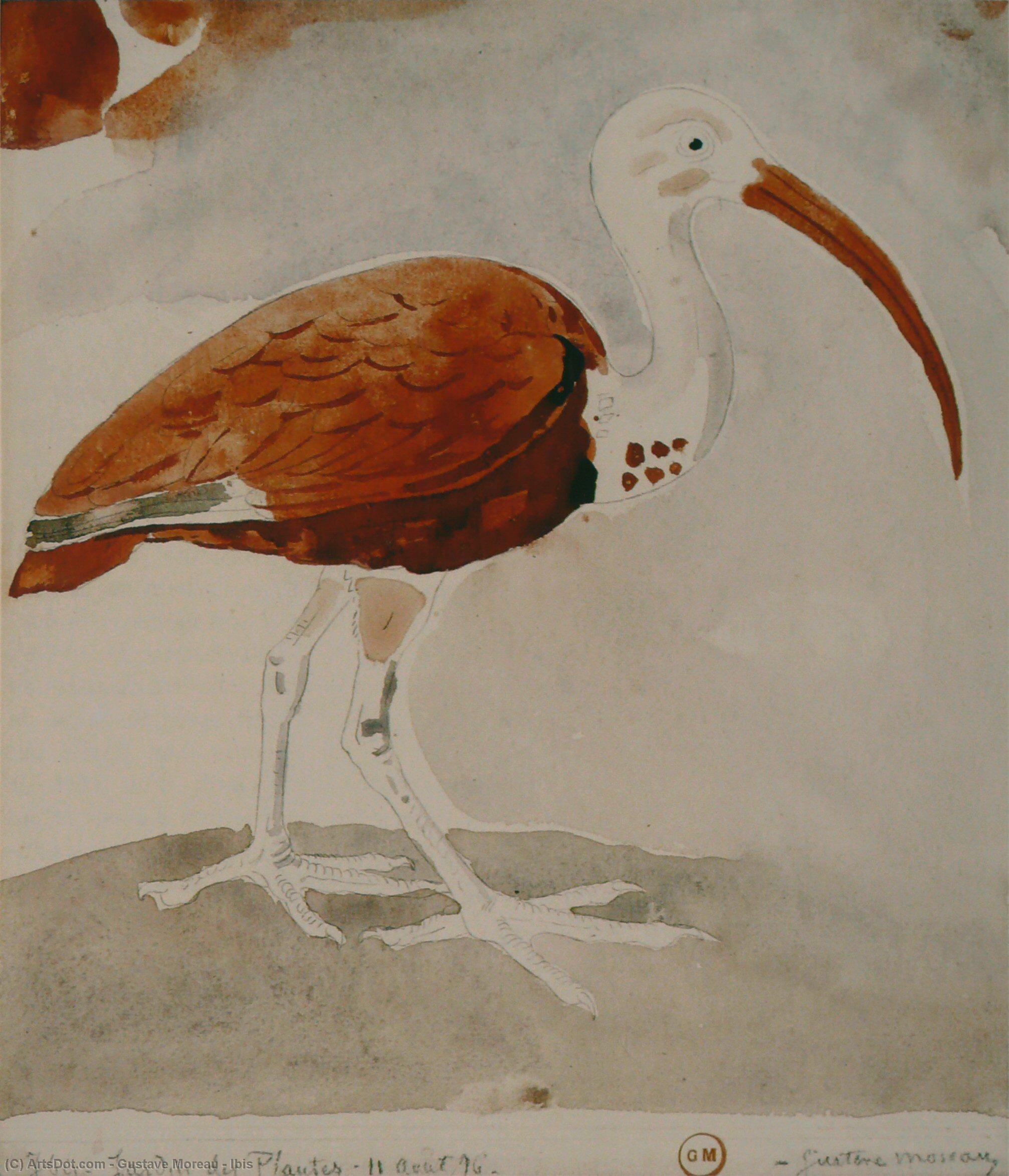
Gustave Moreau's "Ibis," painted in 1876, isn’t merely a depiction of a bird; it’s an immersion into a richly layered world of symbolism, myth, and the artist’s intensely personal vision. This captivating work, rendered in stark black and white – a deliberate choice that amplifies its dreamlike quality – embodies the core tenets of Symbolism, a movement Moreau helped define. Rather than striving for photographic realism or objective representation, Moreau sought to evoke emotions and ideas through carefully constructed forms, evocative colors (though here presented in monochrome), and allusions to ancient lore. The painting’s power lies not just in its subject matter but in the atmosphere of mystery and contemplation it generates.
Moreau's artistic journey was profoundly shaped by his upbringing within a cultured Parisian family steeped in intellectual pursuits. His father, an architect and archivist, instilled in him a deep appreciation for history, mythology, and the arts. This foundation, combined with rigorous training at the École des Beaux-Arts, provided Moreau with a solid technical base while simultaneously fueling his desire to move beyond traditional academic constraints. He was particularly drawn to the works of Dante, Ovid, and other classical authors, whose narratives offered fertile ground for symbolic exploration. The Ibis itself becomes a conduit for these ancient stories – a creature often associated with Osiris in Egyptian mythology, representing resurrection and rebirth.
Examining the painting’s composition reveals Moreau's deliberate manipulation of form to convey meaning. The ibis stands prominently on the ground, its long legs suggesting both a groundedness and an upward reach – a visual representation of striving for spiritual enlightenment. Its large beak, sharply defined against the muted background, directs our gaze, drawing us into the bird’s enigmatic presence. The artist's use of dots across the body creates a textured surface, adding to the painting’s tactile quality and hinting at the complexities hidden beneath its seemingly simple form. The monochromatic palette – predominantly orange with white accents – contributes significantly to the work’s mood, lending it an ethereal, almost otherworldly appearance. It is reminiscent of late-medieval illuminated manuscripts or the detailed drawings found in alchemical texts.
Moreau's technique is characterized by meticulous detail and a masterful command of line. He employs a precise, linear style, reminiscent of Japanese woodblock prints, to create a sense of stillness and contemplation. The sharp edges and carefully rendered feathers contrast with the softer, more diffused background, further emphasizing the ibis’s central importance within the composition. The painting's surface is not merely decorative; it’s imbued with symbolic weight, each element contributing to the overall narrative.
Beyond its formal qualities, "Ibis" resonates deeply with themes prevalent in Moreau’s oeuvre – particularly those relating to mythology, religion, and the human psyche. The ibis, as a symbol of resurrection and transformation, connects directly to ancient Egyptian beliefs about death and rebirth. Moreau frequently explored these themes in his paintings, often depicting figures from classical mythology or biblical narratives within dreamlike landscapes. This painting can be interpreted as an allegory for the artist’s own personal journey – a quest for spiritual understanding amidst the complexities of life.
Interestingly, Moreau's fascination with symbolism extended beyond traditional mythological sources. He drew inspiration from a wide range of influences, including Japanese art, medieval manuscripts, and even alchemical texts. This eclectic approach resulted in a highly individualistic style that defied easy categorization. The painting’s ambiguity invites viewers to project their own interpretations onto the scene, fostering a sense of personal engagement with the artwork.
"Ibis" by Gustave Moreau is more than just a beautiful image; it's a window into the mind of a visionary artist. TopImpressionists offers meticulously crafted hand-painted reproductions that capture the essence of this iconic work, allowing you to experience its power and beauty firsthand. Our skilled artists faithfully recreate Moreau’s intricate details, color palette, and atmospheric mood, ensuring that your reproduction is a true testament to the original masterpiece. Whether displayed in a gallery, a study, or a cherished home space, this stunning artwork will undoubtedly spark conversation and inspire contemplation for years to come.

1826 - 1898 , フランス

Explore 10 iconic white paintings by Monet, Whistler & Rothko! Discover the stories behind these serene masterpieces and their impact on art history. Find museum-quality reproductions for your home decor at .

Explore 10 iconic paintings dominated by black tones, from Rembrandt’s chiaroscuro to Goya's dark expressions. Discover the stories behind these masterpieces & find museum-quality art reproductions for your home at .

クロード・モネの傑作25選。印象派を代表する光の画家、モネの世界を旅しませんか?睡蓮や風景画など、名画の背景にある物語と芸術技法をご紹介。TopImpressionistsで高品質な複製画とインテリアアートを見つけましょう。全コレクションはこちら。

Delve into the power of 'Ivory Black' with 10 iconic paintings by masters like Rembrandt & Caravaggio. Explore dramatic chiaroscuro, gothic moods & timeless art history. Find museum-quality reproductions and elevate your home decor at

マーク・ロスコの傑作25選。抽象表現主義を代表する巨匠、色彩が織りなす深遠な世界を探求します。絵画の背景や技法、感動的なストーリーを紐解き、TopImpressionistsで高品質なアートプリントをお楽しみください。リビングやオフィスにモダンアートを飾るなら!


最新の美術ニュース、限定オファー、そしてインテリアのアイデアをいち早くお届けします。
お客様のプロジェクトについてお聞かせください。当社の美術専門家が、お客様に合わせた3つのパーソナライズされた芸術提案をご提供いたします。
あなたにぴったりの3作品を無料で厳選いたします
 手描き複製画を注文する
 シェアする
シェアする シェアする
シェアする
 詳細を見る
詳細を見る

 ダウンロード
 似ている作品
 X線調査
X線調査 スライドショー

 詳細を見る
詳細を見る









 ガラスオプションは、110cm未満のサイズでのみご利用いただけます。


