

 設置イメージを確認
 送る
送る シェア
シェア
 詳細情報
詳細情報 ガイドを表示

 画像をダウンロード
 似ている作品
 X線調査
X線調査 スライドショー
 統計情報
統計情報Avatar
 Oil On Canvas
- WallArt
- Symbolism
 1916
1916- Modern
 102.0 x 128.0 cm
 Royal Scottish Academy of Art - Architecture
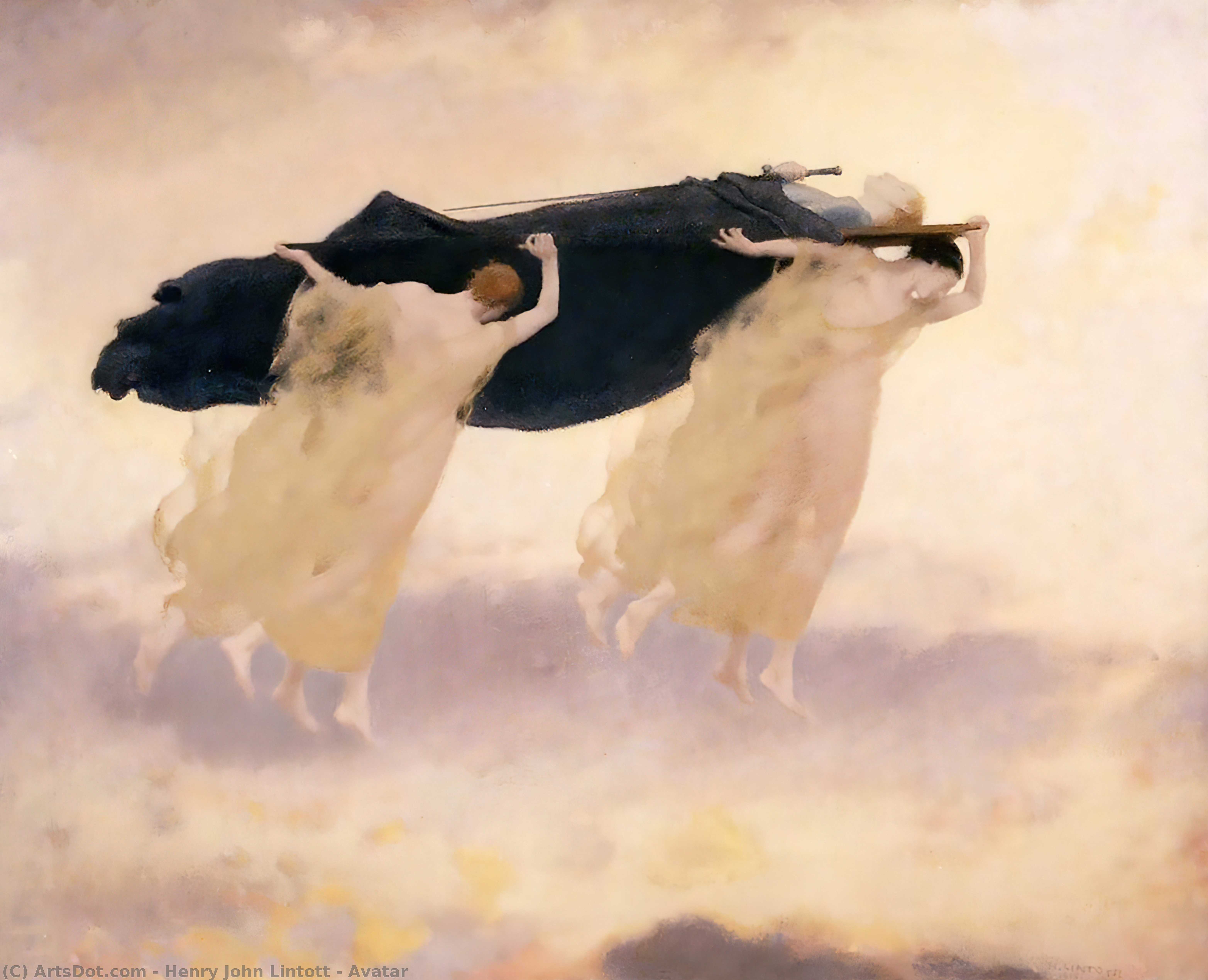
Explore 'Avatar' by Henry John Lintott – a haunting Symbolist painting of three women uniting in strength. Discover its ethereal beauty & British Impressionism at the Royal Scottish Academy.
 続きを読む
続きを読む
Discover Henry John Lintott's captivating paintings! Explore his portraits, landscapes & figure studies reflecting British Impressionism & Post-Impressionism. View available artworks and learn about this significant 20th-century artist.
このページに掲載されている作品は著作権法によって保護されており、当社の許可なく同一の複製物を制作または販売することは法律で禁じられています。この保護は、以下のような国際条約に基づき執行されます。 ベルヌ条約 および、以下の条項に定められたものを含む各国の法律により、 米国著作権法 第17編。
この手法は、著作権で保護された作品の複製や複写を伴わないため、著作権法に完全に準拠しています。これは単なる模倣ではなく、創造的な再解釈です。元の作品からインスピレーションを受けつつも、それとは異なる、全く新しい絵画を生み出すものです。
ジークレー/アートプリント
スピーディーな制作と多彩な仕上げオプションが魅力の、ミュージアムクオリティなジークレー・キャンバスプリント。 ( 手描きの複製画を注文する デジタル画像販売へ切り替え)




P118B ¥10

P118H ¥10

P118W ¥10

P438Z ¥10

P508JH ¥12

P508YH ¥12

P805H ¥10

P805Z ¥10

P919BZ ¥10

P919G ¥10

P919XJ ¥10

P959ZH ¥10

P968JZ ¥12

W106C ¥8

W218G ¥10

W218JH ¥8

W218Y ¥10

W307PJ ¥10

W316G ¥10

W316PJ ¥8

W316Y ¥10

W398PJ ¥8

W4111J ¥10

W500HY ¥15

W500JH ¥15

W692G ¥12

W849H ¥8

W940BG ¥15

W953PJ ¥8




標準サイズ
カスタムサイズ
CM
INCH
作品のオリジナル比率に合わせた、当店の規定サイズからお選びください。
Loading sizes...

横幅
高さ
額縁や壁のスペースに合わせて、ご希望の幅と高さを入力してください。プリントはカットすることは可能ですが、元の画像より大きくすることはできないため、異なる比率のサイズを選択された場合は、画像の一部が欠けることになります。印刷を開始する前に、内容を確認していただくためのデジタルモックアップをお送りいたします。このページに表示されている画像は、実際のカット後の状態を示すものではありません。実際の仕上がりはモックアップにてご確認ください。


 ガラスオプションは、110cm未満のサイズでのみご利用いただけます。

Avatar
ジークレー/アートプリント
複製画サイズ一覧
-


合計金額
¥ 10949
A Vision of Ethereal Unity
In the vast, misty corridors of art history, few works manage to bridge the gap between the tangible world and the realm of the spirit as gracefully as Henry John Lintott’s 1916 masterpiece, "Avatar." This captivating oil on canvas is not merely a painting; it is a window into a dreamscape where the boundaries of form and shadow dissolve. At its heart, the composition presents three female figures, positioned with a deliberate, rhythmic balance that guides the eye across a landscape of uncertainty. They appear to be engaged in a shared, sacred task, bearing a large, dark, boat-like object that anchors the ethereal scene. There is an undeniable sense of weight and purpose in their movement, yet they seem to glide through a hazy, atmospheric void, as if caught in a moment of suspended animation between heaven and earth.
The style of "Avatar" is a profound dialogue between Symbolism and Romanticism. Lintott eschews the sharp, clinical lines of realism in favor of soft, curvilinear forms and a palette of pale yellows, muted blues, and ghostly whites. The brushwork is loose and evocative, creating a textured surface where light does not strike objects so much as it permeates them. This technique produces a diffused, glowing effect, making the clouds appear to swirl with a life of their own. For the discerning collector or interior designer, this piece offers a sophisticated layer of depth; its lack of rigid boundaries allows it to integrate seamlessly into spaces that value atmosphere and mood, providing a focal point that invites quiet contemplation rather than demanding loud attention.
Symbolism and the Strength of Connection
Beyond its visual beauty, "Avatar" serves as a powerful allegory for human resilience and collective endeavor. The central theme is one of unity. The way the three women work in concert to carry their mysterious burden symbolizes the strength found in solidarity—the idea that even the most daunting journeys through life's shadows are made possible through cooperation. The dark, enigmatic object they carry acts as a profound symbol; it could represent the heavy responsibilities of existence, or perhaps a vessel for the soul navigating the turbulent currents of fate. This tension between the lightness of the angelic figures and the gravity of their task creates an emotional resonance that is both melancholic and deeply inspiring.
Historically, this work reflects Lintott’s position within the Scottish art scene and his exposure to the burgeoning Symbolist movements in London and Paris. As a prominent figure at the Royal Scottish Academy, Lintott was a master of capturing the struggle between light and darkness. In "Avatar," this struggle is not depicted through violent contrast, but through a subtle, atmospheric haze that suggests the ephemeral nature of life itself. To possess a reproduction of this work is to bring a piece of this historical introspection into a modern home—a reminder of the enduring power of connection and the beauty found in the pursuit of common goals.
An Invitation to the Sublime
For those seeking to curate an environment of peace, mystery, or intellectual depth, "Avatar" offers unparalleled inspiration. The painting’s shallow perspective and flattened space create an intimate experience, drawing the viewer into a world where the physical laws of gravity seem secondary to the emotional laws of the spirit. It is a piece that rewards repeated viewing, revealing new nuances in its layered glazes and soft shadows each time the light hits it. Whether placed in a grand gallery-style living room or a quiet study, this reproduction serves as a testament to the timeless allure of the sublime, making it an exquisite choice for anyone looking to infuse their surroundings with a sense of poetic grace and historical significance.
よくあるご質問
Henry John Lintott作「Avatar」 の著作権状況について、その根拠を教えてください。
Henry John Lintottによる「Avatar」は著作権により保護されていますです。著作権の保護期間は作者の没年から起算されますが、Henry John Lintottは1965年に亡くなっています。
Henry John Lintott作「Avatar」の原画はどこで見ることができますか?
原画の「Avatar」はRoyal Scottish Academy of Art - Architecture, エディンバラ, United Kingdomにてご覧いただけます。
「Avatar」全体の明るさはどの程度ですか?
視覚的な明るさの観点から見ると、Henry John Lintott作「Avatar」 は brilliant です。


アーティストについて
Henry John Lintott: A Weaver of Scottish Dreams
Henry John Lintott (1877-1965) wasn’t a name that dominated the art world during his lifetime, yet within the rich tapestry of 20th-century British painting, particularly in Scotland, he remains a quietly significant figure. More than simply a painter, Lintott was an educator and a mentor, shaping the artistic trajectories of generations through his tenure at the Edinburgh College of Art. His work—a captivating blend of portraiture, landscape, and allegorical scenes—offers a glimpse into a world where observation is paramount, emotion subtly rendered, and the ethereal intertwines with the everyday.
Born in Brighton, Lintott’s artistic journey began with formal training at the local school. He then broadened his horizons, studying in London and Paris – experiences that undoubtedly exposed him to the burgeoning currents of Impressionism and Symbolism. It was a move north to Edinburgh in 1902 that proved pivotal, establishing a long and influential career within Scotland’s artistic heartland. He quickly ascended to a position of respect, becoming one of the initial staff members at the College, where he spent over four decades nurturing talent and refining his own practice.
The Language of Light and Shadow
Lintott's style is immediately recognizable—a deliberate eschewing of bold, assertive brushstrokes in favor of a meticulously layered technique. He favored soft, diffused light, often employing a muted palette dominated by blues, greens, and browns, creating an atmosphere of quiet contemplation. His landscapes aren’t merely depictions of scenery; they are imbued with a dreamlike quality, as if viewed through a hazy memory or a half-remembered vision. This is particularly evident in works like “St Bernard’s Crescent from Studio Window,” where the urban scene dissolves into a wash of atmospheric color, suggesting both familiarity and an underlying sense of mystery.
His portraits are equally compelling. Lintott avoided the conventional formality often associated with portraiture, instead capturing his subjects with a gentle intimacy. He seemed to seek not just likeness but also something deeper—a hint of personality, emotion, or inner life. The “Self Portrait,” for instance, reveals an older man reflecting on his own journey, his gaze imbued with a quiet dignity and perhaps a touch of melancholy.
Influences and Artistic Circle
Lintott’s artistic development was undoubtedly shaped by the prevailing movements of his time – Impressionism and Symbolism. However, he forged his own distinctive voice, blending these influences with a distinctly Scottish sensibility. He was part of The Society of Eight, a group of artists who shared a commitment to exploring subjective experience and challenging conventional artistic norms. This circle fostered a spirit of experimentation and collaboration, contributing significantly to the vibrant artistic scene in Edinburgh.
His influence extended far beyond his immediate colleagues. He mentored a remarkable cohort of young Scottish artists, including Anne Redpath, John Maxwell, and William MacTaggart—artists who went on to achieve considerable recognition in their own right. Lintott’s emphasis on observation, sensitivity, and the exploration of inner landscapes undoubtedly played a role in shaping their artistic visions.
Legacy and Enduring Appeal
Henry John Lintott may not have achieved widespread fame during his lifetime, but his work continues to resonate with viewers today. His paintings possess a quiet beauty and emotional depth that transcends time. They invite us to slow down, to observe closely, and to contemplate the subtle nuances of light, color, and form. The National Galleries of Scotland recognize Lintott’s importance, describing him as “a painter of portraits, landscapes and allegorical subjects,” whose method was “slow and meticulous” and his style “often soft and dream-like.”
His legacy lies not only in the works he created but also in the artists he nurtured. Lintott’s influence can be seen throughout the Scottish art landscape, a testament to his skill as an educator and his profound understanding of the power of visual language. His paintings remain a poignant reminder that true artistry often resides in the quiet moments—the subtle shifts in light, the unspoken emotions, and the enduring beauty of the everyday world.

Henry John Lintott
1877 - 1965
アーティスト情報
- Artistic Movement Or Style: British Impressionism/Post-Impressionism
- Artists Or Movements Influenced By This Artist: ['Scottish School']
- Artists Who Influenced This Artist:
- Anne Redpath
- John Maxwell
- William MacTaggart
- Date Of Birth: 1877
- Date Of Death: 1965
- Full Name: Henry John Lintott
- Nationality: British
- Notable Artworks:
- Avatar
- Self Portrait
- St Bernard’s Crescent
- Place Of Birth: Brighton, UK
関連記事

Henry Lamb: Reassessing Modern British Primitivism & the Poetics of Discomfort
Explore the compelling work of Henry Lamb, a key figure in British Primitivism. Discover his unsettling portraits, poignant war art & unique artistic vision. A deep dive into his life and legacy.

アンリ・マティスの傑作25選:色彩と情熱の軌跡|TopImpressionists
アンリ・マティスの傑作25選🎨 色彩と情熱が織りなす世界を旅する。フォーヴィスム代表の巨匠、マティスの絵画の魅力と歴史を紐解きます。TopImpressionistsで高品質なアートプリントや複製画を見つけ、インテリアに芸術的な輝きを✨ Explore the full collection online

John Henry Twachtman: Atmospheric Impressionism & the American Landscape
Explore the captivating landscapes of John Henry Twachtman, a pivotal American Impressionist & Tonalist painter. Discover his artistic evolution, key works, and lasting influence on early 20th-century art.

ジョン・シンガー・サージェント:至高の25選 - 美と光の肖像画の世界 | TopImpressionists
ジョン・シンガー・サージェントの至高の25選。肖像画、写実主義、光と影の表現が美しい作品群を紐解きます。マダムXや少女の肖像など、時代を超えて愛される名作をTopImpressionistsで鑑賞。高品質なアート複製で、お部屋に美術館のような空間を。今すぐコレクションをご覧ください。

ジョン・コンスタブルの傑作25選:英国風景画の巨匠が描く自然と光の詩 | TopImpressionists
ジョン・コンスタブルの傑作25選。英国風景画の巨匠が描く自然と光の詩の世界へ。ロマン主義を代表する絵画、デダム・ヴェールやヘイ・ウェインなど、TopImpressionistsで高品質なアートプリントをお楽しみください。インテリアに深みと感動を。コレクションはこちら。