
オンラインプレビューをはるかに凌ぐ、高解像度で鮮明なデジタル画像をご購入いただけます。
各ファイルは、社内の専門家が高度なツールと熟練した手作業によるレタッチを用いて、細心の注意を払って準備されています。すべての画像において、卓越した鮮明度、正確な色彩再現性、そして繊細なディテールを保証いたします。
最終ファイルは、プロフェッショナルな編集・印刷環境ですぐにご利用いただけるよう最適化された状態で、72時間以内にメールにてお届けいたします。これは、一流のデザインスタジオ、出版社、ギャラリーから信頼されているものと同等の品質です。
TopImpressionists.com を選ぶことは、単に画像を手に入れることではありません。それは、プロの手によって精密に仕上げられ、満足保証が付いた高品質なデジタルアートワークを受け取ることを意味します。ご注文いただいた際に自動的に付随する内容は、以下の通りです:

ご注文から72時間以内に、高解像度のデジタル画像ファイルがメールでお手元に届きます。すぐにそのままご利用いただけます。

お客様の作品は、高度なAIツールと専門家による手作業の編集を組み合わせてプロフェッショナルに最適化されており、細部のディテール、鮮明さ、そして正確な色再現性を最大限に引き出しています。

ファイルを誤って削除したり、紛失してしまったりしましたか?ご安心ください。いつでも無料で再送いたします。

関税や手数料、配送料を気にすることなく、お気に入りのアートワークをすぐにお楽しみいただけます。デジタルダウンロードは常に免税です。

プロ仕様のツールとカラーマネジメント技術を用いることで、デジタル画像が元の色を最大限に忠実に再現することを保証いたします。

ご購入いただいたデジタル画像にご満足いただけない場合は、60日以内であれば、修正または100%の返金(理由を問う必要はありません)をさせていただきます。

ご満足いただけない場合は、デジタルファイルを受け取ってから60日以内であれば、理由を問わず全額返金いたします。

3枚購入で10%OFF - 5枚購入で15%OFF - 10枚以上購入で20%OFF。クリエイティブなプロジェクト、ギャラリー、エージェンシーに最適です。
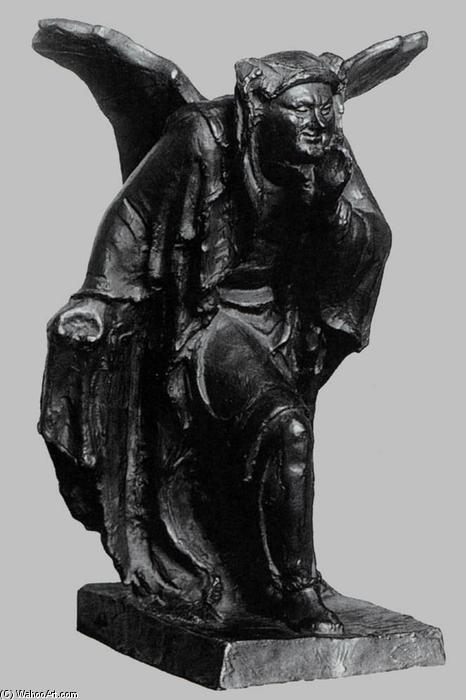
Hermann Ernst Freund’s “Loki” stands as a compelling testament to the burgeoning Romantic movement’s fascination with ancient mythology, specifically the complex and often contradictory narratives of Norse lore. Crafted in Rome during a pivotal decade of his artistic development – 1818-1820 – this bronze sculpture transcends mere representation; it embodies a potent distillation of Loki's character: cunning trickster, shapeshifter, and harbinger of chaos, yet simultaneously imbued with an unsettling intelligence and a hint of tragic vulnerability. Freund’s decision to focus on this notoriously ambiguous figure speaks volumes about the era’s shifting artistic sensibilities – a move away from the rigid formality of Neoclassicism towards a more emotionally charged exploration of folklore and the darker aspects of human nature.
The sculpture’s power lies not only in its subject but also in Freund's masterful manipulation of bronze – a medium he expertly wielded throughout his career. The figure is rendered with remarkable anatomical detail, capturing the muscularity and coiled energy of Loki mid-pose. Note the deliberate roughness of the surface, achieved through careful polishing and patination; this textural contrast emphasizes the figure’s physicality while simultaneously hinting at an underlying sense of unease. The drapery, flowing and dynamic, is sculpted with a remarkable degree of realism, suggesting both movement and a subtle suggestion of concealment – mirroring Loki's ability to blend seamlessly into various roles.
Technique: The bronze casting process itself contributes significantly to the sculpture’s impact. The inherent qualities of the metal—its weight, its capacity for detail, and its potential for surface treatment—are fully exploited by Freund, creating a work that is both imposing and intimate.Loki's pose – seated, one leg extended, head turned in a gesture of deliberate observation – immediately conveys his characteristic cunning. The subtle suggestion of a smirk plays upon the viewer’s expectations, inviting speculation about his intentions. The presence of wings, a clear reference to Norse mythology, reinforces his status as a supernatural being, capable of transformation and wielding considerable power. However, it is not merely a depiction of brute force; there's an element of calculated strategy in Loki’s stance, reflecting his role as a master manipulator.
“Loki” is more than just a sculpture; it’s an evocation of the complexities inherent in Norse mythology – a world populated by gods and giants, heroes and monsters, where fate is often capricious and morality ambiguous. Freund's work captures this spirit with remarkable sensitivity, inviting viewers to contemplate the nature of trickery, intelligence, and the enduring power of myth. Reproductions of this piece offer a tangible connection to a pivotal moment in Romantic art history, allowing us to experience firsthand the artistic vision of a sculptor who dared to delve into the shadowy depths of Norse legend. It remains a potent symbol of both the allure and the danger inherent in embracing the unknown.
Hermann Ernst Freund (1786-1840) was a German-born Danish sculptor who achieved recognition for his pioneering work in Nordic mythology and, most notably, the ambitious *Ragnarok Frieze*. Born near Bremen, Germany, he initially pursued training as a smith before dedicating himself to the world of art. He enrolled at the Art Academy in Copenhagen, where his talent quickly shone through, earning him all four silver and gold medals.
Following his graduation, Freund embarked on a decade-long sojourn in Rome (1810-1820). This period proved pivotal to his artistic development. He became the closest assistant to the renowned sculptor Bertel Thorvaldsen, gaining invaluable experience and refining his skills. His work during this time, such as the marble bust of Bernhard Severin Ingemann (1820), demonstrates a clear influence of Thorvaldsen’s Neoclassical style.
Upon returning to Denmark, Freund distinguished himself as an early proponent of Romantic Nationalism. He was the first Danish sculptor to actively engage with themes from Nordic mythology, creating a series of twelve statuettes between 1822 and 1829. These included compelling representations of figures like Loki (1822), Odin (bronze, 1827), and Thor (1829). His approach skillfully blended the grandeur of ancient Greek and Roman mythological traditions with distinctly Norse subject matter.
In 1829, Freund was appointed professor at the Academy, solidifying his position within the Danish art world. Inspired by his travels in Southern Italy, he had his official residence, Materialgaard, decorated in a Pompeiian style. He mentored several young artists including Georg Hilker, Heinrich Eddelien, Constantin Hansen and Christen Købke who assisted with the decoration of Materialgaard based on Freund’s designs.
Hermann Ernst Freund played a crucial role in shaping Danish sculpture during the Golden Age. His pioneering exploration of Nordic mythology not only revitalized national artistic identity but also established a unique and enduring legacy. The largest collection of his works is housed at the Glyptotek in Copenhagen, ensuring that future generations can appreciate his contributions to art history. He remains an important figure for understanding the intersection of Neoclassicism, Romanticism, and National Identity in 19th-century Danish art.

1786 - 1840 , Germany


最新の美術ニュース、限定オファー、そしてインテリアのアイデアをいち早くお届けします。
お客様のプロジェクトについてお聞かせください。当社の美術専門家が、お客様に合わせた3つのパーソナライズされた芸術提案をご提供いたします。
あなたにぴったりの3作品を無料で厳選いたします

 Preview
 プリントを購入
 シェアする
シェアする シェアする
シェアする
 詳細を見る
詳細を見る

 ダウンロード
 似ている作品
 X線調査
X線調査 スライドショー


 詳細を見る
詳細を見る