

Shown: · With its frame:
 設置イメージを確認
 送る
送る シェア
シェア
 詳細情報
詳細情報 ガイドを表示

 画像をダウンロード
 似ている作品
 X線調査
X線調査 スライドショー
 Q&A
Q&A 統計情報
統計情報Two Men Painted by hand in oil, brushstroke by brushstroke
 Oil On Canvas
- WallArt
- Realist Observation
 1865
1865 27.0 x 21.0 cm
 メトロポリタン美術館
¥ 42323
手描き油彩複製画
当社のアーティストが、お客様のご希望のサイズと額縁に合わせて、キャンバスに手描きで制作する油彩画です。 ( プリント版に切り替え デジタル画像販売へ切り替え)
Size
·標準サイズ
カスタムサイズ
CM
INCH
作品のオリジナル比率に合わせた、当店の規定サイズからお選びください。
Loading sizes...

横幅
高さ
フレームや壁のスペースに合わせて、ご希望の幅と高さを入力してください。本作品は手描きのため、異なる比率のサイズをご希望の場合、絵画の周囲を少し広げて描くか、あるいは端を少しカットして調整することが可能です。お客様のご要望に合わせます。制作を開始する前に、仕上がりを確認するためのデジタルモックアップをお送りいたします。このページに表示されている画像は完成品の実物ではなく、あくまでモックアップによるイメージです。
 詳細を見る
詳細を見るFinish
·
White ¥1

Blurside ¥1

Extended ¥1

P118B ¥10

P118H ¥10

P118W ¥10

P438Z ¥10

P508JH ¥12

P508YH ¥12

P805H ¥10

P805Z ¥10

P919BZ ¥10

P919G ¥10

P919XJ ¥10

P959ZH ¥10

P968JZ ¥12

W106C ¥8

W218G ¥10

W218JH ¥8

W218Y ¥10

W307PJ ¥10

W316G ¥10

W316PJ ¥8

W316Y ¥10

W398PJ ¥8

W4111J ¥10

W500HY ¥15

W500JH ¥15

W692G ¥12

W849H ¥8

W940BG ¥15

W953PJ ¥8

H24-GOLD ¥30

H24-SILVER ¥30

H36-GOLD ¥45

H36-SILVER ¥45
Shipped in a protective tube, ready for your own framer.
Above 105 cm the frame is shipped as a kit for a professional framer — read the details.
Extras
optionalWhat do the extras include?
Examples of what can be changed: Replace face with customer photo; Add pet (e.g., replace cat with dog); Include hidden message in background; Change background landscape or elements.
After order, TopImpressionists.com team will email client for instructions and provide a mockup preview
After order, TopImpressionists.com team will email client for instructions and provide a mockup preview
世界中への配送()は、通常の5週間ではなく、3〜4週間でお届けいたします。(29 10月)。品質には一切妥協いたしません。
保護用ワニス
銘板
刻印入りブロンズプレートの詳細
This elegant plaque features the artist's name and the title of the artwork, finely engraved for a timeless presentation.
It is made from bronze with a refined, elegant finish. The text is precisely laser-engraved for a sharp and permanent result. Measuring 9x2 cm, the plaque is compact yet easy to read. It's built to be durable and scratch-resistant, offering a professional, museum-quality look. Mounting is simple thanks to the included adhesive backing.
透明アクリル銘板の詳細
The plaque includes essential engraved details such as the artist's name, the title of the artwork, the date it was created, the type of media used-like oil on canvas or watercolor-a brief description of the piece, and a QR code that links to the complete artwork information.
It is crafted from clear acrylic, offering a sleek, modern appearance. The text is UV-engraved in black to ensure strong visual contrast. With a size of 10x15 cm, it ensures optimal readability. It comes equipped with two metal hooks for secure wall mounting. The plaque is designed to be weather-resistant, making it suitable for various environments, and it includes interactive features that work seamlessly with smartphone scanning.
黒アクリル製銘板の詳細
This elegant plaque includes engraved information such as the artist's name, the title of the artwork, the date it was created, the type of media used (like oil on canvas or watercolor), a short description of the artwork, and a QR code for quick access to more information.
The plaque itself is made from refined black acrylic with a premium finish. The text is laser-engraved in white for high contrast and readability. Its size is 10x15 cm, designed to be easy to read. It comes with two metal hooks for professional mounting. The design is sleek and fits any interior style. It is also weather-resistant and durable, with built-in digital integration for mobile compatibility.
ガラスオプションは、110cm未満のサイズでのみご利用いただけます。
 ガラスオプションは、110cm未満のサイズでのみご利用いただけます。
- 世界中へ無料エクスプレス配送
- 高品質なリネンキャンバス
- 配送時完全保険付
- 関税・輸入税の払い戻し保証
- 忠実な色彩再現の保証
- 100日間返品保証(製造上の欠陥がある場合のみ)
- 100% 全額返金保証
- まとめ買い割引のご案内


コレクション詳細
アーティストプロフィール
パリ フランス エドガー・ドガ ヒレール・ Germain-エドガール・ドガ 19世紀を代表するフランスの画家、エドガー・ドガ。バレエダンサーやパリの日常風景を捉え、革新的な構図と卓越した描写力で印象主義に影響を与えました。『踊り子』『カフェ・ド・シャワール』など、現代生活の真実を描き出した傑作群。 印象派、写実主義 パブロ・ピカソ ギュスターヴ・クールベ 1834年7月19日 1917年9月27日 ヒレール・ Germain-エドガール・ドガ フランス人 タムブリンを持つ踊り子 フランス、パリ 入絵主義 1 エドガー・ドガは、レーベルを拒否しながらも、どの芸術運動と関連付けられることが多いですか?
About the painting
A Moment Frozen in Time: Edgar Degas’s “Two Men”
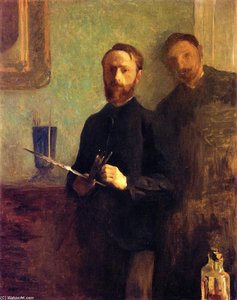
Edgar Degas's "Two Men," painted in 1865, isn’t merely a depiction of two figures; it’s a carefully constructed tableau brimming with unspoken narratives and the quiet observation that defined the artist’s unique approach to painting. Often considered a pivotal work in his oeuvre, this piece reveals Degas’s fascination with capturing candid moments – individuals caught in their everyday routines, revealing glimpses into their personalities and the atmosphere of their surroundings. The scene, likely situated within an artist's studio, immediately draws the viewer in with its muted palette and the palpable sense of a shared, yet private, conversation.
The painting’s composition is deliberately asymmetrical. The man on the right, seated and partially turned away, exudes a certain reserve, perhaps even weariness. His posture suggests contemplation or perhaps simply the burden of artistic endeavor. Conversely, the figure standing before us—the identity of whom remains tantalizingly unknown – possesses an openness, his gaze directed squarely at the viewer. This directness creates an immediate connection, inviting speculation about their relationship and the subject of their discussion. Degas masterfully uses this contrast to generate a dynamic tension within the frame, suggesting a complex interplay between observation and engagement.
Decoding the Brushstroke: Technique and Style
Degas’s distinctive style is immediately apparent in “Two Men.” He eschews the smooth, polished surfaces favored by many of his contemporaries, opting instead for loose, expressive brushstrokes that imbue the painting with a remarkable sense of movement. The paint isn't blended; rather, it’s applied in visible dabs and dashes, creating an almost tactile quality to the surface. This technique perfectly captures the fleeting nature of the moment – the suggestion of conversation, the rustle of clothing, the play of light on skin. The artist’s use of color is equally deliberate, relying on a restrained palette of earthy tones—ochres, browns, and grays—that contribute to the painting's somber mood and reinforce its sense of realism.
Notably, Degas employed oil paint on wood panel, a medium that allowed for both textural richness and a subtle sheen. The way light reflects off the surface reveals the artist’s meticulous attention to detail, highlighting the textures of fabric and the contours of the figures' faces. The visible brushwork isn’t simply an aesthetic choice; it’s integral to conveying the immediacy and spontaneity of the scene.
A Glimpse into a Parisian World
“Two Men” offers a valuable window into the artistic milieu of 19th-century Paris. The setting, likely Degas's studio, was a hub for creative exchange—a space where artists gathered to discuss ideas, critique each other’s work, and simply observe the world around them. The presence of Émile Lévy, a student at the French Academy in Rome when Degas met him, adds another layer of historical context. This encounter likely fueled Degas's interest in portraying figures engaged in intellectual pursuits – a recurring theme throughout his career.
Beyond its biographical details, the painting speaks to a broader cultural shift. Degas’s focus on everyday life and ordinary people represented a departure from the grand historical narratives favored by earlier generations of artists. He sought to capture the essence of modern existence—the complexities of human interaction, the rhythms of daily routine, and the subtle nuances of personality.
Emotional Resonance and Timeless Appeal
Despite its apparent simplicity, “Two Men” possesses a profound emotional resonance. The painting’s quiet intimacy invites viewers to contemplate the unspoken connections between individuals—the shared experiences that shape our lives and the mysteries that lie beneath the surface of everyday interactions. The ambiguity surrounding the figures' identities further enhances this effect, prompting us to project our own interpretations onto the scene.
A hand-painted reproduction of “Two Men” by TopImpressionists.com offers a remarkable opportunity to bring this captivating artwork into your home or office. The meticulous detail and vibrant colors faithfully recreate Degas’s original vision, allowing you to appreciate the artist's genius and immerse yourself in the atmosphere of his Parisian studio. It is more than just a painting; it’s a portal to another time, a testament to the enduring power of observation, and a celebration of the beauty found in the ordinary.
よくあるご質問
ヒラール・ジェームズ・エドガー・デガス作「Two Men」は、どのような色彩の調和を見せていますか?
ヒラール・ジェームズ・エドガー・デガス作「Two Men」の色使いは、Unified Paletteな調和を見せています。ここでの「調和」とは、色彩同士が互いにどのように響き合っているかを表しています。
ヒラール・ジェームズ・エドガー・デガス作「Two Men」は、明るい印象の作品ですか、それとも暗い印象の作品ですか?
ヒラール・ジェームズ・エドガー・デガス作「Two Men」の明るさはdeep_shadow、輝度はDarkと記録されています。
「Two Men」は、作者の母国に保管されていますか?
いいえ、作品は国外に保管されています。ヒラール・ジェームズ・エドガー・デガスの出生国はフランスであり、「Two Men」の真作を収蔵している美術館はUnited States of Americaにあります。
Quick facts and art quiz
About ヒラール・ジェームズ・エドガー・デガス

ヒラール・ジェームズ・エドガー・デガス
1834 - 1917, フランス
アーティストについて
エドガー・デガス:動きを捉える芸術家
エドガー・デガスは、1834年にパリで生まれました。彼は印象派の画家たちと並びながらも、そのスタイルにこだわらず、現実主義者として活動しました。これは彼の周囲の世界を注意深く観察し、誠実さを追求した結果です。彼の幼少時代は裕福な家庭環境で育ちましたが、父親は銀行家であり、母親はニューオーリンズのクレオール系でした。この背景は芸術教育へのアクセスを提供しましたが、同時にアカデミックな制約に対する反発を抱えていました。彼は当初、リュシエ・ルグランに通い始めましたが、彼の真の教育はルーブル美術館で古典的な作品を模写することを始めたことから始まりました。これは彼が伝統に挑戦し続けることを意味しました。彼は独立した精神を持った人物であり、彼のキャリア全体を通してその特徴を定義しました。印象派との違い:独自の芸術的視点
同時期のモネやレノワールは屋外で光の移ろいを追求しましたが、デガスは主にスタジオ内で働き、観察と記憶からシーンを作り上げました。彼の主題は現代的なものであり、多くのアカデミックな画家が好みた歴史的なテーマや神話的なテーマとは異なっていました。彼はパリの人々が生きていく日常にインスピレーションを受けました。特にバレエダンサーに対する情熱は彼の作品の中心を成しています。デガスは単に美しいバレリーナを描いたわけではありません。彼は彼らの職業の厳しさを描き、絶え間ない練習、肉体的な負担、そして困難の中で現れる優雅さの一瞬を捉えました。彼の構図はしばしば斬新で、人物を予想外の位置に配置し、非対称な構成を用います。これは動きを捉えるための優れた技術であり、絵画全体にダイナミズムと immediacy を与えます。彼は伝統的な方法を用いて現代的なテーマに取り組むことで、他の若い画家たちに影響を与えました。彼の芸術的開発は多様な影響を受けていました。彼は幼少期に古典的な原則を重視し、特にジャン=オーギュスト=ドミニク・アンジェール絵画家の厳格な訓練を受けました。しかし、デガスは印象派の画家たちのように屋外で絵を描くことを避けませんでした。彼は印象派の画家たちと並びながらも、そのスタイルにこだわらず、現実主義者として活動しました。彼は他のアーティストを鼓舞し、新しい技術を実験するよう促したピサロとの関係が彼の芸術的な開発において重要な役割を果たしました。彼は日本の絵画技法に魅了され、これは構図の非対称性や視点の簡素化など、さまざまな要素に影響を与えました。彼はまた写真を使用し、動きを捉えるためのツールとして認識しました。この多様な影響を受け入れ、伝統的な規範から解放され、世界を表現するための新しい方法を探求する次世代のアーティストに道を拓いたのです。彼の芸術的開発は多様な影響を受けていました。彼は幼少期に古典的な原則を重視し、特にジャン=オーギュスト・ドミニク・アンジェール絵画家の厳格な訓練を受けました。しかし、デガスは印象派の画家たちのように屋外で絵を描くことを避けませんでした。彼は他のアーティストを鼓舞し、新しい技術を実験するよう促したピサロとの関係が彼の芸術的な開発において重要な役割を果たしました。彼はまた写真を使用し、動き捉えるためのツールとして認識しました。この多様な影響を受け入れ、伝統的な規範から解放され、世界を表現するための新しい方法を探求する次世代のアーティストに道を拓いたのです。主な作品と技術
デガスは幅広いメディアで実験しました。油絵、パステル、ゴウアッシュ、エッチング、リトグラフ、モノタイプ、ワックスモデリングなど、さまざまな素材を使って作品を制作しました。特にバレエダンサーや女性のヌードを描くことで知られています。これらの作品は彼の動きを捉えるための優れた技術を示しており、絵画全体にダイナミズムと immediacy を与えます。彼はバレエダンサーや女性のヌードだけでなく、競馬場での騎手やレース馬も描きました。彼のポートレートは人間の孤独を表現し、心理的な複雑さを明らかにしています。彼は特にバレエダンサーや女性のヌードを描き、これらの作品は彼の動きを捉えるための優れた技術を示しており、絵画全体にダイナミズムと immediacy を与えます。彼はバレエダンサーや女性のヌードだけでなく、競馬場での騎手やレース馬も描きました。彼のポートレートは人間の孤独を表現し、心理的な複雑さを明らかにしています。これらの作品は彼の動きを捉えるための優れた技術を示しており、絵画全体にダイナミズムと immediacy を与えます。彼はバレエダンサーや女性のヌードだけでなく、競馬場での騎手やレース馬も描きました。彼のポートレートは人間の孤独を表現し、心理的な複雑さを明らかにしています。これらの作品は彼の動きを捉えるための優れた技術を示しており、絵画全体にダイナミズムと immediacy を与えます。彼はバレエダンサーや女性のヌードだけでなく、競馬場での騎手やレース馬も描きました。彼のポートレートは人間の孤独を表現し、心理的な複雑さを明らかにしています。これらの作品は彼の動きを捉えるための優れた技術を示しており、絵画全体にダイナミズムと immediacy を与えます。彼はバレエダンサーや女性のヌードだけでなく、競馬場での騎手やレース馬も描きました。彼のポートレートは人間の孤独を表現し、心理的な複雑さを明らかにしています。これらの作品は彼の動きを捉えるための優れた技術を示しており、絵画全体にダイナミズムと immediacy を与えます。彼はバレエダンサーや女性のヌードだけでなく、競馬場での騎手やレース馬も描きました。彼のポートレートは人間の孤独を表現し、心理的な複雑さを明らかにしています。これらの作品は彼の動きを捉えるための優れた技術を示しており、絵画全体にダイナミズムと immediacy を与えます。彼はバレエダンサーや女性のヌードだけでなく、競馬場での騎手やレース馬も描きました。彼のポートレートは人間の孤独を表現し、心理的な複雑さを明らかにしています。これらの作品は彼の動きを捉えるための優れた技術を示しており、絵画全体にダイナミズムと immediacy を与えます。彼はバレエダンサーや女性のヌードだけでなく、競馬場での騎手やレース馬も描きました。彼のポートレートは人間の孤独を表現し、心理的な複雑さを明らかにしています。これらの作品は彼の動きを捉えるための優れた技術を示しており、絵画全体にダイナミズムと immediacy を与えます。彼はバレエダンサーや女性のヌードだけでなく、競馬場での騎手やレース馬も描きました。彼のポートレートは人間の孤独を表現し、心理的な複雑さを明らかにしています。これらの作品は彼の動きを捉えるための優れた技術を示しており、絵画全体にダイナミズムと immediacy を与えます。彼はバレエダンサーや女性のヌードだけでなく、競馬場での騎手やレース馬も描きました。彼のポートレートは人間の孤独を表現し、心理的な複雑さを明らかにしています。これらの作品は彼の動きを捉えるための優れた技術を示しており、絵画全体にダイナミズムと immediacy を与えます。彼はバレエダンサーや女性のヌードだけでなく、競馬場での騎手やレース馬も描きました。彼のポートレートは人間の孤独を表現し、心理的な複雑さを明らかにしています。これらの作品は彼の動きを捉えるための優れた技術を示しており、絵画全体にダイナミズムと immediacy を与えます。彼はバレエダンサーや女性のヌードだけでなく、競馬場での騎手やレース馬も描きました。彼のポートレートは人間の孤独を表現し、心理的な複雑さを明らかにしています。これらの作品は彼の動きを捉えるための優れた技術を示しており、絵画全体にダイナミズムと immediacy を与えます。彼はバレエダンサーや女性のヌードだけでなく、競馬場での騎手やレース馬も描きました。彼のポートレートは人間の孤独を表現し、心理的な複雑さを明らかにしています。これらの作品は彼の動きを捉えるための優れた技術を示しており、絵画全体にダイナミズムと immediacy を与えます。彼はバレエダンサーや女性のヌードだけでなく、競馬場での騎手やレース馬も描きました。彼のポートレートは人間の孤独を表現し、心理的な複雑さを明らかにしています。これらの作品は彼の動きを捉えるための優れた技術を示しており、絵画全体にダイナミズムと immediacy を与えます。彼はバレエダンサーや女性のヌードだけでなく、競馬場での騎手やレース馬も描きました。彼のポートレートは人間の孤独を表現し、心理的な複雑さを明らかにしています。これらの作品は彼の動きを捉えるための優れた技術を示しており、絵画全体にダイナミズムと immediacy を与えます。彼はバレエダンサーや女性のヌードだけでなく、競馬場での騎手やレース馬も描きました。彼のポートレートは人間の孤独を表現し、心理的な複雑さを明らかにしています。これらの作品は彼の動きを捉えるための優れた技術を示しており、絵画全体にダイナミズムと immediacy をQuick facts about ヒラール・ジェームズ・エドガー・デガス
- Artistic Movement Or Style: 印象派、写実主義
- Artists Or Movements Influenced By This Artist:
- ピカソ
- マティス
- Artists Who Influenced This Artist:
- ジャン=オーギュスト・ドミニク・アンジェール・イングレス
- ゴッホバート
- カミーユ・ピサロ
- Date Of Birth: 1834年7月19日
- Date Of Death: 1917年9月27日
- Full Name: Hilaire Germain Edgar De Gas
- Nationality: フランス人
- Notable Artworks:
- ダンサーと tambourine
- バレエ教室
- デガスのジャケットを着た姿
- コレクター
- 髪をとかす女性たち
- Place Of Birth: パリ、フランス
関連作品




テーマ、スタイル、特徴別に分類された作品を探索しましょう。


Two Men
·