

Shown: · With its frame:
 設置イメージを表示
 シェアする
シェアする シェアする
シェアする
 詳細を見る
詳細を見る ガイドを表示

 ダウンロード
 似ている作品
 X線調査
X線調査 スライドショーを表示
 Q&A
Q&A 統計情報
統計情報
- 33.0 x 43.0 cm

¥ 42423
手描き油彩複製画
当社のアーティストが、ご希望のサイズと額縁に合わせてキャンバスに手描きで制作する、オーダーメイドの油彩画です。 ( プリント版に切り替え デジタル画像販売へ切り替え)
Size
·標準サイズ
オーダーメイド
CM
INCH
作品のオリジナル比率に合わせた、当店の規定サイズからお選びください。
Loading sizes...

横幅
高さ
フレームや壁のスペースに合わせて、ご希望の幅と高さを入力してください。本作品は手描きのため、異なる比率のサイズをご希望の場合、絵画の周囲を少し広げて描くか、あるいは端を少しカットして調整することが可能です。お客様のご要望に合わせます。制作を開始する前に、仕上がりを確認するためのデジタルモックアップをお送りいたします。このページに表示されている画像は完成品の実物ではなく、あくまでモックアップによるイメージです。
 詳しく読む
詳しく読むFinish
·
White ¥1

Blurside ¥1

Extended ¥1

P118B ¥10

P118H ¥10

P118W ¥10

P438Z ¥10

P508JH ¥12

P508YH ¥12

P805H ¥10

P805Z ¥10

P919BZ ¥10

P919G ¥10

P919XJ ¥10

P959ZH ¥10

P968JZ ¥12

W106C ¥8

W218G ¥10

W218JH ¥8

W218Y ¥10

W307PJ ¥10

W316G ¥10

W316PJ ¥8

W316Y ¥10

W398PJ ¥8

W4111J ¥10

W500HY ¥15

W500JH ¥15

W692G ¥12

W849H ¥8

W940BG ¥15

W953PJ ¥8

H24-GOLD ¥30

H24-SILVER ¥30

H36-GOLD ¥45

H36-SILVER ¥45
Shipped in a protective tube, ready for your own framer.
Above 105 cm the frame is shipped as a kit for a professional framer — read the details.
Extras
optionalWhat do the extras include?
Examples of what can be changed: Replace face with customer photo; Add pet (e.g., replace cat with dog); Include hidden message in background; Change background landscape or elements.
After order, TopImpressionists.com team will email client for instructions and provide a mockup preview
After order, TopImpressionists.com team will email client for instructions and provide a mockup preview
世界中への配送()は、通常の5週間ではなく、3〜4週間でお届けいたします。(2 11月)。品質には一切妥協いたしません。
保護用ワニス
キャプション
刻印入りブロンズプレートの詳細
This elegant plaque features the artist's name and the title of the artwork, finely engraved for a timeless presentation.
It is made from bronze with a refined, elegant finish. The text is precisely laser-engraved for a sharp and permanent result. Measuring 9x2 cm, the plaque is compact yet easy to read. It's built to be durable and scratch-resistant, offering a professional, museum-quality look. Mounting is simple thanks to the included adhesive backing.
透明アクリル銘板の詳細
The plaque includes essential engraved details such as the artist's name, the title of the artwork, the date it was created, the type of media used-like oil on canvas or watercolor-a brief description of the piece, and a QR code that links to the complete artwork information.
It is crafted from clear acrylic, offering a sleek, modern appearance. The text is UV-engraved in black to ensure strong visual contrast. With a size of 10x15 cm, it ensures optimal readability. It comes equipped with two metal hooks for secure wall mounting. The plaque is designed to be weather-resistant, making it suitable for various environments, and it includes interactive features that work seamlessly with smartphone scanning.
黒アクリル製銘板の詳細
This elegant plaque includes engraved information such as the artist's name, the title of the artwork, the date it was created, the type of media used (like oil on canvas or watercolor), a short description of the artwork, and a QR code for quick access to more information.
The plaque itself is made from refined black acrylic with a premium finish. The text is laser-engraved in white for high contrast and readability. Its size is 10x15 cm, designed to be easy to read. It comes with two metal hooks for professional mounting. The design is sleek and fits any interior style. It is also weather-resistant and durable, with built-in digital integration for mobile compatibility.
ガラスオプションは、110cm未満のサイズでのみご利用いただけます。
 ガラスオプションは、110cm未満のサイズでのみご利用いただけます。
- 世界中へ無料エクスプレス配送
- 高品質なリネンキャンバス
- 配送時完全保険付
- 関税・輸入税の払い戻し保証
- 真の色彩再現に関する保証
- 100日間返品保証(製造上の欠陥がある場合のみ)
- 100% 全額返金保証
- まとめ買い割引のご案内


アーティストの略歴
Explore the Pointillist works of Hippolyte Petitjean (1854-1929), a French painter known for his landscapes, portraits & innovative color techniques.
About the painting
Quick facts and art quiz
About Hippolyte Petitjean

Hippolyte Petitjean
1854 - 1929, France
作家プロフィール
The Luminous Legacy of Hippolyte Petitjean
In the golden twilight of the nineteenth century, a period defined by radical shifts in perception and the pursuit of pure light, Hippolyte Petitjean emerged as a vital architect of color. Born in the quiet surroundings of Mâcon, France, in 1854, his journey from a provincial student to a central figure in the Neo-Impressionist movement is a testament to the transformative power of artistic vision. His early training began at the age of thirteen in his hometown, but it was the move to Paris and the prestigious École des Beaux-Arts that would fundamentally reshape his destiny. Under the tutelage of academic masters such as Alexandre Cabanel and Pierre Puvis de Chavannes, Petitjean mastered the rigorous foundations of classical technique, yet his spirit yearned for a more modern, scientific exploration of the visible world.
The trajectory of Petitjean’s career underwent a profound metamorphosis in 1884, following a fateful encounter with Georges Seurat. This meeting was not merely a social introduction but an artistic awakening. Inspired by Seurat’s revolutionary theories on optical mixing, Petitjean abandoned the traditional blending of pigments in favor of Pointillism. He embraced the meticulous application of tiny, distinct dots of pure color, a method designed to let the viewer's eye perform the work of synthesis. This transition from the academic traditions of his mentors to the vibrant, shimmering surfaces of Neo-Impressionism allowed him to capture a sense of luminosity that felt almost supernatural, turning landscapes and portraits into vibrating tapestries of light.
A Mastery of Light and Form
Petitjean’s oeuvre is characterized by a remarkable versatility that refused to be confined to a single stylistic prison. While he is most celebrated for his Pointillist precision, his hand was capable of great fluidity. By 1894, he began to move away from the rigid dotting technique, integrating more feathery, expressive strokes into his compositions. This evolution allowed him to bridge the gap between the scientific rigor of Seurat and the more emotive, atmospheric qualities of Impressionism. His landscapes, particularly those capturing the rugged beauty of Normandy and Brittany, serve as profound meditations on the interplay of atmosphere and earth, where the sea and sky seem to dissolve into a haze of pure pigment.
Beyond the landscape, Petitjean’s portraits stand as some of his most intimate achievements. In these works, he utilized his mastery of color theory to imbue skin tones with a subtle psychological depth. He did not merely seek to replicate a likeness; rather, he sought to capture the very essence of his subjects through the careful orchestration of light and shadow. His ability to layer pigment to achieve an unparalleled realism—where a face seems to glow from within—demonstrates a sophisticated understanding of how color affects human perception. This dedication to the emotional resonance of color ensured that even his most technical experiments remained deeply human.
Historical Significance and Artistic Endurance
The significance of Hippolyte Petitjean lies in his role as a bridge between eras. He was an artist who could navigate the strictures of the Salon while simultaneously pushing the boundaries of the avant-garde. His participation in the Salon des Indépendants and exhibitions across Europe—from Brussels to Berlin—cemented his reputation as a significant voice in the international art scene. Even as he experimented with decorative watercolours later in life, returning to widely spaced rounded spots of pure color, he remained faithful to the core principle that light is not merely something that falls upon an object, but something that resides within the very fabric of color itself.
Today, the legacy of Petitjean continues to resonate through the collections of prestigious institutions such as the National Gallery of Art and the Musée d’Art Moderne in Paris. His work serves as a vital chapter in the story of modern art, reminding us of a time when painters dared to deconstruct reality into its most fundamental elements: dots, light, and emotion. To look upon a Petitjean painting is to witness the triumph of scientific observation married to poetic intuition, an enduring testament to the beauty found in the meticulous assembly of a thousand tiny fragments.
Quick facts about Hippolyte Petitjean
- Full Name: Hippolyte Petitjean
- Nationality: French
- Date Of Birth: 1854
- Date Of Death: 1929
- Place Of Birth: Mâcon, France
- Notable Artworks:
- Pont Neuf
- Woman in a Garden
- In the Park
- Artistic Movement Or Style: Pointillism


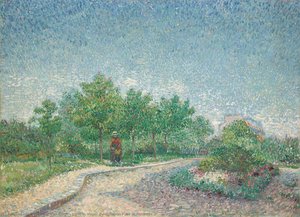
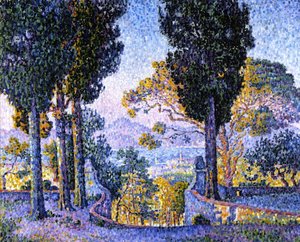


Hippolyte Petitjean
Landscape in Mâcon
() ·
With its frame: · Hand-painted in oil on linen
Total