
当社のアーティストが、お客様のご希望のサイズと額縁に合わせて、キャンバスに手描きで制作する油彩画です。 ( プリント版に切り替え 画像に切り替え)
作品のオリジナル比率に合わせた、当店の規定サイズからお選びください。

特定のフレームやスペースに合わせて、ご希望のサイズをご入力いただけます。選択されたサイズが元の画像の比率と異なる場合、アートワークをトリミングするか、手描きで要素を追加して絵画を拡張いたします。デジタルモックアップ を制作し、制作開始前にご確認(承認)をいただきます。
画面上のプレビューは、実際のトリミングや拡張を正確に反映しているものではありません。最終的な構図は、モックアップによってのみ正確にご確認いただけます。
カスタムサイズもご利用いただけますが、元の比率を維持するためには、あらかじめ用意されたリストからサイズを選択することをお勧めいたします。

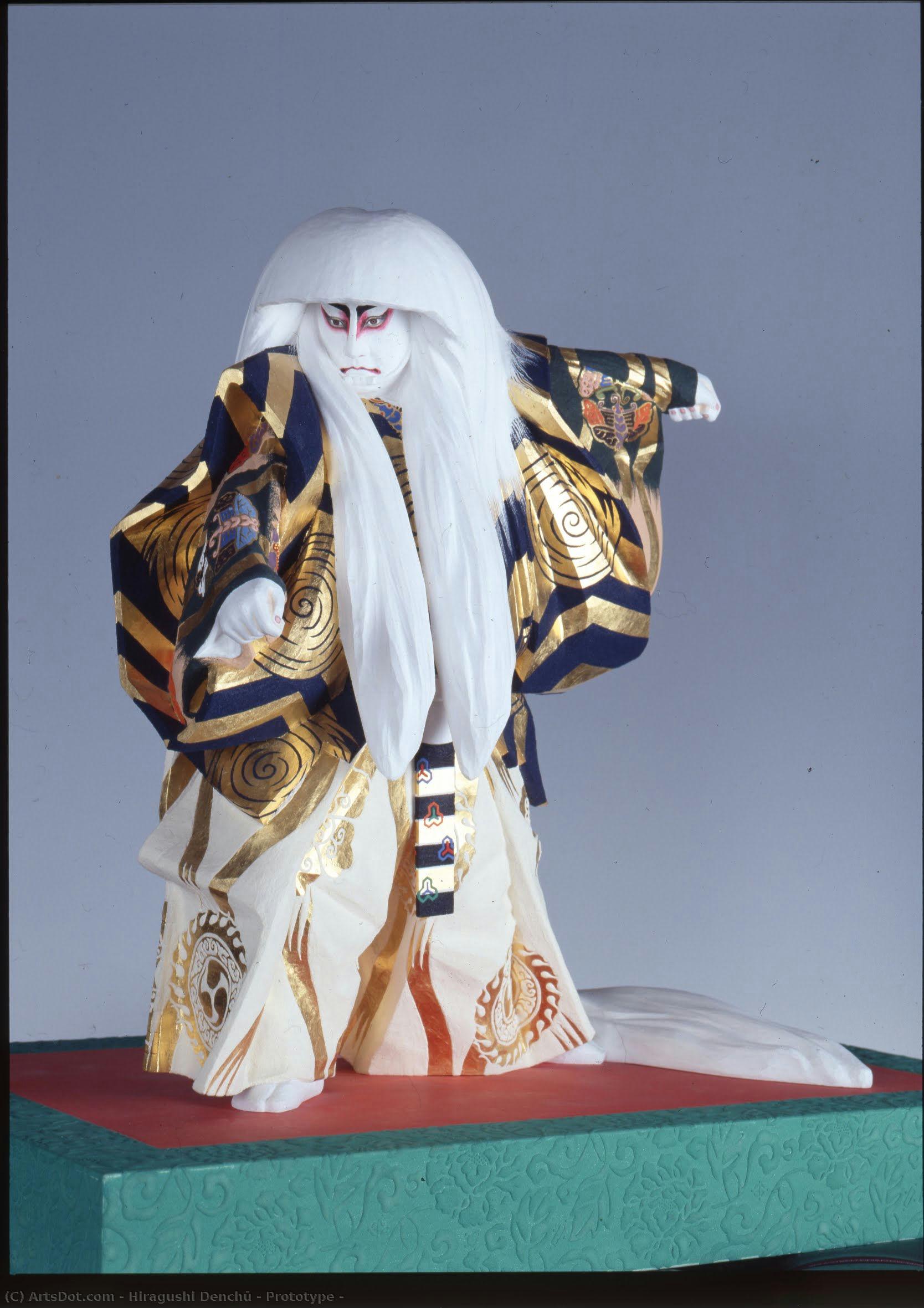
Prototype
複製画のサイズ
In the quiet intersection of spiritual devotion and masterful craftsmanship lies the work of Hiragushi Denchū, a sculptor whose hands breathed life into the very essence of Japanese wood. Born in 1872 within the scenic Okayama Prefecture, Denchū’s journey was one of profound transformation, moving from the humble beginnings of an apprentice in Osaka’s doll-making workshops to the prestigious heights of an Imperial Artist. His early years were shaped by the rhythmic precision of carving and the vibrant colors of traditional artistry, yet it was his ability to transcend mere decoration that would eventually define his place in the pantheon of Japanese masters. Denchū did not merely carve wood; he sought to capture the ephemeral breath of the divine and the enduring dignity of the human spirit.
The foundation of Denchū’s aesthetic was deeply rooted in the rich soil of Buddhist philosophy. His training under the esteemed Kōun Takamura at Tokyo’s Imperial Art Academy provided him with a rigorous technical discipline, yet his heart remained tethered to the ancient traditions of his lineage. He became a master of polychrome wood sculpture, a technique that required an extraordinary patience to meticulously carve cedar wood before applying layers of vibrant, luminous pigments. This marriage of texture and color allowed him to create works that possessed a startling realism, where the grain of the wood seemed to pulse with the warmth of living flesh or the terrifying energy of a deity.
To encounter a Denchū sculpture is to witness a moment of frozen emotion. His repertoire spanned the celestial and the terrestrial, moving seamlessly between the wrathful power of Buddhist iconography and the tender vulnerability of human portraiture. In his celebrated piece “Tenshō,” the viewer is confronted by a deity of immense spiritual fervor, characterized by a dramatic pose and a halo of flames that seems to flicker even in the stillness of a museum gallery. Conversely, his work "Old Mother of Heian" offers a profound study in serenity, capturing the weathered grace of age with such sensitivity that the inanimate wood takes on a palpable, breathing presence.
His technical prowess was matched only by his commitment to the evolution of Japanese sculpture. As a founding member of the Nihon Chōkoku Kai (Japan Sculpture Society) in 1907, he stood at the forefront of a movement that sought to elevate sculpture from a decorative craft to a high art form capable of expressing modern complexities. This period of his life was marked by an intense exploration of how traditional materials could serve new, emotive narratives, ensuring that the ancient art of woodcarving remained relevant in a rapidly changing Japan.
The significance of Denchū’s contribution to Japanese culture is etched into the very institutions that honor him. His career was punctuated by some of the highest accolades a Japanese artist could receive, including his appointment as an Imperial Household Artist in 1944. The nation recognized his immense cultural value through several prestigious designations:
Even in his final years, Denchū continued to leave his mark upon the sacred landscape of Japan. One of his most enduring legacies can be found at the Kaminarimon Gate of Tokyo's Sensō-ji Temple, where his masterful carving of a pair of dragon gods serves as a guardian for the temple’s entrance. Through this work, Denchū achieved a rare feat: he bridged the gap between the individual artist and the collective spiritual consciousness of a people. His sculptures remain not just objects of beauty, but vessels of reverence, reminding every observer of the profound sanctity found within the natural world.

1872 - 1979 , Japan


最新の美術ニュース、限定オファー、そしてインテリアのアイデアをいち早くお届けします。
お客様のプロジェクトについてお聞かせください。当社の美術専門家が、お客様に合わせた3つのパーソナライズされた芸術提案をご提供いたします。
あなたにぴったりの3作品を無料で厳選いたします

 プレビュー
プレビュー
 シェアする
シェアする シェアする
シェアする
 詳細を見る
詳細を見る

 ダウンロード
 似ている作品
 X線調査
X線調査 スライドショー

 詳細を見る
詳細を見る






































 ガラスオプションは、110cm未満のサイズでのみご利用いただけます。


