

 設置イメージを表示
 シェアする
シェアする シェアする
シェアする
 詳細を見る
詳細を見る ガイドを表示

 ダウンロード
 似ている作品
 X線調査
X線調査 スライドショーを表示
 Q&A
Q&A 統計情報
統計情報The Violet Note

- 18.0 x 26.0 cm


 詳細を表示
詳細を表示
ジークレー/アートプリント
スピーディーな制作と多彩な仕上げオプションが魅力の、ミュージアムクオリティなジークレー・キャンバスプリント。 ( 手描き複製画を注文する デジタル画像販売へ切り替え)




P118B ¥10

P118H ¥10

P118W ¥10

P438Z ¥10

P508JH ¥12

P508YH ¥12

P805H ¥10

P805Z ¥10

P919BZ ¥10

P919G ¥10

P919XJ ¥10

P959ZH ¥10

P968JZ ¥12

W106C ¥8

W218G ¥10

W218JH ¥8

W218Y ¥10

W307PJ ¥10

W316G ¥10

W316PJ ¥8

W316Y ¥10

W398PJ ¥8

W4111J ¥10

W500HY ¥15

W500JH ¥15

W692G ¥12

W849H ¥8

W940BG ¥15

W953PJ ¥8




標準サイズ
オーダーメイド
CM
INCH
作品のオリジナル比率に合わせた、当店の規定サイズからお選びください。
Loading sizes...

横幅
高さ
額縁や壁のスペースに合わせて、ご希望の幅と高さを入力してください。プリントはカットすることは可能ですが、元の画像より大きくすることはできないため、異なる比率のサイズを選択された場合は、画像の一部が欠けることになります。印刷を開始する前に、内容を確認していただくためのデジタルモックアップをお送りいたします。このページに表示されている画像は、実際のカット後の状態を示すものではありません。実際の仕上がりはモックアップにてご確認ください。


 ガラスオプションは、110cm未満のサイズでのみご利用いただけます。

The Violet Note
ジークレー/アートプリント
複製画サイズ一覧
-


合計金額
¥ 11070
A Moment of Quiet Anticipation: Unpacking “The Violet Note”
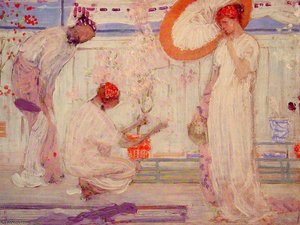
James Abbott McNeill Whistler’s "The Violet Note," painted in 1886, isn't a grand statement of narrative or dramatic action; it’s a carefully constructed tableau of quiet contemplation and the subtle poetry of everyday life. This intimate portrait captures a woman, her back turned to the viewer, engaged in the seemingly simple act of preparing for travel – a moment frozen in time that speaks volumes about Whistler’s core aesthetic philosophy: “art for art’s sake.” The painting immediately draws us in with its muted palette dominated by blues and greens, creating an atmosphere of subdued elegance and a sense of veiled mystery. It's a deliberate departure from the prevailing Victorian obsession with grand historical scenes or emotionally charged portraits, reflecting Whistler’s commitment to capturing the essence of beauty through form, color, and light rather than storytelling.
The Language of Form and Color: Whistler’s Aesthetic Vision
Whistler was deeply influenced by Japanese prints – particularly *ukiyo-e* – which emphasized flattened perspectives, bold outlines, and a focus on decorative elements. This influence is evident in the painting's composition; the figures are rendered with a sense of detachment, almost as if viewed through a slightly removed lens. The use of color is equally deliberate. Whistler favored a technique he called “tonal harmony,” prioritizing subtle gradations of tone over bright, saturated hues. Notice how the violet – hinted at in the title and subtly reflected in the arrangement of objects – acts as a unifying element, grounding the scene and lending it an air of sophisticated restraint. The careful placement of each object—the vase, the potted plant, the books—contributes to a carefully balanced visual rhythm, suggesting a considered aesthetic rather than a spontaneous one.
Symbolism in the Details: A Journey Within
Beyond its formal qualities, “The Violet Note” is rich with symbolic potential. The woman’s posture, leaning on her suitcase, immediately evokes travel and departure – but it's not a joyous or celebratory departure. There’s a hint of melancholy in her stance, suggesting perhaps a bittersweet farewell or the quiet solitude of a journey undertaken alone. The suitcase itself, placed squarely on the floor, is a potent symbol of both practicality and vulnerability. The books, stacked neatly together, could represent knowledge, experience, or even a longing for intellectual stimulation during her travels. Even the vase with its single bloom – a violet, no doubt – speaks to beauty, fragility, and the transient nature of life. Whistler wasn’t simply depicting a scene; he was layering it with subtle suggestions and inviting the viewer to project their own interpretations onto the canvas.
Historical Context: The Rise of Aestheticism
“The Violet Note” emerged during a pivotal moment in art history – the height of the Aesthetic movement. Whistler, along with figures like Oscar Wilde, rejected the didactic and moralistic tendencies of much 19th-century art, arguing that art should exist solely for its own beauty and pleasure. This philosophy challenged the established conventions of the time, leading to considerable controversy and criticism. Whistler’s work was often dismissed as “mere decoration,” but his insistence on prioritizing formal qualities over narrative content paved the way for modernism and profoundly influenced subsequent generations of artists. Understanding this context illuminates why "The Violet Note" is not a painting about *what* is happening, but rather about *how* it's being seen – a testament to Whistler’s dedication to capturing the essence of visual experience.
Bringing “The Violet Note” Home: A Reproduction for Your Space
TopImpressionists.com offers meticulously crafted hand-painted reproductions of "The Violet Note," allowing you to bring this evocative masterpiece into your own home or office. Our skilled artisans replicate Whistler’s tonal harmony and subtle details with exceptional precision, ensuring that the painting's atmosphere and symbolic depth are faithfully preserved. Whether you appreciate Whistler’s pioneering aestheticism or simply admire its quiet beauty, a reproduction of “The Violet Note” is a timeless addition to any collection – a reminder of the power of art to evoke emotion and inspire contemplation.
Q&A
ジェームズ・アボット・マクニール・ホイッスラー作「The Violet Note」は、どのようにしてAestheticism and Symbolismをアーティストの母国と結びつけているのでしょうか?
「The Violet Note」は、アメリカ合衆国出身のジェームズ・アボット・マクニール・ホイッスラーによって、Aestheticism and Symbolismの潮流の中で制作されました。アーティストの出自は、この作品をアメリカ合衆国の作家たちが実践したAestheticism and Symbolismへと結びつけています。
「The Violet Note」の主題は、ジェームズ・アボット・マクニール・ホイッスラーが普段扱うテーマとどのように関連していますか?
ジェームズ・アボット・マクニール・ホイッスラーの作品に繰り返し現れるテーマにはaestheticism, european avant-garde, sensibility, mood, atmosphere, travel, preparation, journeyがありますが、「The Violet Note」ではwoman, travel, packing, suitcase, vase, books, anticipationに焦点を当てています。
「The Violet Note」の解説ページはどこにありますか?
ジェームズ・アボット・マクニール・ホイッスラー作「The Violet Note」には、解説資料ページをご用意しています。これは、学生や教室での学習用に設計された、印刷可能な作品解説シートです。
関連作品



作家プロフィール
ジェームズ・アボット・マクニール・ホイッスラー:美の探求者
1834年、アメリカのマサチューセッツ州ローウェルに生まれたジェームズ・アボット・マクニール・ホイッスラーは、絵画と版画を通して、その時代を代表する芸術家の一人として名を馳せました。彼の人生は、常に既存の規範との対立を伴い、絵画における「芸術は芸術のためである」という理念を強く主張しました。幼少期から鉄道技師であった父に随伴し各地を転々としながらも、描画への情熱を燃やし続けました。西ポインツ軍事大学での短期間の経験や測量業務への従事も、彼の芸術的探求を妨げることなく、むしろ多様な環境への適応力と感受性を育むこととなりました。やがて彼はパリへと旅立ち、セバスチャン・ボゥレのもとで油絵、水彩画、版画の技術を磨き、フランスの実ismやバルビゾン派の影響を受けながらも、独自の芸術的表現を追求し始めました。印象主義を超えた調和:ノクターンとポートレート
ホイッスラーが確立したスタイルは、写実的な描写よりも、色彩の調和と大気の効果を重視するものでした。彼は絵画を通して現実をそのまま再現することなく、その本質、一瞬の感情や微妙なニュアンスを捉えようと試みました。特に有名なのは「ノクターン」シリーズです。これは、夜の風景を描いた作品群で、テムズ川の薄明かりを背景に、色彩と光の微妙な変化が表現されています。これらの作品は、単なる風景描写ではなく、音楽のような調和のとれた感情的な体験を提供しようとする試みでした。また、ホイッスラーのポートレートも特筆すべき点です。彼は被写体の外見だけでなく、その内面や雰囲気までも捉えようと努めました。彼の作品に見られるポートレートは、単なる肖像画ではなく、色彩構成の一部として巧みに組み込まれた芸術的な存在となっています。「灰と黒の調和 第1番」(通称「ホイッスラーの母」)はその代表例であり、形式美と感情表現が融合した傑作として高く評価されています。美への探求と論争: Ruskinとの対立
ホイッスラーの芸術的理念は、しばしば激しい論争を巻き起こしました。特に、美術批評家ジョン・ラスキンの作品に対する批判は、1878年に法廷での訴訟に発展し、芸術界に大きな波紋を広げました。「落下するロケットのある夜のノクターン」を巡るこの裁判は、ホイッスラーが芸術の自律性を主張し、絵画が現実の忠実な再現である必要がないことを力説した場となりました。彼は、自身の作品が色彩と形式の調和のとれた配置であり、道徳的または社会的なメッセージを伝えるものではないことを明確にしました。この裁判は、ホイッスラーにとって金銭的な損失をもたらしましたが、芸術における自由な表現の重要性を訴える象徴的な出来事となりました。日本美術の影響と後世への遺産
ホイッスラーの作品には、日本の浮世絵(歌麿、広重など)からの強い影響が見て取れます。大胆な構図、装飾的なパターン、そして簡潔な色彩感覚は、浮世絵の世界観を反映しており、彼の芸術的革新に大きく貢献しました。彼はまた、スペインの画家ベラスケスの色調や筆致からもインスピレーションを得て、独自の表現スタイルを確立しました。ホイッスラーの「芸術は芸術のためである」という理念は、エステティック運動を牽引し、その後の近代美術に大きな影響を与えました。彼の作品は、形式主義的なアプローチと色彩構成の探求を通して、絵画の可能性を広げ、後世の多くの芸術家にインスピレーションを与え続けています。ホイッスラーの足跡:主要作品
- The Forge (1861)
- Portrait of Charles Lang Freer (1873)
- Brown and Gold: The Gold Girl—Connie Gilchrist (1876-77)
- Arrangement in Grey and Black No. 1 (Whistler’s Mother) (1871)
- Nocturne in Black and Gold – The Falling Rocket (1875)

ジェームズ・アボット・マクニール・ホイッスラー
1834 - 1903 , アメリカ合衆国
プロフィール概要
- フルネーム: ジェームズ・アボット・マクニール・ホイッスラー
- 主な作品:
- whistler’s Mother
- Nocturne in Black and Gold
- The Forge
- 出生地: ローウェル(アメリカ合衆国)
- 国籍: アメリカ合衆国
- 影響を与えたアーティスト: ['アースティティック運動']
- 影響を受けたアーティスト:
- ベラスケス
- 日本の浮世絵
- 没年月日: 1903年7月17日
- 生年月日: 1834年7月10日
- 芸術運動/スタイル: 印象派、アール・ヌーヴォー
関連記事

Azure Visions: Exploring Representations of the Blue Dress in Western Art History
Explore the rich history of the blue dress in Western art! Discover its symbolism, from Renaissance masterpieces to modern interpretations by artists like Martin & Schiele. Uncover cultural meanings and artistic techniques.

ポール・セザンヌ:至高の25選 - 傑作と革新の軌跡 | TopImpressionists
ポール・セザンヌの至高の25選。ポスト印象派を代表する画家、セザンヌの傑作と革新的な技法を紐解きます。TopImpressionistsで高品質な複製画やインテリアアートを見つけ、芸術の世界をご自宅に。今すぐコレクションをご覧ください。

ジェームズ・マクニール・ホイストラー:至高の25選 - 美と調和を求めた芸術家の軌跡 | TopImpressionists
ジェームズ・マクニール・ホイストラーの至高の25選。ノクターン、印象派、美しい色彩に満ちた作品群を紐解きます。TopImpressionistsで高品質なアートプリントとインテリアをお楽しみください。名画の世界へ – TopImpressionists.com
The Allure of Azure: Exploring the Symbolic & Aesthetic Depths of Blue in Art History
Explore the rich history of blue in art! Discover its symbolism, from ancient pigments to modern masterpieces by Kandinsky & Seurat. Uncover the psychological impact and cultural meanings behind this captivating hue.

Slate Blue Masterpieces: 10 Iconic Paintings & Timeless Home Decor Ideas
Immerse yourself in the captivating world of slate blue! Explore 10 iconic paintings by Monet, Van Gogh & Renoir. Discover their stories, techniques & find museum-quality art reproductions for your home at .


