


 プレビュー
プレビュー
 シェアする
シェアする シェアする
シェアする
 詳細を見る
詳細を見る ガイド
ガイド

 ダウンロード
 似ている作品
 X線調査
X線調査 スライドショー
 統計情報
統計情報War, the Exile and the Rock Limpet
 キャンバスに油彩
- ウォールアート
- Romanticism
 1842
1842 79.0 x 79.0 cm
 Tate Gallery
 詳細を見る
詳細を見る
手描き油彩複製画
当社のアーティストが、お客様のご希望のサイズと額縁に合わせて、キャンバスに手描きで制作する油彩画です。 ( プリント版に切り替え デジタル画像販売へ切り替え)




P118B $10

P118H $10

P118W $10

P438Z $10

P508JH $12

P508YH $12

P805H $10

P805Z $10

P919BZ $10

P919G $10

P919XJ $10

P959ZH $10

P968JZ $12

W106C $8

W218G $10

W218JH $8

W218Y $10

W307PJ $10

W316G $10

W316PJ $8

W316Y $10

W398PJ $8

W4111J $10

W500HY $15

W500JH $15

W692G $12

W849H $8

W940BG $15

W953PJ $8




標準サイズ
オーダーメイド
CM
INCH
作品のオリジナル比率に合わせた、当店の規定サイズからお選びください。
Loading sizes...

幅
高さ
特定のフレームやスペースに合わせて、ご希望のサイズをご入力いただけます。選択されたサイズが元の画像の比率と異なる場合、アートワークをトリミングするか、手描きで要素を追加して絵画を拡張いたします。デジタルモックアップ を制作し、制作開始前にご確認(承認)をいただきます。
画面上のプレビューは、実際のトリミングや拡張を正確に反映しているものではありません。最終的な構図は、モックアップによってのみ正確にご確認いただけます。
カスタムサイズもご利用いただけますが、元の比率を維持するためには、あらかじめ用意されたリストからサイズを選択することをお勧めいたします。
カスタマイズの例:顔をお客様の写真に置き換える、ペットを追加する(例:猫を犬に変更)、背景に隠れたメッセージを入れる、背景の風景や要素を変更するなど。
ご注文後、TopImpressionists.com チームより詳細な指示をお送りするとともに、仕上がりイメージ(モックアップ)をご提供いたします。
ご注文後、TopImpressionists.com チームより詳細な指示をお送りするとともに、仕上がりイメージ(モックアップ)をご提供いたします。


 ガラスオプションは、110cm未満のサイズでのみご利用いただけます。

War, the Exile and the Rock Limpet
複製技法
複製画のサイズ
-


合計金額
$ 269
A Moment of Despair: Turner’s ‘War, The Exile and the Rock Limpet’
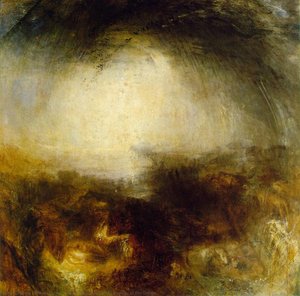
Joseph Mallord William Turner's “War, The Exile and the Rock Limpet,” painted in 1842, is far more than a simple depiction of a desolate landscape. It’s a profoundly melancholic meditation on power, isolation, and the crushing weight of history—a cornerstone of the Romantic movement that continues to resonate with viewers today. This large oil painting, measuring 79 x 79 cm, transports us to the stark, windswept shores of Saint Helena, the remote island prison where Napoleon Bonaparte spent his final years, a poignant symbol of defeat and fading glory.
Turner’s genius lies in his ability to capture not just what he saw, but also the *feeling* of a scene. The composition is dominated by a vast, turbulent sky—a swirling vortex of bruised purples, fiery oranges, and deep blues – that seems to press down upon the solitary figure of Napoleon. He stands before a body of water, rendered in muted greys and browns, reflecting the bleakness of his surroundings. The horizon line is low, emphasizing the immensity of the landscape and the insignificance of the human presence within it. The painting’s palette is deliberately restrained, dominated by somber tones that heighten the sense of despair and confinement.
The Narrative of Exile
The painting's genesis lies in a specific historical event: Napoleon Bonaparte’s exile to Saint Helena following his defeat at Waterloo in 1815. Turner, deeply affected by news of the former Emperor’s plight, created “War” as a companion piece to "Peace – Burial at Sea," which depicted the return of Napoleon's remains to France. While ‘Peace’ celebrated a triumphant homecoming, 'War' offers a starkly different perspective—a glimpse into the final, desolate years of a man stripped of his power and surrounded by nothing but isolation. The painting isn’t a glorification of war; rather, it is an exploration of its devastating consequences for both the victor and the vanquished.
Turner masterfully uses symbolism to convey this sense of loss. Napoleon, depicted in a state of quiet contemplation, bows slightly as he examines a single rock limpet clinging to a stone. This seemingly insignificant detail—a humble creature from the sea—represents the ultimate insignificance of even the most powerful man when confronted with the relentless passage of time and the inevitability of mortality. The limpet’s presence serves as a visual metaphor for Napoleon's diminished state, reduced to observing a small, vulnerable life in his final hours.
Turner’s Revolutionary Technique
“War, The Exile and the Rock Limpet” is a testament to Turner’s innovative approach to landscape painting. He moved beyond traditional academic techniques, prioritizing atmosphere and emotional impact over precise representation. His brushstrokes are loose and expressive, creating a sense of movement and dynamism within the scene. Turner employed a technique known as ‘atmospheric perspective,’ where distant objects appear paler and less detailed, contributing to the illusion of depth and vastness. The use of color is particularly striking—not used to mimic reality but to evoke mood and emotion. Notice how the warm hues of the sunset contrast sharply with the cool, somber tones of the water and landscape.
Turner’s layering of glazes – applying thin washes of paint over dried layers – created a luminous quality that seemed to capture the very essence of light and shadow. This technique allowed him to achieve an unparalleled sense of depth and atmosphere, anticipating the techniques of Impressionist painters who would follow in his wake. The painting's almost abstract qualities—the blurred forms, the emphasis on color and light—demonstrate Turner’s willingness to break with convention and forge a new path for landscape art.
A Timeless Reflection
“War, The Exile and the Rock Limpet” is more than just a historical painting; it's a profound meditation on human nature, power, and mortality. It speaks to our own experiences of isolation, loss, and the enduring consequences of conflict. Reproductions of this iconic work offer a remarkable opportunity to bring Turner’s evocative vision into your home or office—a powerful reminder of the beauty and melancholy that can be found in even the darkest corners of history. Its dramatic composition and emotional depth make it a captivating addition to any art collection, inviting contemplation and sparking dialogue about the complexities of human experience.
関連作品


アーティストの略歴
The Luminary of Light: A Journey Through the Life and Art of J.M.W. Turner
Joseph Mallord William Turner, a name synonymous with the sublime power of landscape and the evocative dance of light, remains one of Britain’s most celebrated and influential artists. Born in Covent Garden, London, in 1775, Turner's journey from a barber’s son to a master painter was fueled by an innate talent, relentless dedication, and a visionary spirit that would forever alter the course of art history. From his earliest days sketching architectural details to his later, almost abstract explorations of atmosphere and color, Turner consistently pushed the boundaries of artistic expression. His formal training began at the Royal Academy Schools in 1789, where he quickly distinguished himself as a promising student. However, Turner was not content with merely replicating established styles; he sought to capture the very essence of nature – its raw power, its fleeting beauty, and its inherent drama. Early works reveal a meticulous attention to topographical detail, reflecting the prevailing artistic tastes of the time. Yet, even in these early pieces, hints of his future direction are visible—a sensitivity to light and shadow, a willingness to experiment with color, and an emerging fascination with the sublime. He was particularly drawn to the Dutch Golden Age painting style, absorbing influences from artists like Rembrandt and Vermeer.The Evolution of a Visionary: From Topography to Transcendence
Turner’s artistic development was marked by constant experimentation and a growing desire to move beyond mere representation. Influenced by masters like Claude Lorrain and J.M.W. Cozens, he began to infuse his landscapes with a romantic sensibility, emphasizing emotional response over precise depiction. His travels throughout Europe, beginning in 1802, proved pivotal, exposing him to diverse landscapes and inspiring new approaches to composition and color. He wasn’t simply recording what he saw; he was interpreting it through the lens of his own unique vision. These expeditions took him to Italy, Switzerland, Germany, and Norway, where he meticulously documented breathtaking vistas and absorbed inspiration from local artistic traditions. The early 19th century witnessed a shift in Turner's style towards greater expressiveness. His seascapes, in particular, became increasingly dramatic, capturing the fury and majesty of the ocean with unprecedented intensity. Paintings like “The Fighting Temeraire Tugged to Her Last Berth to Be Broken Up” (1839) are not merely depictions of a ship being towed to its final resting place; they are poignant meditations on mortality, loss, and the relentless march of progress. The use of light in this work is particularly striking—a golden sunset casting a melancholic glow over the scene, symbolizing the passing of an era. Turner skillfully employed dramatic chiaroscuro techniques, highlighting the interplay between darkness and illumination to heighten emotional impact.A Master of Atmosphere: Light, Color, and the Sublime
Turner’s later works are characterized by an almost radical departure from traditional artistic conventions. He increasingly prioritized atmosphere and color over form and detail, creating paintings that seem to dissolve into pure light and energy. Works like “Rain, Steam and Speed – The Great Western Railway” (1844) exemplify this approach—a swirling vortex of color and motion that captures the dynamism of the industrial age. Critics were often baffled by these later works, but their influence on subsequent generations of artists would prove profound. He was a pioneer in exploring the effects of light and atmosphere, anticipating the Impressionists’ focus on capturing fleeting moments and subjective perceptions. His use of color was equally innovative—bold, vibrant hues applied with loose brushstrokes to create a sense of movement and energy. Turner wasn't simply painting landscapes; he was attempting to convey the very *feeling* of being in nature – the awe, the wonder, the terror.Turner’s unwavering commitment to artistic vision cemented his place as one of Britain’s greatest painters. He established himself as a leading figure in the Romantic movement, shaping its aesthetic sensibilities and inspiring countless artists who followed in his wake. His legacy continues to resonate today, reminding us that art can transcend mere representation—that it can capture the sublime beauty of the natural world and evoke profound emotional responses.
Notable Works & Collections
- The Morning After the Deluge (1843): A powerful depiction of nature’s forces, housed in the Tate Collection, London.
- Chichester Canal (1828): Commissioned by George Wyndham, currently at the Tate Collection.
- Ruins of Tintern Abbey: A stunning watercolor showcasing his mastery of light and atmosphere, found in the Calouste Gulbenkian Museum (Lisboa, Portugal).
- The Fighting Temeraire Tugged to Her Last Berth to Be Broken Up (1839): A poignant masterpiece exploring themes of loss and change.
- Rain, Steam and Speed – The Great Western Railway (1844): Capturing the dynamism of the industrial age with swirling color and motion.

ウィリアム・ターナー
1775 - 1851 , イギリス
基本情報
- Artistic Movement Or Style: ロマン主義絵画
- Artists Or Movements Influenced By This Artist: ['クロード・ローラン']
- Date Of Birth: 1775年4月23日
- Date Of Death: 1851年12月19日
- Full Name: ジョゼフ・マロード・ウィリアム・ターナー
- Nationality: イギリス人
- Notable Artworks:
- 嵐 - グレート・ウェスタン鉄道
- 戦闘テメライア
- Place Of Birth: ロンドン、イギリス
関連記事

Capturing the Soul: The Emotional Magic and Sublime Grandeur of Romantic Landscape Painting
Explore the profound emotional depth of Romantic landscape painting. Discover how masters like Friedrich and Turner captured the sublime through light, shadow, and nature's power in this expert art history retrospective for discerning collectors.
テーマ、スタイル、特徴別に分類された作品を探索しましょう。


