

Shown: · With its frame:
 設置イメージを確認
 送る
送る シェア
シェア
 詳細情報
詳細情報 ガイドを表示

 画像をダウンロード
 似ている作品
 X線調査
X線調査 スライドショー
 Q&A
Q&A 統計情報
統計情報
¥ 42454
手描き油彩複製画
当社のアーティストが、お客様のご希望のサイズと額縁に合わせて、キャンバスに手描きで制作する油彩画です。 ( プリント版に切り替え デジタル画像販売へ切り替え)
Size
·標準サイズ
カスタムサイズ
CM
INCH
作品のオリジナル比率に合わせた、当店の規定サイズからお選びください。
Loading sizes...

横幅
高さ
フレームや壁のスペースに合わせて、ご希望の幅と高さを入力してください。本作品は手描きのため、異なる比率のサイズをご希望の場合、絵画の周囲を少し広げて描くか、あるいは端を少しカットして調整することが可能です。お客様のご要望に合わせます。制作を開始する前に、仕上がりを確認するためのデジタルモックアップをお送りいたします。このページに表示されている画像は完成品の実物ではなく、あくまでモックアップによるイメージです。
 詳細を見る
詳細を見るFinish
·
White ¥1

Blurside ¥1

Extended ¥1

P118B ¥10

P118H ¥10

P118W ¥10

P438Z ¥10

P508JH ¥12

P508YH ¥12

P805H ¥10

P805Z ¥10

P919BZ ¥10

P919G ¥10

P919XJ ¥10

P959ZH ¥10

P968JZ ¥12

W106C ¥8

W218G ¥10

W218JH ¥8

W218Y ¥10

W307PJ ¥10

W316G ¥10

W316PJ ¥8

W316Y ¥10

W398PJ ¥8

W4111J ¥10

W500HY ¥15

W500JH ¥15

W692G ¥12

W849H ¥8

W940BG ¥15

W953PJ ¥8

H24-GOLD ¥30

H24-SILVER ¥30

H36-GOLD ¥45

H36-SILVER ¥45
Shipped in a protective tube, ready for your own framer.
Above 105 cm the frame is shipped as a kit for a professional framer — read the details.
Extras
optionalWhat do the extras include?
Examples of what can be changed: Replace face with customer photo; Add pet (e.g., replace cat with dog); Include hidden message in background; Change background landscape or elements.
After order, TopImpressionists.com team will email client for instructions and provide a mockup preview
After order, TopImpressionists.com team will email client for instructions and provide a mockup preview
世界中への配送()は、通常の5週間ではなく、3〜4週間でお届けいたします。(1 11月)。品質には一切妥協いたしません。
保護用ワニス
銘板
刻印入りブロンズプレートの詳細
This elegant plaque features the artist's name and the title of the artwork, finely engraved for a timeless presentation.
It is made from bronze with a refined, elegant finish. The text is precisely laser-engraved for a sharp and permanent result. Measuring 9x2 cm, the plaque is compact yet easy to read. It's built to be durable and scratch-resistant, offering a professional, museum-quality look. Mounting is simple thanks to the included adhesive backing.
透明アクリル銘板の詳細
The plaque includes essential engraved details such as the artist's name, the title of the artwork, the date it was created, the type of media used-like oil on canvas or watercolor-a brief description of the piece, and a QR code that links to the complete artwork information.
It is crafted from clear acrylic, offering a sleek, modern appearance. The text is UV-engraved in black to ensure strong visual contrast. With a size of 10x15 cm, it ensures optimal readability. It comes equipped with two metal hooks for secure wall mounting. The plaque is designed to be weather-resistant, making it suitable for various environments, and it includes interactive features that work seamlessly with smartphone scanning.
黒アクリル製銘板の詳細
This elegant plaque includes engraved information such as the artist's name, the title of the artwork, the date it was created, the type of media used (like oil on canvas or watercolor), a short description of the artwork, and a QR code for quick access to more information.
The plaque itself is made from refined black acrylic with a premium finish. The text is laser-engraved in white for high contrast and readability. Its size is 10x15 cm, designed to be easy to read. It comes with two metal hooks for professional mounting. The design is sleek and fits any interior style. It is also weather-resistant and durable, with built-in digital integration for mobile compatibility.
ガラスオプションは、110cm未満のサイズでのみご利用いただけます。
 ガラスオプションは、110cm未満のサイズでのみご利用いただけます。
- 世界中へ無料エクスプレス配送
- 高品質なリネンキャンバス
- 配送時完全保険付
- 関税・輸入税の払い戻し保証
- 忠実な色彩再現の保証
- 100日間返品保証(製造上の欠陥がある場合のみ)
- 100% 全額返金保証
- まとめ買い割引のご案内


コレクション詳細
Discover 'Bords de L’Oise' by Karl Pierre Daubigny – a serene 19th-century landscape painting in the Romantic style. Explore atmospheric beauty & evocative scenes of the Oise River.
アーティストプロフィール
Discover Karl Pierre Daubigny, a 19th-century French landscape painter known for his Impressionistic scenes of the Seine & Oise. Explore his serene riverbanks and rural life depictions.
About the painting
Quick facts and art quiz
About Karl Pierre Daubigny

Karl Pierre Daubigny
1846 - 1886, France
アーティストについて
The Legacy of Light: The Life and Art of Karl Pierre Daubigny
In the golden age of French landscape painting, few artists captured the ephemeral dance of light and shadow as intimately as Karl Pierre Daubigny. Born in Paris in 1846, Daubigny was destined for a life steeped in the pigments and textures of the natural world. As the son of the renowned Charles François Daubigny, a pillar of the Barbizon school, his very existence was intertwined with the evolution of French realism and the burgeoning Impressionist movement. This profound artistic lineage provided him with more than just technical instruction; it gifted him an ancestral eye for the subtle shifts in atmosphere that define the soul of a landscape.
Daubigny’s journey into the heart of the art world began remarkably early. At the tender age of seventeen, he made his triumphant debut at the prestigious Salon of 1863. Works such as Un Sentier (A Track) and Île de Vaux in Auvers immediately signaled to critics and peers alike a profound sensitivity to the vitality of spring. While his early brushwork bore the unmistakable influence of his father’s grounded, realist approach, a unique spirit began to emerge from his canvases—one that sought not just to document the earth, but to evoke its breathing, changing essence.
A Mastery of Atmosphere and Technique
As his career matured, Daubigny moved beyond mere representation, venturing into a more personal and somber stylistic realm. He became a master of the atmospheric nuance, particularly in his depictions of the Seine and Oise valleys. His technique was characterized by an exquisite command over the interplay of color and light, often employing broken brushstrokes to simulate the shimmering reflections found on moving water. To gaze upon a Daubigny landscape is to witness the meticulous study of sunlight as it strikes a ripple or filters through a canopy of leaves.
<- Tonal Depth: He favored a sophisticated palette of earthy ochres, siennas, and umbers, which provided a warm, grounded foundation for his more luminous highlights.
- Textural Realism: His ability to render the tactile qualities of nature—the roughness of bark, the softness of moss, and the fluidity of river currents—created a palpable sense of presence.
- Luminous Innovation: By layering colors with precision, he achieved a vibrating quality in his work that anticipated the full flowering of Impressionism.
His fascination with the natural world led him far beyond the studio, as he sought inspiration in the rugged coastlines of Brittany and Normandy, as well as the dense, mysterious depths of the Fontainebleau forest. Each location offered a new vocabulary of light for him to translate onto canvas.
Historical Significance and Enduring Impression
The trajectory of Daubigny’s career was marked by significant recognition within the French art establishment. His consistent presence at the Salon, including notable exhibitions in 1866 and 1874, earned him prestigious medals that solidified his reputation as a formidable talent. Yet, his true significance lies in his role as a bridge between the structured realism of the Barbizon school and the sensory revolution of Impressionism. He possessed the rare ability to maintain a sense of structural integrity while embracing the fleeting, subjective experience of sight.
Though his life was tragically short, ending in 1886 in Auvers-sur-Oise, the impact of his work remains profound. Daubigny did not merely paint landscapes; he captured the very breath of the French countryside. His ability to find the extraordinary within the ordinary—a quiet pond at dusk or a sun-drenched path through the woods—continues to resonate with anyone who finds beauty in the transient moments of our world. Today, his works stand as serene monuments to a period of unparalleled artistic transformation, inviting viewers to rediscover the tranquil majesty of the natural landscape.
Quick facts about Karl Pierre Daubigny
- Full Name: Karl Pierre Daubigny
- Nationality: French
- Date Of Birth: 1846
- Date Of Death: 1886
- Place Of Birth: Paris, France
- Notable Artworks:
- Banks of the Oise River
- A Lake in the Woods at Dusk
- Bords de L’Oise
- Artistic Movement Or Style: Impressionism
- Artists Who Influenced This Artist:
- Jean-Francois Millet
- Gustave Coubert
- Artists Or Movements Influenced By This Artist: ['Claude Monet']
関連作品
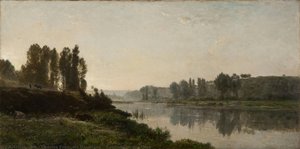




Karl Pierre Daubigny
Bords de L'Oise
() ·
With its frame: · Hand-painted in oil on linen
Total