
迅速な制作と多彩な仕上げオプションを備えた、ミュージアムクオリティのジークレーまたはキャンバスプリント。 ( 手描きの絵画を購入 画像を購入)
作品のオリジナル比率に合わせた、当店の規定サイズからお選びください。

特定のフレームやスペースに合わせて、ご自身でサイズを指定することも可能です。選択されたサイズが元の画像の比率と一致しない場合、作品をトリミングするか、鏡面反射または単色での塗りつぶしによって画像を拡張いたします。制作を開始する前に、ご確認用のデジタルモックアップをお送りいたします。
画面上のプレビューには、実際のトリミングや拡張は反映されませんのでご注意ください。最終的な構図を正確に確認できるのは、モックアップのみとなります。
カスタムサイズも承っておりますが、元の比率を維持するためには、あらかじめ用意されたリストからサイズを選択することをお勧めいたします。

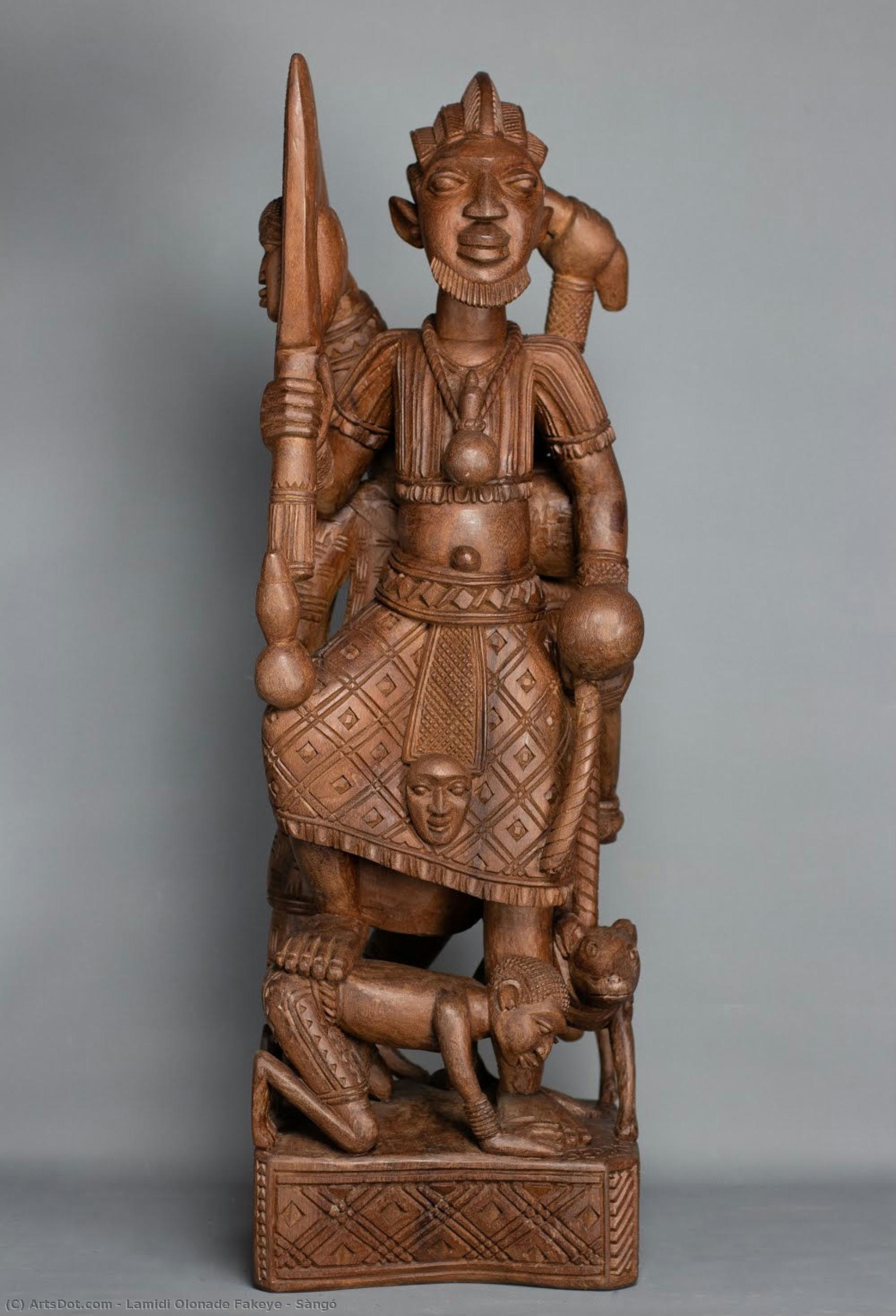
Sàngó
複製画のサイズ
Born in Ila Orangun, Nigeria, in 1925, Lamidi Olonade Fakeye’s life was inextricably linked to the rich artistic heritage of his people – the Isedo Quarters of the Inurin compound. From a young age, he inherited a profound connection to sculpture, learning the ancient techniques of wood carving from his father and later receiving tutelage under the esteemed master sculptor George Bamidele Arowoogun. This lineage, spanning five generations of skilled artisans, profoundly shaped his artistic vision and established him as a pivotal figure in the evolution of Nigerian art.
Early life provided the foundation for Fakeye’s exceptional talent. He began carving at just thirteen years old, demonstrating an innate ability to translate symbolic narratives into tangible form. His apprenticeship with Arowoogun honed his skills, exposing him to traditional Yoruba motifs and techniques – a crucial element in understanding the depth of his later work. The choice of wood as his primary medium wasn’t arbitrary; it represented a deep respect for nature and a connection to the spiritual beliefs embedded within Yoruba culture. The selection of specific trees was often imbued with symbolic meaning, reflecting the desired qualities of the sculpture.
Fakeye's artistic journey gained momentum in 1960 with his first solo exhibition at the British Council in Nigeria, marking a significant step towards recognition. This early exposure paved the way for international acclaim, culminating in an artist-in-residence position at Western Michigan University in Kalamazoo, Michigan, in 1962 – a remarkable achievement for a Nigerian artist at that time. This period allowed him to engage with new artistic perspectives while retaining his commitment to portraying Yoruba themes and cultural values.
Throughout the 1960s and 70s, Fakeye’s career flourished. He was elected president of the Society of Professional Artists of Nigeria in 1964, solidifying his position as a leading voice within the Nigerian art community. His work began to attract international attention, with exhibitions held at the United States Information Service in Nigeria (1964) and later at institutions like the Smithsonian Institution in 1999 – a testament to the growing recognition of his artistic merit on a global scale. He also contributed significantly to the academic world, serving as a faculty member at the University of Ile-Ife from 1978 onward.
Fakeye’s sculptures are deeply rooted in Yoruba cosmology and mythology. His work frequently depicts ancestral figures, deities (Orishas), and scenes from traditional stories – all rendered with meticulous detail and imbued with symbolic significance. The use of *ighbale*, a distinctive carving technique involving the creation of intricate relief patterns, is particularly characteristic of his style. These patterns aren’t merely decorative; they are believed to hold spiritual power and represent the interconnectedness of the physical and spiritual realms.
Beyond the symbolic, Fakeye's technical mastery is evident in the smooth surfaces, graceful lines, and realistic portrayals of his subjects. He skillfully employed a variety of wood types – often Iroko or Ebony – each chosen for its tonal qualities and durability. His sculptures are not simply representations; they are imbued with life through careful attention to proportion, texture, and the subtle nuances of expression.
Lamidi Olonade Fakeye’s death in Ile-Ife on December 25, 2009, marked the loss of a truly exceptional artist. However, his legacy continues to resonate through his enduring artwork, now housed by Johfrim Art and Design Studio. His contributions to the development of sculpture in Nigeria are undeniable, and he is remembered as a pivotal figure in preserving and promoting Yoruba artistic traditions. His retrospective exhibition at Hope College in Holland, Michigan, and the Smithsonian Institution further cemented his place within the canon of 20th-century African art.
Furthermore, the influence of Fakeye extends beyond his own creations. His nephew, Lukman Alade Fakeye, continues the family tradition, carrying forward the legacy of masterful wood carving and upholding the artistic values instilled by generations past. Lamidi Olonade Fakeye’s life and work stand as a powerful testament to the enduring power of art to connect individuals to their cultural heritage and to transcend geographical boundaries.

1925 - 2009 , Nigeria


最新の美術ニュース、限定オファー、そしてインテリアのアイデアをいち早くお届けします。
お客様のプロジェクトについてお聞かせください。当社の美術専門家が、お客様に合わせた3つのパーソナライズされた芸術提案をご提供いたします。
あなたにぴったりの3作品を無料で厳選いたします

 プレビュー
プレビュー
 シェアする
シェアする シェアする
シェアする
 詳細を見る
詳細を見る

 ダウンロード
 似ている作品
 X線調査
X線調査 スライドショー

 詳細を見る
詳細を見る






































 ガラスオプションは、110cm未満のサイズでのみご利用いただけます。


